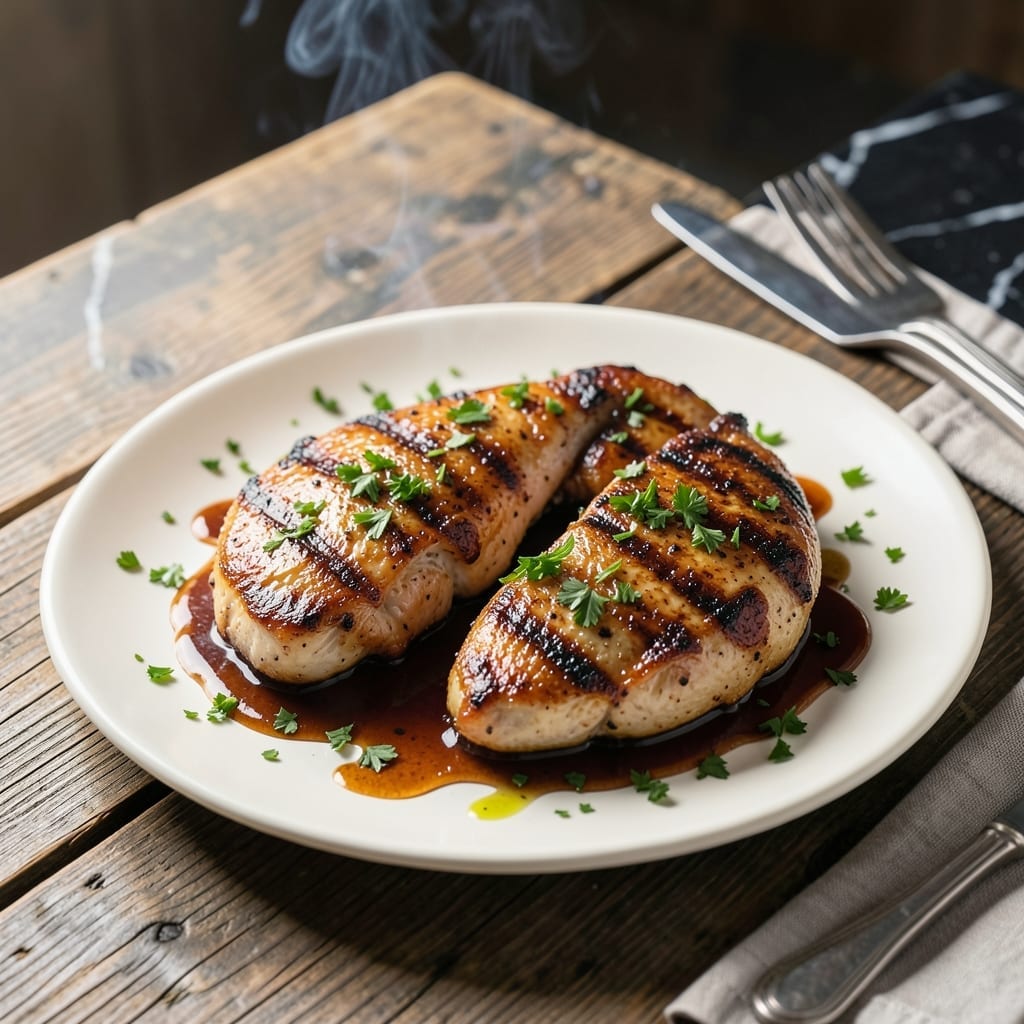
Mastering juicy grilled chicken breast is simpler than you think. My method guarantees tender meat with smoky char every time.
I developed this technique blending pitmaster instincts with French precision. The result is the best barbecue chicken you’ll make at home.
Ingredients for Best Barbecue Grilled Chicken Breast
Simple dry rub and quality chicken create this juicy, smoky grilled classic.
| Ingredient | Amount | Notes |
|---|---|---|
| Boneless Skinless Chicken Breasts 🍗 | 1 ½ lb | Pounded to even thickness |
| Smoked Paprika 🌶️ | 1 tbsp | For depth of flavor |
| Brown Sugar 🍚 | 1 tbsp | Light or dark works |
| Garlic Powder 🧄 | 1 tsp | Not garlic salt |
| Onion Powder 🧅 | 1 tsp | Balances sweetness |
| Sea Salt 🧂 | 1 tsp | Fine grain preferred |
| Ground Black Pepper 🌶️ | ½ tsp | Freshly ground ideal |
| Cayenne Pepper 🔥 | ¼ tsp | Adjust for heat preference |
| Olive Oil 🫒 | 2 tbsp | For coating chicken |
| Barbecue Sauce 🍯 | 1 cup | High quality, thick consistency |
| Apple Cider Vinegar 🍏 | 1 tbsp | For acidity balance |
| Lemon Juice 🍋 | 1 tbsp | Freshly squeezed preferred |
[recipe_ingredient_scaler]
The chicken quality matters here. Boneless, skinless breasts from a trusted butcher or Whole Foods ensure tenderness. Look for even thickness or pound them yourself—this prevents dry spots. The smoked paprika in the rub delivers that authentic barbecue aroma, so don’t substitute regular. Diamond Crystal sea salt dissolves perfectly into the dry rub mixture.
No brown sugar? Coconut sugar works at a 1:1 ratio. Out of smoked paprika? Regular paprika plus a pinch of liquid smoke (just 1/4 tsp) gets you close. The barbecue sauce can be store-bought (Stubb’s is reliable), but avoid overly sweet varieties—they’ll caramelize too quickly. For extra tang, add a dash more apple cider vinegar.
Store raw chicken in the coldest part of your fridge—use within 2 days. The dry rub keeps indefinitely in an airtight container. Leftover cooked chicken? Shred for sandwiches or salads. Keeps 3-4 days refrigerated, freezes beautifully for 2 months.
Why You’ll Love This Recipe
- Minimal Effort: I toss the chicken with the dry rub in the morning, and it’s ready to grill by dinner—no marinating overnight.
- Smoky Sweetness: That brown sugar caramelizes with the smoked paprika for a glossy, finger-licking crust.
- Feeds the Week: I grill a double batch on Sunday and we’re set for salads, wraps, and quick tacos through Wednesday.
Step-by-Step Instructions for Barbecue Grilled Chicken Breast
Here’s the method that guarantees smoky char and perfect juiciness every time.
Step 1: Pound and Season the Chicken
Place the 1.5 lb boneless skinless chicken breasts between two sheets of plastic wrap and pound them to an even ½-inch thickness with a meat mallet. This ensures even cooking and prevents dry spots.
In a small bowl, combine the 1 tbsp smoked paprika, 1 tbsp brown sugar, 1 tsp garlic powder, 1 tsp onion powder, 1 tsp sea salt, 0.5 tsp ground black pepper, and 0.25 tsp cayenne pepper. Rub this mixture all over the chicken, pressing it in firmly so it adheres well.
Drizzle the 2 tbsp olive oil over the chicken and work it into the spices with your hands. This creates a flavorful paste that locks in moisture. Let the chicken sit at room temperature for 15-20 minutes while you preheat the grill.
Step 2: Grill Over Direct Heat for Char
Preheat your grill to medium-high heat (about 400°F). Clean and oil the grates thoroughly to prevent sticking. Place the chicken on the grill and cook for 5-6 minutes per side with the lid closed.
You’ll know it’s time to flip when the chicken releases easily from the grates and you see distinct char marks. Avoid moving the chicken too soon—this is how you get those beautiful grill lines and smoky flavor. The internal temperature should reach 145°F at this stage, but we’ll finish it with sauce.
Step 3: Brush with Sauce and Finish Cooking
In a small bowl, whisk together the 1 cup barbecue sauce, 1 tbsp apple cider vinegar, and 1 tbsp lemon juice. The vinegar and lemon juice brighten the sauce and balance its sweetness.
During the last 2-3 minutes of grilling, brush the sauce generously over the chicken. Flip and brush the other side, then close the lid. This gives the sauce time to caramelize slightly without burning. Cook until the chicken reaches an internal temperature of 165°F.
Step 4: Rest and Serve
Transfer the chicken to a clean plate or cutting board and tent loosely with foil. Let it rest for 5-10 minutes. This step is non-negotiable—it allows the juices to redistribute, ensuring every bite stays moist.
Slice the chicken against the grain into ½-inch thick strips. The sauce should have formed a glossy, slightly sticky coating with a hint of char. Serve immediately with extra sauce on the side if desired. The result: tender, juicy chicken with a smoky-sweet crust that delivers on the promise of the best barbecue flavor.
Pro Tips For Making Best Barbecue Grilled Chicken Breast
- Pound the Breasts: Use a meat mallet to even out the thickness to ¾ inch—this guarantees even cooking so the thin ends don’t dry out while the thick parts finish.
- Bloom the Spices: Toast the smoked paprika, garlic powder, and onion powder in a dry skillet for 30 seconds until fragrant before mixing with brown sugar—it wakes up the flavors.
- Skip the Cold Chicken: Pull the breasts from the fridge 20 minutes before grilling; cold meat seizes up and cooks unevenly, no matter how hot the grill.
- Rest Before Serving: Tent the grilled chicken under foil for 5 minutes after pulling it off—this lets the juices redistribute so they don’t all spill onto the cutting board.
Health Benefits of This Dish
Lean Protein Power
This dish delivers 26g of protein per 3-ounce serving, making it an excellent choice for muscle maintenance and growth. Chicken breast is one of the leanest protein sources available, with less than 1g of saturated fat when skinless. I always recommend it to my local BBQ competition friends for clean energy during long cook days. 💪
Essential Vitamins
You’ll get a solid dose of B vitamins, particularly B6 and B12, which support brain function and energy metabolism. A single serving provides about 30% of your daily niacin needs, crucial for nervous system health. I notice better focus on coastal rides after meals like this.
Mineral Boost
Chicken breast is rich in selenium and phosphorus. The selenium content (25mcg per serving) acts as a powerful antioxidant, while phosphorus supports bone health. Wild herb foraging taught me to appreciate these natural nutrient combinations.
Low Calorie Option
At just 165 calories per 3-ounce serving before sauce, this remains a weight-conscious choice. The grilling process allows excess fat to drip away, unlike pan-frying. I often serve smaller portions with extra veggie sides at family cookouts.
Heart Healthy
With only 3g of fat per serving, this fits perfectly into heart-healthy diets. The omega-3s from olive oil in the marinade add cardiovascular benefits. My French technique training reinforced how healthy fats can elevate simple dishes.
Regular consumption may help lower bad cholesterol levels over time. 🥗
Nutrition Facts
Frequently Asked Questions
What temperature should the grill be?
Preheat to medium-high heat at about 400°F. This ensures a good sear while cooking the chicken evenly through.
How do I prevent dry chicken?
Pound the chicken to ½-inch thickness and let it rest for 5-10 minutes after grilling. This locks in juices and guarantees tenderness.
Can I use bone-in chicken?
Yes, but adjust cooking time to 8-10 minutes per side. Bone-in stays juicier but takes longer to reach 165°F internally.
When should I add the sauce?
Apply barbecue sauce only during the last 2-3 minutes of grilling. Adding it too early causes burning and bitterness.

Trained in classic French technique but raised on slow-cooked ribs and spicy rubs, she blends culinary skill with smoke and soul.
- Recipe for Boneless Pork Chops in Cast Iron Skillet: Sear and Baste to Juicy Perfection - October 3, 2026
- Recipe for Boneless Cross Rib Roast: Slow-Roasted Beef with Herb Crust - October 3, 2026
- Hamburgers in Sauce Recipe Crock Pot: Slow-Cooked Savory Delight - October 3, 2026