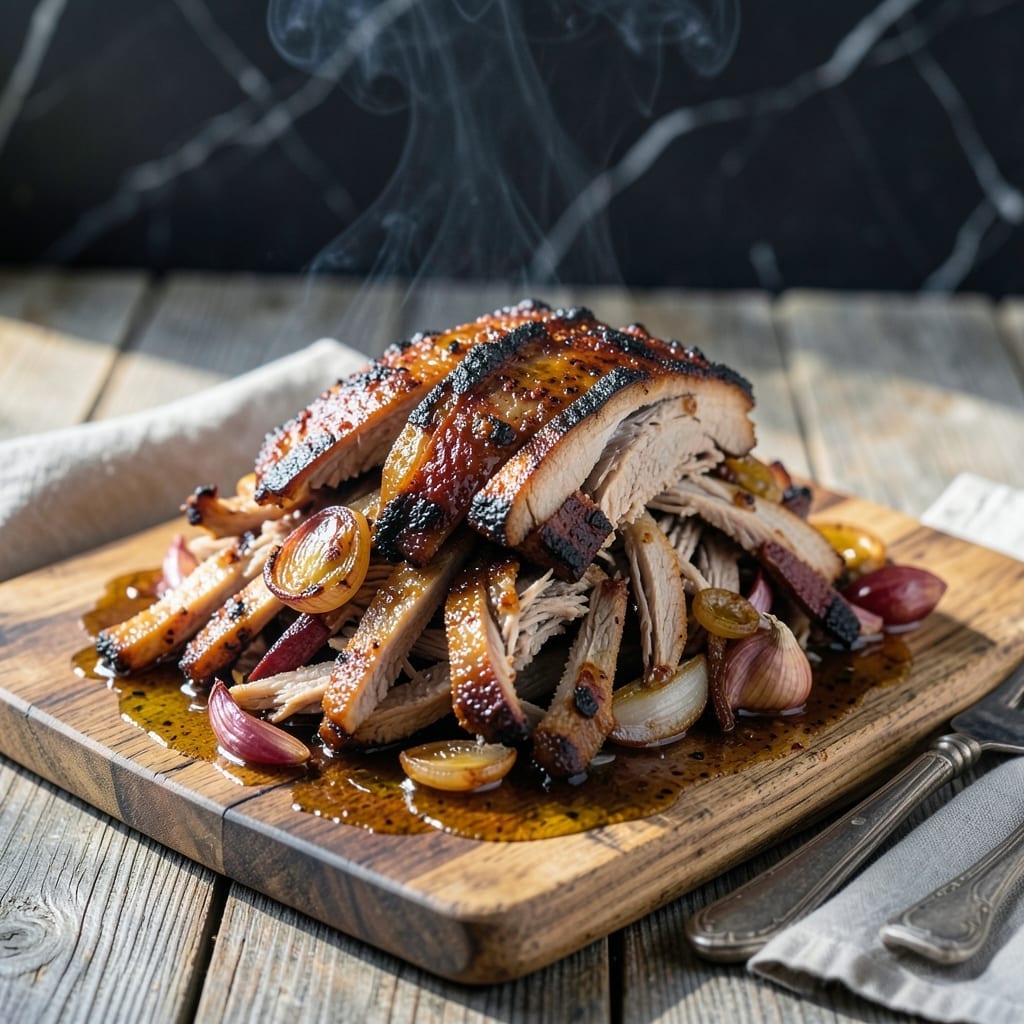
This barbecue recipe represents years of perfecting the balance between smoky depth and sweet-spicy complexity.
My molasses-based rub creates a caramelized crust while the slow smoke infuses every bite with restaurant-quality flavor.
Ingredients for Best Barbecue Recipe Ever
Restaurant-quality barbecue starts with a carefully balanced rub and quality pork shoulder.
| Ingredient | Amount | Notes |
|---|---|---|
| Pork Shoulder 🥩 | 4 lb | Bone-in or boneless, well-marbled |
| Molasses 🍯 | ½ cup | Unsulphured for cleaner flavor |
| Brown Sugar 🍚 | ½ cup | Light or dark, packed |
| Paprika 🌶️ | 2 tbsp | Sweet or smoked, freshly opened |
| Garlic Powder 🧄 | 1 tbsp | Not garlic salt substitute |
| Onion Powder 🧅 | 1 tbsp | Fine grind preferred |
| Ground Black Pepper 🌶️ | 1 tbsp | Coarsely ground for texture |
| Kosher Salt 🧂 | 2 tbsp | Diamond Crystal preferred |
| Cayenne Pepper 🔥 | 1 tsp | Adjust for heat preference |
| Chili Powder 🌶️ | 1 tbsp | Blended variety for depth |
| Apple Cider Vinegar 🍏 | ¼ cup | Balances sweetness in rub |
| Hickory Wood Chips 🪵 | 2 cups | Soaked for 30 minutes |
| Yellow Mustard 🟡 | ¼ cup | Binder for the rub |
[recipe_ingredient_scaler]
The pork shoulder is non-negotiable for this. Bone-in yields the juiciest results, though boneless works if that’s what’s available. Look for good marbling—fat equals flavor in low-and-slow cooking. Most butchers will sell it as ‘pork butt’ (despite the name, it’s shoulder). Costco carries excellent pre-trimmed cuts at a good price. Avoid pre-brined or ‘enhanced’ meats, as they can throw off the seasoning balance.
No molasses? Honey or maple syrup can substitute in a pinch, though the flavor profile shifts slightly toward sweeter. Smoked paprika instead of regular adds depth if you only have one. The apple cider vinegar is key for cutting through the richness—white vinegar at half the amount works but lacks complexity. For wood chips, pecan or cherry pair beautifully with pork if hickory isn’t available.
The rub keeps in an airtight container for up to 3 months. Soaked wood chips can be stored in the freezer for 6 months—just thaw before using. Pork shoulder freezes beautifully for 6-12 months if you find a great sale. Always bring meat to room temperature before applying the rub for even distribution.
Why You’ll Love This Recipe
- Set and Forget: I toss the pork shoulder with the dry rub, let the slow cooker do the work, and 8 hours later? Fall-apart tender barbecue.
- Sweet and Smoky: That molasses and brown sugar glaze with a kick of paprika gives it a deep, sticky-sweet finish.
- Crowd Pleaser: I’ve served this at summer cookouts and casual Tuesday dinners—everyone from picky kids to my uncle the grill snob asks for seconds.
- Leftovers for Days: Honestly, it tastes even better the next day—shredded pork freezes beautifully for sandwiches, tacos, or loaded nachos.
Step-by-Step Instructions for Smoky Molasses and Spice-Rubbed Barbecue
Master the technique that transforms simple ingredients into competition-level barbecue with a perfect bark.
Step 1: Prepare the Pork Shoulder and Create the Rub
Pat the 4 lb Pork Shoulder completely dry with paper towels to ensure the rub adheres properly. Trim any large fat caps, leaving a thin layer for flavor and moisture. This step prevents the rub from sliding off during the long cook.
In a bowl, combine the 0.5 cup Molasses, 0.5 cup Brown Sugar, 2 tbsp Paprika, 1 tbsp Garlic Powder, 1 tbsp Onion Powder, 1 tbsp Ground Black Pepper, 2 tbsp Kosher Salt, 1 tsp Cayenne Pepper, 1 tbsp Chili Powder, and 0.25 cup Apple Cider Vinegar. The vinegar cuts through the sweetness and helps the rub caramelize.
Step 2: Apply the Rub and Prepare for Smoking
Rub the 0.25 cup Yellow Mustard evenly over the pork shoulder—it acts as a binder without adding noticeable flavor. Immediately apply the molasses-spice mixture, pressing it firmly into the meat so it forms a thick, even coating. Let the seasoned pork rest at room temperature for 30-45 minutes while you prepare the smoker.
This resting period allows the rub to penetrate the surface slightly and the pork to take the chill off, promoting more even cooking. The molasses will begin to form a tacky surface, which is exactly what you want for bark development.
Step 3: Set Up the Smoker and Begin the Cook
Soak the 2 cups Hickory Wood Chips in water for 30 minutes, then drain. Preheat your smoker to 225°F using the soaked wood chips for smoke. Maintain this temperature throughout the cook—consistency is key to breaking down the collagen in the pork shoulder without drying it out.
Place the pork shoulder fat-side up on the smoker grate. The fat cap will render down during cooking, basting the meat and contributing to the bark formation. Close the lid and resist the urge to peek for at least 3 hours—every time you open the lid, you lose heat and smoke.
Step 4: Monitor and Maintain the Smoke
After 4-5 hours, check the pork’s internal temperature. You’re aiming for a steady rise to 165°F internally. If the smoker temperature drops, add more fuel gradually to avoid overshooting. The pork should develop a dark, mahogany bark by this point.
If using a water pan in your smoker, ensure it remains filled—this helps maintain humidity and prevents the pork from drying out during the long cook. Spritz the pork with a mixture of equal parts apple cider vinegar and water every 2-3 hours after the first 4 hours to enhance bark formation.
Step 5: Wrap and Finish to Perfection
When the pork reaches 165°F internally (typically after 6-8 hours), it will stall as moisture evaporates. Wrap the pork tightly in pink butcher paper or aluminum foil to push through this plateau. Return it to the smoker and continue cooking until the internal temperature reaches 200-205°F.
At this temperature, the pork should be probe-tender—when you insert a meat thermometer, it should slide in with no resistance, like butter. Remove the pork from the smoker and let it rest, wrapped, in a cooler or warm oven for at least 1 hour. This resting period allows the juices to redistribute, ensuring moist, tender meat from edge to edge.
Pro Tips For Making Best Barbecue Recipe Ever
- Low and Slow Wins: Cook that pork shoulder at 225°F for at least 8 hours—any higher and the molasses will burn before the meat gets tender. I learned this the hard way after ruining two shoulders by rushing.
- Dry Rub First: Pat the pork shoulder completely dry before rubbing with paprika and garlic powder, or the spices won’t stick and the bark won’t form. Sounds tedious, but it actually changes the outcome.
- Don’t Drown in Sauce: Resist the urge to slather on the molasses-brown sugar mix too early—wait until the last hour to avoid a sticky, burnt mess. Your future self will thank you.
- Rest Before Pulling: Let the pork shoulder rest under foil for 30-45 minutes after cooking, or all the juices will end up on the cutting board. My grandmother swore by this, and she was right.
Serving Suggestions for Leftovers
Classic BBQ Sides
I always serve this with tangy coleslaw—the crisp texture and acidity cut through the richness. Use green cabbage and carrots with a mayo-buttermilk dressing for the perfect balance. My family recipe includes a touch of apple cider vinegar to echo the rub. 🥗
Comforting Starches
Cornbread is a must—sweet, crumbly, and perfect for soaking up juices. I bake mine in a cast-iron skillet for a crispy crust. For a twist, try smoked mac and cheese with cheddar and gouda—it pairs beautifully with the pork’s depth.
Fresh Accompaniments
Balance the meal with pickled vegetables. Quick-pickle red onions and jalapeños in apple cider vinegar for 30 minutes. The brightness wakes up your palate between bites of smoky meat. I also love grilled corn with chili-lime butter. 🌽
Sauce On the Side
While this barbecue stands alone, I offer two sauces: a vinegar-based mop sauce for tang and a thick, sweet Kansas City-style for dipping. Serve them warm in small bowls. The vinegar sauce enhances the bark, while the sweet sauce adds another layer.
Beverage Pairings
For drinks, iced tea with lemon wedges is classic. I also love craft IPAs—the bitterness complements the sweetness. For non-alcoholic options, sparkling water with lime cleanses the palate between bites. 🍺
Presentation Tips
Shred the pork coarsely and pile it high on a platter. Garnish with fresh cilantro and serve with buns on the side. I like to toast the buns lightly with garlic butter for extra flavor. Let guests build their own sandwiches.
Nutrition Facts
Frequently Asked Questions
Do I need a smoker for this?
Any grill with indirect heat works. Use a charcoal grill with coals pushed to one side or a gas grill with burners off on one side. Maintain 225°F and add wood chips for smoke flavor.
How do I know when it’s done?
The pork is ready at 200-205°F internally. Test with a probe thermometer—it should slide in like butter. If it resists, keep cooking and check every 30 minutes.
Can I use a different cut of meat?
Stick with pork shoulder for best results. Pork butt (same cut) works too. Avoid lean cuts like tenderloin—they dry out during long cooking. Brisket can substitute but requires 12-14 hours.

Trained in classic French technique but raised on slow-cooked ribs and spicy rubs, she blends culinary skill with smoke and soul.
- Recipe for Boneless Pork Chops in Cast Iron Skillet: Sear and Baste to Juicy Perfection - October 3, 2026
- Recipe for Boneless Cross Rib Roast: Slow-Roasted Beef with Herb Crust - October 3, 2026
- Hamburgers in Sauce Recipe Crock Pot: Slow-Cooked Savory Delight - October 3, 2026