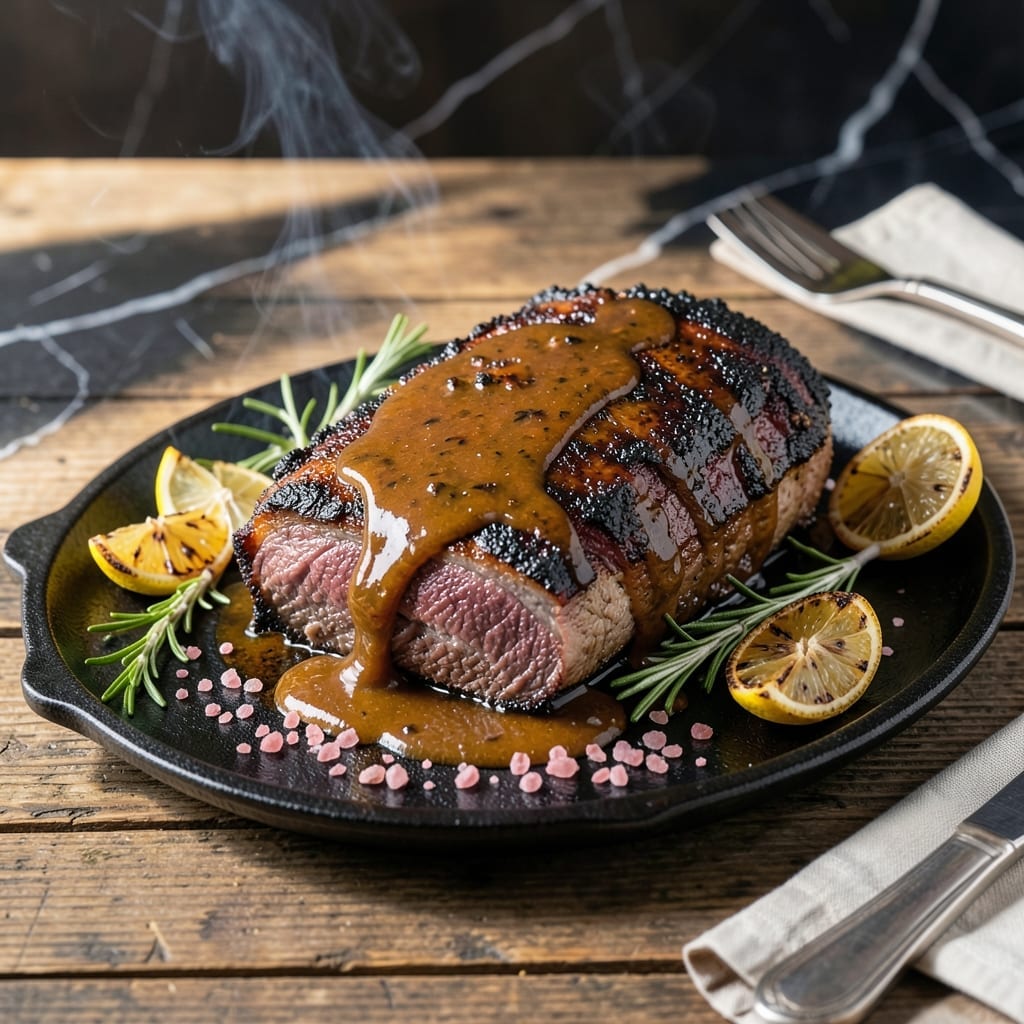
There’s nothing like the first smell of hickory smoke wafting from a Traeger, signaling a low-and-slow brisket masterpiece in the making. This method turns tough cuts into a tender, flavorful centerpiece that’s worth every minute of the wait.
I’ve refined this technique over years of backyard cookouts, blending classic pitmaster patience with precise temperature control. The Traeger’s consistent heat ensures the brisket develops a perfect bark while staying juicy inside.
The secret lies in the rub—a balance of bold spices that form a crust as rich as the meat beneath it. Resting the brisket after smoking locks in all that smoky goodness.
Serve this to a crowd, and you’ll earn the title of grill master before the first slice is gone.
Ingredients for Best Brisket Recipe for Traeger Grill
A full packer brisket and bold spices create that legendary low-and-slow masterpiece everyone craves.
| Ingredient | Amount | Notes |
|---|---|---|
| Beef Brisket 🥩 | 12 lb | Full packer cut, untrimmed |
| Hickory Wood Pellets 🪵 | 20 lb | For Traeger grill fuel |
| Coarse Kosher Salt 🧂 | ¼ cup | Diamond Crystal preferred |
| Coarse Black Pepper 🌶️ | ¼ cup | Freshly ground for best crust |
| Paprika 🌶️ | 2 tbsp | Sweet or smoked variety |
| Garlic Powder 🧄 | 2 tbsp | Not garlic salt |
| Onion Powder 🧅 | 2 tbsp | Fresh ground preferred |
| Cayenne Pepper 🔥 | 1 tbsp | Adjust for heat preference |
| Brown Sugar 🍚 | ¼ cup | Light or dark variety |
| Mustard Powder 🟡 | 1 tbsp | For rub binding |
| Apple Cider Vinegar 🍏 | ½ cup | For spritzing during cook |
| Beef Tallow 🧈 | ½ cup | For injection (optional) |
| Yellow Mustard 🟡 | ¼ cup | For binder before rub |
[recipe_ingredient_scaler]
The brisket is everything here. Full packer cut (flat + point) gives you that perfect marbling and fat cap for a 12-hour smoke. Most butchers will special-order if you ask ahead. I always grab mine from Costco—consistent quality and great price per pound. Look for a brisket with a thick, even fat cap (at least 1/4 inch) and vibrant red color throughout.
No hickory pellets? Pecan or oak work great too—just avoid mesquite (too strong for brisket). Short on a spice? Pre-made brisket rubs from Amazon or BBQ supply stores save time. The vinegar spritz can be apple juice mixed with water for a sweeter bark. Mustard powder missing? Skip it entirely—the rub will still bind fine.
Uncooked brisket keeps 2-3 days in the fridge (wrapped tightly) or can be frozen for 6 months. Once smoked, rest it wrapped in towels in a cooler for 2-4 hours before slicing. Leftovers (if any exist) hold 4-5 days refrigerated or freeze for 3 months.
Why You’ll Love This Recipe
- Set It and Forget: The Traeger does all the work—I just season the brisket with salt, pepper, and paprika, then let the hickory pellets work their magic for hours.
- Smoky Perfection: That deep hickory smoke pairs with the coarse black pepper and paprika rub to create a crust so good, I catch myself sneaking bites straight from the cutting board.
- Feeds the Crew: One brisket on the Traeger means leftovers for sandwiches, tacos, or chili—honestly, it’s the gift that keeps on giving all week.
- Budget-Friendly Luxury: A whole brisket is cheaper per pound than steaks, and with minimal seasoning, it turns into a showstopper without breaking the bank.
Step-by-Step Instructions for Smoked Brisket on Traeger Grill
Follow this proven method to achieve tender, flavorful results with a perfect bark on your Traeger.
Step 1: Trim and Apply the Rub
Trim the beef brisket fat cap to about ¼ inch thickness, using a sharp knife for precision. This protects the meat while allowing smoke penetration. I remove any hard fat deposits but leave the marbling intact for moisture and flavor.
Create a rub by combining 0.25 cup Coarse Kosher Salt, 0.25 cup Coarse Black Pepper, 2 tbsp Paprika, 2 tbsp Garlic Powder, 2 tbsp Onion Powder, 1 tbsp Cayenne Pepper, 0.25 cup Brown Sugar, and 1 tbsp Mustard Powder. Coat the brisket generously with 0.25 cup Yellow Mustard as a binder, then apply the rub, pressing firmly to adhere. Let it rest for 1 hour at room temperature.
Step 2: Set Up the Traeger for Low-and-Slow Cooking
Fill your Traeger hopper with 20 lb Hickory Wood Pellets for consistent fuel. Preheat the grill to 225°F with the lid closed for at least 15 minutes. This ensures stable temperature before adding the brisket.
Place the brisket fat-side up directly on the grill grates. Insert a meat probe into the thickest part of the flat, avoiding fat pockets. Close the lid and maintain the temperature throughout the cook. The initial smoke should be thin and blue, not thick and white.
Step 3: Smoke and Spritz for Moisture
Smoke the brisket undisturbed for 6-8 hours or until the internal temperature reaches 165-170°F. This is when the “stall” typically begins, as moisture evaporates and slows the cooking process.
Every 2-3 hours, spritz the brisket with 0.5 cup Apple Cider Vinegar mixed with water (1:1 ratio) to maintain moisture and enhance bark formation. Optional: Inject with melted 0.5 cup Beef Tallow at the start for added juiciness.
Step 4: Wrap and Finish the Cook
Once the brisket hits 165-170°F, wrap it tightly in pink butcher paper to power through the stall. Return it to the grill and continue cooking until the internal temperature reaches 200-205°F.
This stage typically takes another 4-6 hours. Use the probe test as your guide: it should slide into the meat like butter with no resistance. The total cook time usually falls between 12-16 hours, depending on the brisket size and grill conditions.
Step 5: Rest and Slice
Remove the brisket from the grill and let it rest, wrapped, in a cooler or warm oven for at least 1 hour. This allows the juices to redistribute, ensuring a moist, tender result.
Unwrap and slice against the grain into ¼-inch thick portions. The flat and point have different grain directions, so adjust your slicing angle accordingly. Serve immediately while warm for the best texture and flavor.
Pro Tips For Making Best Brisket Recipe For Traeger Grill
- Trim the Fat Cap: Leave about 1/4 inch of fat on the brisket to protect the meat, but trim any thick chunks—hickory smoke won’t penetrate through a half-inch layer. I learned this the hard way after my first brisket came out tasting like salty lard. —
- Start at 225°F: Set your Traeger to 225°F and stick to it; low and slow is non-negotiable for breaking down the connective tissue. After burning one batch at 275°F, I finally figured out patience pays off. —
- Skip the Sauce Early: Resist the urge to mop with sauce until the last hour—paprika in the rub needs time to form that dark, flavorful bark. Sounds weird, but it works. —
- Rest Under Foil: Pull the brisket at 203°F internal temp, wrap it in foil, and give it a solid 2 hours in a cooler or warm oven. My grandmother swore by this, and she was right: it keeps the juices from turning into a sad puddle on the cutting board.
Storing and Reheating This Dish
Refrigerator Storage
Let your brisket cool for no more than 2 hours before transferring to airtight containers. Store in the fridge at 40°F or below for up to 4-5 days. The flavors deepen overnight, making leftovers even more delicious. ❄️
Freezer Storage
For longer storage, wrap slices tightly in heavy-duty aluminum foil and place in freezer bags. Brisket freezes well for up to 3 months without losing quality. Squeeze out excess air to prevent freezer burn.
Stovetop Reheating
My preferred method: place brisket in a skillet with ¼ cup beef broth or water. Heat over medium-low heat for 8-10 minutes, covered, until reaching 165°F. This keeps the meat moist and tender.
Oven Reheating
Preheat oven to 325°F. Wrap brisket in foil with 2 tbsp apple juice or broth, then heat for 20-25 minutes. This method works great for larger portions and maintains that smoky flavor. 🔥
Microwave Reheating
For quick meals, place slices on a microwave-safe plate with a damp paper towel. Heat on 50% power for 1-2 minutes, checking frequently. Add a splash of broth if it looks dry.
Serving from Rest
If you’ve rested the brisket properly (as we covered earlier), it’ll stay warm for 2-4 hours in a cooler. Slice just before serving to retain all those precious juices and smoky aromas.
Nutrition Facts
Frequently Asked Questions
What temperature should the Traeger be set to?
Set your Traeger to a consistent 225°F for the entire cook. This low-and-slow approach ensures tender meat and a perfect bark without overcooking the exterior.
How do I know when the brisket is done?
Use a meat probe: it should slide in like butter when the internal temp hits 200-205°F. The probe test is more reliable than time alone because every brisket cooks differently.
Do I need to trim the fat cap?
Yes, trim the fat cap to about ¼ inch thickness. This allows smoke to penetrate while still protecting the meat from drying out during the long cook.
Can I use a different wood pellet flavor?
Pecan or oak work well, but avoid mesquite—it’s too strong for brisket. Hickory is classic, but

Trained in classic French technique but raised on slow-cooked ribs and spicy rubs, she blends culinary skill with smoke and soul.
- Recipe for Boneless Pork Chops in Cast Iron Skillet: Sear and Baste to Juicy Perfection - October 3, 2026
- Recipe for Boneless Cross Rib Roast: Slow-Roasted Beef with Herb Crust - October 3, 2026
- Hamburgers in Sauce Recipe Crock Pot: Slow-Cooked Savory Delight - October 3, 2026