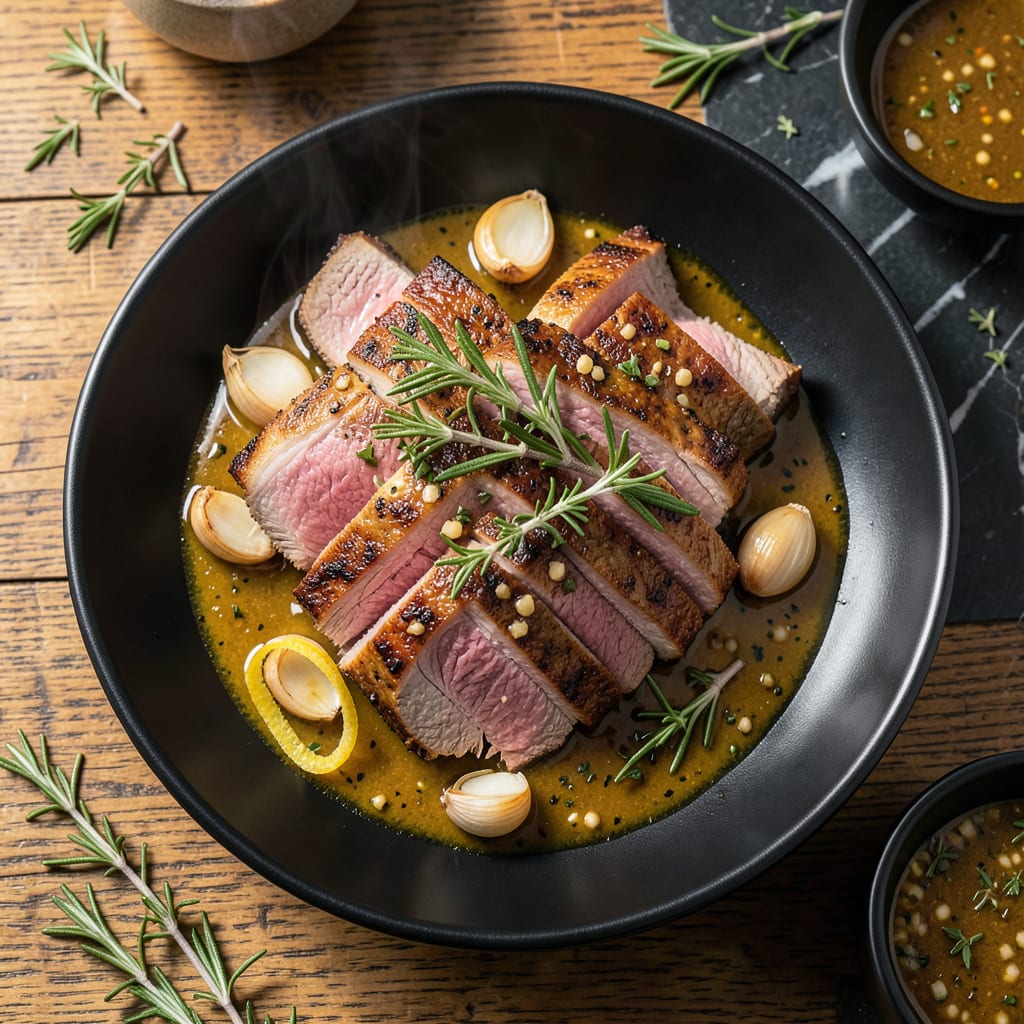
This herb-crusted pork tenderloin delivers tender, moist results every time through a proven technique. The secret lies in proper seasoning and precise cooking temperatures.
I developed this method to ensure the meat stays juicy while forming a flavorful crust. It’s the kind of dish that impresses without requiring advanced skills.
Ingredients for Best Damn Pork Tenderloin
Fifteen ingredients transform pork tenderloin into a restaurant-quality centerpiece with perfect texture.
| Ingredient | Amount | Notes |
|---|---|---|
| Pork Tenderloin 🥩 | 1 ½ lb | Trimmed of silver skin |
| Kosher Salt 🧂 | 1 ½ tsp | Diamond Crystal preferred |
| Freshly Ground Black Pepper 🌶️ | 1 tsp | Coarse grind for texture |
| Garlic Cloves 🧄 | 4 cloves | Minced to fine paste |
| Fresh Rosemary 🌿 | 2 tbsp | Finely chopped, stems removed |
| Fresh Thyme Leaves 🍃 | 2 tbsp | Stripped from stems |
| Dijon Mustard 🟡 | 2 tbsp | Whole grain preferred |
| Extra-Virgin Olive Oil 🫒 | 3 tbsp | Divided for searing and crust |
| Dry White Wine 🍷 | ½ cup | For deglazing pan |
| Unsalted Butter 🧈 | 2 tbsp | For basting during cooking |
| Shallot 🧅 | 1 whole | Finely minced for sauce |
| Low-Sodium Chicken Broth 🍲 | ½ cup | For pan sauce reduction |
| Whole Grain Mustard 🟡 | 1 tsp | For finishing sauce |
| Fresh Parsley 🌿 | ¼ cup | Chopped, for garnish |
[recipe_ingredient_scaler]
The pork tenderloin quality is paramount. Look for even coloring and minimal fat—avoid pieces with excessive marbling as they can dry out. Whole Foods and Costco consistently carry premium cuts. For the herbs, organic rosemary and thyme from the produce section have superior aroma. Always trim the silver skin yourself (butchers often leave it on) for even cooking and better crust adhesion.
Out of fresh herbs? Dried at one-third the quantity works in a pinch, though the crust won’t be as vibrant. No white wine? Substitute apple cider vinegar diluted with water (1:3 ratio). For the mustard, regular Dijon replaces whole grain acceptably. The butter can be omitted entirely—additional olive oil maintains moisture. Shallots? Red onion offers similar sweetness when minced finely.
The tenderloin benefits from a 30-minute rest at room temperature before cooking. Store uncooked pork in its original packaging for up to 3 days in the fridge. Leftovers? Slice and reheat gently in a skillet with a splash of broth to maintain moisture. The herb crust holds its flavor for 24 hours when properly stored.
Why You’ll Love This Recipe
- I’ll be real: the slices reheat beautifully for sandwiches the next day.
- One Pan Wonder: I just season, sear, and roast—no fancy steps, no extra dishes to wash.
- Garlic-Rosemary Magic: The fresh rosemary and garlic create this ridiculous crust that’ll have everyone asking for the recipe.
- Weeknight Hero: Honestly, it’s my go-to for busy Tuesdays when I need something impressive but unfussy.
Step-by-Step Instructions for Herb-Crusted Pork Tenderloin
Master these techniques for a perfectly seared crust and juicy interior every time.
Step 1: Create the Herb and Mustard Crust
Pat the 1.5 lb Pork Tenderloin dry with paper towels. Trim any remaining silver skin if needed. In a small bowl, combine the 2 tbsp Dijon Mustard, 2 tbsp Fresh Rosemary, 2 tbsp Fresh Thyme Leaves, 4 cloves Garlic Cloves (minced), 1.5 tsp Kosher Salt, and 1 tsp Freshly Ground Black Pepper with 2 tbsp Extra-Virgin Olive Oil.
This paste should be thick and fragrant. I spread it evenly over the entire surface of the pork, pressing it in so it adheres completely. This herb crust creates an aromatic barrier that locks in moisture while forming a flavorful sear.
Step 2: Sear the Tenderloin to Perfection
Heat the remaining 1 tbsp Extra-Virgin Olive Oil in a large oven-safe skillet over medium-high heat until shimmering. Add the pork and sear on all sides for 2-3 minutes per side until deep golden brown.
Don’t rush—you want a uniform crust. I add the 2 tbsp Unsalted Butter during the last minute of searing and baste the pork continuously. The butter foams will create a nutty aroma and enhance the crust’s richness.
Step 3: Finish in the Oven and Rest
Transfer the skillet to a preheated 400°F oven. Roast for 12-15 minutes or until the internal temperature reaches 145°F. Remove from the oven and transfer the pork to a cutting board.
Let it rest for 10 minutes under a loose foil tent. This resting period allows the juices to redistribute, ensuring every slice remains tender and moist. The pork will carry over to 150-155°F during this time.
Step 4: Craft the Pan Sauce
Place the skillet over medium heat and add the 1 whole Shallot (minced). Sauté for 1-2 minutes until translucent. Deglaze with the 0.5 cup Dry White Wine, scraping up all browned bits.
Simmer until reduced by half, then add the 0.5 cup Low-Sodium Chicken Broth and 1 tsp Whole Grain Mustard. Cook for 3-4 minutes until slightly thickened. Swirl in any remaining butter from the skillet for a glossy finish.
Slice the pork into 1-inch thick medallions and arrange on a platter. Drizzle the sauce over the top and garnish with the 0.25 cup Fresh Parsley for a vibrant finish.
Pro Tips For Making Best Damn Pork Tenderloin
- Sear It Hot: Use a ripping hot pan with oil just shy of smoking—this gives the pork tenderloin that deep golden crust that locks in all the juices. I learned this the hard way after too many pale, steamed-looking cuts.
- Crush the Garlic: Smash the garlic cloves with the flat of your knife before mincing—it releases way more flavor into the rosemary rub. Sounds weird, but it works.
- Don’t Overcook It: Pull the tenderloin at 140°F internal temp—it’ll coast to 145°F while resting. After burning three batches, I finally figured out pork keeps cooking off the heat.
- Rest Under Foil: Tent the cooked pork with foil and give it a solid 10 minutes before slicing. My grandmother swore by this, and she was right: it stays juicy every time.
Dietary Considerations for This Recipe
Gluten-Free Friendly
This recipe is naturally gluten-free as written, with no wheat-based ingredients in the crust or sauce. The Dijon mustard and white wine are typically safe, but always verify labels for hidden gluten. I source my mustard from Maille for peace of mind. 💡
Dairy-Free Option
To make this dairy-free, simply swap the 2 tbsp Unsalted Butter for olive oil or vegan butter. The crust will still form beautifully, and the pan sauce remains rich. Miyoko’s makes an excellent plant-based butter that browns well.
Low-Carb Perfect
With only 3g net carbs per serving (mostly from the wine and shallot), this fits perfectly into keto or low-carb diets. Skip the pan sauce reduction if you’re strictly counting, or reduce the wine to 2 tbsp for even fewer carbs.
Allergen Notes
The primary allergens here are mustard (in both Dijon and whole grain) and sulfites (in wine). For mustard allergies, replace with 1 tbsp mayonnaise mixed with 1 tsp apple cider vinegar. Use apple juice for deglazing instead of wine.
Sodium Considerations
To reduce sodium, use low-sodium Dijon and cut the Kosher Salt to 1 tsp. The low-sodium chicken broth already helps keep levels in check. I find the herbs provide enough flavor that the reduction isn’t noticeable.
Protein-Packed
A 4-ounce serving delivers about 26g of protein with only 150 calories. This makes it ideal for high-protein diets. The lean tenderloin cut ensures you’re getting quality protein without excessive fat. 💪
Nutrition Facts

Trained in classic French technique but raised on slow-cooked ribs and spicy rubs, she blends culinary skill with smoke and soul.
- Recipe for Boneless Pork Chops in Cast Iron Skillet: Sear and Baste to Juicy Perfection - October 3, 2026
- Recipe for Boneless Cross Rib Roast: Slow-Roasted Beef with Herb Crust - October 3, 2026
- Hamburgers in Sauce Recipe Crock Pot: Slow-Cooked Savory Delight - October 3, 2026