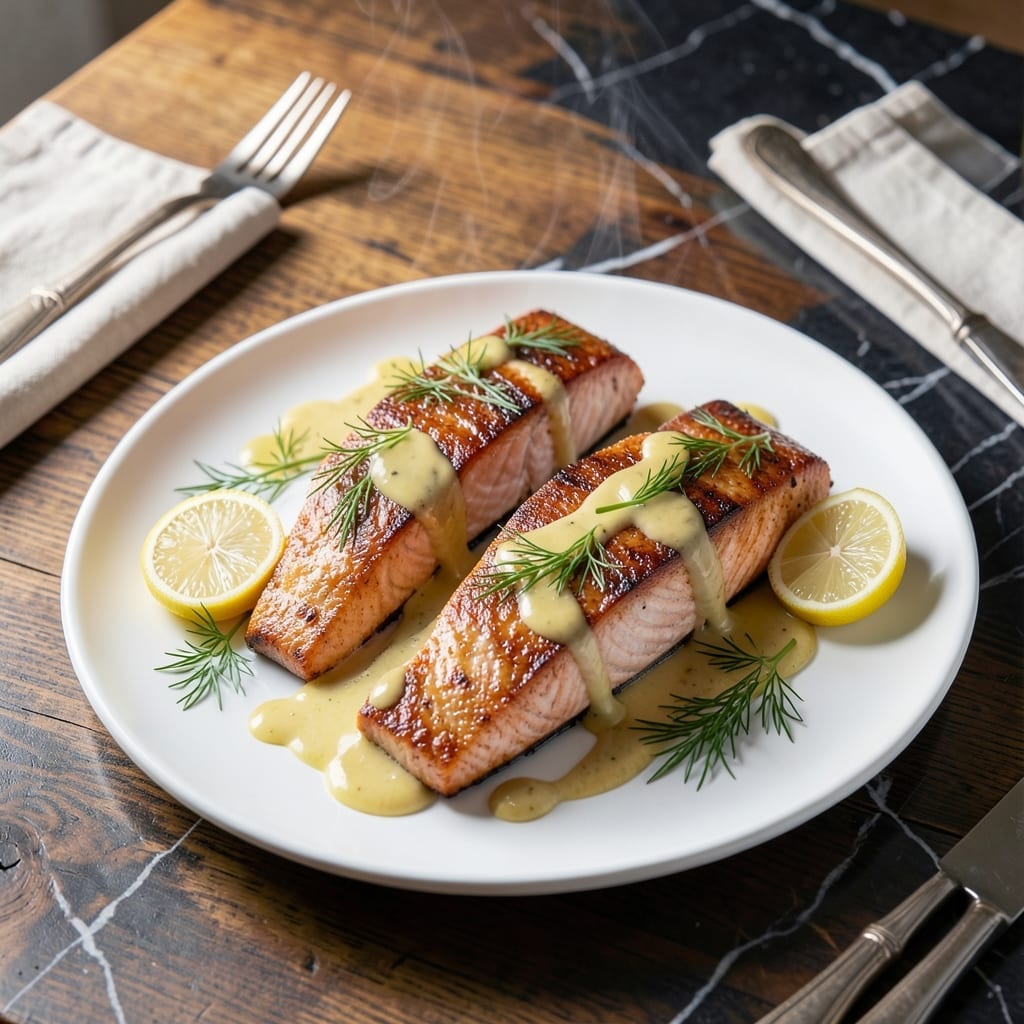
This salmon recipe delivers flaky, buttery perfection with minimal effort. The garlicky butter glaze elevates each bite to new heights.
I’ve refined this method to ensure best results every time—crisp skin, tender flesh, and a rich, aromatic finish.
Ingredients for Best Damn Salmon
Center-cut salmon fillets meet a bright, garlicky butter glaze for restaurant-quality results at home.
| Ingredient | Amount | Notes |
|---|---|---|
| Salmon Fillets 🐟 | 1 ½ lb | Skin-on, center-cut preferred |
| Unsalted Butter 🧈 | ½ cup | European-style for richness |
| Garlic Cloves 🧄 | 4 cloves | Minced finely for glaze |
| Fresh Lemon 🍋 | 1 whole | Zested and juiced |
| Fresh Dill 🌿 | ¼ cup | Chopped, stems removed |
| Dijon Mustard 🟡 | 1 tbsp | Smooth, not whole grain |
| Honey 🍯 | 1 tbsp | Raw or pure preferred |
| Kosher Salt 🧂 | 1 tsp | Diamond Crystal brand recommended |
| Freshly Ground Black Pepper 🌶️ | ½ tsp | Coarse grind preferred |
| Olive Oil 🫒 | 1 tbsp | Extra-virgin for high heat |
| Shallot 🧅 | 1 whole | Minced for depth of flavor |
| Dry White Wine 🍷 | ¼ cup | Sauvignon Blanc or Pinot Grigio |
[recipe_ingredient_scaler]
The salmon quality is non-negotiable here. Wild-caught sockeye or king salmon from Whole Foods or a trusted fishmonger ensures the flakiest texture and richest flavor. Skin-on fillets hold together better during cooking, and center-cut pieces provide uniform thickness for even doneness. Always ask for the freshest catch of the day (the eyes should be clear, flesh should spring back when pressed).
No white wine? Substitute chicken broth with a splash of lemon juice—it won’t be identical, but it’ll work. Fresh dill can be swapped for fresh tarragon at one-to-one ratio for a slightly different herbal note. Honey averse? Maple syrup offers a similar sweetness profile. The Dijon mustard is key for emulsifying the glaze, but whole-grain mustard adds pleasant texture if preferred.
Salmon is best cooked immediately, but the fillets keep 1-2 days in the fridge if wrapped tightly. The glaze can be made ahead and stored separately for up to 3 days. Leftovers? Gently reheat in a low oven to preserve moisture—never microwave (it’ll dry out the fish).
Why You’ll Love This Recipe
- One Pan Wonder: I toss everything on a single sheet pan—salmon, butter, garlic, lemon—and let the oven do the work. One pan, minimal cleanup, maximum flavor.
- Buttery Garlic Heaven: The combo of melted butter, fresh garlic, and dill is ridiculous. That first bite with the crispy edges? I make it just to have leftovers.
- Weeknight Hero: It’s my go-to for busy evenings. Between us, it’s fancy enough for guests but unfussy enough for a Tuesday.
- Leftover Luxury: The next-day salmon flakes into salads or wraps beautifully. Honestly, I sometimes double the batch just for this.
Step-by-Step Instructions for Garlicky Butter Glazed Salmon
This method delivers perfectly flaky salmon with a rich, aromatic glaze every time.
Step 1: Prepare and Season the Salmon Fillets
Pat the 1.5 lb salmon fillets completely dry with paper towels—this ensures a good sear. I always use skin-on, center-cut pieces for even cooking and presentation.
Season both sides evenly with the 1 tsp kosher salt and 0.5 tsp freshly ground black pepper. The salt not only seasons but also helps draw out surface moisture for better browning. Let the seasoned fillets sit at room temperature for 10 minutes while you prep the remaining ingredients.
Step 2: Sear the Salmon Skin-Side Down
Heat the 1 tbsp olive oil in a large skillet over medium-high heat until it shimmers but doesn’t smoke. Place the salmon in the pan skin-side down, pressing gently with a spatula for 10 seconds to prevent curling.
Cook undisturbed for 4-5 minutes until the skin is deep golden brown and crisp. The fish will release easily from the pan when it’s ready to flip. Don’t be tempted to move it prematurely—this is how you get that perfect crispy skin that defines the best salmon dishes.
Step 3: Create the Garlicky Butter Glaze
While the salmon cooks, melt the 0.5 cup unsalted butter in a small saucepan over medium heat. Add the minced 1 whole shallot and cook for 2 minutes until translucent.
Stir in the minced 4 cloves garlic cloves and cook for 30 seconds until fragrant but not browned. Add the 1 tbsp Dijon mustard, 1 tbsp honey, zest of the 1 whole fresh lemon, and 0.25 cup dry white wine. Simmer for 2-3 minutes until slightly reduced, then stir in the 0.25 cup fresh dill.
Step 4: Finish Cooking and Glaze the Salmon
Flip the salmon and cook for 2-3 minutes on the flesh side. Pour the butter glaze over the fillets, tilting the pan slightly to spoon the sauce over the top repeatedly for 1-2 minutes.
The salmon is done when it reaches an internal temperature of 125-130°F and flakes easily with a fork. The glaze should be thick enough to coat the back of a spoon with a glossy sheen. Squeeze the juice from the 1 whole fresh lemon over the top just before serving.
Pro Tips For Making Best Damn Salmon
- Skin Side Down First: Start cooking the salmon with the skin side down in a hot pan—this guarantees a crispy exterior while keeping the flesh tender. I learned this the hard way after flipping too early and ending up with soggy skin.
- Pat It Dry: Before seasoning, pat the salmon fillets very dry with a paper towel. More moisture on the surface means less sear, and nobody wants steamed salmon when they could have that golden crust.
- Pull It Early: Take the salmon off the heat when it’s still slightly translucent in the center—it’ll keep cooking from residual heat. After overcooking a few batches, I finally figured out it’s done when it flakes easily but still looks a little raw inside.
- Butter Last: Add the butter, garlic, and dill only in the last 2 minutes of cooking. Sounds weird, but it works: the butter won’t burn, and the garlic stays fragrant instead of bitter.
Serving Suggestions for best damn salmon
Plating Perfection
Transfer each fillet to a warm plate, skin-side down, to maintain that crisp texture. I use white plates to make the golden glaze pop. Spoon extra sauce over the top, letting it drip naturally down the sides for a restaurant-worthy presentation. 💛
Garnish Like a Pro
Sprinkle with reserved fresh dill and a few lemon wheels for color contrast. A pinch of flaky sea salt on top adds a final crunch and visual interest. Honestly, this simple touch elevates the dish from home-cooked to chef-level.
Side Dish Pairings
Serve with roasted asparagus or steamed green beans to soak up that glorious glaze. I love adding a side of wild rice pilaf for texture contrast. The buttery sauce pairs beautifully with these simple sides.
Wine Pairing
A crisp Sauvignon Blanc or Pinot Grigio cuts through the richness perfectly. For red lovers, a light Pinot Noir works surprisingly well. I always keep a bottle of New Zealand Sauvignon Blanc on hand for salmon nights. 🍷
Bread for Sauce
Don’t waste a drop of that glaze—serve with crusty bread or garlic naan for dipping. I like to toast slices of baguette and rub them with a raw garlic clove for extra flavor.
Nutrition Facts
Frequently Asked Questions
What temperature should the salmon reach?
Cook until it hits 125-130°F internally. This ensures tender, flaky texture without overcooking. Use a meat thermometer for perfect results every time.
Can I use frozen salmon fillets?
Yes, but thaw completely in the fridge overnight first. Pat very dry before cooking to achieve that coveted crispy skin. Never cook from frozen.
How do I prevent the glaze from breaking?
Keep heat at medium when making the sauce. If it separates, whisk in 1 tsp cold water off heat to re-emulsify. The Dijon mustard helps stabilize it.
What if my salmon sticks to the pan?
Your pan wasn’t hot enough or the fish wasn’t dry. Heat oil until shimmering, then wait 30 seconds more before adding salmon. Don’t move it for 4-5 minutes.

Trained in classic French technique but raised on slow-cooked ribs and spicy rubs, she blends culinary skill with smoke and soul.
- Recipe for Boneless Pork Chops in Cast Iron Skillet: Sear and Baste to Juicy Perfection - October 3, 2026
- Recipe for Boneless Cross Rib Roast: Slow-Roasted Beef with Herb Crust - October 3, 2026
- Hamburgers in Sauce Recipe Crock Pot: Slow-Cooked Savory Delight - October 3, 2026