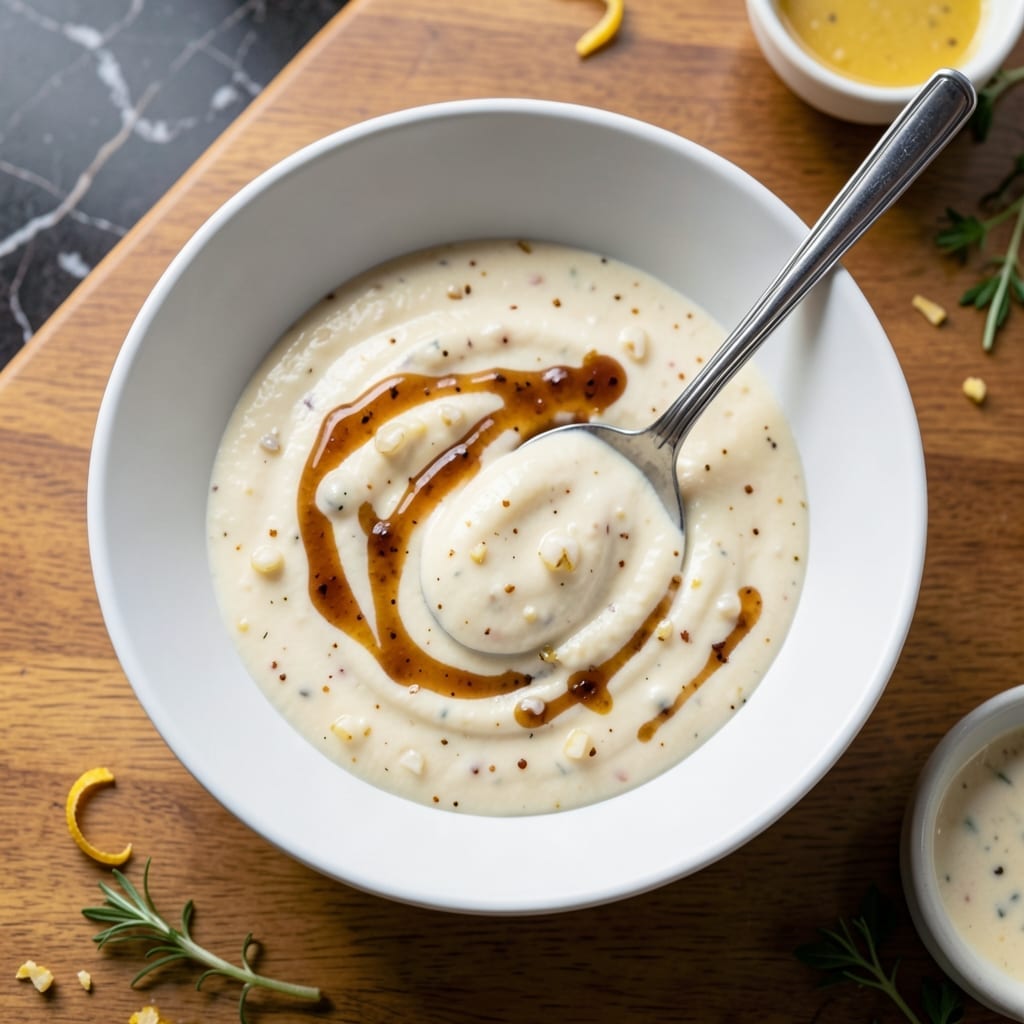
This parmesan emulsion dressing represents the pinnacle of salad accompaniments, delivering a tangy depth that elevates any green.
Its stable emulsion ensures it stays fresh for days, with rich parmesan and bright acidity creating a perfectly balanced flavor profile.
Ingredients for Best Dressing Recipe Ever
These premium ingredients create a restaurant-quality dressing with lasting freshness and vibrant flavor.
| Ingredient | Amount | Notes |
|---|---|---|
| Parmesan Cheese 🧀 | ¾ cup | Freshly grated from block |
| Dijon Mustard 🟡 | 2 tbsp | Smooth, high-quality variety |
| White Wine Vinegar 💧 | ¼ cup | Balances richness with acidity |
| Lemon Juice 🍋 | 2 tbsp | Freshly squeezed for brightness |
| Garlic Cloves 🧄 | 2 cloves | Minced for pungent depth |
| Extra-Virgin Olive Oil 🫒 | 1 cup | High-quality, fruity finish |
| Honey 🍯 | 1 tbsp | Adds subtle sweetness |
| Worcestershire Sauce 🍶 | 1 tsp | Enhances umami depth |
| Salt 🧂 | ½ tsp | Fine sea salt preferred |
| Black Pepper 🌶️ | ½ tsp | Freshly ground for complexity |
[recipe_ingredient_scaler]
The Parmesan is non-negotiable for authentic flavor—Parmigiano-Reggiano from Whole Foods or a specialty cheese shop delivers the best results. Grate it fresh from a wedge (the pre-grated stuff lacks intensity). The olive oil should be fruity and high-quality; California Olive Ranch or Colavita are excellent choices. For the vinegar, white wine vinegar provides the clean acidity this emulsion needs to balance the richness.
No white wine vinegar? Champagne vinegar at equal volume works well. If you’re avoiding honey, agave nectar or maple syrup can substitute, though the flavor profile will shift slightly. For a dairy-free version, nutritional yeast at one-third the amount replaces Parmesan, though the texture will differ. The Dijon mustard can be swapped for whole-grain mustard for a rustic touch, but avoid yellow mustard—it’s too mild.
This emulsion holds beautifully for 5-7 days in the fridge. Store it in an airtight container, preferably glass, to maintain freshness. If separation occurs (natural for emulsions), simply whisk or shake vigorously to recombine before use. Do not freeze, as it may alter the texture permanently.
Why You’ll Love This Recipe
- Five-Minute Whisk: I just dump everything in a jar, shake, and it’s ready—no blender, no fuss.
- Tangy Perfection: That sharp Parmesan with the bright lemon and Dijon? Honestly, I could drink it.
- Salad’s Best Friend: I drizzle it on greens, roasted veggies, even grilled chicken. Between us, it’s my secret weapon.
- Keeps Like a Champ: Makes a full jar, stays fresh in the fridge for a week, and tastes just as good on day five.
Step-by-Step Instructions for Tangy Parmesan Dressing
Master the emulsion technique that separates good dressings from extraordinary ones.
Step 1: Build the Acid Base with Aromatics
In a medium bowl, combine the 0.25 cup White Wine Vinegar, 2 tbsp Lemon Juice, 2 cloves minced Garlic Cloves, 2 tbsp Dijon Mustard, 1 tbsp Honey, 1 tsp Worcestershire Sauce, 0.5 tsp Salt, and 0.5 tsp Black Pepper. Whisk vigorously for 30 seconds until the mixture is uniform and slightly frothy.
The mustard acts as your emulsifier—this is what will bind the oil and vinegar together permanently. Let this mixture sit for 5 minutes to allow the garlic to infuse its pungent depth into the acids. You’ll notice the color deepen slightly as the flavors meld.
Step 2: Incorporate the Parmesan for Creamy Depth
Add the 0.75 cup Parmesan Cheese to the bowl and whisk again for 1-2 minutes until the cheese fully dissolves into the mixture. Use freshly grated Parmesan from a block—pre-grated varieties contain anti-caking agents that prevent proper emulsification.
The mixture will thicken noticeably as the cheese melts. You’re creating a stable foundation that will accept the oil without separating. If any cheese clumps remain, press them against the bowl side with the whisk to break them apart completely.
Step 3: Slowly Emulsify the Olive Oil
With one hand, begin whisking the mixture rapidly in a circular motion. With your other hand, drizzle in the 1 cup Extra-Virgin Olive Oil in a very thin, steady stream—this should take about 2-3 minutes. The key is adding the oil slower than you think necessary.
Watch for the mixture to transform from a thin liquid to a thick, creamy emulsion that coats the back of a spoon. If it begins to separate, stop adding oil and whisk vigorously until it comes back together. The finished dressing should have the consistency of heavy cream and a glossy, homogeneous appearance.
Step 4: Test and Adjust the Emulsion
Dip a piece of lettuce into the dressing and let it sit for 1 minute. The dressing should cling to the leaf without sliding off or pooling at the bottom. If it’s too thick, whisk in 1 tsp of water at a time until it reaches your desired consistency.
Taste and adjust seasoning if needed, though the initial measurements should yield a perfectly balanced flavor. The dressing will keep its emulsion in the refrigerator for up to 1 week, though it’s best consumed within 3 days for peak freshness and flavor.
Pro Tips For Making Best Dressing Recipe Ever
- Whisk Like Crazy: I learned this the hard way—stream the oil in very slowly while whisking constantly to emulsify the dressing properly. A broken dressing is a sad dressing.
- Grate Fresh Parmesan: Skip the pre-grated stuff; freshly grated Parmesan melts into the dressing better and doesn’t leave that weird gritty texture.
- Mince the Garlic Fine: After burning a few batches, I now mince the garlic super fine or even press it to avoid harsh, bitter chunks in the finished dressing.
- Bloom the Mustard: Sounds weird, but it works: let the Dijon mustard sit in the vinegar and lemon juice for 5 minutes before adding oil—it mellows the sharpness and deepens the flavor.
Serving Suggestions for This best dressing recipe ever
🥘 Plating Styles
This versatile dressing can shine in any setting. For a casual meal, drizzle it over a simple garden salad or use it as a dip for veggie sticks. In a formal setting, elegantly pool it beneath a bed of mixed greens or artfully swirl it around the plate for a restaurant-worthy presentation. For buffet-style service, keep it in a small pitcher or cruet for easy self-serving.
🌿 Garnishing Techniques
Enhance the visual appeal with fresh herbs like parsley, chives, or dill sprinkled on top. For a touch of sophistication, add a swirl of balsamic reduction or a dusting of grated Parmesan. Edible flowers or microgreens can also add a pop of color and freshness.
🍽️ Portion Sizes
For individual servings, offer 2-3 tablespoons per person as a salad dressing or dip. For family-style meals, serve in a larger bowl with a ladle or spoon for easy sharing. Adjust portions based on the dish—light salads need less, while hearty grain bowls can handle more.
🌡️ Serving Temperature
This dressing tastes best at room temperature, allowing the flavors to meld beautifully. If refrigerated, let it sit for 10-15 minutes before serving. For the best texture, give it a quick whisk or shake to re-emulsify before drizzling. Avoid heating, as it may cause separation.
Nutrition Facts

Trained in classic French technique but raised on slow-cooked ribs and spicy rubs, she blends culinary skill with smoke and soul.
- Recipe for Boneless Pork Chops in Cast Iron Skillet: Sear and Baste to Juicy Perfection - October 3, 2026
- Recipe for Boneless Cross Rib Roast: Slow-Roasted Beef with Herb Crust - October 3, 2026
- Hamburgers in Sauce Recipe Crock Pot: Slow-Cooked Savory Delight - October 3, 2026