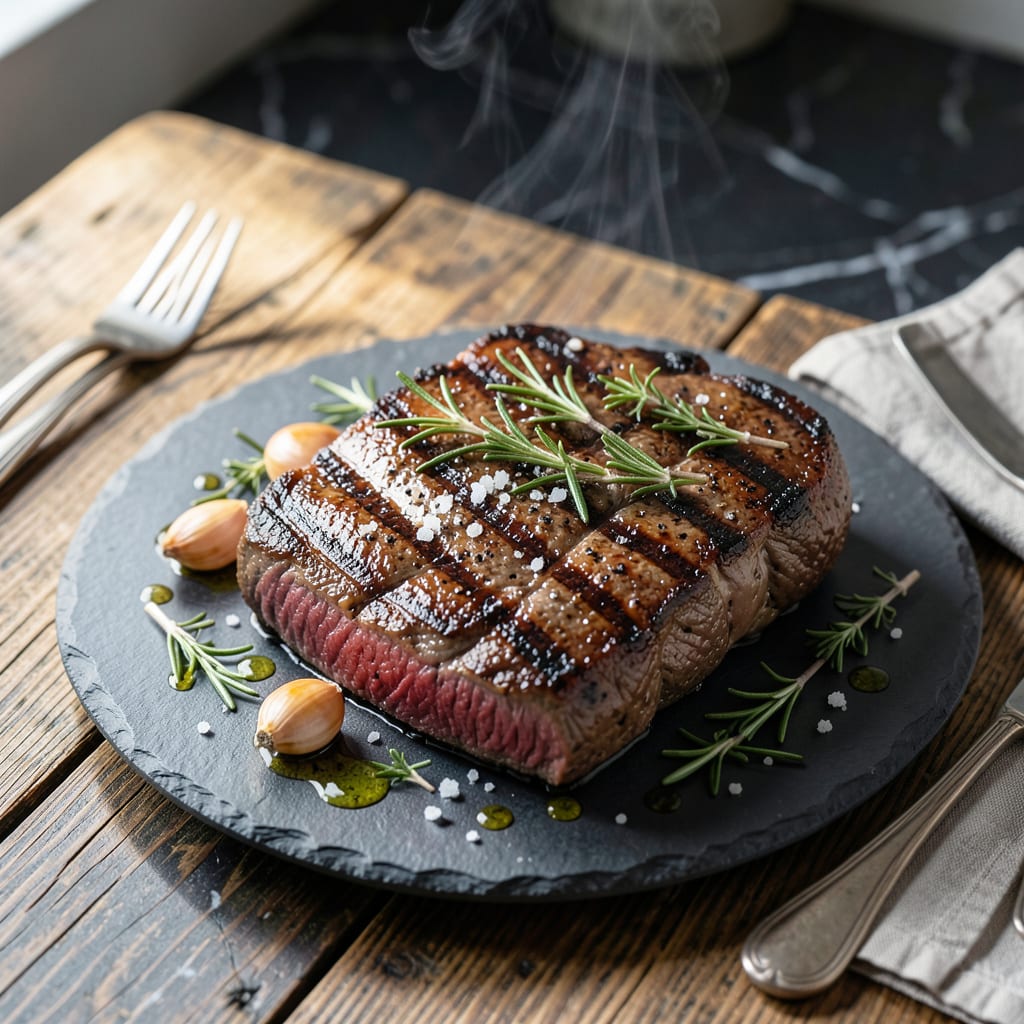
This grilled ribeye delivers a steakhouse-level crust and deeply juicy flavor through precise high-heat technique and proper resting time. I’ve perfected this method over countless cookouts, balancing smoky char with tender interior.
The secret lies in a hot grill, minimal manipulation, and letting the meat rest before slicing. This approach transforms quality ribeye into a centerpiece worthy of any dinner table, with results that rival professional kitchens.
Ingredients for Best Grilled Ribeye
Prime ribeye plus bold seasonings create a steakhouse-quality centerpiece with minimal effort.
| Ingredient | Amount | Notes |
|---|---|---|
| Ribeye Steak 🥩 | 2 lb | Bone-in preferred for flavor |
| Kosher Salt 🧂 | 1 ½ tbsp | Diamond Crystal preferred |
| Coarse Black Pepper 🌶️ | 1 tbsp | Freshly ground for best results |
| Garlic Cloves 🧄 | 4 cloves | Smashed, peeled |
| Fresh Rosemary Sprigs 🌿 | 2 whole | Stems intact for grilling |
| Fresh Thyme Sprigs 🍃 | 4 whole | Stems intact for grilling |
| Extra-Virgin Olive Oil 🫒 | ¼ cup | High smoke point preferred |
| Unsalted Butter 🧈 | 4 tbsp | For basting during grilling |
| Vegetable Oil 🫒 | 1 tbsp | For grill grate cleaning |
| Red Wine Vinegar 🍷 | 1 tsp | For finishing acidity |
| Flaky Sea Salt 🧂 | ½ tsp | For finishing sprinkle |
[recipe_ingredient_scaler]
The ribeye is non-negotiable here. USDA Prime or Choice with thick cut (1.5-2 inches) and good marbling ensures juiciness. Butcher shops or Whole Foods are ideal for selection, but most supermarkets carry acceptable cuts. Bone-in adds flavor, but boneless works if that’s your preference. Look for bright red color with white fat streaks—avoid anything brown or gray.
No fresh herbs? Dried rosemary and thyme at one-third the amount work in a pinch. Short on garlic? Garlic powder at half the quantity can substitute. The butter is key for that glossy crust—don’t skip it. For oil, any high smoke point variety (avocado, grapeseed) works if you’re out of vegetable oil. The vinegar adds brightness; lemon juice is an acceptable alternative.
Let the steak rest 10-15 minutes before slicing—this keeps it juicy. Store raw ribeye in the fridge for up to 3 days or freeze for 6-12 months. Leftovers? Rare, but they’ll keep 4-5 days refrigerated. Reheat gently in a skillet to preserve texture.
Why You’ll Love This Recipe
- 5-Minute Seasoning: I just rub the ribeye with kosher salt, coarse pepper, crushed garlic, and fresh rosemary—no marinade, no waiting.
- Crispy, Juicy Bite: That thick cut sears up with a peppery crust while staying pink and buttery inside.
- Backyard Star: It’s my go-to for summer dinners, date night, or even a solo treat on the patio.
- Leftovers? Yes Please: Cold slices make the next day’s sandwiches ridiculous—no reheating needed.
Step-by-Step Instructions for Grilled Ribeye
Master these techniques to achieve a steakhouse-quality crust and perfectly juicy interior every time.
Step 1: Season and Temper the Ribeye
Pat the 2 lb ribeye steak thoroughly dry with paper towels—this is crucial for developing a proper crust. Season generously with the 1.5 tbsp kosher salt and 1 tbsp coarse black pepper, pressing the seasoning into all surfaces of the meat.
Place the steak on a wire rack set over a plate and let it sit uncovered at room temperature for 45-60 minutes. This tempering step ensures even cooking from edge to center. Meanwhile, lightly crush the 4 cloves garlic cloves and set aside with the 2 whole fresh rosemary sprigs and 4 whole fresh thyme sprigs.
Step 2: Prepare the Grill and Clean the Grates
Preheat your grill to high heat (about 450-500°F). Once hot, use tongs to rub the 1 tbsp vegetable oil onto the grates with a folded paper towel. This creates a non-stick surface and prevents the steak from sticking during cooking.
Close the lid and allow the grill to return to full temperature. You want the grates screaming hot—they should sizzle immediately when the steak makes contact. This initial sear is what creates that coveted crust.
Step 3: Sear and Baste for Maximum Flavor
Place the ribeye on the grill and sear undisturbed for 3-4 minutes until a deep brown crust forms. Flip the steak and immediately add the 4 tbsp unsalted butter, crushed garlic, rosemary, and thyme to the grill near the steak.
As the butter melts, use a spoon to baste the steak continuously for the next 3-4 minutes. The aromatic butter will infuse into the meat while the herbs release their essential oils. For medium-rare, aim for an internal temperature of 125-130°F.
Step 4: Rest and Finish for Perfect Juiciness
Transfer the steak to a cutting board and let it rest for 10 minutes—this allows the juices to redistribute throughout the meat. Tent loosely with foil to keep warm.
Before serving, drizzle with the 0.25 cup extra-virgin olive oil and 1 tsp red wine vinegar, then sprinkle with the 0.5 tsp flaky sea salt for a final touch of brightness and texture. Slice against the grain and serve immediately while still warm.
Pro Tips For Making Best Grilled Ribeye
- Dry the Steak: Pat the ribeye bone-dry with paper towels before seasoning—any moisture steams instead of sears, and I learned this the hard way after too many gray, sad steaks.
- Crust First, Flip Once: Sear over high heat for 3-4 minutes per side without moving, then finish over indirect heat. Resist the urge to poke or flip early; that crust is what you’re after.
- Skip Cold Garlic: Slice the garlic cloves thin and let them sit at room temp for 10 minutes before adding to the grill—they’ll mellow out and sweeten instead of burning to bitter little chips.
- Rest Under Rosemary: Toss fresh rosemary sprigs on the resting plate and set the steak on top for 5-10 minutes; the herbs perfume the meat while it reabsorbs its juices.
Troubleshooting This Dish
Uneven Cooking
If you notice one side cooking faster, your grill likely has hot spots. Rotate the ribeye 90 degrees halfway through each side’s cooking time. I always check with my ThermoWorks Instant Read to confirm even doneness. 🌡️
Sticking Steak
Sticking means your grill wasn’t hot enough or the steak wasn’t dry. Pat the ribeye thoroughly and ensure the grates are screaming hot. If it sticks, don’t force it—wait 30 seconds longer for a clean release.
Overcooked Steak
Pull your ribeye 5°F below your target temp—it’ll rise during resting. For medium-rare, remove at 125°F. Remember, the steak continues cooking off the heat. This saved many dinners for me.
Weak Crust
For a better crust, press the seasoning firmly into the meat before grilling. Use Diamond Crystal kosher salt—its coarse texture adheres better. Don’t skip drying the surface completely first.
Dry Texture
Dry ribeye usually means it was overcooked or not rested. Rest for the full 10 minutes before slicing. Also, baste generously with that butter-herb mixture to lock in moisture.
Herbs Burning
If your rosemary or thyme blackens, move the sprigs to the grill’s cooler edge. Add them during the last 2 minutes of cooking instead. Fresh herbs from the farmers market make all the difference.

Trained in classic French technique but raised on slow-cooked ribs and spicy rubs, she blends culinary skill with smoke and soul.
- Recipe for Boneless Pork Chops in Cast Iron Skillet: Sear and Baste to Juicy Perfection - October 3, 2026
- Recipe for Boneless Cross Rib Roast: Slow-Roasted Beef with Herb Crust - October 3, 2026
- Hamburgers in Sauce Recipe Crock Pot: Slow-Cooked Savory Delight - October 3, 2026