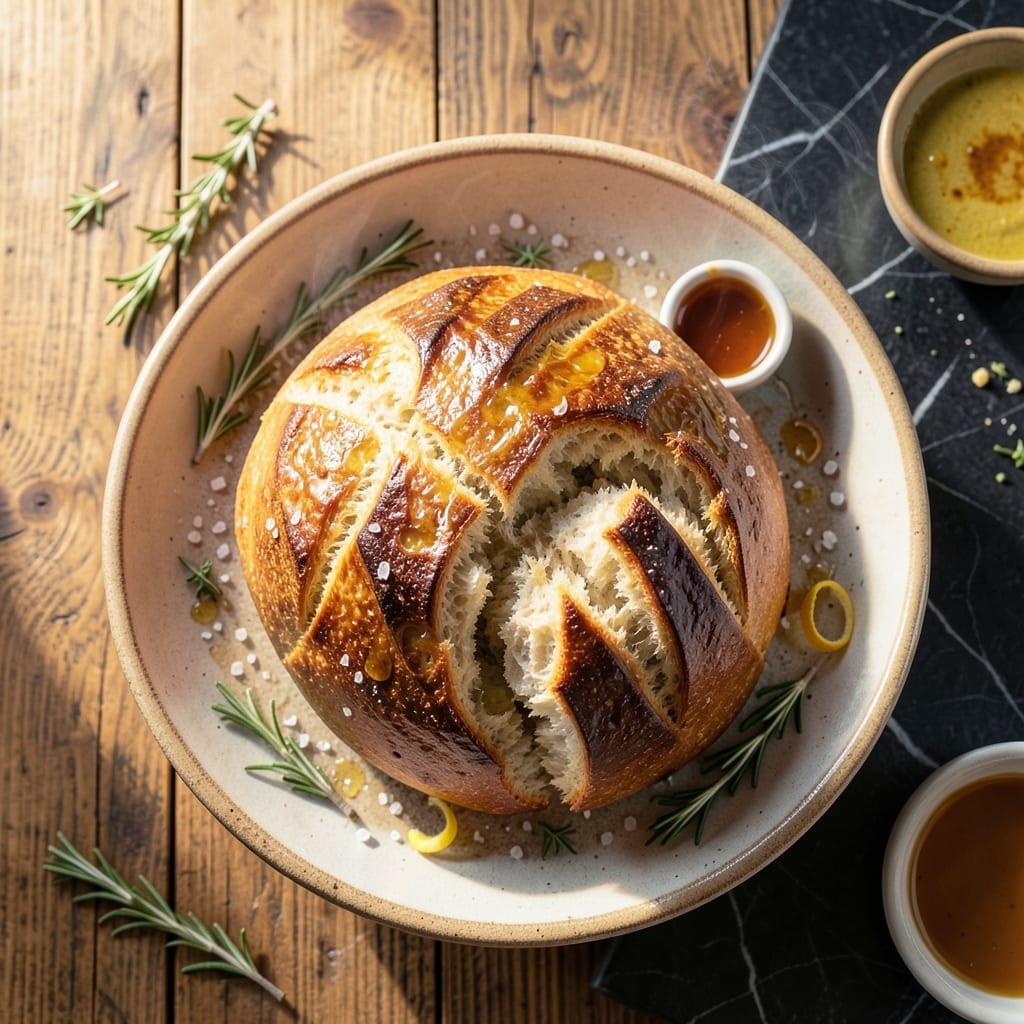
This recipe delivers the best artisan Italian bread with a crisp crust and airy crumb. My French training meets rustic tradition in every bite.
Simple ingredients, precise technique, and patience create a loaf that rivals any bakery. The crust crackles, the inside stays soft and open.
Ingredients for Best Italian Bread Recipe in the World
Ten simple ingredients create bakery-quality bread with crisp crust and airy crumb.
| Ingredient | Amount | Notes |
|---|---|---|
| Bread Flour 🌾 | 4 cups | High-protein for structure |
| Active Dry Yeast 🍞 | 2 ¼ tsp | Or one 0.25 oz packet |
| Warm Water 💧 | 1 ½ cups | 110°F to activate yeast |
| Sea Salt 🧂 | 2 tsp | Fine grain for even distribution |
| Extra-Virgin Olive Oil 🫒 | 2 tbsp | For dough elasticity |
| Honey 🍯 | 1 tbsp | Feeds the yeast |
| Cornmeal 🌽 | ¼ cup | For dusting baking surface |
| All-Purpose Flour 🌾 | ½ cup | For dusting work surface |
| Ice Cubes ❄️ | 4 pieces | For steam in oven |
| Egg White 🥚 | 1 whole | For optional glossy finish |
[recipe_ingredient_scaler]
The flour is critical here. King Arthur Bread Flour is the gold standard for its high protein content, which develops the gluten structure needed for that perfect chew. Yeast should be fresh and active—test it in warm water with a pinch of sugar before committing. Whole Foods or any baking supply store will have quality options. Warm water temperature is non-negotiable: too hot kills the yeast, too cold slows activation.
No bread flour? All-purpose in a pinch, but expect a slightly denser crumb. Honey can be swapped for maple syrup or sugar if preferred. The olive oil adds richness, but vegetable oil works too. For a more rustic loaf, add a tablespoon of vital wheat gluten to boost the protein content. Cornmeal can be replaced with semolina for a coarser texture.
Dough rises best in a warm, draft-free spot—70-75°F is ideal. Store baked bread in a paper bag at room temperature for up to 3 days. For longer storage, freeze slices wrapped in foil for up to 3 months. Always cool completely before slicing to maintain structure.
Why You’ll Love This Recipe
- Five Ingredients: That’s it—flour, yeast, water, salt, and good olive oil. No fancy stuff hiding in my pantry.
- Crispy Golden Crust: The olive oil gives it that crackly shell with a soft, airy center. Honestly, I could eat it plain.
- Sandwich Hero: From bruschetta to paninis, this loaf holds up to anything I throw at it.
- Budget Stretcher: A loaf this good for pennies? I’ll take it, especially when it feeds us for days.
Step-by-Step Instructions for Italian Bread
Master these professional techniques for artisan crust and open crumb structure.
Step 1: Activate Yeast and Create Sponge
In a stand mixer bowl, whisk together the 2.25 tsp Active Dry Yeast with the 1.5 cups Warm Water at 110°F and the 1 tbsp Honey. Let this mixture sit for 5-7 minutes until it becomes foamy and opaque—this confirms your yeast is active and ready to work.
Add the 4 cups Bread Flour and 2 tsp Sea Salt to the yeast mixture. Using the dough hook attachment, mix on low speed for 2 minutes until the ingredients come together into a shaggy mass. The dough will look rough at this stage, but the gluten development happens next.
Step 2: Knead and Develop Gluten Structure
Increase the mixer speed to medium and knead for 6-8 minutes. After 2 minutes, drizzle in the 2 tbsp Extra-Virgin Olive Oil and continue kneading. The dough should become smooth, elastic, and slightly tacky—it will pull away from the bowl but still stick slightly to your finger when touched.
This extended kneading time is crucial for developing the strong gluten network that gives Italian bread its characteristic chewy texture. The olive oil adds elasticity and richness to the crumb. If the dough seems too sticky, resist adding more flour; instead, let the mixer continue working it.
Step 3: First Rise and Punch Down
Transfer the dough to a lightly oiled bowl, turning once to coat all sides. Cover with a damp kitchen towel and let rise in a warm, draft-free place for 1 to 1.5 hours, or until doubled in volume. The dough should spring back slowly when pressed lightly with a finger.
Punch down the dough to release the air, then turn it out onto a surface dusted with the 0.5 cup All-Purpose Flour. This prevents sticking while you shape the loaves. The all-purpose flour works better for dusting than bread flour here, as it creates a lighter barrier.
Step 4: Shape and Final Proof
Divide the dough into two equal portions and shape each into a round loaf or elongated baguette. Place the shaped loaves on a baking sheet dusted with the 0.25 cup Cornmeal, which prevents sticking and adds texture to the crust. Cover loosely and let proof for 45-60 minutes until nearly doubled in size.
The loaves should hold an indentation when gently pressed. Preheat your oven to 425°F during the last 15 minutes of proofing. Place a metal baking pan on the lower oven rack—this will be used to create steam for a crispy crust.
Step 5: Bake with Steam and Finish
Just before baking, use a sharp razor or serrated knife to score the tops of the loaves in a decorative pattern. This allows the bread to expand properly during baking. Place the 4 pieces Ice Cubes in the preheated baking pan on the lower rack to create steam.
Bake the loaves on the middle rack for 25-30 minutes until they are deep golden brown and sound hollow when tapped on the bottom. For an optional glossy finish, brush the tops with the 1 whole Egg White mixed with 1 tsp water during the last 5 minutes of baking. Cool completely on a wire rack before slicing.
Pro Tips For Making Best Italian Bread Recipe In The World
- Proof the Yeast: Always bloom your active dry yeast in warm water (110°F) with a pinch of sugar first—I learned this the hard way after wasting flour on dough that never rose.
- Use High-Protein Flour: Bread flour (12-14% protein) is non-negotiable for that chewy, airy crumb; all-purpose just won’t give you the same structure.
- Don’t Rush the Rise: Give the dough a full 1.5–2 hours for the first rise, even if it looks ready sooner—patience actually changes the outcome.
- Brush with Olive Oil: Before baking, brush the loaf with about 1 tablespoon of extra-virgin olive oil for a golden crust that crackles with every bite.
Regional Styles of best italian bread recipe in the world
Tuscan Rustic
This version adds 1 tbsp chopped rosemary and 2 minced garlic cloves to the dough. The herbs infuse during rising, creating aromatic bread perfect for Tuscan soups. I forage wild rosemary on my coastal rides for an extra earthy note. 🌿
Sicilian Sesame
Before baking, brush the top with 1 tbsp olive oil and sprinkle with 3 tbsp sesame seeds. This gives a nutty crunch reminiscent of Sicilian street bread. The seeds toast beautifully during the 25-30 minute bake time at 425°F.
Roman Ciabatta Style
Increase the hydration by adding ¼ cup extra water to the dough. This creates the characteristic large, irregular holes of ciabatta. The wetter dough requires careful handling during shaping.
Ligurian Focaccia
Press the dough into a 9×13-inch pan and dimple with your fingers. Drizzle with 3 tbsp olive oil and sprinkle with coarse sea salt. Bake at 400°F for 20-25 minutes for a thick, pillowy result.
Calabrian Spiced
Add 1 tsp red pepper flakes and 1 tsp fennel seeds to the dough. This spicy-sweet combination is a nod to Calabrian flavors. The heat builds subtly as you enjoy the bread.
Venetian Sweet
Incorporate ¼ cup raisins and 1 tbsp orange zest into the dough for a slightly sweet version. This pairs beautifully with mascarpone cheese for dessert. The citrus brightens the natural sweetness. 🍊
Frequently Asked Questions
What’s the ideal water temperature for activating yeast?
Use 110°F water—hotter than that can kill the yeast, while cooler water slows activation. A kitchen thermometer ensures accuracy. Too hot or cold affects rise time and bread texture.
Can I use all-purpose flour instead of bread flour?
Yes, but the crumb will be slightly denser. Bread flour’s higher protein develops better gluten structure. For best results, add 1 tbsp vital wheat gluten per cup of all-purpose flour.
Why does my bread have a dense texture?
Overproofing or insufficient kneading are common culprits. Ensure dough doubles in size during rise and knead for 6-8 minutes. Also, avoid adding extra flour—sticky dough is normal.
How do I store leftover bread to keep it fresh?
Keep it in a paper bag at room temperature for up to 3 days. For longer storage, wrap slices in foil and freeze for up to 3 months. Avoid plastic bags—they trap moisture and soften the crust.
Nutrition Facts

Trained in classic French technique but raised on slow-cooked ribs and spicy rubs, she blends culinary skill with smoke and soul.
- Recipe for Boneless Pork Chops in Cast Iron Skillet: Sear and Baste to Juicy Perfection - October 3, 2026
- Recipe for Boneless Cross Rib Roast: Slow-Roasted Beef with Herb Crust - October 3, 2026
- Hamburgers in Sauce Recipe Crock Pot: Slow-Cooked Savory Delight - October 3, 2026