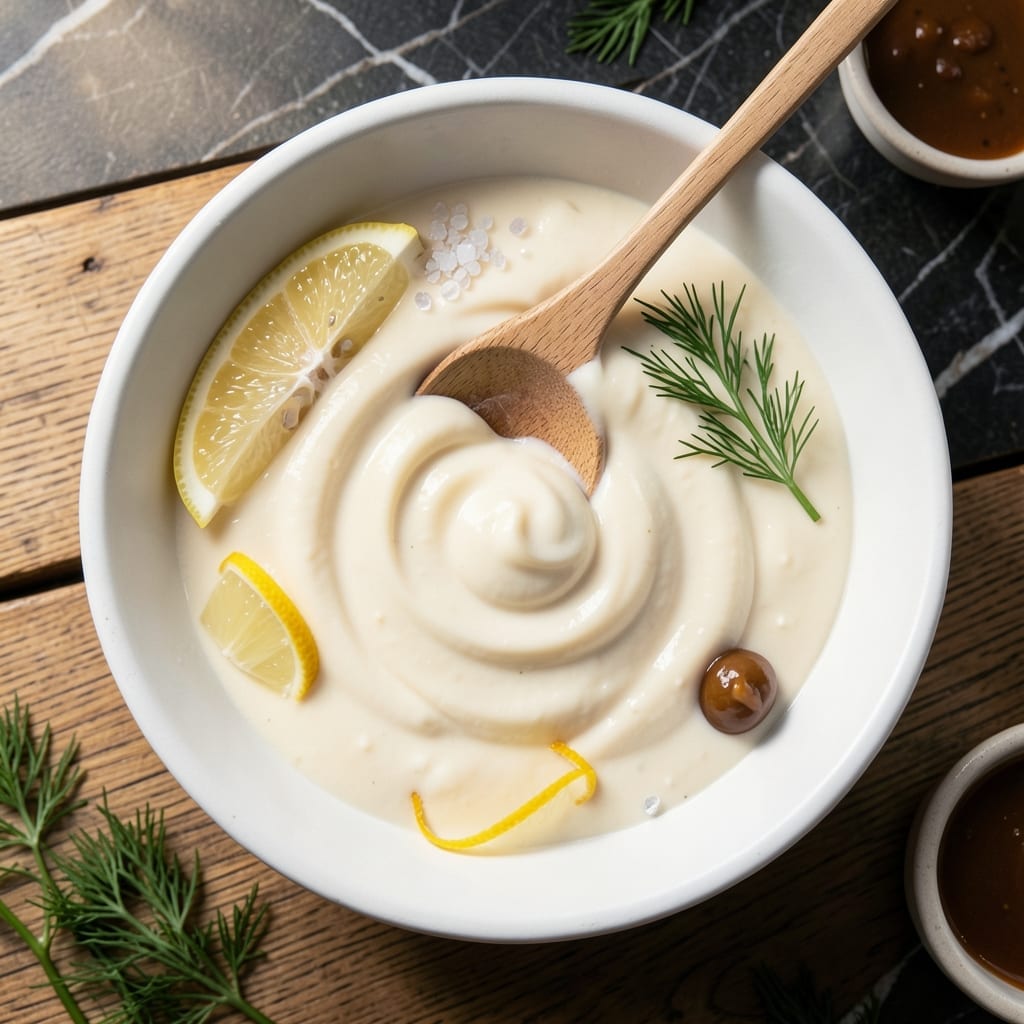
This mayonnaise recipe delivers the silkiest texture and most balanced flavor you will ever taste. The emulsion comes together perfectly every time.
With just a few simple ingredients and the right technique, you can create a condiment that surpasses anything store-bought. The result is creamy, stable, and endlessly versatile.
Ingredients for Best Mayonnaise Recipe Ever
Seven ingredients transform into the creamiest, most balanced condiment you have ever made.
| Ingredient | Amount | Notes |
|---|---|---|
| Large Egg Yolk 🥚 | 1 whole | Room temperature for best emulsion |
| Dijon Mustard 🟡 | 1 tsp | Smooth, not whole grain |
| White Wine Vinegar 🍷 | 1 tbsp | Or apple cider vinegar |
| Lemon Juice 🍋 | 1 tbsp | Freshly squeezed preferred |
| Fine Sea Salt 🧂 | ½ tsp | Adjust to taste after blending |
| Granulated Sugar 🍚 | ¼ tsp | Balances acidity subtly |
| Light Neutral Oil 🫒 | 1 cup | Avocado or light olive oil |
[recipe_ingredient_scaler]
The oil quality is non-negotiable here. Light olive oil or avocado oil ensures a neutral flavor that lets the egg and acidity shine—avoid extra-virgin, as its peppery notes will dominate. Room-temperature egg yolks create a more stable emulsion, so pull them from the fridge 30 minutes before starting. For the vinegar, white wine is classic, but apple cider adds a subtle fruity depth.
No Dijon? Yellow mustard at equal amount works, though it’s slightly sweeter. Out of white wine vinegar? Rice vinegar or champagne vinegar are excellent substitutes. The sugar can be omitted, but it tempers the sharpness of the acids. If you’re watching sugar, a pinch of monk fruit sweetener dissolves well. For a richer mayo, use one whole egg plus one yolk instead of just a yolk.
Store in an airtight jar in the fridge for up to 1 week. The flavor actually improves after 24 hours as the emulsion settles. If separation occurs, re-whisk or blend briefly. Do not freeze—it will break the emulsion.
Why You’ll Love This Recipe
- 5-Minute Magic: I can make a fresh batch faster than it takes to dig the store-bought jar out of the fridge.
- Bright & Zesty: That tangy kick from the white wine vinegar and lemon juice makes every sandwich sing.
- Endless Uses: Honestly, I slather it on burgers, mix it into dressings, and even use it as a base for dips.
- Pantry Staples: Just an egg yolk and a few condiments I always have on hand—no special shopping required.
Step-by-Step Instructions for Homemade Mayonnaise
Master the emulsion technique and you’ll achieve a creamy, stable mayonnaise with perfect consistency.
Step 1: Combine the Base Ingredients
In a medium bowl, whisk together the large egg yolk, Dijon mustard, white wine vinegar, lemon juice, fine sea salt, and granulated sugar until fully combined and slightly thickened. The mustard acts as an emulsifier, while the vinegar and lemon juice provide the signature tang.
I use a wire whisk for this step to ensure the egg yolk and Dijon mustard are completely integrated. The mixture should look smooth and pale yellow, with no visible streaks of yolk or mustard. This foundation is critical for a stable emulsion.
Step 2: Begin the Emulsion with Oil
Start adding the light neutral oil 1 drop at a time while whisking constantly. This is the most crucial part of the process—adding the oil too quickly will break the emulsion. After about ¼ cup of oil is incorporated, the mixture will begin to thicken noticeably.
Once the emulsion starts to form, you can increase the oil to a very thin, steady stream. Maintain vigorous whisking throughout. The mixture should become pale and creamy, with a texture that clings to the whisk. If it looks shiny or greasy, you’re adding the oil too fast.
Step 3: Finish the Emulsion and Adjust
Continue whisking in the remaining light neutral oil in a thin stream until fully incorporated. The mayonnaise should be thick, creamy, and glossy, with a light, airy texture. If it becomes too thick, whisk in 1 teaspoon of warm water to loosen it slightly.
Taste and adjust the seasoning with additional fine sea salt if needed. The balance of acidity from the white wine vinegar and lemon juice should be bright but not overpowering, with the granulated sugar subtly rounding out the flavors.
Step 4: Rest and Store Properly
Transfer the mayonnaise to a clean jar or airtight container. Let it rest at room temperature for 10-15 minutes to allow the flavors to meld fully. This short resting period enhances the depth of flavor and ensures the emulsion is fully stable.
Store the mayonnaise in the refrigerator for up to 1 week. The cold temperature will thicken it further. Always use a clean spoon when scooping to prevent contamination and extend its freshness.
Pro Tips For Making Best Mayonnaise Recipe Ever
- Room Temp Eggs: Pull your egg out of the fridge 30 minutes before starting—cold yolks resist emulsifying, and I learned this the hard way after ending up with a broken mayo more times than I’d like to admit.
- Slow Drizzle Oil: Add your oil a few drops at a time at first, then in a thin stream once it starts to thicken. After burning through a cup of oil with a failed batch, I finally figured out that patience here is non-negotiable.
- Use Fresh Lemon: Skip the bottled lemon juice; fresh lemon juice adds a brightness that bottled just can’t match. Sounds obvious, but I was skeptical until I tried it—now I won’t make mayo any other way.
- Salt Last: Hold off on adding the fine sea salt until the very end. Adding it too early can break the emulsion, and I skip this when I’m lazy, but the mayo is noticeably smoother when I don’t.
Perfect Pairings for This Recipe
Side Dishes
This best mayonnaise recipe ever pairs wonderfully with classic sides. Use it as a creamy dip for crispy fries or onion rings to elevate their crunch. Spread it on a BLT sandwich or a grilled cheese for an extra layer of richness. It also works as a base for potato salad or coleslaw, adding a velvety texture that ties everything together.
Drink Pairings
Balance the richness of homemade mayo with refreshing drinks. A cold lemonade or iced tea cuts through the creaminess, while a crisp pilsner or sauvignon blanc complements dishes like seafood salads or burgers slathered in mayo. For a non-alcoholic twist, try sparkling water with lime.
Complementary Flavors
Enhance your mayo with bold flavors. Mix in sriracha or smoked paprika for a spicy kick, or stir in fresh herbs like dill or chives for a bright, fresh taste. A touch of garlic or Dijon mustard adds depth, making it perfect for dipping sauces or marinades. Experiment to match your dish’s profile!
Nutrition Facts

Trained in classic French technique but raised on slow-cooked ribs and spicy rubs, she blends culinary skill with smoke and soul.
- Recipe for Boneless Pork Chops in Cast Iron Skillet: Sear and Baste to Juicy Perfection - October 3, 2026
- Recipe for Boneless Cross Rib Roast: Slow-Roasted Beef with Herb Crust - October 3, 2026
- Hamburgers in Sauce Recipe Crock Pot: Slow-Cooked Savory Delight - October 3, 2026