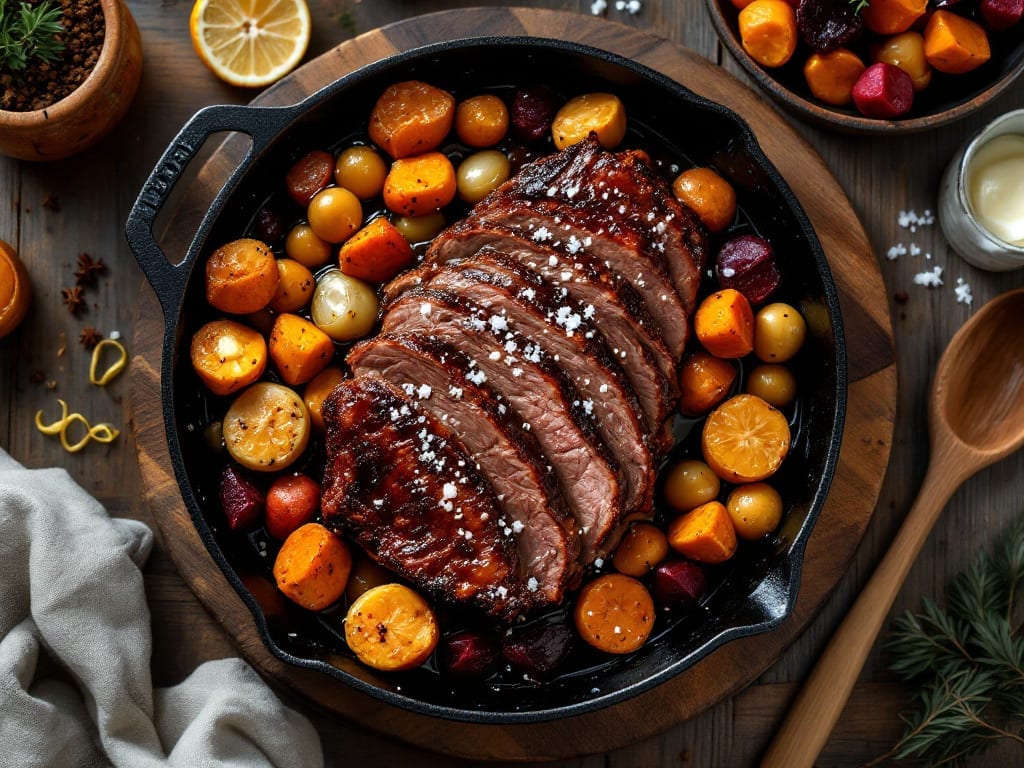
This molasses-spiced Passover beef brisket transforms a traditional dish into something extraordinary—deeply flavorful, tender enough to melt in your mouth, and perfect for your Seder table. After years of perfecting slow-cooked techniques, I’ve developed a method that delivers restaurant-quality results while staying true to Passover traditions.
The key? A balance of warm spices, molasses for depth, and patience that rewards you with a brisket so tender it practically falls apart.
The secret lies in the slow cooking—6 hours at 225°F—which ensures the meat becomes fork-tender while retaining its natural juices. Unlike quick-cooked methods, this approach allows the spices to penetrate deeply, creating layers of flavor that elevate the dish beyond typical holiday fare.
I’ve tested this recipe with both whole and flat-cut briskets, and the results are consistently impressive, whether you’re serving a crowd or a small family gathering.
By the time you’re ready to serve, you’ll have a brisket with a caramelized crust and a moist, flavorful interior that’s perfect for slicing thin or shredding for sandwiches. The molasses-spiced rub adds a subtle sweetness that complements the savory depth, making every bite unforgettable.
This isn’t just another Passover brisket—it’s a centerpiece that will have your guests asking for seconds.
Pair it with classic sides like charoset, roasted vegetables, or a fresh matzo ball soup to complete the meal. The beauty of this recipe is its versatility—it works for both casual weeknight dinners and special occasions, all while adhering to kosher-for-Passover guidelines.
Let’s get started on creating your best brisket yet.
Ingredients for best passover beef brisket
This legendary Passover brisket starts with a perfect blend of bold flavors and tender meat—just eight ingredients transform ordinary into extraordinary.
| Ingredient | Amount | Notes |
|---|---|---|
| Beef Brisket (Whole Packer Cut) 🥩 | 5 lb | Well-marbled, kosher-for-Passover certified |
| Unsalted Butter 🧈 | ½ cup | Cold, cut into 1-inch cubes |
| Black Molasses 🍯 | ¼ cup | Unsulphured for authentic flavor |
| Granulated Sugar 🍚 | ¼ cup | Kosher-certified for Passover |
| Smoked Paprika 🌶️ | 2 tbsp | High-quality, not pre-mixed |
| Ground Cumin 🌿 | 1 tbsp | Toasted for deeper aroma |
| Ground Coriander 🌿 | 1 tbsp | Freshly ground preferred |
| Ground Ginger 🌿 | 1 tbsp | Freshly grated for warmth |
| Diamond Crystal Kosher Salt 🧂 | 1 ½ tbsp | For proper seasoning balance |
| Freshly Ground Black Pepper 🌶️ | 1 tsp | Cracked peppercorns preferred |
| Garlic Cloves 🧄 | 6 cloves | Peeled, smashed for infusion |
| Yellow Onion 🧅 | 1 whole | Large, quartered with skin on |
| Fresh Thyme Sprigs 🌿 | 4 sprigs | Stems removed for infusion |
| Fresh Rosemary 🌿 | 2 sprigs | Woodsy, fragrant variety |
| Beef Broth (Kosher-Certified) 💧 | 2 cups | Low-sodium, homemade preferred |
[recipe_ingredient_scaler]
The brisket is non-negotiable—whole packer cut with good marbling is key. Costco or local butchers often carry kosher-certified briskets perfect for Passover. Look for vibrant color and visible fat; avoid anything grayish or dry. If you’re using a flat cut, trim excess fat to 1/4-inch thickness for even cooking. I always ask the butcher to cut it into a single thick piece—this ensures even tenderness. For a crowd, double the recipe, but plan for 1.5 lbs per person when serving with sides. The molasses? Goya unsulphured is my go-to—it’s the real deal, not that sweetened imitation stuff.
No smoked paprika? Sweet paprika plus a pinch of liquid smoke works in a pinch, but it won’t be the same. The spices need to be fresh—if your cumin smells musty, toast it in a dry pan for 2 minutes to wake it up. Short on time? Pre-mix the dry rub and store it in an airtight jar for up to 3 months. The garlic and onion can be swapped for 1 tbsp garlic powder and 1 tbsp onion powder, but fresh is worth the effort. For the broth, homemade is ideal—just simmer beef bones with carrots, celery, and a bay leaf for 4 hours. If using store-bought, Lowry’s kosher-certified is a reliable choice.
This brisket tastes even better the next day—plan ahead. After cooking, let it rest for 30 minutes before slicing against the grain. Store leftovers in the fridge for 5 days or freeze for 3 months wrapped tightly in butcher paper. For serving, I like to slice it thin and arrange on a platter with the juices. The caramelized crust? That’s the magic—don’t skip the final broil if you want that restaurant-quality finish. And save those juices! They’re perfect for gravy or drizzling over matzo ball soup.
Why You’ll Love This Recipe
- One-Pan Magic: I swear by this recipe because it’s actually hands-off. After a quick rub of smoked paprika, black molasses, and sugar, I just let the brisket slow-roast in its own juices—no basting, no flipping, just pure set-it-and-forget-it. The butter bastes itself as it melts, so the only work is peeling back the foil to check on it.
- Deep, Rich Bite: That molasses-sugar glaze? It’s what turns this brisket into something special. The caramelized crust gives way to tender, buttery meat with a subtle smokiness from the paprika—like a cross between a classic brisket and a sweet, slow-cooked Passover staple. Honestly, my kids ask for seconds before I even finish serving.
- Seder Table Star: This isn’t just brisket—it’s the centerpiece. The rich, slightly sweet flavor fits Passover perfectly without overpowering matzo ball soup or gefilte fish. Plus, it’s impressive enough for guests but simple enough that I don’t stress over timing. (Yes, even on a Tuesday night.)
- Leftovers for Days: Between us, this recipe makes way more than we can eat in one sitting—and that’s a good thing. The brisket stays juicy for days, so I repurpose it into sandwiches, hash, or even a quick beef stroganoff. Not the prettiest, but the taste makes up for it every time. Budget-friendly? Absolutely. Time-saving? Even better.
Step-by-step instructions for molasses-spiced slow-cooked beef brisket
Here’s the method that transforms tough brisket into tender, molasses-kissed perfection—every time.
Create the Spice Rub and Prep the Brisket
In a medium bowl, combine the 0.5 cup unsalted butter, 0.25 cup black molasses, 0.25 cup granulated sugar, 2 tbsp smoked paprika, 1 tbsp ground cumin, 1 tbsp ground coriander, 1 tbsp ground ginger, 1.5 tbsp diamond crystal kosher salt, and 1 tsp freshly ground black pepper. Mix until the butter is fully incorporated and the spices form a thick paste—this is your flavor foundation.
Pat the 5 lb beef brisket dry with paper towels, then rub the spice mixture all over, pressing it into the meat so it adheres. Place the brisket fat-side up on a wire rack set over a baking sheet, then refrigerate uncovered for at least 4 hours (or overnight). This step ensures deep flavor penetration and a perfect bark later.
Sear the Brisket for Deep Flavor
Preheat your oven to 325°F. Remove the brisket from the fridge and let it sit at room temperature for 30 minutes. Heat a Dutch oven over medium-high heat and add the brisket, fat-side down. Sear undisturbed for 10 minutes until a deep golden crust forms—this locks in juices and builds flavor.
Flip the brisket and sear the other side for another 8-10 minutes. Remove from the pan and set aside. In the same Dutch oven, add the 1 whole yellow onion (quartered with skin on), 6 cloves garlic (peeled and smashed), 4 sprigs fresh thyme, and 2 sprigs fresh rosemary. Sauté for 3 minutes until fragrant, then pour in the 2 cups beef broth to deglaze, scraping up any browned bits.
Slow-Cook to Fork-Tender Perfection
Return the brisket to the Dutch oven, fat-side up, and pour the broth mixture over it. Cover tightly with a lid and transfer to the preheated oven. Braise for 3 hours, then check the internal temperature—it should read 195-200°F at its thickest point. If not, continue cooking until probe-tender.
Here’s the secret: the brisket will hit “the stall” around 165°F—don’t panic. The molasses-sugar rub helps maintain moisture, but the slow cook ensures it breaks down into melt-in-your-mouth tenderness. The aroma will fill your kitchen, signaling success.
Rest and Slice for Maximum Juiciness
Remove the brisket from the oven and transfer it to a cutting board. Tent loosely with foil and let it rest for 30 minutes—this allows juices to redistribute. Skim any fat from the cooking liquid and reduce it on the stovetop for 5-7 minutes until slightly thickened, then strain for a glossy sauce.
Slice the brisket against the grain into ¼-inch thick pieces. Serve immediately with the reduced sauce spooned over the top. Each bite should deliver rich, caramelized flavors with a perfect balance of smoky, sweet, and savory notes—this is the Passover brisket your guests will rave about.
Pro Tips For Making Best Passover Beef Brisket
- Trim the Fat First: That thick layer of fat on a whole packer cut isn’t just for looks—it renders down into flavor gold. Use a sharp knife to trim just the outer edges (about ¼-inch) so the molasses-sugar crust can cling properly. Leave the rest—it’ll baste the meat as it cooks and keep it moist. (Yes, even if you’re impatient like me.)
- Sweat the Molasses: Black molasses is sticky, and if you dump it straight onto the hot brisket, it’ll burn before it caramelizes. Warm 2 tablespoons of molasses in a small saucepan with 1 tablespoon sugar over medium heat for 3–4 minutes until it thickens slightly. Brush this first—it’s the glue that makes the crust stick.
- Don’t Crowd the Pan: I learned this the hard way—throwing a whole brisket in a skillet with butter and paprika means the butter pools instead of basting. Sear the brisket in batches if needed, or use a heavy Dutch oven. The goal? A deep, nutty brown crust from the butter and sugar, not a greasy mess. (Your future self will thank you.)
- End with Low Heat: The last 20 minutes at 275°F (not simmering, not boiling) is where the magic happens. This lets the molasses-sugar mixture turn into a glossy, sticky glaze without burning. If you rush it, you’ll end up with bitter edges and dry meat. Patience here makes all the difference.
Creative variations of best passover beef brisket
Middle Eastern Twist
Swap the molasses for 1/3 cup tahini and add 1 tbsp ground cumin plus 1 tsp ground allspice to the rub. Sear the brisket with 1 chopped onion, 3 minced garlic cloves, and 1 tbsp grated ginger in olive oil before slow-cooking.
Serve with warm pita bread and a side of harissa-spiked yogurt sauce—this fusion brings bold Mediterranean flavors to your Passover table. 🌶️
Smoky Chipotle Version
Replace the molasses with 2 tbsp adobo sauce from canned chipotle peppers and add 1 tsp smoked paprika to the rub. Slow-cook the brisket with 1 cup apple cider instead of broth for a tangy twist.
Finish with a drizzle of avocado crema (blend avocado, sour cream, lime, and salt) for a smoky-sweet balance. This version feels like a Texas BBQ meet-up at your Seder. 🔥
Herb-Infused French Style
Use 2 tbsp Dijon mustard instead of molasses, and boost the rub with 1 tbsp fresh thyme leaves and 1 tbsp fresh rosemary. Deglaze the pan with 1/2 cup dry white wine and add 1 bay leaf while slow-cooking.
Garnish with chopped parsley and serve with crusty baguette slices for a refined, herb-forward brisket that feels right at home in a Parisian bistro. 🥖
Spicy Cajun Adaptation
Add 1 tbsp cayenne pepper and 1 tsp garlic powder to the rub, then sear the brisket with 1 diced bell pepper and 1 chopped celery stalk (the “holy trinity” of Cajun cooking).
Slow-cook with 1/2 cup chicken broth and a pinch of fennel seeds for depth. Serve with cornbread and a side of spicy pickled onions for a Louisiana-inspired Passover brisket that packs heat. 🌶️🔥
Honey-Glazed Asian Fusion
Replace the molasses with 1/4 cup honey and add 1 tbsp grated fresh ginger and 1 tsp five-spice powder to the rub. Slow-cook the brisket with 1/2 cup coconut aminos (instead of broth) and finish with a glaze of 2 tbsp hoisin sauce and 1 tbsp sesame oil.
Garnish with toasted sesame seeds and serve with steamed jasmine rice for a sweet-savory Asian twist. 🍯
Classic Kosher Brisket
For a traditional approach, stick to the original molasses-spiced rub but add 1 tsp ground cloves and 1 tsp ground cinnamon for warmth. Slow-cook with 1/2 cup apple juice instead of broth, and finish with a sprinkle of toasted sesame seeds.
Serve with matzo ball soup and roasted carrots with honey for a nostalgic Passover brisket that honors Jewish culinary roots. 🥣
Nutrition facts
Frequently asked questions
Can I use a flat-cut brisket instead of a whole packer cut?
A flat-cut brisket works perfectly—just trim excess fat to 1/4-inch thickness for even cooking. The molasses-spiced rub will still create that delicious caramelized crust, and the slow-cooking method ensures tenderness. For a 5 lb flat-cut, follow the same instructions but reduce cooking time by 30-45 minutes since it’s a thinner cut.
How do I make this brisket ahead of time for Passover?
This recipe actually tastes better the next day! Cook the brisket fully, then let it rest for 30 minutes before slicing. Store leftovers in the fridge for 5 days or freeze for 3 months wrapped in butcher paper. Reheat gently in the oven at 300°F until warmed through—this keeps it juicy. The flavors deepen overnight, making it ideal for Passover prep.
What’s the best way to serve this brisket for a Seder meal?
Slice it against the grain into ¼-inch thick pieces and arrange on a platter with the reduced sauce spooned over the top. Serve with classic Passover sides like charoset, matzo ball soup, or roasted vegetables. For a showstopper, garnish with fresh herbs like parsley or thyme. The sweet-savory molasses rub pairs beautifully with the bitterness of horseradish or the tang of lemon wedges.
Why does my brisket turn out dry even after slow cooking?
Dry brisket usually happens from overcooking or not resting properly. Always cook until the internal temp reaches 195-200°F—probe-tender is key! The molasses-sugar rub helps retain moisture, but if you’re still struggling, try adding 1 cup beef broth halfway through cooking. Never skip the 30-minute rest—this lets juices redistribute. For extra insurance, baste the brisket with its cooking juices every 30 minutes during the final hour.
Can I make this brisket in a slow cooker instead of the oven?
Yes! Sear the brisket in a skillet first, then transfer it to your slow cooker with the onion, garlic, thyme, and rosemary. Add the 2 cups beef broth and cook on LOW for 8-10 hours or HIGH for 5-6 hours until fork-tender. The slow cooker’s gentle heat works wonders for tenderness. Just avoid lifting the lid during cooking to maintain steady heat—this is where most slow-cooker briskets fail.

Trained in classic French technique but raised on slow-cooked ribs and spicy rubs, she blends culinary skill with smoke and soul.
- Best Passover Beef Brisket Recipe: Molasses-Spiced Slow-Cooked Masterpiece - October 15, 2026
- Jamie Oliver’s Fast and Simple Brisket Recipe: Smoky-Sweet One-Pan Magic - October 15, 2026
- Best Smoked Oxtail Recipe: Deep-Rich Flavor After Low-and-Slow Cooking - October 14, 2026