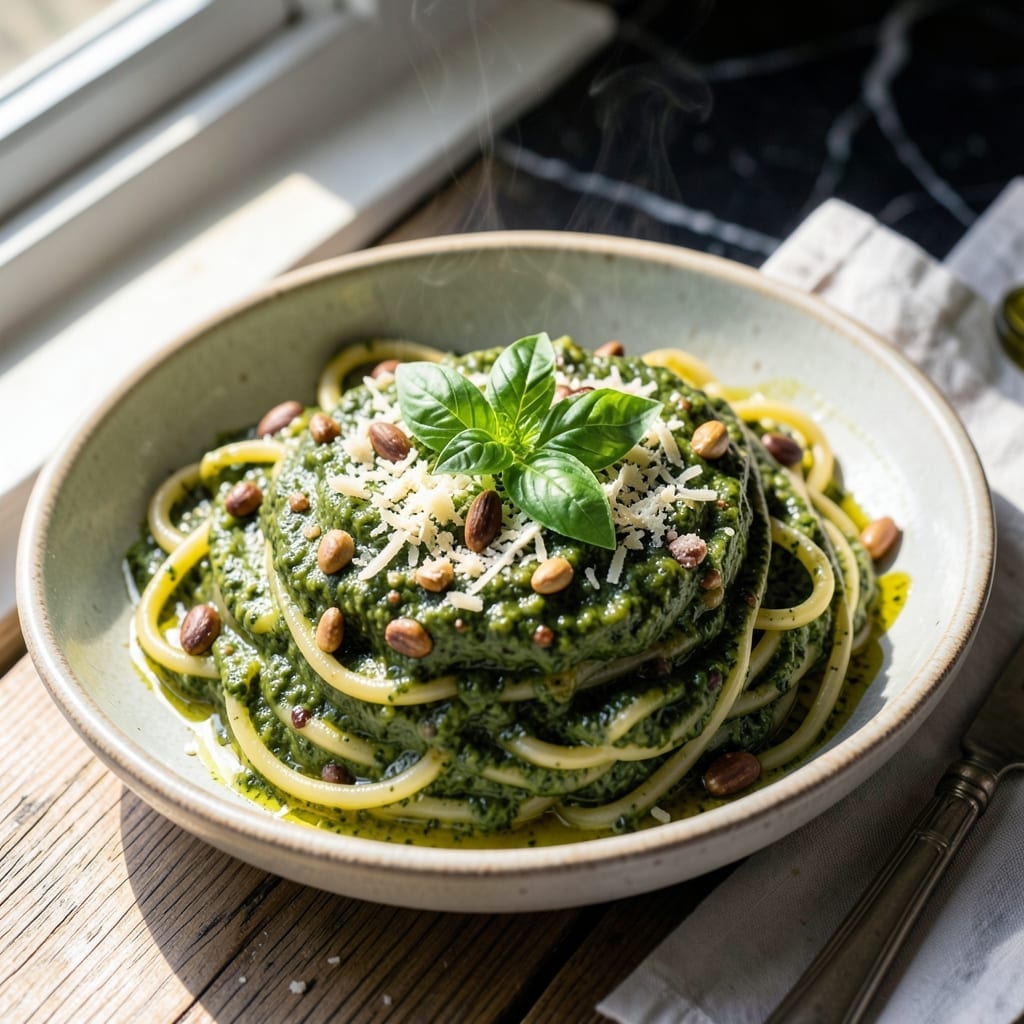
This pesto sauce delivers the best balance of fresh basil, nutty pine nuts, and sharp parmesan in every bite.
With just a few simple ingredients and a blender, you can create a versatile sauce that elevates pasta, sandwiches, or dips.
Ingredients for Best Pesto Sauce Recipe Ever
Eight ingredients transform into vibrant pesto sauce with perfect balance and freshness.
| Ingredient | Amount | Notes |
|---|---|---|
| Fresh Basil Leaves 🌿 | 2 cups | Packed, stems removed |
| Pine Nuts 🥜 | ½ cup | Toasted for nuttiness |
| Garlic Cloves 🧄 | 3 cloves | Peeled, roughly chopped |
| Parmesan Cheese 🧀 | ¾ cup | Freshly grated from wedge |
| Extra-Virgin Olive Oil 🫒 | ¾ cup | High-quality, fruity |
| Lemon Juice 🍋 | 1 tbsp | Freshly squeezed |
| Sea Salt 🧂 | ½ tsp | Fine grain preferred |
| Black Pepper 🌶️ | ¼ tsp | Freshly ground |
[recipe_ingredient_scaler]
The basil must be fresh and vibrant—farmers market finds often outperform grocery store options. For pine nuts, Trader Joe’s and Costco offer consistent quality at reasonable prices. Opt for a wedge of Parmigiano-Reggiano rather than pre-grated; the texture and flavor are superior. Extra-virgin olive oil should have a fruity, peppery note to complement the basil.
No pine nuts? Walnuts or raw cashews work well at a lower cost. Fresh lemon juice is ideal, but bottled works in a pinch (one-third less to avoid bitterness). If avoiding dairy, nutritional yeast adds a cheesy depth. For a milder garlic flavor, roast the cloves first. The olive oil quantity can be adjusted based on desired thickness.
Store pesto in an airtight container with a thin olive oil layer on top to prevent browning. Keeps in the fridge for up to 1 week or can be frozen in ice cube trays for 6 months. Always bring to room temperature before serving for best flavor.
Why You’ll Love This Recipe
- 5-Minute Magic: I toss everything in the food processor and it’s done before the pasta finishes boiling.
- Pine Nut Perfection: The toasted pine nuts and Parmesan give it that rich, nutty depth I crave every time.
- Endless Pairings: I slather it on sandwiches, toss with pasta, or drizzle over roasted veggies—never gets old.
- Fridge Stays Fresh: Honestly, it keeps for a week, so I always have a jar ready for quick meals.
Step-by-Step Instructions for Basil and Pine Nut Pesto
Achieve restaurant-quality results with this proven method for vibrant, aromatic pesto every time.
Step 1: Toast the Pine Nuts
Heat a dry skillet over medium-low heat and add the 0.5 cup Pine Nuts. Stir frequently for 3-4 minutes until they turn light golden brown and become fragrant. Watch carefully—they burn quickly once they start to color.
This toasting step intensifies their nutty flavor and adds depth to your pesto. Remove them from the pan immediately when done and let them cool completely on a plate. They’ll continue to cook from residual heat if left in the hot pan.
Step 2: Process the Aromatics
In a food processor, combine the 2 cups Fresh Basil Leaves, 3 cloves Garlic Cloves, cooled Pine Nuts, 0.5 tsp Sea Salt, and 0.25 tsp Black Pepper. Pulse 10-12 times until the mixture is finely chopped but not puréed.
The texture should look like coarse sand with some small visible pieces. I’ve found that processing in short bursts rather than continuously gives you better control over the texture. Avoid over-processing at this stage—the oil will help create the final smooth consistency.
Step 3: Emulsify with Cheese and Oil
Add the 0.75 cup Parmesan Cheese to the processor and pulse 5-6 times to incorporate. Then, with the processor running continuously, slowly drizzle in the 0.75 cup Extra-Virgin Olive Oil through the feed tube. This slow addition creates a stable emulsion.
The mixture will transform from dry and crumbly to smooth and glossy. Stop to scrape down the sides as needed. The pesto should be thick but still pourable—if it’s too thick, you can add a bit more oil, but the 0.75 cup should be perfect.
Step 4: Finish and Adjust
Transfer the pesto to a bowl and stir in the 1 tbsp Lemon Juice. This brightens the flavors and helps preserve the vibrant green color. Taste and adjust seasoning if needed, though the Parmesan Cheese and Sea Salt should provide sufficient saltiness.
For the best texture, let the pesto sit at room temperature for 15-20 minutes before serving. This allows the flavors to meld together. The finished pesto should have a vivid green color with a smooth, slightly chunky texture that clings beautifully to pasta or spreads easily on bread.
Pro Tips For Making Best Pesto Sauce Recipe Ever
- Pulse, Don’t Blend: Use short pulses in the food processor to keep the pesto textured—over-blending turns it into a sad, oily paste. I learned this the hard way after ruining a batch with one long spin.
- Toast the Pine Nuts: Lightly toast the pine nuts in a dry pan for 2-3 minutes until golden. Sounds weird, but it works: it brings out a nutty depth that raw nuts just can’t deliver.
- Dry the Basil: Pat the basil leaves completely dry before blending—water is the enemy here. Even a little moisture makes the pesto separate and look dull.
- Add Cheese Last: Fold in the grated Parmesan by hand after pulsing the rest. My grandmother swore by this, and she was right: it keeps the sauce creamy instead of clumpy.
Creative Variations of This Recipe
🔥 Spicy Texas Style
Kick your pesto up a notch with a Texas twist! Swap out traditional pine nuts for 1/2 cup of toasted pecans, and add 1 chopped jalapeño (seeds removed for milder heat) and 1/2 teaspoon of smoked paprika. Blend these with the classic basil, garlic, and Parmesan for a bold, smoky flavor. For extra depth, use 1/4 cup of olive oil infused with chipotle peppers. This variation pairs perfectly with grilled meats or as a zesty dip for tortilla chips.
🍯 Sweet and Savory Fusion
Combine sweet and savory by incorporating 2 tablespoons of honey and 1/4 cup of sun-dried tomatoes into your pesto. Reduce the garlic to 1 clove to balance the flavors, and add 1/2 teaspoon of balsamic vinegar for a tangy touch. This version works wonderfully with roasted vegetables, goat cheese, or even as a glaze for grilled chicken.
🥗 Healthy Lighter Version
For a lighter take, replace pine nuts with 1/4 cup of walnuts and use 1/2 the amount of olive oil. Add 1/2 cup of fresh spinach to boost the nutrient profile without overpowering the basil. A splash of low-fat Greek yogurt (2 tablespoons) can replace some of the cheese for creaminess with fewer calories. This pesto is ideal for tossing with whole wheat pasta or drizzling over salads.
🍂 Seasonal Twist
Embrace autumn flavors by substituting 1 cup of arugula for half the basil and adding 1/4 cup of roasted butternut squash. Include 1 teaspoon of ground cinnamon and 1 tablespoon of maple syrup for warmth and sweetness. This seasonal pesto is fantastic with roasted root vegetables or as a spread on turkey sandwiches.
Nutrition Facts

Trained in classic French technique but raised on slow-cooked ribs and spicy rubs, she blends culinary skill with smoke and soul.
- Recipe for Boneless Pork Chops in Cast Iron Skillet: Sear and Baste to Juicy Perfection - October 3, 2026
- Recipe for Boneless Cross Rib Roast: Slow-Roasted Beef with Herb Crust - October 3, 2026
- Hamburgers in Sauce Recipe Crock Pot: Slow-Cooked Savory Delight - October 3, 2026