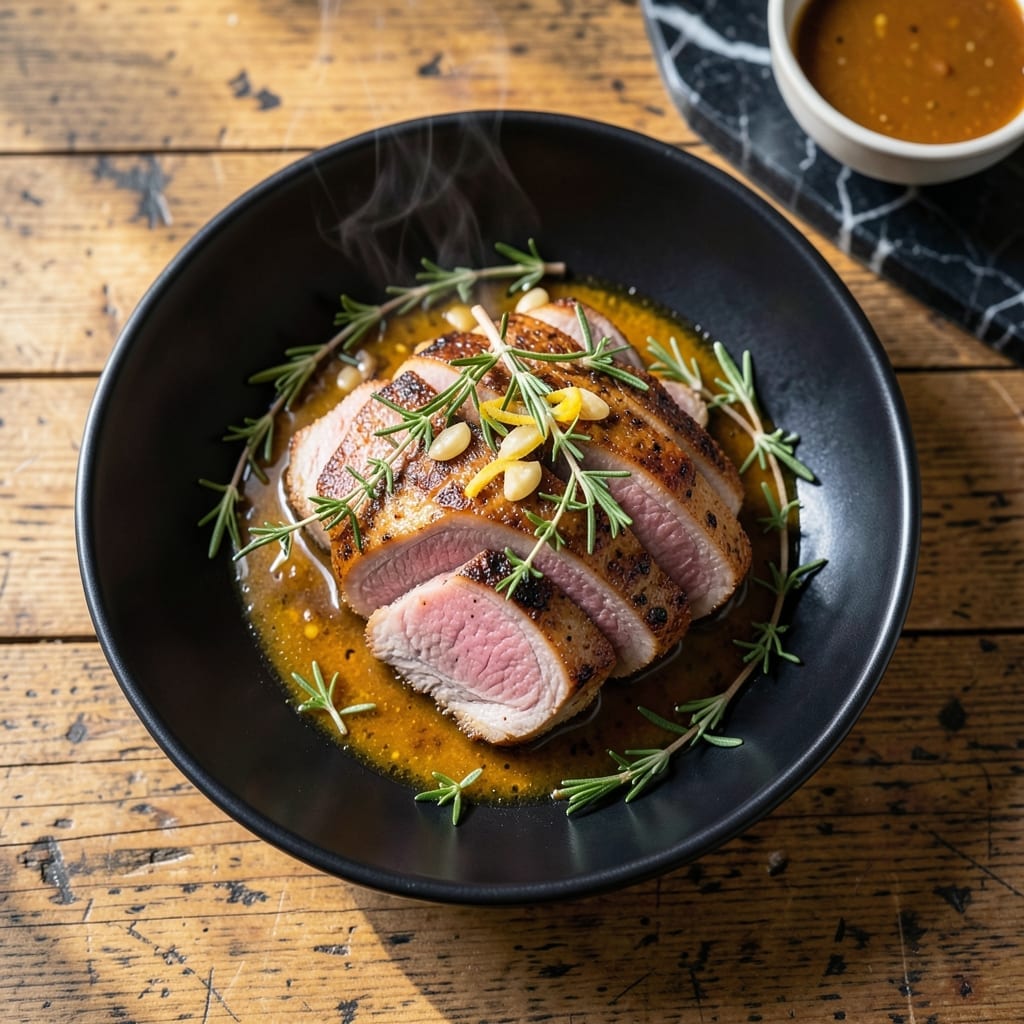
This pork tenderloin delivers restaurant-quality results with a simple herb crust and foolproof technique. I developed this method to ensure tender, juicy meat every time, whether for weeknight dinner or special occasions.
The secret lies in searing the seasoned loin first, then finishing it in the oven. This creates a flavorful crust while keeping the inside perfectly moist. A quick pan sauce made from the drippings adds the final touch of richness.
You’ll end up with meat so tender it cuts like butter, with a golden herb crust that adds texture and depth. The aroma alone will have everyone gathering around the table before it’s even served.
Serve with roasted vegetables or mashed potatoes to complete the meal. Here’s how to make this centerpiece dish.
Ingredients for Best Pork Tenderloin
A few high-quality ingredients transform into this elegant, herb-crusted centerpiece with minimal effort.
| Ingredient | Amount | Notes |
|---|---|---|
| Pork Tenderloin 🥩 | 1 ½ lb | Trimmed of silver skin |
| Kosher Salt 🧂 | 1 ½ tsp | Diamond Crystal preferred |
| Black Pepper 🌶️ | 1 tsp | Freshly ground |
| Garlic Cloves 🧄 | 4 cloves | Minced finely |
| Fresh Rosemary 🌿 | 2 tbsp | Finely chopped |
| Fresh Thyme Leaves 🍃 | 2 tbsp | Stems removed |
| Dijon Mustard 🟡 | 2 tbsp | Whole-grain variety okay |
| Olive Oil 🫒 | 2 tbsp | Divided, extra-virgin |
| Unsalted Butter 🧈 | 2 tbsp | For pan sauce |
| Dry White Wine 🍷 | ½ cup | Or substitute chicken broth |
| Low-Sodium Chicken Broth 🥣 | ½ cup | If not using wine |
| All-Purpose Flour 🌾 | 1 tsp | For thickening sauce |
[recipe_ingredient_scaler]
The pork tenderloin is the star—look for even thickness (about 4 inches in diameter) and a pale pink color with visible marbling. Whole Foods or Costco offer consistently good options, but most supermarkets carry it pre-trimmed. The silver skin must be removed (butcher can do this) to prevent curling during cooking. For herbs, fresh rosemary and thyme from the produce section outperform dried every time.
No white wine? Chicken broth with a splash of lemon juice mimics the acidity. Dried herbs work in a pinch (one-third the amount of fresh). The Dijon mustard can be swapped for whole-grain, but avoid yellow mustard—it’s too sharp. For the pan sauce, vegetable broth keeps it vegetarian-friendly. The butter is optional but adds a restaurant-quality richness to the drippings.
Pork tenderloin cooks quickly—use within 2-3 days of purchase or freeze for up to 6 months. Fresh herbs keep wrapped in damp paper towels for 1 week. The cooked dish holds well, covered, for 3-4 days in the fridge. Reheat gently to preserve moisture.
Why You’ll Love This Recipe
- One Pan Wonder: It’s just pork tenderloin, a quick rub of salt, pepper, and minced garlic, then into the oven—no piles of dishes.
- Herb-Infused Bite: The rosemary and garlic seep in so every slice tastes like a restaurant dish, but better because I made it.
- Dinner to Lunch: Roast one on Sunday and I’ve got sandwiches, salads, or tacos ready for the whole week.
- Budget Hero: Pork tenderloin is lean, affordable, and feeds four without breaking the bank or my schedule.
Step-by-Step Instructions for Herb-Crusted Pork Tenderloin
Master these professional techniques for perfectly tender, herb-infused pork with a rich pan sauce.
Step 1: Prepare the Herb Marinade and Coat the Pork
In a small bowl, combine 2 tbsp Dijon Mustard, 1 tbsp Olive Oil, 1.5 tsp Kosher Salt, 1 tsp Black Pepper, 4 cloves minced Garlic Cloves, 2 tbsp Fresh Rosemary, and 2 tbsp Fresh Thyme Leaves. Stir until the herbs are evenly distributed throughout the mixture.
Pat the 1.5 lb Pork Tenderloin dry with paper towels to ensure the marinade adheres properly. Rub the herb mixture all over the pork, pressing it into the meat to create a thick, even coating. This step infuses the pork with flavor and helps form a beautiful crust during searing.
Step 2: Sear the Pork Tenderloin to Develop a Crust
Heat the remaining 1 tbsp Olive Oil in a large oven-safe skillet over medium-high heat until it shimmers. Add the pork tenderloin and sear for 3-4 minutes per side, turning occasionally, until the surface is deep golden brown and a crust has formed.
This high-heat searing step is critical for developing the Maillard reaction, which creates complex flavors and a visually appealing crust. Resist the urge to move the pork too much—let it develop a deep color before turning. The internal temperature at this stage should be around 120-130°F.
Step 3: Roast to Perfect Doneness
Transfer the skillet with the seared pork to a preheated 400°F oven. Roast for 10-15 minutes, or until an instant-read thermometer inserted into the thickest part registers 145°F for medium-rare to medium doneness.
The pork will continue cooking as it rests, so remove it from the oven just as it reaches temperature. The juices should run slightly pink when pierced, indicating optimal tenderness. If you prefer a more well-done result, aim for 150-155°F, but be cautious not to overcook, as pork tenderloin can become dry quickly.
Step 4: Create a Rich Pan Sauce
Transfer the pork to a cutting board and tent loosely with foil to rest for 10 minutes. Place the skillet over medium heat and add 2 tbsp Unsalted Butter. Once melted, sprinkle in 1 tsp All-Purpose Flour and stir to create a light roux, cooking for 1 minute.
Deglaze the pan with 0.5 cup Dry White Wine and 0.5 cup Low-Sodium Chicken Broth, scraping up all the browned bits from the bottom. Simmer for 3-4 minutes until the sauce thickens enough to coat the back of a spoon. Strain if desired for a smoother texture, then pour over the sliced pork before serving.
Pro Tips For Making Best Pork Tenderloin
- Dry the Meat: Pat the pork tenderloin completely dry with paper towels before seasoning—I learned this the hard way after my first few roasts steamed instead of seared.
- Crush the Garlic: Smash the garlic cloves with the side of your knife before mincing; it releases more flavor and makes peeling a breeze.
- Pull at 145°F: Use a meat thermometer and take it off the heat at 145°F—pork tenderloin keeps cooking as it rests, and this guarantees it stays juicy, not dry.
- Rosemary Slits: Make small slits in the tenderloin and tuck in fresh rosemary sprigs; it infuses the meat with way more aroma than just sprinkling on top.
Dietary Considerations for best pork tenderloin
Gluten-Free Option
This recipe is naturally gluten-free if you use cornstarch instead of all-purpose flour for the pan sauce. Mix 1 tsp cornstarch with 1 tbsp cold water and stir into the sauce instead. I always keep Bob’s Red Mill cornstarch on hand for this exact purpose. 💪
Dairy-Free Adaptation
Simply swap the 2 tbsp unsalted butter for olive oil or a dairy-free butter alternative like Miyoko’s. The pan sauce will still be rich and flavorful. I’ve made it this way for guests with dairy sensitivities, and no one notices the difference.
Low-Carb Friendly
With only 1 tsp flour in the sauce, this dish is already very low in carbs. For a completely carb-free version, omit the thickener entirely and let the sauce reduce naturally. The wine adds minimal carbs, but you can use chicken broth instead if preferred.
Paleo Modifications
Use ghee instead of butter for the pan sauce and ensure your Dijon mustard is paleo-compliant. I like Primal Kitchen brand for both. The herbs and pork are already paleo-friendly, making this an easy adaptation for that lifestyle.
Sodium Considerations
To reduce sodium, use low-sodium chicken broth and decrease the kosher salt to 1 tsp. I often add a pinch of herbes de Provence to compensate for the reduced salt. This keeps the dish flavorful while being heart-healthier. 💛
Allergen Note
The primary allergens here are mustard and potentially dairy. For mustard allergies, substitute 1 tbsp olive oil plus 1 tsp lemon zest in the marinade. Always check your wine for sulfites if that’s a concern.
Nutrition Facts
Frequently Asked Questions
What’s the best way to prevent dry pork?
Remove it from the oven at 145°F and let it rest for 10 minutes before slicing. This allows the juices to redistribute through the meat.
Can I use dried herbs instead of fresh?
Yes, use 1/3 the amount of dried herbs. The flavor will be slightly different but still delicious. Fresh rosemary and thyme are ideal for the best crust.
How do I know when it’s done without a thermometer?
Press the thickest part—it should feel slightly firm but still springy, like the base of your thumb. The juices should run clear with a faint pink tint.
Can I make this on the grill instead of the oven?
Sear over direct heat for 3-4 minutes per side, then move to indirect heat and cook until it reaches 145°F.

Trained in classic French technique but raised on slow-cooked ribs and spicy rubs, she blends culinary skill with smoke and soul.
- Recipe for Boneless Pork Chops in Cast Iron Skillet: Sear and Baste to Juicy Perfection - October 3, 2026
- Recipe for Boneless Cross Rib Roast: Slow-Roasted Beef with Herb Crust - October 3, 2026
- Hamburgers in Sauce Recipe Crock Pot: Slow-Cooked Savory Delight - October 3, 2026