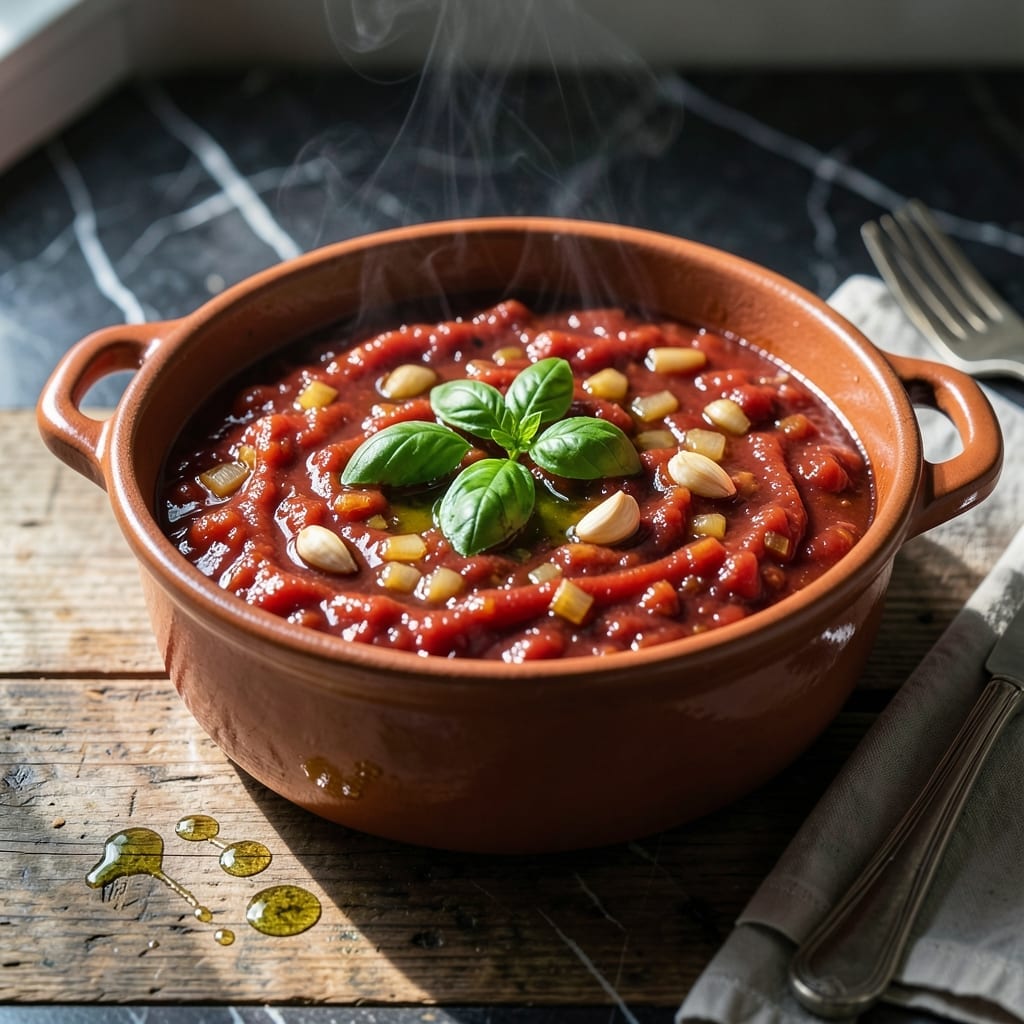
This San Marzano tomato sauce elevates any pasta dish with its rich, authentic Italian flavor. The secret lies in slow-simmered tomatoes and a precise blend of aromatics.
I’ve perfected this best version through years of testing, ensuring a balance of sweetness, acidity, and depth. No shortcuts—just pure, restaurant-quality results.
Ingredients for Best Spaghetti Sauce Recipe from Scratch
Nine ingredients transform into rich, restaurant-quality sauce with San Marzano depth and aromatic complexity.
| Ingredient | Amount | Notes |
|---|---|---|
| San Marzano Whole Peeled Tomatoes 🍅 | 28 oz | Canned, crushed by hand |
| Extra-Virgin Olive Oil 🫒 | ¼ cup | First cold-press preferred |
| Yellow Onion 🧅 | 1 whole | Finely diced for even cooking |
| Garlic Cloves 🧄 | 6 cloves | Minced for aromatic depth |
| Fresh Basil Leaves 🌿 | ½ cup | Loosely packed, torn by hand |
| Dry Red Wine 🍷 | ½ cup | Chianti or Sangiovese works well |
| Tomato Paste 🍅 | 2 tbsp | Double-concentrated preferred |
| Sea Salt 🧂 | 1 ½ tsp | Fine grain for even distribution |
| Black Pepper 🌶️ | ½ tsp | Freshly cracked for boldness |
| Crushed Red Pepper Flakes 🌶️ | ¼ tsp | Adjust to heat preference |
[recipe_ingredient_scaler]
The tomatoes are non-negotiable here. San Marzano DOP from Italy (look for the certification on the can) give that perfect balance of sweetness and acidity. Eataly or Whole Foods usually carry them, but most well-stocked supermarkets have them too. The olive oil matters too—first cold-press adds a fruity depth that cheaper oils just can’t match.
No red wine? Substitute with vegetable broth plus a splash of balsamic vinegar for similar depth. Fresh basil is ideal, but dried basil at one-third the amount works in a pinch (just add it earlier in cooking). The tomato paste can come from those squeeze tubes—so convenient and no waste. If you’re out of onions, shallots add a sweeter note.
Sauce actually improves overnight as flavors meld. Keeps in the fridge for 5 days, or freeze in portions for up to 3 months. I like to freeze in ice cube trays for perfect single-serving portions (worth the extra minute).
Why You’ll Love This Recipe
- One Pot Simplicity: I just dump the San Marzano tomatoes, onion, and garlic into a pot with olive oil—no fancy steps, just let it simmer while I set the table.
- Rich San Marzano Magic: Honestly, the sweetness of those whole peeled tomatoes with fresh basil makes it taste like Nonna’s kitchen in a bowl.
- Freezer Friendly: I double the batch and freeze half—pasta night becomes a no-brainer even on the busiest weeks.
- Budget Luxury: Between us, it costs pennies compared to jarred sauce but tastes like a million bucks.
Step-by-Step Instructions for Spaghetti Sauce From Scratch
This is the technique that transforms simple ingredients into a rich, complex sauce worth savoring.
Step 1: Build the Aromatic Foundation
Heat the 0.25 cup Extra-Virgin Olive Oil in a heavy pot over medium-low heat. When it shimmers, add the finely diced Yellow Onion and cook for 8-10 minutes, stirring occasionally, until it becomes translucent and just begins to caramelize at the edges.
This slow cooking develops the onion’s natural sweetness, creating a flavor base that’s anything but sharp. The pot should be large enough to accommodate all ingredients with room to stir—crowding leads to steaming rather than proper sautéing.
Add the 6 minced Garlic Cloves and cook for 1 minute, just until fragrant. Don’t let it brown—burnt garlic turns bitter and will dominate your sauce.
Step 2: Deepen Flavors with Tomato Paste and Wine
Stir in the 2 tbsp Tomato Paste and cook for 2-3 minutes, pressing it into the onion and garlic. You’ll notice the mixture darken slightly and take on a brick-red hue—this is the paste caramelizing and developing its full potential.
Pour in the 0.5 cup Dry Red Wine, scraping up any browned bits from the bottom of the pot. These fond bits are pure flavor bombs that will dissolve into your sauce. Let the wine simmer for 3-4 minutes until reduced by half.
This step is non-negotiable for depth. The alcohol cooks off, leaving behind a complexity that water or broth simply can’t provide. You should smell the wine’s aroma mellow into something richer.
Step 3: Simmer the San Marzano Tomatoes to Perfection
Add the 28 oz San Marzano Whole Peeled Tomatoes, crushing them by hand as you drop them in. I prefer this method to a food processor—it gives you varied texture, with some larger chunks and some finer pieces.
Stir in the 1.5 tsp Sea Salt, 0.5 tsp Black Pepper, and 0.25 tsp Crushed Red Pepper Flakes. Bring the mixture to a gentle simmer, then reduce heat to low.
Partially cover the pot and let it cook for 45-60 minutes, stirring every 10-15 minutes. The sauce should bubble lazily, with small plops breaking the surface occasionally. You’ll know it’s ready when it’s thickened slightly and taken on a deep, ruby-red color.
Step 4: Finish with Fresh Basil
Remove the pot from heat and stir in the 0.5 cup Fresh Basil Leaves, tearing them by hand as you add them. The heat will wilt the basil just enough to release its aromatic oils without turning it into a sad, dark green mush.
Let the sauce sit for 10 minutes before serving. This resting period allows the flavors to marry completely. The basil should remain bright green and visible throughout the sauce, providing fresh, herbal notes that balance the richness.
Taste and adjust seasoning if needed—though with quality San Marzano tomatoes and proper technique, you likely won’t need to add anything. The sauce should coat the back of a spoon but still have a loose, pourable consistency.
Pro Tips For Making Best Spaghetti Sauce Recipe From Scratch
- Crush the Tomatoes: Hand-crush the San Marzano tomatoes right in the pot—this gives you chunky texture without the metallic taste you get from a blender or food processor.
- Bloom the Garlic: Cook the minced garlic in olive oil over low heat until it’s just fragrant but not brown, about 30-45 seconds. I learned this the hard way—burnt garlic makes the sauce bitter.
- Skip the Dried Basil: Fresh basil leaves added at the end (not simmered for hours) keep that bright, sweet flavor. Dried basil just turns to dust and loses its punch.
- Simmer Uncovered: Let the sauce reduce uncovered for at least 30 minutes on low heat. Sounds tedious, but it thickens naturally and concentrates the flavors—no cornstarch needed.
Common Mistakes When Making This Recipe
🔥 Overcooking the Tomatoes
Cooking tomatoes for too long can break down their natural sweetness and leave your sauce tasting bitter or overly acidic. Fresh San Marzano tomatoes are delicate, and excessive heat or time can destroy their vibrant flavor.
Fix: Simmer the sauce on low to medium heat for 20-30 minutes, stirring occasionally. Taste as you go to ensure the flavor stays balanced.
🧂 Skimping on Salt
Tomatoes need salt to enhance their natural flavors. Undersalting your sauce can result in a bland, flat taste that no amount of herbs or garlic can fix. Seasoning layer by layer is key.
Fix: Salt the tomatoes as they cook down, then adjust seasoning at the end. Use high-quality sea salt or kosher salt for the best results.
🌿 Adding Herbs Too Early
Dried herbs like oregano and basil can turn bitter if added at the start of cooking. Their flavors intensify over time, which may overpower the sauce if not managed carefully.
Fix: Add dried herbs halfway through cooking or fresh herbs toward the end. This preserves their aromatic qualities without overpowering the sauce.
🥘 Forgetting to Deglaze the Pan
After browning garlic or meat, flavorful browned bits (fond) can stick to the pan. Skipping deglazing means losing rich, caramelized flavors that deepen the sauce’s complexity.
Fix: Use a splash of wine, broth, or water to loosen the fond, scraping the pan to incorporate those flavors into the sauce.
Nutrition Facts

Trained in classic French technique but raised on slow-cooked ribs and spicy rubs, she blends culinary skill with smoke and soul.
- Recipe for Boneless Pork Chops in Cast Iron Skillet: Sear and Baste to Juicy Perfection - October 3, 2026
- Recipe for Boneless Cross Rib Roast: Slow-Roasted Beef with Herb Crust - October 3, 2026
- Hamburgers in Sauce Recipe Crock Pot: Slow-Cooked Savory Delight - October 3, 2026