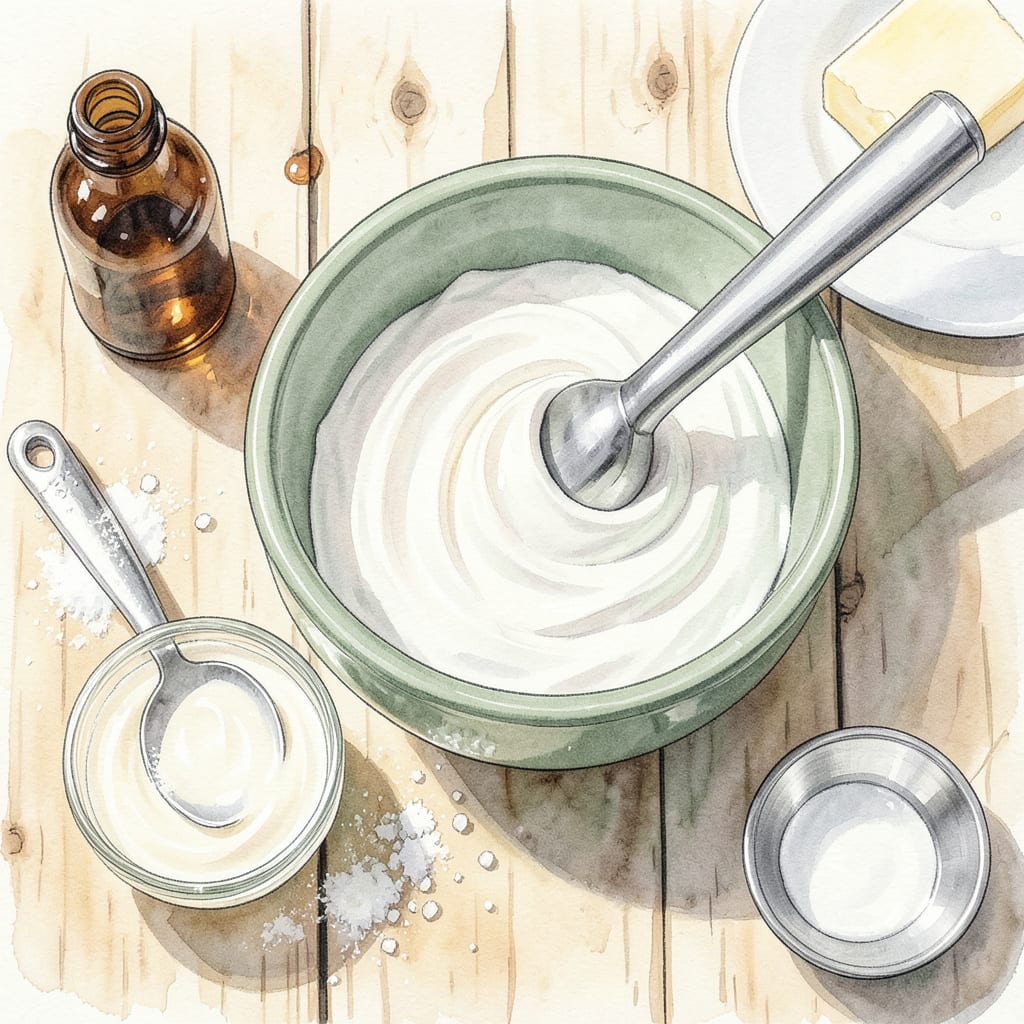
This bettercreme frosting delivers the professional-quality texture bakeries achieve—light yet stable, smooth yet pipeable. The secret lies in the precise balance of shortening and butter, which creates a frosting that holds its shape without becoming greasy or overly sweet. I developed this recipe after years of testing ratios to eliminate the gritty texture common in homemade versions.
What sets this apart is its versatility: it pipes clean edges for decorative work, spreads smoothly for layer cakes, and maintains structure in warm kitchens. The neutral base accepts flavor variations beautifully—whether you’re adding cocoa powder for chocolate frosting or citrus zest for a bright finish. Every batch yields consistent results, making it my go-to for both simple cupcakes and elaborate cake designs.
Ingredients for Bettercreme Frosting
Eight simple ingredients transform into that bakery-quality frosting you’ve been chasing—smooth, stable, and utterly pipeable.
| Ingredient | Amount | Notes |
|---|---|---|
| Vegetable Shortening 🧈 | ¾ cup | High-ratio preferred for stability |
| Unsalted Butter 🧈 | ½ cup | Softened to room temperature |
| Powdered Sugar 🍚 | 4 cups | Sifted for ultra-smooth texture |
| Vanilla Extract 💧 | 1 tbsp | Pure extract, not imitation |
| Heavy Cream 🥛 | 2 tbsp | Cold, for perfect consistency |
| Salt 🧂 | ¼ tsp | Fine sea salt preferred |
| Almond Extract 🌰 | ¼ tsp | Optional, enhances flavor depth |
| Lemon Juice 🍋 | ½ tsp | Freshly squeezed, balances sweetness |
[recipe_ingredient_scaler]
The shortening is non-negotiable here—Crisco or Sweetex high-ratio brands give that professional stability. Butter quality matters too; I swear by Plugrá or Kerrygold for their higher fat content (less water = less greasy frosting). Powdered sugar should be ultra-fine—if yours is grainy, pulse it in the food processor first. The vanilla? Nielsen-Massey or Rodelle are worth the splurge for that pure, clean flavor.
No almond extract? A splash of coconut extract adds similar depth, or just omit it—the vanilla carries the flavor. Heavy cream can be swapped with whole milk (add 1 extra tbsp), but avoid low-fat; the fat is crucial for structure. If you’re in a pinch, cold coffee creamers (like International Delight) work surprisingly well. The lemon juice isn’t just for flavor—it cuts sweetness and extends shelf life, so don’t skip it.
Frosting keeps 5 days refrigerated in an airtight container—press plastic wrap directly on the surface to prevent crusting. For longer storage, freeze for up to 3 months; thaw overnight in the fridge, then rewhip with a splash of cream. Pro tip: Make a double batch and freeze half in piping bags. Label with the date and flavor (vanilla, chocolate, etc.) for easy grab-and-decorate sessions.
Step-by-Step Instructions for Bettercreme Frosting
This foolproof method delivers that signature light, fluffy texture you love—every single time.
Step 1: Cream the Fats to Perfection
In a large mixing bowl, combine the 0.75 cup vegetable shortening and 0.5 cup unsalted butter that’s been softened to room temperature. Using a paddle attachment on medium-high speed, beat these together for 3-4 minutes until the mixture becomes pale and noticeably fluffier.
This creaming process incorporates air, which is essential for that light, cloud-like texture. You’ll know it’s ready when the mixture clings to the sides of the bowl and leaves visible trails from the beater. Don’t rush this step—proper aeration prevents a dense, greasy frosting.
Step 2: Gradually Incorporate the Powdered Sugar
With the mixer running on low speed, begin adding the 4 cups powdered sugar about 1 cup at a time. After each addition, pause to scrape down the sides of the bowl with a silicone spatula. This ensures even distribution and prevents pockets of dry sugar.
Once all the sugar is incorporated, increase the speed to medium and beat for an additional 2 minutes. The frosting should transform from grainy to silky smooth. If it appears too thick at this stage, don’t worry—the heavy cream will balance the consistency in the next step.
Step 3: Add Flavorings and Adjust Consistency
With the mixer still running on medium speed, add the 1 tbsp vanilla extract, 0.25 tsp salt, 0.25 tsp almond extract, and 0.5 tsp lemon juice. Allow these to incorporate fully for about 30 seconds before adding the 2 tbsp heavy cream.
The heavy cream should be added slowly while mixing. Watch as the frosting transforms—it will become glossier and more pliable. The perfect piping consistency should hold a soft peak when you lift the beater, but still spread smoothly with a spatula. If needed, add additional cream by the teaspoon until you reach this ideal texture.
Step 4: Final Whipping for Ultimate Fluffiness
Increase the mixer speed to high and whip the frosting for a final 2-3 minutes. This last step is crucial—it incorporates maximum air, creating that signature Bettercreme lightness. You’ll notice the frosting become even paler in color and nearly double in volume.
To test for doneness, stop the mixer and examine the texture. When you press a finger lightly into the frosting, it should hold its shape with just a slight bounce back. The surface should appear matte rather than greasy, indicating perfect emulsification of the fats and sugars.
Regional Styles of This Recipe
Southern Bakery Style
The South takes bettercreme seriously—think butter pecan variations with toasted pecans folded in. I add 2 tbsp finely chopped pecans and 1 tsp brown sugar for that caramelized depth. The key is toasting the nuts first in a dry skillet until fragrant. This style pairs perfectly with red velvet cakes at church socials. 🌰
For a true Southern touch, swap the vanilla extract for 1 tbsp bourbon vanilla (I use Savannah Bee Company brand). The subtle oak notes complement the shortening’s richness. This version holds up beautifully in humid weather—critical for outdoor picnics and porch gatherings.
Midwest Classic
Midwestern bakeries keep it simple but perfect—this is where bettercreme shines on funfetti cakes and birthday sheet cakes. The trick is adding 1 tsp clear vanilla extract to maintain that pure white color. I learned this from a St. Louis baker who swore by McCormick’s clear vanilla for wedding cakes.
For extra stability in layer cakes, reduce the heavy cream to 1 tbsp and add 1 tbsp corn syrup. This prevents bulging between layers during summer potlucks. The texture stays smooth enough to pipe rosettes but firm enough to hold intricate designs.
West Coast Citrus
California bakers brighten bettercreme with citrus—try adding 1 tbsp orange zest and 1 tsp lime juice to the base recipe. The acidity cuts through the sweetness beautifully. I first tasted this version at a Santa Monica bakery where they paired it with coconut cake. ✨
For a tropical twist, fold in ¼ cup toasted coconut flakes after whipping. Use unsweetened coconut to avoid graininess. This variation works wonderfully with pineapple upside-down cakes and pairs surprisingly well with chilled rosé wines.
Northeast Elegance
New England bakeries elevate bettercreme with European techniques. Try whipping in 2 tbsp mascarpone cheese at the end for a luxurious texture. The tang complements the sweetness perfectly. I discovered this trick at a Boston patisserie where they used it for opera cakes.
For holiday cakes, add ½ tsp cinnamon and ¼ tsp nutmeg to the base. This spiced version becomes magical on gingerbread or pumpkin layers. The warmth of the spices balances the cool, smooth frosting beautifully.
Texas Bold Flavors
Everything’s bigger in Texas, including the frosting flavors. For a true Lone Star version, add 1 tbsp espresso powder and 1 tsp cayenne to the base. The heat builds slowly—perfect with chocolate cakes. I first tried this at a Dallas BBQ joint that served it on smoked chocolate cake.
For a brunch-worthy version, mix in 2 tbsp cream cheese and 1 tsp maple syrup. This creates a tangy-sweet frosting that pairs wonderfully with bacon-topped cupcakes. The cream cheese adds structure for piping intricate designs.
Pacific Northwest
The PNW loves its local flavors—try infusing the heavy cream with 1 tbsp lavender buds (steep for 10 minutes, then strain). The floral notes work beautifully with honey cakes. I forage wild lavender along the coast for this variation during summer months.
For a woodsy twist, add ½ tsp Douglas fir tip powder (available at specialty spice shops). This earthy version complements spiced carrot cakes and pairs surprisingly well with dark stouts. The piney aroma makes it perfect for winter holiday desserts.
Nutrition Facts

Trained in classic French technique but raised on slow-cooked ribs and spicy rubs, she blends culinary skill with smoke and soul.
- Recipe for Boneless Pork Chops in Cast Iron Skillet: Sear and Baste to Juicy Perfection - October 3, 2026
- Recipe for Boneless Cross Rib Roast: Slow-Roasted Beef with Herb Crust - October 3, 2026
- Hamburgers in Sauce Recipe Crock Pot: Slow-Cooked Savory Delight - October 3, 2026