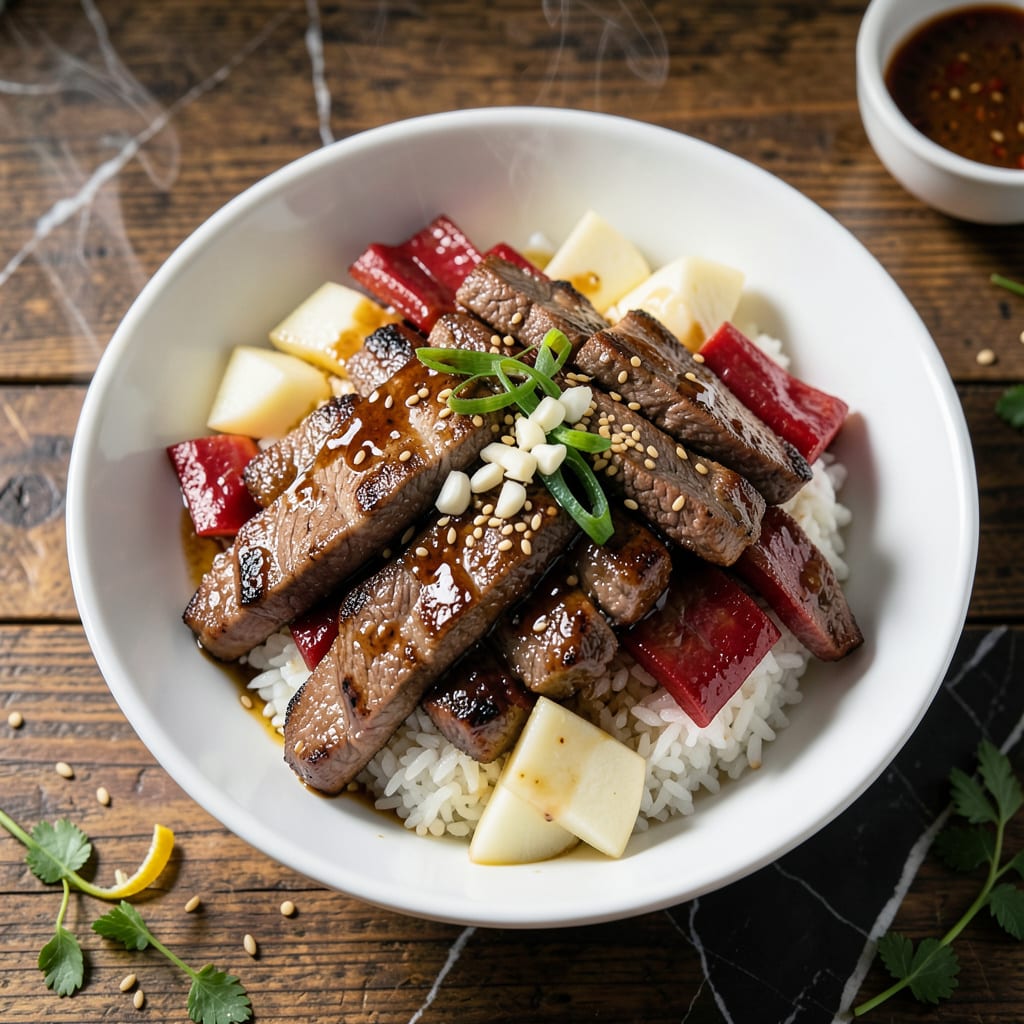
This Korean BBQ beef delivers the authentic sweet-savory flavor you crave from Bibibop. The marinade combines soy sauce, brown sugar, and garlic for a perfectly balanced taste.
Cook it hot and fast for tender, caramelized meat that pairs beautifully with rice and fresh vegetables. This restaurant-quality dish brings Korean flavors to your home kitchen.
Ingredients for Bibibop Korean Bbq Beef
Thinly sliced ribeye and a bold marinade bring authentic Korean BBQ flavors to your table.
| Ingredient | Amount | Notes |
|---|---|---|
| Ribeye Steak 🥩 | 1 ½ lb | Thinly sliced against the grain |
| Soy Sauce 🫒 | ½ cup | Low-sodium preferred for balance |
| Brown Sugar 🍚 | ⅓ cup | Packed, for sweetness and caramelization |
| Garlic Cloves 🧄 | 6 cloves | Minced for maximum flavor infusion |
| Asian Pear 🍐 | ½ whole | Grated, tenderizes the meat |
| Sesame Oil 🫒 | 2 tbsp | Toasted for nutty aroma |
| Rice Vinegar 🍶 | 2 tbsp | Balances sweetness with acidity |
| Gochujang 🌶️ | 2 tbsp | Korean chili paste for depth |
| Fresh Ginger 🌿 | 1 tbsp | Grated for zesty kick |
| Green Onions 🧅 | 4 whole | Thinly sliced for garnish |
| Toasted Sesame Seeds 🌰 | 1 tbsp | For nutty crunch and visual appeal |
| Black Pepper 🌶️ | 1 tsp | Freshly ground for best flavor |
[recipe_ingredient_scaler]
The ribeye is non-negotiable for that melt-in-your-mouth texture—look for well-marbled cuts at Whole Foods or Costco. Asian pear might seem odd, but it’s the secret to tender meat (Bartlett pear works in a pinch). Kikkoman soy sauce is a solid choice, but any good-quality brand will do. For the gochujang, H-Mart or an Asian grocery store will have the best selection and prices.
No ribeye? Flank steak or sirloin work too—just slice extra thin. Out of Asian pear? Kiwi or pineapple can substitute for the tenderizing enzymes. Skip the gochujang? Sriracha plus a dash of miso gets you close. The sesame oil should be toasted—Kadoya brand is my go-to. Brown sugar can be swapped for coconut sugar if you prefer.
Marinate the beef for at least 4 hours (overnight is ideal). Cooked beef keeps in the fridge for 3-4 days and freezes beautifully for 2-3 months. Slice against the grain just before serving for maximum tenderness.
Why You’ll Love This Recipe
- One Pan Marvel: I toss the ribeye with soy, brown sugar, and garlic right in the pan—minimal cleanup, maximum flavor.
- Sweet-Savory Magic: The Asian pear in the marinade tenderizes the beef while adding this subtle, crave-worthy sweetness.
- Meal Prep Hero: I make a double batch on Sunday and it tastes just as good in bowls or tacos all week.
- Budget Stretch: Ribeye feels fancy, but a little goes a long way with these bold flavors. Honestly, it feeds us for two meals.
Step-by-Step Instructions for Korean BBQ Beef
Here’s the method I use to create perfectly marinated beef with irresistible caramelized edges.
Step 1: Prepare and Tenderize the Ribeye
Start by thinly slicing the 1.5 lb ribeye steak against the grain into ¼-inch thick strips. This shortens the muscle fibers, ensuring tender meat that practically melts in your mouth. Place the slices in a large bowl.
Next, grate the ½ Asian pear directly over the beef. The natural enzymes in the pear work as a tenderizer, breaking down proteins without making the meat mushy. This is a traditional Korean technique that elevates the texture beautifully.
Step 2: Create the Flavorful Marinade
In a separate bowl, whisk together the ½ cup soy sauce, ⅓ cup brown sugar, 2 tbsp sesame oil, 2 tbsp rice vinegar, and 2 tbsp gochujang until the sugar dissolves completely. The gochujang adds a subtle heat and depth that balances the sweetness.
Add the 6 minced garlic cloves, 1 tbsp grated fresh ginger, and 1 tsp black pepper to the marinade. Stir well to combine. These aromatics form the flavor backbone of your dish, so don’t skimp on the freshness.
Step 3: Marinate for Maximum Flavor Infusion
Pour the marinade over the ribeye and pear. Use your hands to thoroughly coat every piece, ensuring the marinade penetrates between the slices. Cover the bowl with plastic wrap and refrigerate for at least 4 hours, or ideally overnight.
The longer it marinates, the more the flavors develop and the meat tenderizes. I’ve found that 12-24 hours yields the best results, with the beef absorbing all the sweet, savory, and umami notes from the marinade.
Step 4: Cook to Caramelized Perfection
Heat a large skillet or grill pan over medium-high heat. Working in batches to avoid overcrowding, cook the beef for 3-4 minutes per side until it develops a deep, glossy caramelization and reaches your desired doneness.
Watch for the edges to turn dark brown and slightly crisp—that’s the sugar in the marinade creating that signature Korean BBQ crust. The beef should be sizzling and fragrant, filling your kitchen with an irresistible aroma.
Step 5: Garnish and Serve Immediately
Transfer the cooked beef to a serving platter. While it’s still hot, sprinkle with the 4 thinly sliced green onions and 1 tbsp toasted sesame seeds. The seeds add a nutty crunch, while the green onions provide a fresh, bright contrast to the rich beef.
Serve immediately over steamed rice or with your favorite Korean sides. The beef should be tender and juicy, with a perfect balance of sweet, savory, and slightly spicy flavors in every bite.
Pro Tips For Making Bibibop Korean Bbq Beef
- Slice Against the Grain: Cut the ribeye thinly against the grain after marinating—this makes the beef incredibly tender and easier to eat with rice.
- Grate the Pear: Use a fine grater for the Asian pear so it melts into the marinade, adding natural sweetness and helping tenderize the meat.
- Don’t Overcook the Beef: Ribeye cooks fast in the marinade’s sugars, so sear it just 2-3 minutes per side on high heat to avoid chewy, dry meat.
- Use Fresh Garlic: Mince the garlic cloves right before mixing the marinade—pre-minced garlic loses its punch and can taste bitter.
Regional Styles of This bibibop korean bbq beef
Seoul Street Style
In bustling Seoul markets, this beef is often grilled on built-in tabletop grills called gogigui. The key is cooking it in small batches over very high heat for just 2-3 minutes per side. This creates an intense caramelization that’s hard to replicate at home without a proper setup. 🔥
Busan Sweet Style
Busan’s coastal location influences its BBQ with more sweetness. They add 1 extra tbsp of brown sugar and sometimes a splash of mirin to the marinade. The result is a glossier, sweeter glaze that pairs perfectly with seafood sides. I love this version with grilled shrimp.
Jeonju Royal Style
Jeonju, the culinary capital, elevates this dish with premium ingredients. They use hanwoo beef (Korean Wagyu) and add 1 tsp of toasted pine nuts to the marinade. The beef is sliced thicker (½ inch) and cooked more slowly for a luxurious mouthfeel.
Gangwon Mountain Style
In the mountainous Gangwon region, wild ingredients shine. Foragers add 1 tbsp of minced wild chives and sometimes dried mushroom powder to the marinade. The beef is often grilled over charcoal for a smokier flavor. I’ve tried this with local herbs from my coastal foraging spots.
Modern Fusion Style
Korean chefs in Los Angeles are reinventing this classic by adding 1 tbsp of miso paste to the marinade. This creates a deeper umami flavor that pairs well with non-traditional sides like roasted Brussels sprouts. The miso also helps the beef develop a richer color during cooking.
Nutrition Facts

Trained in classic French technique but raised on slow-cooked ribs and spicy rubs, she blends culinary skill with smoke and soul.
- Recipe for Boneless Pork Chops in Cast Iron Skillet: Sear and Baste to Juicy Perfection - October 3, 2026
- Recipe for Boneless Cross Rib Roast: Slow-Roasted Beef with Herb Crust - October 3, 2026
- Hamburgers in Sauce Recipe Crock Pot: Slow-Cooked Savory Delight - October 3, 2026