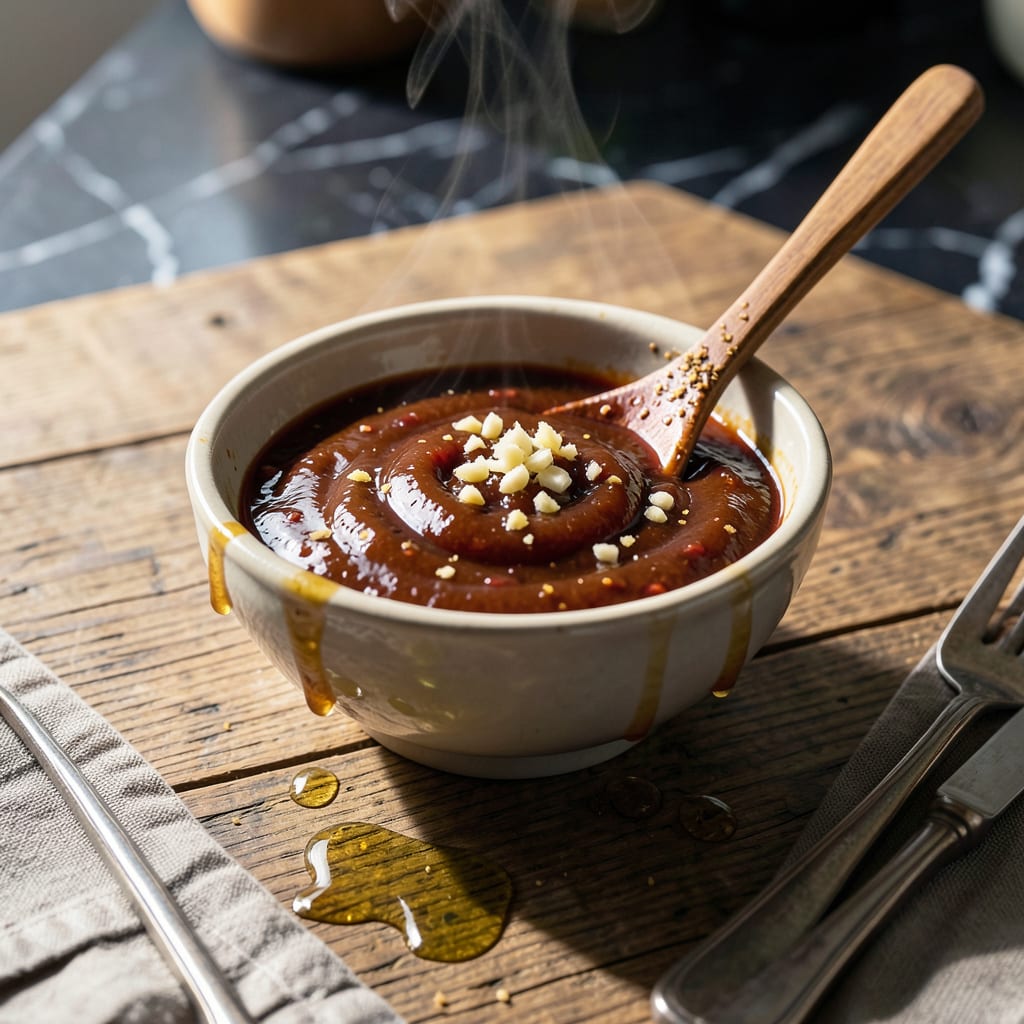
This Korean-inspired sauce brings the perfect balance of sweet and spicy to any dish. I developed this recipe after years of experimenting with Asian flavors and BBQ techniques.
With just a few simple ingredients, you can create a versatile glaze that elevates grilled meats, tofu, or even roasted vegetables. The secret is in the precise ratio of gochujang to honey.
Ingredients for Bibigo Bbq Sauce
Nine ingredients create this Korean-inspired glaze balancing sweet heat perfectly.
| Ingredient | Amount | Notes |
|---|---|---|
| Gochujang 🌶️ | ½ cup | Korean chili paste, essential for spice |
| Honey 🍯 | ⅓ cup | Balances heat with natural sweetness |
| Soy Sauce 🫒 | 3 tbsp | Adds umami depth to sauce |
| Rice Vinegar 💧 | 2 tbsp | Brightens and balances flavors |
| Garlic Cloves 🧄 | 4 cloves | Minced, for aromatic base |
| Fresh Ginger 🌿 | 1 tbsp | Grated, for zesty bite |
| Sesame Oil 🫒 | 1 tbsp | Toasty finish, added last |
| Brown Sugar 🍚 | 2 tbsp | Deepens sweetness and caramelization |
| GoChuGaru 🌶️ | 1 tsp | Korean chili flakes, optional for extra heat |
[recipe_ingredient_scaler]
The gochujang is non-negotiable—look for it in the Asian aisle at Whole Foods or H Mart. Brands like Sempio or Kochukaru deliver authentic flavor. Honey quality matters here; raw or local varieties add complexity. For the soy sauce, low-sodium tamari keeps the salt in check while maintaining depth.
No gochujang? Sriracha plus miso paste can approximate the flavor in a pinch. Honey can be swapped for agave or maple syrup at equal amounts. For a gluten-free version, tamari replaces soy sauce seamlessly. The rice vinegar is flexible—apple cider vinegar works too, though slightly fruitier.
Sauce keeps 1 week in the fridge in an airtight container. For longer storage, freeze in ice cube trays for up to 3 months. Stir well before using, as ingredients may separate over time.
Why You’ll Love This Recipe
- 5-Minute Mix: I just dump all the ingredients in a bowl—gochujang, honey, soy, vinegar, garlic—and stir. No cooking required.
- Sweet & Spicy: The honey and gochujang balance each other out, and the garlic adds that little kick I crave.
- Grill or Drizzle: I slather it on ribs, toss it with wings, or even use it as a dipping sauce for veggies. So versatile.
- Budget Staple: Between us, this costs pennies per batch and keeps in the fridge for weeks. Much cheaper than store-bought.
Step-by-Step Instructions for Korean BBQ Glaze
This method ensures a perfectly balanced sweet-spicy sauce with authentic Korean flavors.
Step 1: Build the Aromatic Base
In a medium saucepan, combine the 0.5 cup Gochujang, 0.33 cup Honey, 3 tbsp Soy Sauce, and 2 tbsp Brown Sugar. I prefer using a heavy-bottomed pan to prevent scorching during the cooking process.
The Gochujang provides the foundational spice while the Honey and Brown Sugar create that signature sweetness. Stir these ingredients together over medium-low heat until the mixture begins to bubble gently at the edges.
Step 2: Incorporate Acid and Aromatics
Add the 2 tbsp Rice Vinegar, 4 cloves Garlic Cloves (minced), and 1 tbsp Fresh Ginger (grated) to the saucepan. The vinegar adds the necessary brightness to balance the rich, sweet-spicy base.
Cook for 3-4 minutes, stirring constantly, until the garlic and ginger become fragrant and the mixture thickens slightly. You’ll notice the sauce darkening and the aromatics softening—this is when you know the flavors are melding properly.
Step 3: Finish and Adjust Consistency
Remove the saucepan from heat and let the mixture cool for 2 minutes. Then stir in the 1 tbsp Sesame Oil and 1 tsp GoChuGaru. The sesame oil adds a nutty depth, while the GoChuGaru introduces an extra layer of heat if desired.
For a smoother texture, you can blend the sauce briefly with an immersion blender. If the sauce is too thick, thin it with 1-2 tablespoons of water to reach your preferred glaze consistency. The finished sauce should coat the back of a spoon with a glossy sheen.
Use immediately for glazing meats or store in an airtight container in the refrigerator for up to 2 weeks. The flavors will deepen as it rests.
Pro Tips For Making Bibigo Bbq Sauce
- Bloom the Gochujang: Heat the gochujang in the pan for 1-2 minutes before adding liquids—this deepens its flavor and removes the raw edge. I learned this the hard way after my first batch tasted flat.
- Mince the Garlic: Finely mince the garlic cloves instead of pressing them; it releases just enough oil for flavor without overpowering the sauce. Sounds picky, but it actually changes the outcome.
- Balance the Sweetness: Taste as you add honey—start with 2 tablespoons, then adjust. After burning a batch by over-sweetening, I now add it gradually.
- Simmer Low and Slow: Keep the heat at medium-low once all ingredients are combined and let it reduce for 5-7 minutes. High heat caramelizes the honey too fast and makes the sauce bitter.
Common Mistakes When Making This Recipe
Overcooking the Sauce
Cooking this glaze on too high heat can make it bitter and thick. I always use medium-low heat and stir constantly to prevent scorching. The sugars in honey and brown sugar burn easily, so patience is key. 🌡️
Skipping the Aromatics
Don’t rush past the garlic and ginger. Cooking them for at least 3-4 minutes releases their full flavor. Raw garlic can taste harsh, while properly cooked aromatics blend seamlessly into the sauce.
Wrong Pan Choice
A thin pan will cause hot spots that burn your sauce. I always use a heavy-bottomed saucepan for even heat distribution. This is especially important with the gochujang’s thick consistency.
Adding Sesame Oil Too Early
Sesame oil’s delicate flavor can turn bitter if heated too long. Always remove the pan from heat and let it cool for 2 minutes before stirring it in. This preserves its nutty aroma.
Inconsistent Thickness
If your sauce is too thick, don’t just add water randomly. Thin it gradually with 1-2 tablespoons at a time until it coats a spoon smoothly. Too thin and it won’t cling to your meats properly. 💡
Ignoring the Rest
Like my French technique training taught me, flavors need time to meld. Let the finished sauce sit for at least 30 minutes before using. This resting period allows all the ingredients to harmonize beautifully.
Nutrition Facts

Trained in classic French technique but raised on slow-cooked ribs and spicy rubs, she blends culinary skill with smoke and soul.
- Recipe for Boneless Pork Chops in Cast Iron Skillet: Sear and Baste to Juicy Perfection - October 3, 2026
- Recipe for Boneless Cross Rib Roast: Slow-Roasted Beef with Herb Crust - October 3, 2026
- Hamburgers in Sauce Recipe Crock Pot: Slow-Cooked Savory Delight - October 3, 2026