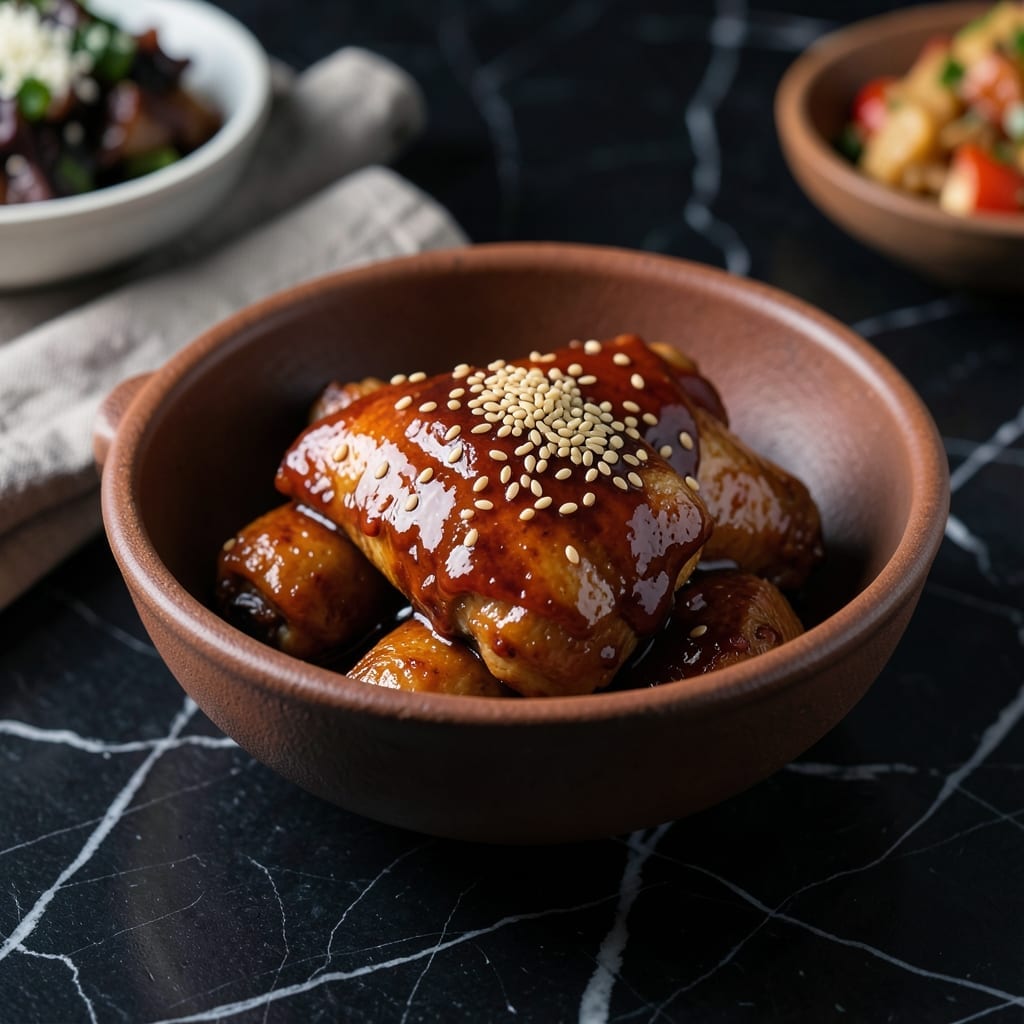
This dish brings the vibrant flavors of Korean barbecue to your home kitchen with minimal effort. The sticky glaze transforms simple chicken into a restaurant-quality meal.
Using Bibigo sauce as the base, this recipe balances sweet, savory, and spicy notes perfectly. The chicken develops a glossy, caramelized coating that’s irresistibly tender.
Ingredients for Bibigo Korean Bbq Sauce Chicken
Transform everyday chicken with bold Korean flavors and a glossy, caramelized finish.
| Ingredient | Amount | Notes |
|---|---|---|
| Boneless Skinless Chicken Thighs 🍗 | 1 ½ lb | Trimmed of excess fat |
| Bibigo Korean BBQ Sauce 🥫 | 1 cup | Plus extra for serving |
| Soy Sauce 🫒 | 2 tbsp | Low-sodium preferred |
| Brown Sugar 🧈 | 2 tbsp | Light or dark variety |
| Rice Vinegar 💧 | 1 tbsp | For acidity balance |
| Sesame Oil 🫒 | 1 tbsp | Toasted for aroma |
| Garlic Cloves 🧄 | 4 cloves | Minced finely |
| Fresh Ginger 🌿 | 1 tbsp | Grated or minced |
| Gochujang 🌶️ | 1 tbsp | Optional for heat |
| Toasted Sesame Seeds 🌰 | 1 tbsp | For garnish |
| Green Onions 🧅 | 3 whole | Thinly sliced |
| Vegetable Oil 🫒 | 1 tbsp | For cooking chicken |
| Kosher Salt 🧂 | ½ tsp | Diamond Crystal preferred |
| Black Pepper 🌶️ | ½ tsp | Freshly ground |
[recipe_ingredient_scaler]
The chicken thighs are non-negotiable here—bone-in works too but boneless ensures even cooking and maximum sauce absorption. Costco or Sam’s Club offer bulk packages perfect for this recipe. For the Bibigo sauce, H-Mart or your local Asian grocery will carry it, but larger Walmart locations often stock it too. Select sauce bottles with intact seals for optimal freshness.
No Bibigo sauce? Combine 3/4 cup hoisin with 2 tbsp gochujang and 1 tbsp soy sauce for a similar profile. Missing gochujang? Sriracha at half the amount adds heat without overpowering. The brown sugar can be swapped for honey or maple syrup (1:1 ratio). Fresh ginger is ideal, but ground ginger at one-fourth the amount works in a pinch.
This tastes best the day it’s made but keeps well for 3-4 days refrigerated. Reheat gently to avoid drying. The sauce can be mixed a day ahead—flavors meld overnight. Freeze cooked chicken with sauce for up to 3 months.
Why You’ll Love This Recipe
- One Pan Wonder: I just toss the chicken thighs with Bibigo sauce, soy, and a splash of rice vinegar—no chopping, no fuss.
- Sweet & Tangy Fix: The brown sugar caramelizes with the BBQ sauce, giving that sticky, finger-licking glaze I can’t resist.
- Meal Prep Magic: I make a big batch Sunday and it tastes just as good reheated for lunch all week.
- Budget Stretcher: Honestly, chicken thighs are cheap, and one bottle of Bibigo sauce goes a long way.
Step-by-Step Instructions for Bibigo Korean BBQ Chicken
Master this glaze technique for restaurant-quality results with minimal effort and maximum flavor.
Step 1: Marinate the Chicken Thighs
In a large bowl, whisk together the 1 cup Bibigo Korean BBQ Sauce, 2 tbsp Soy Sauce, 2 tbsp Brown Sugar, 1 tbsp Rice Vinegar, 1 tbsp Sesame Oil, minced 4 cloves Garlic Cloves, 1 tbsp Fresh Ginger, and 1 tbsp Gochujang until smooth and fully combined.
Add the 1.5 lb Boneless Skinless Chicken Thighs to the marinade, ensuring each piece is thoroughly coated. I like to massage the marinade into the chicken to maximize flavor penetration. Cover and refrigerate for at least 30 minutes, though 2 hours yields deeper flavor infusion.
Step 2: Sear the Chicken to Lock in Flavors
Heat 1 tbsp Vegetable Oil in a large skillet over medium-high heat until shimmering. Remove the chicken from the marinade (reserve the marinade for later) and pat it dry with paper towels for better browning. Season lightly with 0.5 tsp Kosher Salt and 0.5 tsp Black Pepper.
Add the chicken to the hot pan and sear for 4-5 minutes per side until golden brown and slightly charred in spots. Don’t crowd the pan—work in batches if necessary. The chicken should release easily when properly seared.
Step 3: Create the Sticky Glaze
Pour the reserved marinade into the same skillet and bring to a gentle simmer over medium heat. Cook for 3-4 minutes, stirring frequently, until the sauce thickens and becomes glossy. This step transforms the marinade into a rich, sticky glaze.
Return the seared chicken to the skillet, coating each piece completely in the glaze. Reduce heat to medium-low and cook for an additional 3-4 minutes until the chicken reaches an internal temperature of 165°F and the glaze clings beautifully to the meat.
Step 4: Garnish and Serve
Transfer the glazed chicken to a serving platter. Drizzle any remaining sauce from the pan over the top for extra shine. Sprinkle with 1 tbsp Toasted Sesame Seeds and thinly sliced 3 whole Green Onions for freshness and crunch.
Let the chicken rest for 5 minutes before serving to allow the juices to redistribute. The final result should feature tender, juicy chicken with a glossy, finger-licking glaze that delivers bold Korean flavors in every bite.
Pro Tips For Making Bibigo Korean Bbq Sauce Chicken
- Score the Thighs: Cut 2-3 shallow slits into each thigh before marinating—this lets the Bibigo BBQ sauce penetrate deeper and speeds up cooking. I learned this the hard way after my first few batches tasted bland on the inside.
- Simmer the Sauce: Reduce the Bibigo sauce with soy sauce and brown sugar for 3-4 minutes before adding chicken. This thickens it just enough to cling better and intensifies the flavor.
- Skip the Overcrowding: Cook thighs in a single layer with space between them—steer clear of piling them up or they’ll steam instead of caramelize. After burning two batches, I finally figured out the pan needs room to do its job.
- Rest Before Serving: Let the chicken rest 5 minutes under foil after cooking. Sounds weird, but it works: the juices redistribute and the sauce soaks in just a little more.
Essential Equipment for bibigo korean bbq sauce chicken
Skillet Selection
I always reach for my 12-inch cast iron skillet for this dish—it retains heat beautifully and develops that perfect sear. Lodge makes a great affordable option. A heavy stainless steel skillet works too, but avoid nonstick for the best caramelization.
Marinating Bowl
Use a large glass or ceramic mixing bowl for marinating. I love my Pyrex 8-cup because it’s big enough to hold all the chicken and sauce with room to mix. Plastic can absorb odors, so I avoid it for strong flavors like this.
Tongs for Turning
Invest in a good pair of 12-inch locking tongs. I prefer OXO’s stainless steel for precision and grip. They let you turn the chicken without piercing it, keeping all those juices inside where they belong.
Instant-Read Thermometer
Don’t guess at doneness—use a digital instant-read thermometer. I swear by my ThermoWorks ThermoPop for accuracy. It gives me confidence that the chicken hits 165°F every time without overcooking. 🌡️
Sauce Reduction Tool
A wooden spoon is perfect for stirring the glaze as it reduces. The flat edge helps scrape up those flavorful browned bits from the pan. I keep a dedicated spoon just for sauces to avoid any cross-contamination.
Serving Platter
Use a large, shallow platter to showcase the chicken. I love my stoneware platter from a local pottery shop—it retains heat and looks beautiful. The wide surface lets the glaze shine and makes serving easy.
Frequently Asked Questions
Can I use chicken breasts instead of thighs?
Yes, but they’ll be less juicy. Thighs stay tender with the long marinade. If using breasts, reduce marinating time to 30 minutes and monitor closely to prevent drying.
How can I make this spicier?
Add 1 extra tbsp gochujang or a pinch of red pepper flakes to the marinade. For serious heat, mix in 1 tsp sriracha before cooking.
What sides pair well with this dish?
Steamed rice soaks up the extra sauce beautifully. For freshness, try quick-pickled cucumbers or a simple spinach salad with sesame dressing.
Can I bake this instead of pan-searing?
Bake at 400°F for 20-25 minutes, basting with sauce halfway through. Finish under the broiler for 2 minutes for extra caramelization.
Nutrition Facts

Trained in classic French technique but raised on slow-cooked ribs and spicy rubs, she blends culinary skill with smoke and soul.
- Recipe for Oven Baked Halibut: Buttery White Fish with Zesty Lemon Topping - October 3, 2026
- Meatball Curry Recipe Kerala Style: Coconut-Spiced Gravy With Tender Bites - October 3, 2026
- Recipe for Curried Tofu: Aromatic Spices With Crispy Edges - October 3, 2026