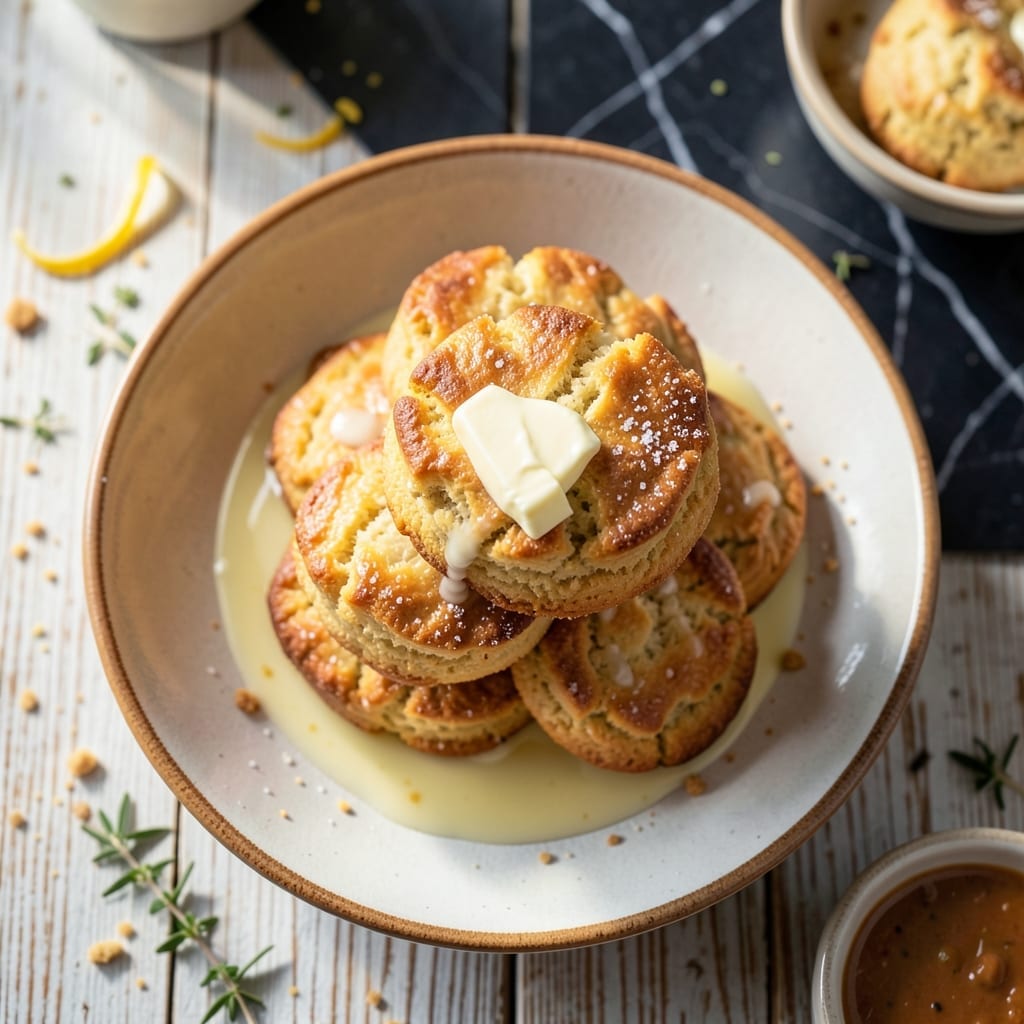
This recipe proves that flaky, tender biscuits don’t require shortening to achieve perfect layers. The secret lies in using cold butter and a precise folding technique.
You’ll get golden, buttery biscuits with a light, airy texture that rises beautifully in the oven. The result is a classic side dish with rich flavor and no greasy aftertaste.
Ingredients for Biscuit Recipe with Butter Not Shortening
Cold butter and simple pantry staples create these flaky, golden biscuits with ease.
| Ingredient | Amount | Notes |
|---|---|---|
| All-Purpose Flour 🌾 | 2 cups | Plus extra for dusting |
| Baking Powder 🧂 | 1 tbsp | Aluminum-free preferred |
| Granulated Sugar 🍚 | 1 tbsp | Balances the richness |
| Salt 🧂 | 1 tsp | Fine sea salt preferred |
| Unsalted Butter 🧈 | ½ cup | Cold, cubed for layers |
| Whole Milk 🥛 | ¾ cup | Cold, plus extra for brushing |
| Baking Soda 🧂 | ½ tsp | For extra lift |
| Cream of Tartar 🧂 | ½ tsp | Stabilizes the rise |
[recipe_ingredient_scaler]
The butter is non-negotiable here—use unsalted, high-fat European-style if you can find it (like Plugrá or Kerrygold). It needs to stay cold, so cube it and chill the cubes for 10 minutes before starting. The flour should be all-purpose, nothing fancy. I always weigh mine (8 oz per cup) for consistency, but scooping and leveling works fine if you’re not picky.
No cream of tartar? White vinegar or lemon juice (1/2 tsp) in the milk does the same thing. Out of milk? Buttermilk at the same amount works beautifully, or thin plain yogurt with a splash of milk. For a richer flavor, swap 2 tbsp of milk for heavy cream. The baking powder must be fresh—test it by dropping a spoonful in hot water. If it doesn’t bubble vigorously, toss it.
Dough keeps in the fridge for 24 hours or can be frozen for 1 month. Baked biscuits are best the day they’re made but reheat beautifully at 350°F for 5-10 minutes. Leftovers? Split, toast, and slather with jam.
Why You’ll Love This Recipe
- One-Bowl Wonder: I mix everything right in the same bowl—no extra dishes, just flour, butter, and a wooden spoon.
- Buttery Richness: The unsalted butter gives these biscuits a depth of flavor shortening just can’t match.
- Morning to Midnight: They’re just as good with jam at breakfast as they are mopping up dinner gravy.
- Pocketbook Friendly: A stick of butter and pantry staples make a dozen biscuits for pennies.
Step-by-Step Instructions for Biscuits With Butter
Here’s the method. Straightforward, tested, works every time.
Step 1: Combine Dry Ingredients for Maximum Rise
In a large mixing bowl, whisk together the 2 cups All-Purpose Flour, 1 tbsp Baking Powder, 1 tbsp Granulated Sugar, 1 tsp Salt, 0.5 tsp Baking Soda, and 0.5 tsp Cream of Tartar. I always whisk for at least 30 seconds to ensure everything is evenly distributed.
This combination of leavening agents creates those tall, flaky layers you’re after. The cream of tartar works with the baking soda for extra lift, while the baking powder provides consistent rise throughout the baking process.
Step 2: Cut In Cold Butter for Flaky Layers
Add the 0.5 cup Unsalted Butter, which should be cold and cubed. Using a pastry cutter or two forks, cut the butter into the flour mixture until the largest pieces are about the size of peas. This step is crucial—you want visible butter pieces in the dough for those flaky layers.
I prefer to work quickly here to keep the butter cold. If the butter starts to soften, pause and chill the bowl in the freezer for 5 minutes before continuing. The cold butter will create steam as it bakes, which is what separates the dough into those beautiful layers.
Step 3: Add Milk and Form the Dough
Make a well in the center of the flour-butter mixture and pour in the 0.75 cup Whole Milk, which should also be cold. Using a wooden spoon, stir just until the dough begins to come together. It will look shaggy and slightly sticky—that’s exactly what you want.
Turn the dough out onto a lightly floured surface and gently fold it over itself 4-5 times. This creates additional layers without overworking the dough. Avoid kneading, as this can make the biscuits tough. The dough should be soft but manageable.
Step 4: Shape and Cut the Biscuits
Pat the dough into a 1-inch thick rectangle. For the flakiest results, I use a sharp 2.5-inch biscuit cutter and press straight down without twisting. Twisting the cutter can seal the edges and prevent the biscuits from rising properly.
Place the biscuits on a parchment-lined baking sheet so they’re just touching each other. This close placement helps them rise upward rather than outward. Brush the tops with a bit of extra whole milk for a golden finish.
Step 5: Bake to Golden Perfection
Preheat your oven to 450°F and bake the biscuits for 12-15 minutes, or until they’re tall and golden brown on top. I start checking at the 12-minute mark because ovens can vary.
You’ll know they’re done when the tops are deep golden brown and the bottoms are lightly browned as well. The biscuits should have risen significantly and have a light, flaky texture when broken open. Serve warm for the best experience.
Pro Tips For Making Biscuit Recipe With Butter Not Shortening
- Chill the Butter: Cut your unsalted butter into small cubes and freeze for 10 minutes before mixing—I learned this the hard way after my biscuits turned out flat and greasy instead of flaky.
- Don’t Overwork Dough: Mix just until the flour is incorporated, even if it looks shaggy. After burning three batches, I finally figured out that overmixing develops gluten, making biscuits tough.
- Use Ice-Cold Liquid: Sounds weird, but it works: replace any water in the recipe with ice-cold buttermilk or milk to keep the butter solid longer, creating better layers.
- Bake Immediately: Get the biscuits in the oven as soon as they’re shaped—waiting even 10 minutes lets the baking powder lose its kick, and your biscuits won’t rise as high.
Flavor Customization for This Dish
Make it Spicier 🔥
For a bold kick, mix in 1 tsp of cayenne pepper or ½ tsp of chipotle powder into your dry ingredients. This adds a warm, fiery depth that pairs beautifully with the rich, buttery layers of your biscuits. The heat enhances the savory notes without overpowering the flaky texture.
Add Sweetness 🍯
If you prefer a sweeter biscuit, stir in 2 tbsp of honey or 3 tbsp of brown sugar into the wet ingredients. The honey adds a floral touch, while brown sugar brings a caramel-like richness. Balance the sweetness with a pinch of salt to keep the flavors well-rounded.
Tangy Twist 🍋
A splash of acidity can brighten up your biscuits. Try adding 1 tbsp of lemon zest or 2 tbsp of buttermilk to the dough. The zest adds a citrusy zing, while buttermilk introduces a subtle tang that complements the buttery base.
Extra Smoky 🌬️
For a smoky flavor, incorporate 1 tsp of smoked paprika or ½ tsp of liquid smoke into your dry mix. This works especially well if you’re serving the biscuits with hearty dishes like barbecue or stew, as it adds a deep, woodsy note.
Umami Boost 🧂
Enhance the savory depth with 1 tbsp of grated Parmesan or 1 tsp of garlic powder. Parmesan adds a salty, nutty richness, while garlic powder brings a subtle, aromatic punch. Both options elevate the biscuits’ flavor profile without overwhelming the buttery goodness.
Nutrition Facts

Trained in classic French technique but raised on slow-cooked ribs and spicy rubs, she blends culinary skill with smoke and soul.
- Recipe for Boneless Pork Chops in Cast Iron Skillet: Sear and Baste to Juicy Perfection - October 3, 2026
- Recipe for Boneless Cross Rib Roast: Slow-Roasted Beef with Herb Crust - October 3, 2026
- Hamburgers in Sauce Recipe Crock Pot: Slow-Cooked Savory Delight - October 3, 2026