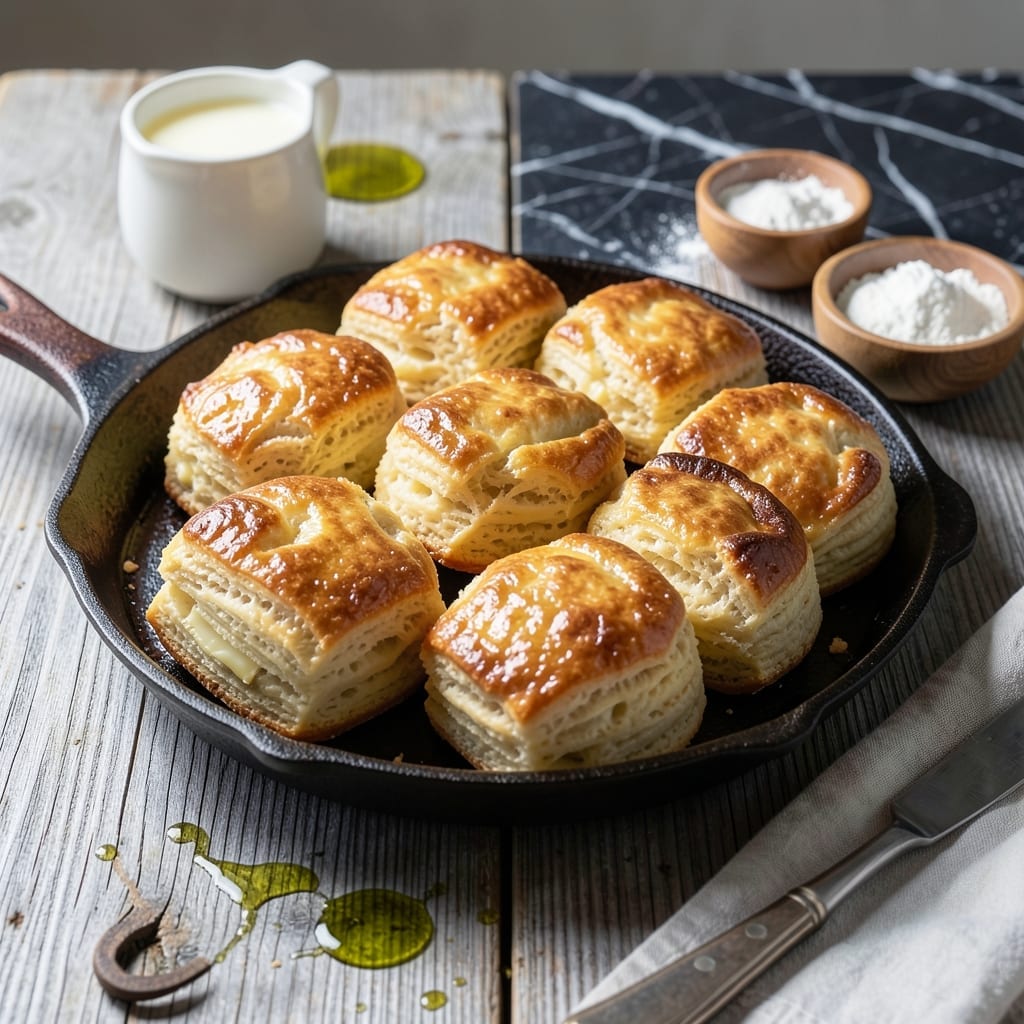
Achieving flaky biscuits at home doesn’t require complicated techniques or specialty ingredients. This method uses self-rising flour to simplify the process while delivering perfect layers every time.
With just a few basic ingredients and a gentle touch, you’ll create biscuits that rise tall and separate beautifully. The key is handling the dough minimally to preserve those coveted layers.
Ingredients for Biscuit Recipe with Self Rising Flour
Self-rising flour streamlines this flaky biscuit recipe with minimal effort and maximum layers.
| Ingredient | Amount | Notes |
|---|---|---|
| Self-Rising Flour 🌾 | 2 cups | All-purpose substitute requires baking powder |
| Unsalted Butter 🧈 | ½ cup | Cold, cubed for flakiness |
| Whole Milk 🥛 | ¾ cup | Cold for tender layers |
| Baking Powder 🧂 | 1 tbsp | Only if using all-purpose flour |
| Salt 🧂 | ½ tsp | Fine sea salt preferred |
| Sugar 🍚 | 1 tsp | Optional for slight sweetness |
[recipe_ingredient_scaler]
The flour is the foundation here—White Lily is the gold standard for Southern biscuits (available at Walmart or Publix in the South). Self-rising already contains salt and leavening, so if you substitute all-purpose, you’ll need to add baking powder and salt. The butter must be ice-cold; I cut mine into small cubes and chill them again before mixing (worth the extra minute).
No self-rising flour? Use all-purpose plus 1 tbsp baking powder and 0.5 tsp salt per cup. For extra flakiness, frozen grated butter works even better than cubed. Whole milk is ideal, but buttermilk (reduce by 1 tbsp) adds tang. Skip the sugar if you prefer savory biscuits—totally optional here.
Biscuits are best the day they’re made, but leftovers keep 2-3 days in an airtight container. Reheat wrapped in foil at 350°F for 10 minutes. Dough can be frozen for 1 month—thaw before baking (don’t refreeze).
Why You’ll Love This Recipe
- No-Fuss Mixing: Honestly, self-rising flour does half the work—just cut in cold butter, add milk, and you’re done.
- Buttery Layers: That flaky, golden crust with a tender center comes from folding the dough just right. Worth every second.
- Breakfast to Dinner: I serve these with jam at dawn, alongside stew at supper, or as a snack with honey. Between us, they disappear fast.
Step-by-Step Instructions for Biscuits With Self-Rising Flour
This method ensures tall, flaky layers with minimal effort and maximum consistency.
Step 1: Chill and Cut the Fat
Begin by placing the 0.5 cup unsalted butter in the freezer for 10 minutes to firm up. Cold butter is non-negotiable for flakiness—when it hits the oven, it creates steam pockets that separate the dough into layers. Cut the chilled butter into ½-inch cubes and keep them in the freezer while you measure the dry ingredients.
If your kitchen is warm, I recommend chilling the mixing bowl as well. This prevents the butter from softening prematurely as you work, which would compromise the texture of your final biscuits.
Step 2: Combine Dry Ingredients and Incorporate Butter
In your chilled bowl, whisk together the 2 cups self-rising flour, 0.5 tsp salt, and 1 tsp sugar until evenly distributed. The sugar adds subtle sweetness that balances the richness, while the salt enhances all the flavors.
Add the cubed butter to the flour mixture. Using a pastry cutter or your fingertips, work the butter into the flour until the mixture resembles coarse crumbs with pea-sized butter pieces visible. This step should take about 3-4 minutes—stop when the largest butter chunks are the size of small peas. Visible butter flecks are what create those coveted flaky layers.
Step 3: Add Liquid and Form the Dough
Create a well in the center of the flour-butter mixture and pour in the 0.75 cup whole milk. Using a fork, gently stir the mixture just until the dry ingredients are moistened. The dough will look shaggy and slightly sticky—that’s exactly what you want.
Turn the dough out onto a lightly floured surface and gently pat it into a 1-inch-thick rectangle. Avoid overworking the dough; excessive handling develops gluten, which makes biscuits tough rather than tender. Fold the dough in half like a book and pat it down again to 1-inch thickness. This lamination step creates additional layers for extra flakiness.
Step 4: Cut and Bake to Golden Perfection
Using a 2½-inch biscuit cutter, press straight down into the dough without twisting—twisting seals the edges and prevents rising. Gather the scraps, gently pat them into 1-inch thickness, and cut more biscuits. You should get about 8 biscuits from this recipe.
Place the biscuits on a parchment-lined baking sheet, ensuring they touch slightly—this helps them rise upward rather than outward. Bake in a preheated 450°F oven for 12-15 minutes until the tops are golden brown and the layers are clearly visible. The biscuits are done when the bottoms are also golden and they sound hollow when tapped.
Pro Tips For Making Biscuit Recipe With Self Rising Flour
- Chill the Butter: Cut your unsalted butter into small cubes and freeze for 10 minutes before mixing—cold butter creates flaky layers, and I learned this the hard way after my first few biscuits came out dense.
- Skip Overworking: Mix just until the dough comes together, even if it looks shaggy. After burning three batches of tough biscuits, I finally figured out that overmixing develops gluten.
- Use Cold Milk: Swap room-temp milk for ice-cold whole milk to keep the butter from melting too soon. Sounds weird, but it works: your biscuits will rise higher and stay tender.
- Start Hot, Finish Fast: Bake at 475°F for 12-15 minutes—high heat guarantees a golden crust and prevents dry biscuits. My grandmother swore by this, and she was right.
Best Sauces and Condiments for This Dish
Classic Gravy Pairing
Sawmill gravy is my go-to for biscuits. Brown ¼ cup sausage drippings with 2 tbsp flour, then whisk in 2 cups whole milk until thickened. Pour this creamy, peppery gravy over split biscuits for a Southern classic. 💛
Honey Butter Spread
Mix ½ cup softened butter with ¼ cup honey and a pinch of sea salt. This sweet-savory spread is perfect for breakfast biscuits. I use local clover honey for the best flavor.
Fruit Compote
Simmer 2 cups berries with 2 tbsp sugar and 1 tsp lemon juice for 10 minutes. The tartness cuts through the richness of the biscuits beautifully.
Spicy Option
Add 1 tbsp hot honey and ½ tsp cayenne to melted butter for dipping. This gives a sweet-heat kick that wakes up your taste buds. 🔥
Cheesy Twist
Split warm biscuits and stuff with sharp cheddar slices or pepper jack. The cheese melts into the layers, creating a gooey, irresistible treat.
Jam Variety
High-quality strawberry preserves or blackberry jam work wonderfully. I prefer Bonne Maman brand for its fruit-forward flavor without being overly sweet.
Nutrition Facts
Frequently Asked Questions
Can I use buttermilk instead of whole milk?
Yes! Use 0.75 cup buttermilk and reduce by 1 tablespoon. The acidity adds tang and tenderness. Avoid overmixing to keep biscuits light.
Why are my biscuits tough?
Overworking the dough develops gluten. Gently pat and fold just until combined—visible flour flecks are fine. Cold butter is also key for flakiness.
How do I make biscuits without a cutter?
Use a glass or knife to cut 1-inch-thick squares. Press straight down—no twisting—to ensure even rising. Re-roll scraps once for more biscuits.
Can I freeze the dough?
Yes! Shape and cut biscuits, then freeze on a tray. Transfer to a bag and store for 1 month. Bake from frozen, adding 2-3 minutes to time.

Trained in classic French technique but raised on slow-cooked ribs and spicy rubs, she blends culinary skill with smoke and soul.
- Recipe for Boneless Pork Chops in Cast Iron Skillet: Sear and Baste to Juicy Perfection - October 3, 2026
- Recipe for Boneless Cross Rib Roast: Slow-Roasted Beef with Herb Crust - October 3, 2026
- Hamburgers in Sauce Recipe Crock Pot: Slow-Cooked Savory Delight - October 3, 2026