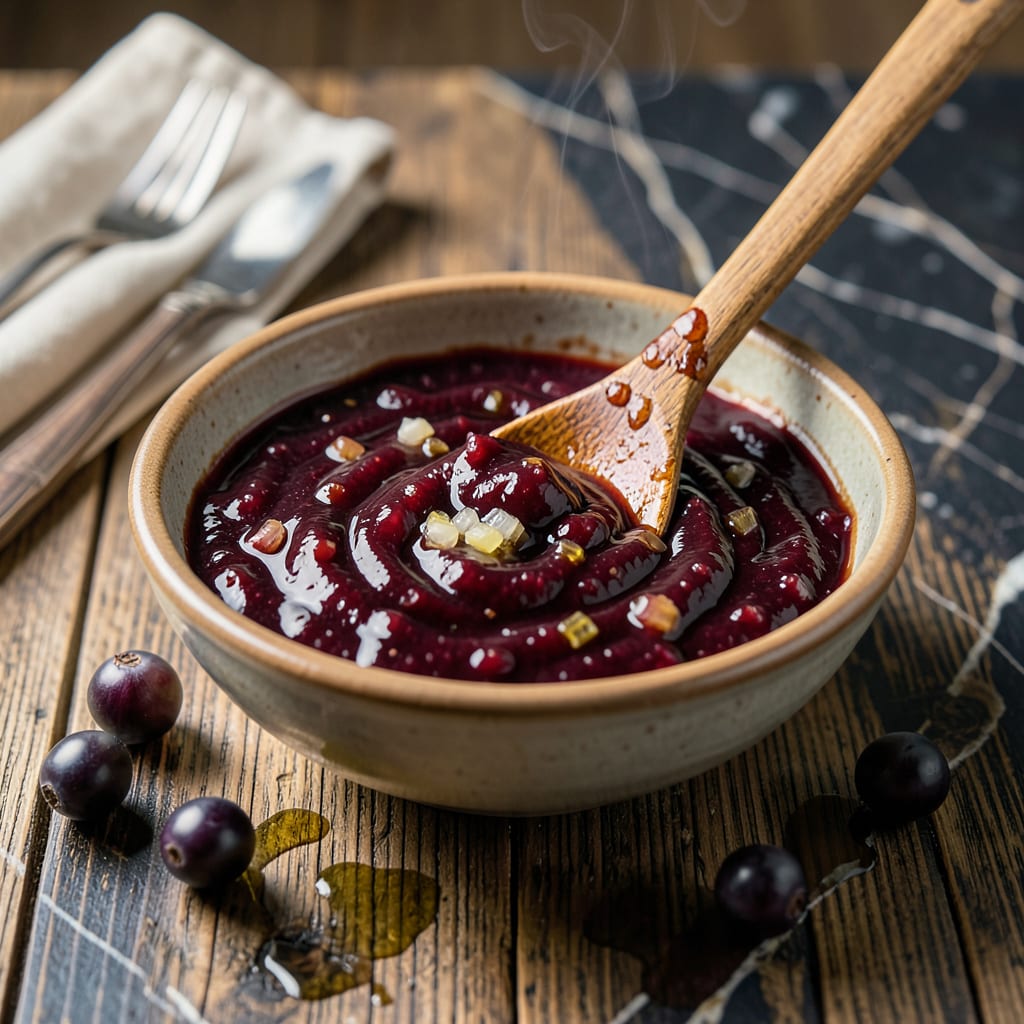
This black currant BBQ sauce delivers a tart twist on classic grill glazes. I developed it to add depth to smoked meats without overpowering their natural flavors.
With just 15 minutes of simmering, the currants break down into a glossy, tangy sauce that clings to ribs or chicken. It stores well, so you can keep some on hand for impromptu cookouts.
Ingredients for Black Currant Bbq Sauce
Nine ingredients transform into this glossy, tangy sauce for ribs or chicken.
| Ingredient | Amount | Notes |
|---|---|---|
| Black Currants 🍇 | 2 cups | Fresh or frozen, stems removed |
| Apple Cider Vinegar 🍏 | ½ cup | For tangy acidity balance |
| Tomato Paste 🍅 | ¼ cup | Deepens umami flavor base |
| Molasses 🍯 | ¼ cup | Adds rich caramelized depth |
| Maple Syrup 🍁 | ¼ cup | Natural sweetener alternative |
| Dijon Mustard 🟡 | 2 tbsp | Sharp flavor enhancer |
| Garlic Cloves 🧄 | 3 cloves | Minced for aromatic kick |
| Onion 🧅 | ½ whole | Finely diced for base |
| Smoked Paprika 🌶️ | 1 tsp | Infuses smoky depth |
| Sea Salt 🧂 | 1 tsp | Adjust to taste preference |
[recipe_ingredient_scaler]
The currants are non-negotiable here. Trader Joe’s carries frozen ones if fresh aren’t in season (they’re seasonal, usually late summer). Whole Foods sometimes has them fresh in the berry section. Look for plump, dark berries—avoid any that look shriveled or dull. The molasses adds that sticky, caramelized backbone, and I always use Brer Rabbit for consistency.
No black currants? Red currants or tart cherries work in a pinch (adjust sweetness down). Swap molasses for dark brown sugar if needed. The apple cider vinegar can be white vinegar at half the amount—it’s sharper, so use less. For a smoother sauce, blend it at the end. The smoked paprika? Don’t skip it—Penzeys has the best.
This keeps for 2 weeks in the fridge, 6 months frozen. Store in a clean jar (mason jars work great) and give it a stir before using. The flavors actually deepen after a day, so make it ahead if you can.
Why You’ll Love This Recipe
- One Pot Wonder: I just dump everything in a saucepan—black currants, vinegar, molasses—and let it simmer.
- Fruit Meets Smoke: That tangy black currant and deep molasses combo hits all the right sweet-tart-smoky notes.
- Slathers on Anything: I’ve used it on ribs, grilled chicken, even as a dipping sauce for roasted veggies.
- Jars for Weeks: A big batch keeps in the fridge for ages, so I’m never scrambling for a last-minute marinade.
Step-by-Step Instructions for Black Currant BBQ Sauce
Here’s the method to create this complex, multi-layered sauce that balances sweet and tangy perfectly.
Step 1: Sauté the Aromatics
Heat a medium saucepan over medium heat. Add the 0.5 whole Onion, finely diced, and cook for 5 minutes until softened and translucent. I like to stir occasionally with a wooden spoon to prevent any browning.
Add the minced 3 cloves Garlic Cloves and cook for another 1-2 minutes until fragrant. You’ll know it’s ready when the garlic releases its aroma but hasn’t taken on any color yet. This base layer builds the foundation for all the flavors to come.
Step 2: Combine and Simmer the Base
Stir in the 2 cups Black Currants, 0.5 cup Apple Cider Vinegar, 0.25 cup Tomato Paste, 0.25 cup Molasses, and 0.25 cup Maple Syrup. Bring the mixture to a gentle boil over medium-high heat, stirring frequently to prevent sticking.
Once boiling, reduce the heat to medium-low and let it simmer for 15-20 minutes. The black currants will start to break down and release their juices, creating a thick, jam-like consistency. You’ll notice the mixture darkening and the aroma becoming richer and more complex.
Step 3: Add the Finishing Touches
Stir in the 2 tbsp Dijon Mustard, 1 tsp Smoked Paprika, and 1 tsp Sea Salt. The mustard adds a sharp tang that cuts through the sweetness, while the smoked paprika brings a subtle depth that makes this sauce special.
Continue simmering for another 10-15 minutes, stirring occasionally, until the sauce has thickened enough to coat the back of a spoon. The color should be a deep, rich mahogany, and the texture should be smooth with just a few visible bits of black currant.
Step 4: Blend and Strain for Smoothness
Remove the sauce from the heat and let it cool slightly. For a smooth sauce, use an immersion blender to purée it directly in the pot. If you prefer a chunkier texture, you can skip this step, but I recommend blending for a silky finish.
For an ultra-smooth sauce, strain it through a fine-mesh sieve to remove any remaining seeds or bits. Let it cool completely before transferring to jars or bottles. The sauce will thicken slightly more as it cools, reaching its perfect consistency.
Pro Tips For Making Black Currant Bbq Sauce
- Simmer Low and Slow: After burning my first batch, I now keep the heat at a gentle simmer—medium-low for 20-25 minutes lets the black currants and molasses meld without scorching.
- Strain the Currants: I learned this the hard way—pushing cooked black currants through a fine-mesh sieve removes those pesky seeds and gives your sauce a silky texture.
- Balance the Sweetness: Sounds weird, but it works: add the apple cider vinegar in two stages, tasting after each tablespoon to cut the maple syrup’s richness without overpowering.
- Bloom the Paste: Cook the tomato paste for 2-3 minutes in the pot before adding liquids—it deepens the flavor and prevents that raw, tinny aftertaste.
Storing and Reheating This black currant bbq sauce
Refrigerator Storage
Let your sauce cool completely before transferring to a clean 16-ounce mason jar. It’ll keep in the fridge at 40°F or below for up to 2 weeks. I always label mine with the date—I’ve learned the hard way that forgotten jars can hide in the back. ❄️
Freezer Storage
For long-term storage, pour cooled sauce into ice cube trays or quart-sized freezer bags. Freeze flat to save space. It’ll stay fresh for up to 6 months. I like using freezer bags because they’re easy to thaw in warm water when I need a quick batch for grilling.
Thawing the Sauce
Transfer frozen sauce to the fridge and let it thaw overnight. For a quicker method, place the sealed bag in a bowl of cold water, changing the water every 30 minutes. Never thaw at room temperature—this can lead to uneven warming and potential spoilage.
Reheating on Stovetop
Pour the sauce into a small saucepan and warm over low heat for 5-7 minutes, stirring occasionally. Add a splash of water or apple cider vinegar if it’s too thick. This method keeps the flavors vibrant and the texture smooth.
Microwave Reheating
Microwave in 30-second intervals at 50% power, stirring between each burst. This prevents hot spots and ensures even heating. I often do this for small batches when I’m in a hurry for a quick glaze. 🔥
Nutrition Facts

Trained in classic French technique but raised on slow-cooked ribs and spicy rubs, she blends culinary skill with smoke and soul.
- Recipe for Boneless Pork Chops in Cast Iron Skillet: Sear and Baste to Juicy Perfection - October 3, 2026
- Recipe for Boneless Cross Rib Roast: Slow-Roasted Beef with Herb Crust - October 3, 2026
- Hamburgers in Sauce Recipe Crock Pot: Slow-Cooked Savory Delight - October 3, 2026