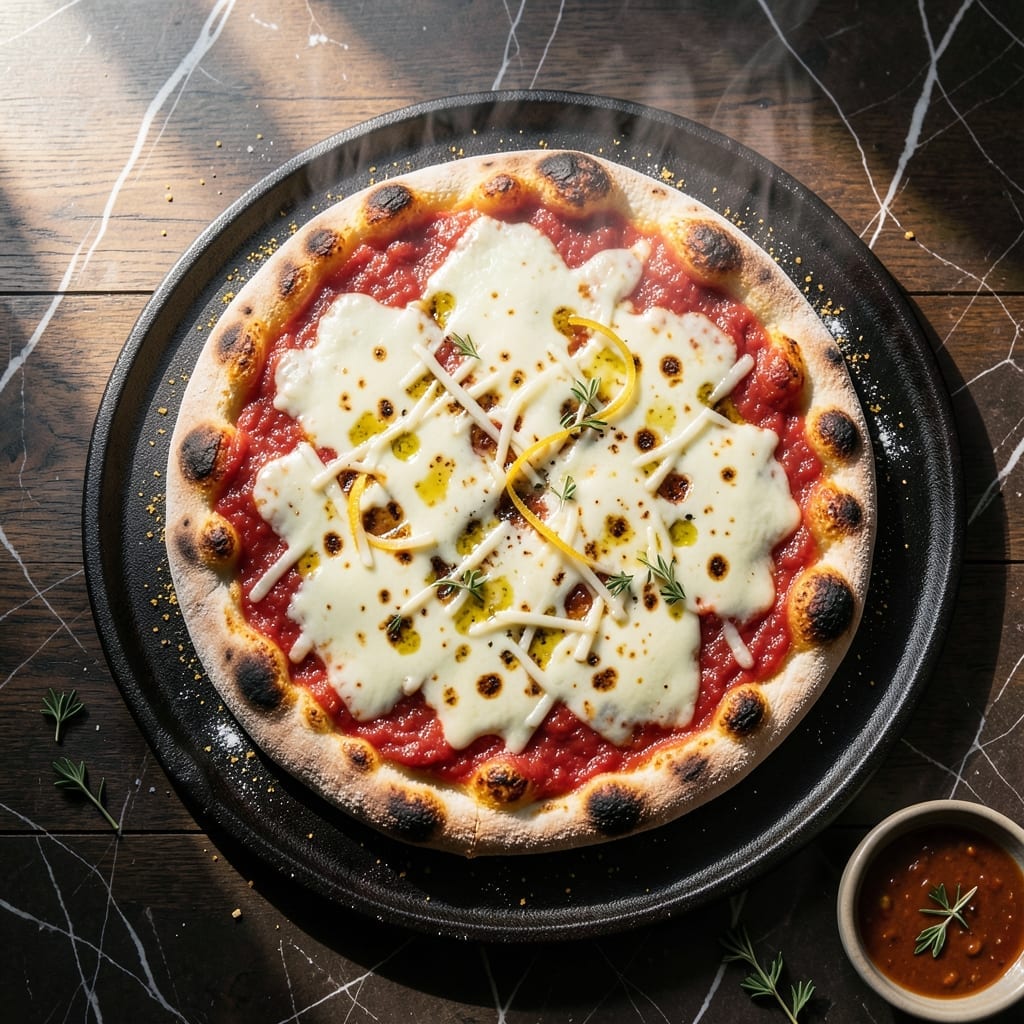
Mastering pizza on a Blackstone grill changes everything—this method delivers a crispy crust with smoky depth that ovens can’t match.
High heat and direct flame create the perfect char while keeping the center tender, proving outdoor cooking isn’t just for burgers anymore.
Ingredients for Blackstone Grill Pizza
High-heat essentials for grill-fired pizza with smoky depth and crisp crust.
| Ingredient | Amount | Notes |
|---|---|---|
| Pizza Dough 🍕 | 1 ½ lb | Store-bought or homemade, room temperature |
| All-Purpose Flour 🌾 | ¼ cup | For dusting work surface |
| Cornmeal 🌽 | ¼ cup | For preventing sticking on grill |
| Olive Oil 🫒 | 2 tbsp | Extra-virgin for brushing crust |
| Pizza Sauce 🍅 | 1 cup | Marinara or tomato-based |
| Shredded Mozzarella Cheese 🧀 | 8 oz | Low-moisture for best melt |
| Fresh Basil Leaves 🌿 | ¼ cup | Torn, for garnish |
| Parmesan Cheese 🧀 | ¼ cup | Freshly grated from block |
| Garlic Cloves 🧄 | 2 cloves | Minced for sauce enhancement |
| Red Pepper Flakes 🌶️ | ½ tsp | Crushed, optional for heat |
| Dried Oregano 🍃 | 1 tsp | For seasoning sauce |
| Kosher Salt 🧂 | 1 tsp | Diamond Crystal preferred |
| Freshly Ground Black Pepper 🌶️ | ½ tsp | To taste |
| Pepperoni Slices 🍕 | 3 oz | Classic topping, optional |
| Bell Peppers 🌶️ | 1 whole | Thinly sliced, any color |
[recipe_ingredient_scaler]
The dough is critical here. Fresh pizza dough from Whole Foods or Trader Joe’s works perfectly—avoid the refrigerated tubes, as they lack the structure for high-heat cooking. For homemade, use a recipe with high-protein flour to withstand the Blackstone’s intense heat. Cornmeal is non-negotiable for that authentic crisp; Bob’s Red Mill is a reliable brand. Always let the dough rest at room temperature before stretching.
No pizza sauce? Crushed San Marzano tomatoes with a pinch of salt and oregano make an excellent substitute. Want more flavor? Sauté the minced garlic in olive oil before mixing into the sauce. For cheese, whole-milk mozzarella melts better than part-skim, and pre-shredded often contains anti-caking agents that affect melt. Fresh basil added post-grill preserves its vibrant color and aroma.
Dough can be prepped 2 days ahead and refrigerated. Sauce keeps for 5 days in the fridge or 3 months frozen. Toppings like peppers should be sliced fresh for optimal texture. Once grilled, pizza stays warm for 10 minutes—serve immediately for that perfect crisp.
Why You’ll Love This Recipe
- No Fuss Setup: I just roll out the dough, sprinkle cornmeal on the griddle, and let the Blackstone do the work—no oven preheating, no messy pans.
- That Grill Crisp: The hot griddle gives the crust this insane charred edge while keeping the center soft, and the olive oil adds just the right richness.
- Backyard Party Hero: Honestly, I’ve served this at birthdays, game nights, even a random Tuesday—everyone gets to customize their slice right on the grill.
- Leftovers? Still Great: The crust stays crispy even the next day, and I love that a single batch feeds my whole family without breaking the bank.
Step-by-Step Instructions for Blackstone Grill Pizza
Master the technique for achieving that signature crispy crust with smoky grill marks.
Step 1: Prepare the Dough and Grill Surface
Begin by dusting your work surface with the 0.25 cup all-purpose flour and stretching the 1.5 lb pizza dough into your desired shape. I maintain an even thickness of about ¼ inch throughout for consistent cooking. The dough should be at room temperature to prevent shrinking when stretched.
Preheat your Blackstone grill over medium-high heat for 10-15 minutes. This ensures the surface reaches the optimal temperature for that perfect sear. Sprinkle the 0.25 cup cornmeal evenly across the griddle—this creates a non-stick barrier while adding a subtle crunch to the crust.
Step 2: Pre-Cook the Crust for Structure
Carefully transfer the stretched dough to the hot griddle. Cook for 2-3 minutes until the underside develops golden brown spots and the top appears slightly dry. This pre-cooking step prevents a soggy crust when you add the toppings.
Using a spatula, check that the crust releases easily from the surface. If it sticks, let it cook for another 30 seconds—the cornmeal should have created a crisp barrier. Brush the cooked surface lightly with 1 tbsp olive oil to enhance flavor and prevent toppings from making the crust soggy.
Step 3: Add Sauce and Toppings Strategically
Flip the crust and immediately spread the 1 cup pizza sauce evenly, leaving a ½-inch border. For maximum flavor, I first sauté the 2 cloves garlic cloves (minced) and 1 tsp dried oregano directly on the griddle in 1 tbsp olive oil for 1 minute, then mix into the sauce before spreading.
Sprinkle the 8 oz shredded mozzarella cheese uniformly over the sauce, then add the 3 oz pepperoni slices and thinly sliced 1 whole bell peppers. For even cooking, I place the pepperoni under the cheese to prevent burning. Season with 1 tsp kosher salt, 0.5 tsp freshly ground black pepper, and 0.5 tsp red pepper flakes for a subtle kick.
Step 4: Finish Cooking with Covered Heat
Close the Blackstone’s hardtop or use a large metal bowl as a dome to trap heat. Cook for 5-7 minutes until the cheese melts completely and the crust’s underside achieves a deep golden brown. The covered environment ensures the toppings heat through while the crust crisps.
Monitor the edges closely—when they turn dark golden brown and the cheese bubbles vigorously, it’s done. The internal temperature of the cheese layer should reach 160°F for proper melting and food safety. Remove from heat when the crust sounds hollow when tapped with a spatula.
Step 5: Rest and Garnish for Optimal Texture
Transfer the pizza to a cutting board and let it rest for 2-3 minutes. This allows the cheese to set slightly, preventing it from sliding off when sliced. The crust will also crisp further as it cools.
Garnish with the 0.25 cup fresh basil leaves (torn by hand for better flavor release) and 0.25 cup parmesan cheese (freshly grated). The residual heat will slightly wilt the basil, intensifying its aroma. Slice with a sharp knife or pizza wheel and serve immediately while the crust remains at its crispest.
Pro Tips For Making Blackstone Grill Pizza
- Preheat the Stone: Get your Blackstone rip-roaring hot—at least 10-15 minutes on high—so the dough hits a screaming surface and crisps up fast. I learned this the hard way after pulling off too many soggy-bottomed pizzas.
- Dust with Cornmeal: Sprinkle a handful of cornmeal on the griddle before stretching the dough—it prevents sticking better than flour and adds that perfect crunch. Sounds weird, but it works.
- Thin Your Sauce: Reduce your pizza sauce for 5 minutes on the stove first, or it’ll make the crust soggy under the toppings. My grandmother swore by this, and she was right.
- Roll It Thin: Stretch that dough paper-thin on the Blackstone—about 1/4-inch thick—for a crispy, even cook. After burning three batches, I finally figured out thick dough just steams instead of browning.
Common Mistakes When Making This Dish
Dough Temperature Issues
Never use cold dough straight from the fridge—it shrinks and fights stretching. I always pull my 1.5 lb pizza dough out 2 hours before grilling to reach room temperature. This makes stretching easier and prevents tough crust.
Skipping the Cornmeal
Omitting the 0.25 cup cornmeal is a recipe for sticking disaster. The cornmeal creates a crisp barrier between dough and griddle. I use Bob’s Red Mill for consistent texture. Without it, you’ll lose that signature crunch.
Overloading Toppings
Piling on too many toppings creates a soggy mess. Stick to 1 cup pizza sauce, 8 oz mozzarella, and a few strategic additions like 3 oz pepperoni. The Blackstone’s heat needs space to work its magic. 🌡️
Uneven Heat Distribution
Hot spots cause burnt edges and raw centers. I preheat my Blackstone on medium-high heat for 15 minutes, then test with a sprinkle of cornmeal—it should sizzle evenly across the entire surface.
Peeking Too Often
Constantly lifting the lid releases precious heat. After adding toppings, resist checking for at least 3 minutes. The trapped heat is what melts the cheese perfectly and crisps the crust underneath.
Skipping the Rest
Cutting immediately causes cheese slide-off. I always let my pizzas rest 2-3 minutes after grilling. This lets the cheese set and the crust achieve maximum crispness. Patience pays off here.
Nutrition Facts
Frequently Asked Questions
What temperature should my grill be?
Preheat your Blackstone to medium-high heat for 10-15 minutes. The surface should be hot enough to sizzle when sprinkled with cornmeal. This ensures even cooking and that perfect crispy crust.
Can I use store-bought dough?
Just let the 1.5 lb dough sit at room temperature for 2 hours before stretching. Avoid refrigerated tubes—they lack the structure for high-heat cooking. Fresh dough from specialty stores works best.
How do I prevent sticking?
Sprinkle 0.25 cup cornmeal evenly across the griddle before adding dough. This creates a crisp barrier while adding texture. Also, ensure your dough isn’t too wet or cold.
Why cover the pizza while cooking?
Covering traps heat, ensuring the cheese melts completely and the crust crisps evenly. Use the grill’s hardtop or a large metal bowl as a dome. Cook for 5-7 minutes with the cover on for best results.

Trained in classic French technique but raised on slow-cooked ribs and spicy rubs, she blends culinary skill with smoke and soul.
- Recipe for Boneless Pork Chops in Cast Iron Skillet: Sear and Baste to Juicy Perfection - October 3, 2026
- Recipe for Boneless Cross Rib Roast: Slow-Roasted Beef with Herb Crust - October 3, 2026
- Hamburgers in Sauce Recipe Crock Pot: Slow-Cooked Savory Delight - October 3, 2026