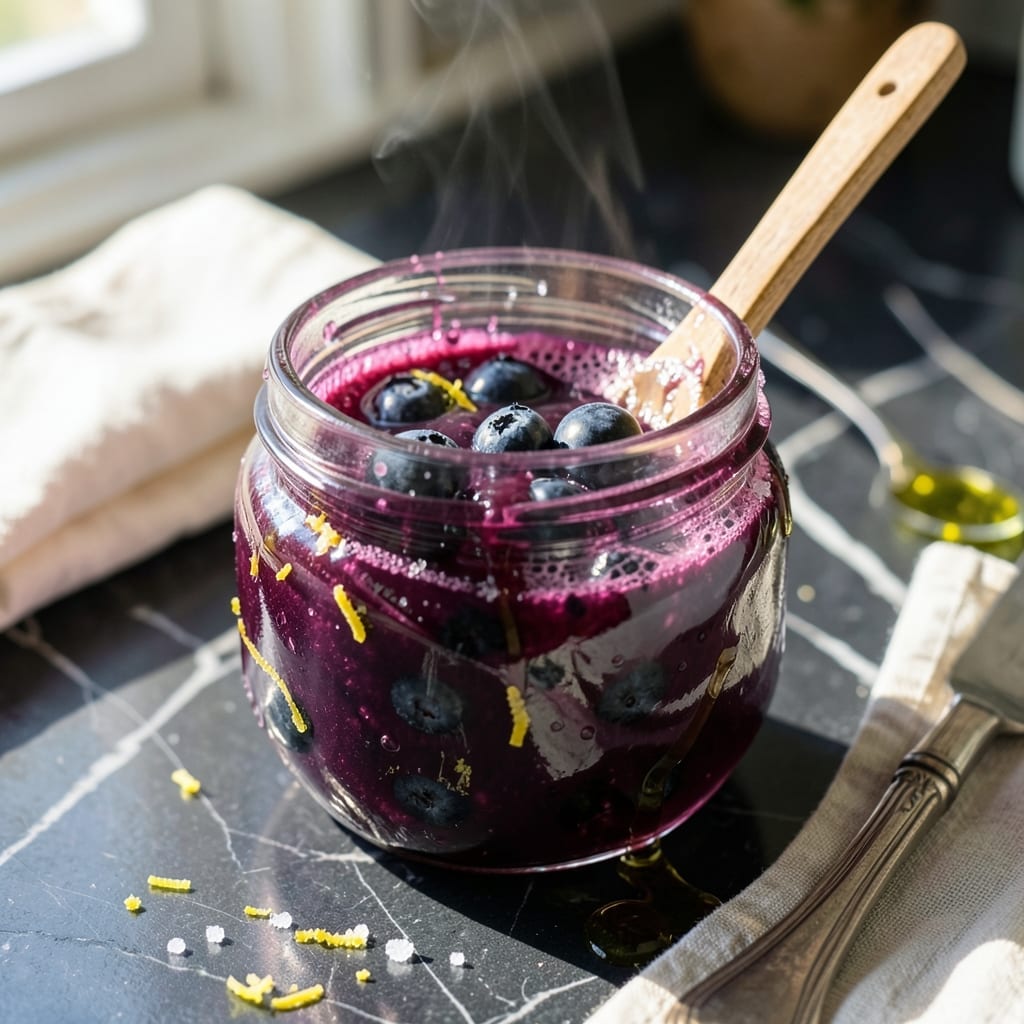
This natural blueberry jam achieves perfect thickness without commercial pectin. The secret lies in the precise balance of fruit, sugar, and lemon juice.
By cooking the berries down with these simple ingredients, you create a spread with vibrant color and authentic fruit flavor. The process is straightforward yet yields professional results every time.
Ingredients for Blueberry Jam Recipe Without Pectin
Seven simple ingredients create a naturally thick, vibrant blueberry spread with professional results every time.
| Ingredient | Amount | Notes |
|---|---|---|
| Fresh Blueberries 🫐 | 4 cups | Fully ripe, stems removed |
| Granulated Sugar 🍚 | 2 cups | White or raw cane sugar |
| Fresh Lemon Juice 🍋 | ¼ cup | Approximately 2-3 lemons |
| Lemon Zest 🍋 | 1 tbsp | Finely grated from 1-2 lemons |
| Water 💧 | ¼ cup | Filtered or distilled |
| Pure Vanilla Extract 🌿 | 1 tsp | Optional for depth of flavor |
| Pinch of Salt 🧂 | 0.125 tsp | Balances sweetness |
[recipe_ingredient_scaler]
The blueberries are everything here. Farmers market berries in peak season (July-August) give the best color and flavor, but frozen works in a pinch—just don’t thaw them first. Look for plump, deep purple berries with no signs of mold. Organic blueberries often have more concentrated flavor. The sugar acts as both sweetener and preservative, so don’t reduce it significantly or the jam won’t set properly.
No fresh lemons? Bottled lemon juice at equal volume works, but fresh really does taste better. Out of blueberries? Blackberries or raspberries make great substitutes (adjust sugar slightly—they’re tarter). Want a lower-sugar version? Use 1.5 cups sugar but expect a softer set. The water helps dissolve the sugar evenly before the berries release their juices.
Store in a sterilized jar in the fridge for up to 3 weeks, or process in a water bath for 1 year shelf life. The flavor deepens after 24 hours, so try to wait before digging in (though I never do).
Why You’ll Love This Recipe
- No Fuss Cooking: I just dump blueberries, sugar, and lemon juice in a pot and let it work its magic—no special ingredients or techniques.
- Bright & Tangy: The lemon zest gives it this vibrant kick that makes the blueberry flavor pop in a way store-bought can’t touch.
- Endless Uses: I slather it on toast, swirl it into yogurt, or even glaze a chicken dish—honestly, it disappears faster than I can make it.
- Budget Friendly: A pint of blueberries and a few pantry staples yields jars of jam that cost pennies compared to gourmet brands.
Step-by-Step Instructions for Blueberry Jam Without Pectin
This method relies on natural fruit pectin and precise timing to achieve the perfect thick spread.
Step 1: Prepare and Mash the Blueberries
Place all 4 cups Fresh Blueberries in a large, heavy-bottomed saucepan. Using a potato masher or fork, crush about half of the berries to release their juices. This creates the liquid base needed for the jam while leaving some whole berries for texture.
I prefer using fully ripe but still firm blueberries—they contain the most natural pectin. Avoid over-mashing; you want visible berry pieces suspended in the finished jam. The mixture should look chunky with plenty of liquid pooling at the bottom of the pan.
Step 2: Combine Ingredients and Begin Cooking
Add the 2 cups Granulated Sugar, 0.25 cup Fresh Lemon Juice, 1 tbsp Lemon Zest, 0.25 cup Water, and 0.125 tsp Pinch of Salt to the saucepan. Stir well to dissolve the sugar completely before turning on the heat. The lemon juice provides the acidity needed to activate the natural pectin in the blueberries.
The water helps prevent the sugar from crystallizing before the berries release their juices. Stir in the 1 tsp Pure Vanilla Extract at this stage—its flavor will mellow and integrate beautifully during cooking. Use a wooden spoon to avoid reacting with the acid.
Step 3: Cook to the Gel Point
Bring the mixture to a full rolling boil over medium-high heat, stirring frequently. Once boiling, reduce heat to medium and maintain a steady boil that can’t be stirred down. Use a silicone spatula to scrape the bottom of the pan constantly for the first 10 minutes to prevent sticking.
After 15-20 minutes, the mixture will begin to thicken noticeably. Watch for these visual cues: the bubbles will become smaller and closer together, and the jam will sheet off the spoon in thick, slow drips. Test by placing a small amount on a chilled plate—it should wrinkle slightly when pushed with your finger.
Step 4: Final Thickness Check and Jar Preparation
Continue cooking for another 5-10 minutes, testing frequently with the plate method. The jam is done when it reaches 220-222°F on a candy thermometer and holds its shape when mounded on the spoon. Remember that it will thicken slightly more as it cools.
While the jam cooks, sterilize your jars and lids in boiling water for 10 minutes. This ensures they’re ready for immediate filling. Keep them hot until use to prevent thermal shock when adding the hot jam.
Step 5: Jar and Seal the Finished Jam
Ladle the hot jam into the prepared jars, leaving ¼-inch headspace at the top. Wipe the rims clean with a damp cloth to ensure a proper seal. Apply the lids and rings, then process in a boiling water bath for 10 minutes to create a vacuum seal.
Remove the jars and let them cool undisturbed on a towel-lined counter. You’ll hear the satisfying “ping” of the lids sealing as they cool. The jam will thicken further as it sets, reaching its final consistency after 24 hours. Store in a cool, dark place for up to one year, or refrigerate after opening.
Pro Tips For Making Blueberry Jam Recipe Without Pectin
- Simmer Low and Slow: After burning three batches, I finally figured out that keeping the heat at a gentle, steady simmer—never a rolling boil—prevents the sugar from caramelizing too fast and lets the berries break down naturally.
- Mash Some Berries: I learned this the hard way—mashing about a quarter of the blueberries before cooking releases their pectin, which helps thicken the jam without adding store-bought pectin.
- Skip the Over-Stirring: Resist the urge to stir constantly once the jam starts thickening; it can break down the fruit too much and you’ll end up with a watery consistency instead of that perfect spreadable texture.
- Use a Wide Pot: A wide, heavy-bottomed pot (not a deep saucepan) lets the jam cook down faster and more evenly—sounds weird, but it actually changes the outcome, giving you a richer, thicker jam in less time.
Storing and Reheating This Recipe
Refrigerator Storage
Let your jam cool completely before transferring to a clean, airtight jar. I use Ball Mason jars with two-piece lids for best results. Store in the refrigerator for up to 3 weeks—the natural sugars act as a preservative.
Freezer Storage
For longer storage, freeze in pint-sized jars or plastic freezer containers. Leave ½-inch headspace to allow for expansion. The jam freezes beautifully for up to 6 months without losing flavor or texture. ❄️
Water Bath Canning
For shelf-stable storage, process sealed jars in a boiling water bath for 10 minutes. This creates a vacuum seal that preserves the jam for up to 1 year in your pantry. Always check the seal before storing.
Thawing Frozen Jam
Move the jar from freezer to refrigerator and let it thaw overnight for best texture. For quick use, place the sealed jar in a bowl of cold water, changing the water every 30 minutes until thawed. 💡
Using After Opening
Once opened, keep the jar refrigerated and use within 1 month for best quality. The flavor actually improves after 24 hours as the berries fully meld with the sugar and lemon.
Preventing Spoilage
Always use a clean, dry spoon when scooping jam to prevent mold growth. If you see any signs of spoilage, discard immediately. Properly stored, this jam maintains its vibrant color and fresh taste.
Nutrition Facts
Frequently Asked Questions
Why use lemon juice in pectin-free jam?
The acidity in lemon juice activates natural pectin in blueberries, helping the jam set properly. It also balances sweetness and preserves color. Without it, your jam may stay runny.
Can I use frozen blueberries?
Yes, but don’t thaw them first. Add frozen berries directly to the pot with other ingredients. They’ll release more liquid initially but work perfectly. Expect a slightly softer set.
How do I know when it’s done?
Test by placing a spoonful on a chilled plate. If it wrinkles when pushed with your finger, it’s ready. Also look for 220-222°F on a candy thermometer.
What if my jam doesn’t thicken?
Cook longer in 5-minute increments, testing after each. If still too thin, add 1 tbsp more lemon juice and cook further. Avoid adding extra sugar.

Trained in classic French technique but raised on slow-cooked ribs and spicy rubs, she blends culinary skill with smoke and soul.
- Recipe for Boneless Pork Chops in Cast Iron Skillet: Sear and Baste to Juicy Perfection - October 3, 2026
- Recipe for Boneless Cross Rib Roast: Slow-Roasted Beef with Herb Crust - October 3, 2026
- Hamburgers in Sauce Recipe Crock Pot: Slow-Cooked Savory Delight - October 3, 2026