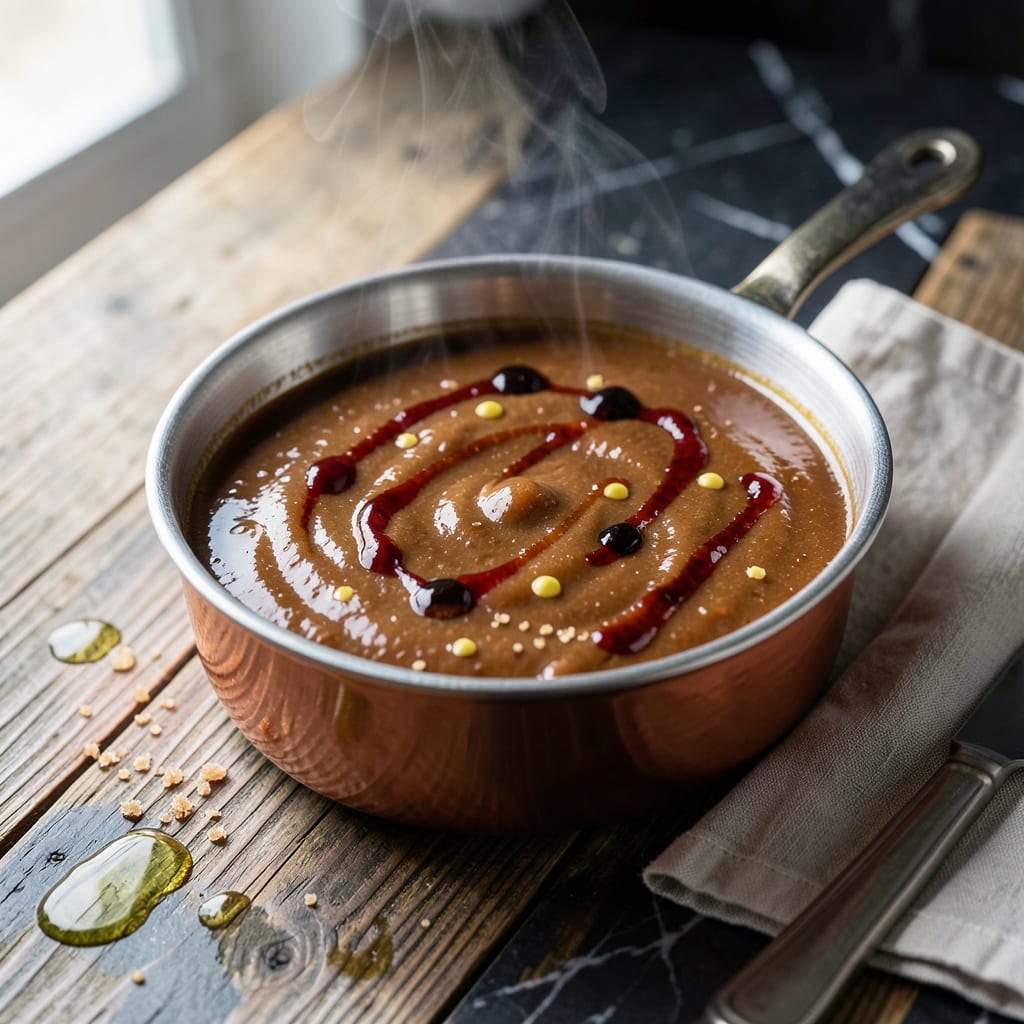
This vinegar-based sauce captures the tangy essence of Memphis BBQ tradition. I’ve refined this recipe through years of competition cooking, balancing bold flavors without overpowering the meat.
What makes it special is the perfect blend of vinegar sharpness with subtle sweetness. This versatile sauce works as a mop, dip, or finishing glaze for ribs, pulled pork, or chicken.
Ingredients for Blues Hog Bbq Sauce
Ten ingredients deliver that signature Memphis tang with balanced sweetness and heat.
| Ingredient | Amount | Notes |
|---|---|---|
| Apple Cider Vinegar 🍏 | 2 cups | 5% acidity for proper tang |
| Tomato Paste 🍅 | ¼ cup | Double-concentrated preferred |
| Light Brown Sugar 🥣 | ½ cup | Packed for consistent sweetness |
| Yellow Mustard 🟡 | ¼ cup | Smooth prepared variety |
| Worcestershire Sauce 🫕 | 2 tbsp | Anchovy-free version if preferred |
| Hot Sauce 🔥 | 2 tbsp | Crystal or Texas Pete style |
| Garlic Powder 🧄 | 2 tsp | Freshly ground if possible |
| Onion Powder 🧅 | 2 tsp | Fine granulation preferred |
| Kosher Salt 🧂 | 1 ½ tsp | Diamond Crystal brand recommended |
| Ground Black Pepper 🌶️ | 1 tsp | Freshly cracked for best flavor |
[recipe_ingredient_scaler]
The vinegar is critical—5% acidity white or apple cider vinegar gives authentic sharpness. Heinz or Bragg brands are competition standards. Tomato paste should be double-concentrated (look for the darker color) for proper consistency. Domino light brown sugar dissolves more evenly than generic brands. For the mustard, avoid Dijon—its complexity competes with the vinegar base.
No apple cider vinegar? White vinegar works but reduce by 10% as it’s sharper. Honey or molasses at half the quantity can replace brown sugar. Skip the Worcestershire? Extra hot sauce plus a pinch of soy sauce mimics the umami. The garlic and onion powders are non-negotiable for depth—fresh minced at double the amount changes the texture but works in a pinch.
Sauce keeps 3-4 weeks refrigerated in a sealed jar. For competition consistency, make it 24 hours ahead—flavors meld overnight. Freezes well for 6 months if you need to store bulk batches.
Why You’ll Love This Recipe
- Pantry Staples Only: I always have these ingredients on hand—apple cider vinegar, tomato paste, and the rest are kitchen basics.
- Sweet & Tangy Kick: The brown sugar and vinegar balance each other perfectly, with a little mustard bite that lingers.
- Slather It Everywhere: Honestly, this sauce works on ribs, chicken, even as a sandwich spread.
- Makes a Big Batch: I double the recipe and keep it in the fridge—lasts for weeks, and the flavor just gets better.
Step-by-Step Instructions for Blues Hog BBQ Sauce
Master this technique for the perfect balance of tangy vinegar and smoky depth in every batch.
Step 1: Combine Wet Ingredients for Foundation
In a medium saucepan, whisk together the 2 cups Apple Cider Vinegar, 0.25 cup Tomato Paste, and 0.25 cup Yellow Mustard until the tomato paste fully dissolves. I use a flat whisk for this—it breaks up the thick paste more efficiently than a spoon.
The mixture will appear thin and separated initially, but the mustard acts as an emulsifier, helping to bind the ingredients. You’ll notice the color deepen as the tomato paste incorporates fully. This base provides the signature tang and body that defines this style of sauce.
Step 2: Incorporate Sweet and Spicy Elements
Add the 0.5 cup Light Brown Sugar, 2 tbsp Worcestershire Sauce, and 2 tbsp Hot Sauce to the saucepan. The brown sugar should be packed firmly into the measuring cup for consistent sweetness in every batch.
Stir constantly over medium heat until the sugar completely dissolves, which takes about 3-4 minutes. Watch for the mixture to turn a rich amber color and develop a slight sheen—this indicates the sugar has fully incorporated. The Worcestershire and hot sauce deepen the umami and heat profile without overpowering the vinegar base.
Step 3: Season and Simmer to Develop Flavors
Sprinkle in the 2 tsp Garlic Powder, 2 tsp Onion Powder, 1.5 tsp Kosher Salt, and 1 tsp Ground Black Pepper. I add the spices gradually while stirring to prevent clumping and ensure even distribution throughout the sauce.
Reduce heat to medium-low and let the sauce simmer for 15-20 minutes, stirring occasionally. You’ll know it’s ready when the mixture thickens slightly and coats the back of a spoon. The sauce should have a glossy appearance and the flavors will meld into a complex, well-balanced profile with visible steam rising in slow, lazy tendrils.
Step 4: Adjust Consistency and Finish
Remove the sauce from heat and let it cool for 5 minutes. The sauce will thicken further as it cools. If it appears too thick after cooling, whisk in 1-2 tablespoons of water to reach your desired consistency.
Taste and adjust seasoning if needed, though the measured ingredients should provide perfect balance. Transfer to a clean jar and let it sit at room temperature for 1 hour before using—this resting period allows the flavors to fully marry. The finished sauce should have a smooth texture with a tangy aroma that makes your mouth water in anticipation.
Pro Tips For Making Blues Hog Bbq Sauce
- Simmer Low and Slow: Keep the heat at a gentle simmer—too high and the vinegar will overpower the sauce. I learned this the hard way after scorching a batch and losing all the sweetness from the brown sugar.
- Bloom the Tomato Paste: Cook the tomato paste for 2-3 minutes before adding liquids to deepen its flavor. Sounds weird, but it works: the sauce tastes richer and more complex.
- Balance the Vinegar: Taste as you go and adjust the apple cider vinegar last—it’s easy to overdo it and end up with a sauce that’s too sharp. A splash of water or a pinch more sugar can save an over-acidic batch.
- Use Fresh Worcestershire: Check the expiration date on your Worcestershire sauce—old bottles lose their punch. After burning three batches, I finally figured out the flat taste was from stale ingredients.
Storing and Reheating Leftovers
Refrigerator Storage
After cooling completely, transfer your sauce to a clean glass jar—I swear by Ball Mason jars for their airtight seal. It’ll keep beautifully in the fridge at 40°F or below for 3-4 weeks. The vinegar base actually improves with a little age as the flavors deepen. 💡
Freezer Storage
For longer storage, freeze in pint-sized freezer bags laid flat to save space. Squeeze out all air before sealing to prevent freezer burn. This sauce freezes well for up to 6 months without losing its tangy punch. Just thaw overnight in the fridge before using.
Stovetop Reheating
Gently warm the sauce in a small saucepan over low heat for 5-7 minutes, stirring occasionally. Avoid boiling—it can make the vinegar too sharp. If it thickens too much, whisk in 1 tbsp water at a time until smooth. 🔥
Microwave Reheating
For quick use, microwave individual portions in 15-second bursts at 50% power, stirring between each. This prevents hot spots and keeps the texture consistent. Cover loosely with a damp paper towel to retain moisture.
Competition Tip
I always make my sauce 24 hours ahead for competitions. The extra day lets the flavors meld completely, and the consistency becomes more stable. Store it in a squeeze bottle for easy application during cook-offs.
Nutrition Facts

Trained in classic French technique but raised on slow-cooked ribs and spicy rubs, she blends culinary skill with smoke and soul.
- Recipe for Boneless Pork Chops in Cast Iron Skillet: Sear and Baste to Juicy Perfection - October 3, 2026
- Recipe for Boneless Cross Rib Roast: Slow-Roasted Beef with Herb Crust - October 3, 2026
- Hamburgers in Sauce Recipe Crock Pot: Slow-Cooked Savory Delight - October 3, 2026