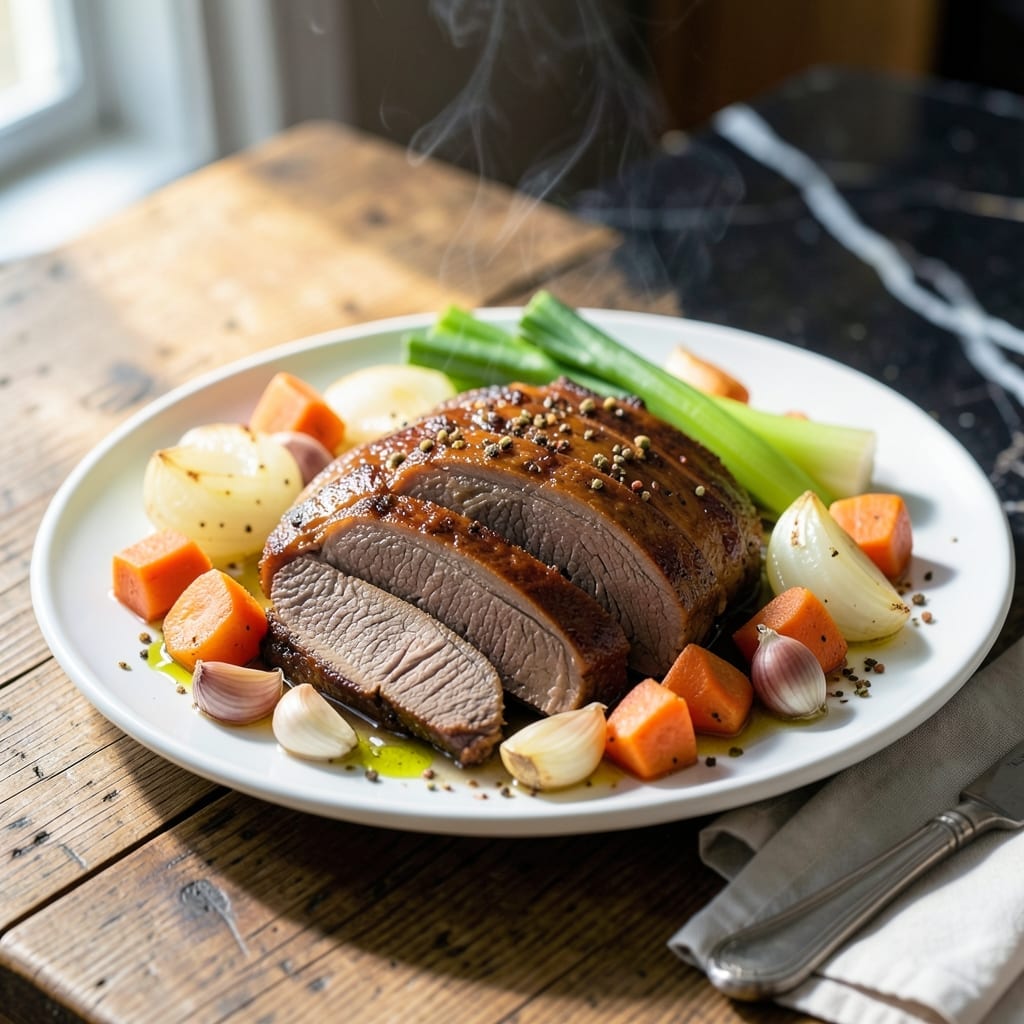
This slow-simmered corned beef delivers the classic deli experience right from your kitchen. My family’s tradition of low-and-slow cooking inspired this method, ensuring each slice stays tender and packed with savory depth.
The secret lies in the gentle simmer, which breaks down the meat while preserving its natural juices. I use a blend of pickling spices for that signature flavor, creating a dish that’s both nostalgic and restaurant-quality.
You’ll end up with perfectly seasoned beef that’s ideal for sandwiches, platters, or standalone servings. The slow process guarantees a texture that’s impossible to rush.
Pair with mustard or rye bread to complete the experience. Here’s how to achieve it at home.
Ingredients for Boar’s Head Corned Beef
Slow-simmered brisket with aromatic spices and vegetables for that deli-classic taste at home.
| Ingredient | Amount | Notes |
|---|---|---|
| Corned Beef Brisket 🥩 | 3 lb | Pre-brined, point cut preferred |
| Pickling Spices 🌿 | 2 tbsp | Whole blend for simmering |
| Yellow Onions 🧅 | 2 whole | Peeled, quartered through root |
| Carrots 🥕 | 4 whole | Peeled, cut into 3-inch chunks |
| Celery Stalks 🥬 | 3 whole | Cut into 3-inch pieces |
| Garlic Cloves 🧄 | 6 cloves | Smashed, unpeeled |
| Bay Leaves 🍃 | 4 whole | Dried, for aroma |
| Black Peppercorns 🌶️ | 1 tbsp | Lightly crushed |
| Kosher Salt 🧂 | 1 tbsp | Diamond Crystal preferred |
| Brown Sugar 🍚 | 2 tbsp | Light or dark variety |
| Apple Cider Vinegar 🍏 | ½ cup | For tangy brightness |
| Beer 🍺 | 12 oz | Dark ale or stout preferred |
| Water 💧 | 4 cups | To cover the brisket |
| Rye Bread 🍞 | 8 slices | For serving, optional |
| Dijon Mustard 🟡 | ½ cup | For serving, optional |
[recipe_ingredient_scaler]
The brisket is everything here. Boar’s Head pre-brined corned beef (sold in vacuum-sealed packs near the deli) saves hours of brining time and delivers consistent quality. Look for the point cut—it’s fattier but stays juicier through the long simmer. If your grocery store doesn’t carry it, Whole Foods or a specialty butcher should. The pickling spices? Penzeys has a great blend, but the bulk section at most stores works fine too.
No pre-brined brisket? You’d need to brine raw beef for 5-7 days—not practical for most home cooks. Swap the beer for beef broth plus a splash of apple cider vinegar if avoiding alcohol. Dark beer adds depth, but any lager works (Guinness is traditional). For the spices, a pre-made corned beef seasoning packet can replace the pickling blend—just skip the included salt. The veggies are flexible too—parsnips or potatoes hold up well in the simmer.
Corned beef keeps beautifully—actually improves overnight. Store submerged in its cooking liquid for up to 5 days in the fridge, or freeze for 3 months. Slice just before serving (or it dries out). The cooking liquid makes killer Reuben dip—just reduce it down with a little mustard and serve with pretzels.
Why You’ll Love This Recipe
- Set It and Forget: I toss the brisket, pickling spices, and veggies in the pot and let the slow cooker do the work.
- That Spice Kick: The pickling spices turn the corned beef into something crave-worthy, with onions and carrots soaking up every bit of flavor.
- Feeds the Crew: One brisket, a handful of veggies, and suddenly I’ve got a meal that satisfies the whole family.
- Leftovers for Days: I make sandwiches, hash, or just reheat slices—honestly, it tastes even better the next day.
Step-by-Step Instructions for Slow-Simmered Corned Beef
Here’s the method I use to achieve fall-apart tender brisket with rich, aromatic broth.
Step 1: Rinse and Prepare the Brisket
Remove the 3 lb Corned Beef Brisket from its packaging and rinse it under cold water to remove excess brine. Pat it dry with paper towels—this helps achieve better browning if you choose to sear it first, though it’s optional for this recipe.
I always check for any remaining fat cap and trim it down to about ¼ inch for the best texture. This step ensures the flavors from the 2 tbsp Pickling Spices and other aromatics penetrate evenly during cooking.
Step 2: Build the Flavor Base
In a large pot or Dutch oven, combine the rinsed brisket with the 2 whole Yellow Onions (quartered), 4 whole Carrots (in chunks), 3 whole Celery Stalks (cut into pieces), and 6 cloves Garlic Cloves (smashed). These vegetables form the aromatic foundation.
Add the 4 whole Bay Leaves, 1 tbsp Black Peppercorns (lightly crushed), 1 tbsp Kosher Salt, 2 tbsp Brown Sugar, 0.5 cup Apple Cider Vinegar, 12 oz Beer, and 4 cups Water. The beer adds depth, while the vinegar balances the richness.
Step 3: Simmer Until Fork-Tender
Bring the mixture to a boil over high heat, then immediately reduce to a gentle simmer. Cover the pot and let it cook for 3 to 3½ hours, turning the brisket halfway through. You want the liquid to barely bubble—too vigorous a boil will toughen the meat.
Check for doneness by piercing the brisket with a fork; it should slide in with no resistance. The meat will shrink slightly, and the house will smell incredible. If the liquid reduces too much, add a splash of hot water to keep the brisket mostly submerged.
Step 4: Rest and Slice Against the Grain
Once tender, transfer the brisket to a cutting board and let it rest for 15 minutes before slicing. This allows the juices to redistribute for maximum tenderness. Slice thinly against the grain for the most tender results.
Serve the slices with the cooking liquid ladled over the top, alongside the softened vegetables. For a classic pairing, spread 0.5 cup Dijon Mustard on slices of rye bread and build a hearty sandwich with the corned beef.
Pro Tips For Making Boar’S Head Corned Beef
- Simmer, Don’t Boil: Keep the water at a gentle simmer—around 185°F—so the brisket stays tender. I learned this the hard way after turning my first corned beef into a chewy hockey puck.
- Rinse the Brisket: Always rinse the brisket under cold water before cooking to remove excess salt from the curing process. Sounds weird, but it works: it keeps the dish from being unbearably salty.
- Skip the Overcrowding: Make sure there’s enough water to fully submerge the brisket and veggies, but don’t pack the pot—leave at least an inch of space for even cooking.
- Use the Spice Packet: Don’t toss the pickling spices that come with Boar’s Head corned beef—add them to the pot. My grandmother swore by this, and she was right: they add depth you can’t get from store-bought blends.
Regional Styles of These Flavors
New England Style
In the Northeast, we often see this dish simmered with cider vinegar and a touch of maple syrup for a subtle sweetness. The apple cider vinegar in the base recipe already leans into this tradition, balancing the brisket’s saltiness beautifully. 🗺️
Texas Twist
Lone Star State cooks might add smoked paprika and cumin to the spice blend for a deeper, earthier profile. I’ve tried swapping the beer for Lone Star—it adds a crisp, light bitterness.
Irish Pub Classic
For St. Patrick’s Day, Irish pubs often use Guinness instead of ale and include cabbage wedges in the simmer. The dark stout gives the broth a rich, almost coffee-like depth. I add a dash of Irish whiskey at the end for warmth.
Southern Comfort
Down South, brown sugar is doubled, and molasses is sometimes added for a stickier, sweeter glaze. The cooking liquid is often reduced into a gravy for serving over mashed potatoes.
Midwest Diner
Midwestern diners serve this with rye bread and thousand island dressing for Reubens. The tangy dressing cuts through the richness, and I always toast the bread with butter for extra crunch.
Pacific Northwest
Out West, we might add juniper berries or fresh rosemary to the spice mix, echoing the pine forests. The beer swap could be a local IPA for hoppy brightness. 🌲
Nutrition Facts
Frequently Asked Questions
Can I use a slow cooker instead of stovetop?
Yes! Cook on low heat for 8-10 hours or high heat for 5-6 hours. The long, gentle cooking works perfectly for achieving the same tenderness.
What if my meat turns out tough?
This usually means it didn’t cook long enough. Return it to the simmer for another 30-60 minutes until fork-tender. Avoid boiling, as this can tighten the fibers.
How do I store leftovers?
Keep submerged in cooking liquid in an airtight container for up to 5 days in the fridge. Freeze for 3 months if needed. Reheat gently to preserve moisture.

Trained in classic French technique but raised on slow-cooked ribs and spicy rubs, she blends culinary skill with smoke and soul.
- Recipe for Boneless Pork Chops in Cast Iron Skillet: Sear and Baste to Juicy Perfection - October 3, 2026
- Recipe for Boneless Cross Rib Roast: Slow-Roasted Beef with Herb Crust - October 3, 2026
- Hamburgers in Sauce Recipe Crock Pot: Slow-Cooked Savory Delight - October 3, 2026