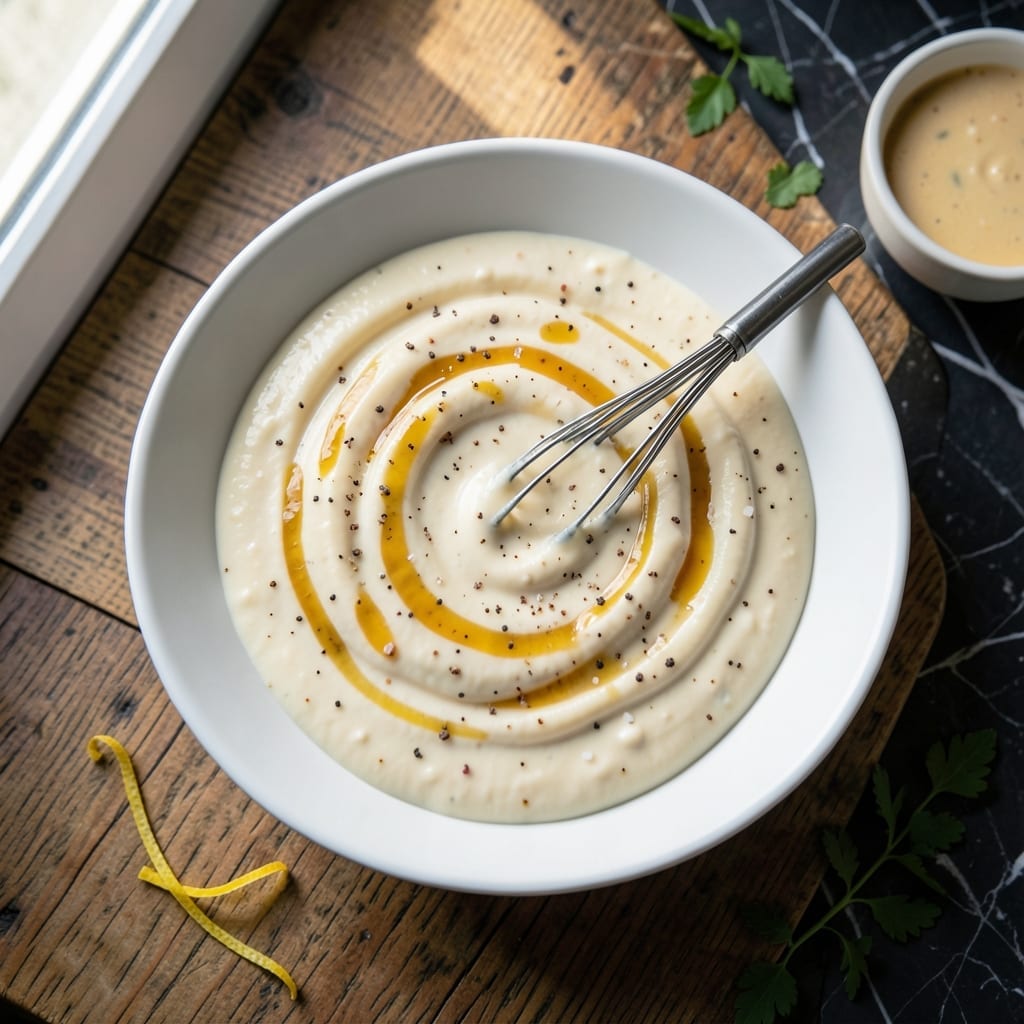
This Alabama original delivers a tangy, creamy twist on traditional barbecue sauce that’s become legendary across the South. I perfected this version through countless late-night experiments to capture that signature balance.
The mayonnaise base creates a rich, velvety texture while vinegar and spices provide the bright, punchy flavor this sauce is known for. It’s the perfect complement to smoked meats or as a dipping sauce.
Ingredients for Bob Gibson White Barbecue Sauce
Nine simple ingredients blend into that legendary Alabama tangy creaminess everyone craves.
| Ingredient | Amount | Notes |
|---|---|---|
| Mayonnaise 🥄 | 2 cups | Full-fat for best texture |
| Apple Cider Vinegar 🍏 | ½ cup | Or white vinegar substitute |
| Prepared Horseradish 🌿 | 2 tbsp | Adjust for heat preference |
| Yellow Mustard 🟡 | 1 tbsp | Classic American style |
| Freshly Ground Black Pepper 🌶️ | 1 tsp | Coarse grind preferred |
| Kosher Salt 🧂 | 1 tsp | Diamond Crystal preferred |
| Granulated Sugar 🍚 | 1 tsp | Balances acidity |
| Garlic Powder 🧄 | ½ tsp | Not garlic salt |
| Onion Powder 🧅 | ½ tsp | Fine grind best |
| Cayenne Pepper 🔥 | ¼ tsp | Optional for heat |
[recipe_ingredient_scaler]
The mayonnaise is non-negotiable—Duke’s or Hellmann’s give you that perfect velvety base. I grab mine at Publix or any regular grocery store. For the horseradish, look for prepared (not fresh) in the refrigerated section near the pickles. It keeps the sauce smooth. Vinegar choice matters too: apple cider gives that signature depth, but white vinegar works if that’s what you’ve got on hand.
No horseradish in the fridge? Extra mustard plus a pinch of cayenne gets you close. Out of apple cider vinegar? White vinegar with a splash of lemon juice mimics the fruitiness. The mustard can be yellow or Dijon—Dijon adds a little more kick. Sugar substitutes? Skip the artificial stuff, but honey or maple syrup work if you’re avoiding refined sugar, though it’ll change the color slightly.
This keeps 1 week in the fridge—longer and the flavors start to dull. Always store in a sealed jar. The horseradish will settle, so give it a good stir before using. Freezing isn’t ideal (mayonnaise separates), but you can freeze portions for up to 1 month if needed.
Why You’ll Love This Recipe
- 5-Minute Mix: I just dump everything in a bowl—mayo, vinegar, horseradish, mustard, pepper—and stir. No cooking, no fuss.
- Tangy Kick: That horseradish bites back just enough, while the vinegar keeps it bright. Honestly, it’s the only BBQ sauce I crave now.
- Drizzle on Anything: I slather it on pulled chicken, dunk fries in it, even mix it into potato salad. Between us, it’s my secret for rescued leftovers.
- Fridge Staple: One batch lasts a week, and the flavors just get better. I’ll be real: it’s cheaper than store-bought and twice as good.
Step-by-Step Instructions for Alabama White Barbecue Sauce
This method delivers the signature tangy, creamy profile that defines Alabama’s famous white sauce.
Step 1: Whisk the Base Ingredients Together
In a medium bowl, combine the 2 cups Mayonnaise and 0.5 cup Apple Cider Vinegar. I use a wire whisk here because it creates a smoother emulsion than a spoon or spatula. The mixture will look slightly separated at first—that’s normal.
Whisk vigorously for 30-45 seconds until the sauce becomes uniform and pale. You’re looking for a smooth, creamy base with no streaks of vinegar. The acidity of the vinegar will slightly thin the mayonnaise, which is exactly what you want for the proper consistency.
Step 2: Incorporate the Aromatic and Spice Elements
Add the 2 tbsp Prepared Horseradish, 1 tbsp Yellow Mustard, 1 tsp Granulated Sugar, 1 tsp Kosher Salt, and 1 tsp Freshly Ground Black Pepper. I add these all at once because they’re the primary flavor builders.
Whisk again for another 30 seconds until everything is fully integrated. The horseradish gives it that signature kick while the mustard adds depth. Taste at this point—you should already recognize the distinctive white sauce profile, though it’ll mellow slightly as it rests.
Step 3: Finish with the Powdered Seasonings
Sprinkle in the 0.5 tsp Garlic Powder, 0.5 tsp Onion Powder, and 0.25 tsp Cayenne Pepper. These are the subtle background notes that round out the flavor without overpowering the tangy base.
Whisk for a final 20-30 seconds until no dry spots remain. The sauce should be thick but pourable, with a glossy appearance. If you prefer a smoother texture, let it sit for 10 minutes—this gives the dry spices time to hydrate fully.
Step 4: Adjust and Rest for Optimal Flavor
Give the sauce a final taste and adjust as needed. I’ve found that most people don’t need to add anything, but if you want more heat, a pinch more cayenne works. For more tang, a splash of additional vinegar does the trick.
Transfer to an airtight container and refrigerate for at least 1 hour before using. This resting time allows the flavors to meld completely. The sauce will thicken slightly in the fridge but will loosen when stirred. It keeps beautifully for up to 2 weeks in the refrigerator.
Pro Tips For Making Bob Gibson White Barbecue Sauce
- Whisk Vigorously: I learned this the hard way—mayonnaise and horseradish can separate if you don’t whisk them together hard enough at the start. A solid 30 seconds of elbow grease guarantees a smooth, creamy base.
- Use Fresh Horseradish: Skip the old jar in the back of your fridge. Freshly prepared horseradish (or a recently opened jar) gives that sharp, bright kick this sauce is famous for.
- Balance the Vinegar: After burning my tongue on too-tangy batches, I now add the apple cider vinegar in two stages—taste after the first splash, then adjust. It should be tangy, not face-puckering.
- Rest Before Serving: Sounds weird, but it works: let the sauce sit in the fridge for at least an hour before using. The flavors meld and mellow—especially the horseradish’s heat.
Wine and Beer Pairings for bob gibson white barbecue sauce
Crisp White Wines
A Sauvignon Blanc from New Zealand cuts through the richness with its bright acidity and citrus notes. I love how the grapefruit undertones complement the vinegar tang. For a budget option, try Kim Crawford or Oyster Bay. 🍷
Light Beers
A crisp pilsner like Pilsner Urquell or Stella Artois refreshes the palate between bites. The light malt profile won’t compete with the sauce’s bold flavors. I always keep a few chilled for backyard BBQs.
Wheat Beers
The citrusy notes of a German hefeweizen pair beautifully with the horseradish kick. Weihenstephaner or Paulaner are my go-to choices. The effervescence cleanses your palate perfectly.
Rosé Options
A dry Provence rosé offers a delightful contrast with its subtle berry notes. Look for Whispering Angel or Miraval. The wine’s acidity balances the creaminess without overpowering it.
Non-Alcoholic Choices
For a booze-free option, try sparkling apple cider with a squeeze of lime. The bubbles and sweetness complement the tangy sauce. I also love iced tea with a lemon wedge for a classic Southern pairing.
Nutrition Facts
Frequently Asked Questions
Can I use a different type of vinegar?
Yes! While apple cider vinegar is traditional, white vinegar works too. For extra depth, try a splash of rice vinegar.
What if I don’t have prepared horseradish?
Substitute with 1 tablespoon extra mustard plus a pinch of cayenne pepper for a similar kick. The texture will be smoother but still flavorful.
How long does this sauce keep in the fridge?
It stays fresh for up to 2 weeks in an airtight container. Stir before using, as ingredients may separate slightly.
Can I make this without mayonnaise?
Greek yogurt works as a substitute, but the texture will be tangier and less creamy. Use the same amount for best results.

Trained in classic French technique but raised on slow-cooked ribs and spicy rubs, she blends culinary skill with smoke and soul.
- Meat Loaf Recipe With Beef And Pork: Homestyle Blend With Rich Gravy - October 3, 2026
- Hamburger Patty Recipe No Egg: Juicy Bind With Breadcrumbs and Milk - October 3, 2026
- Recipe for Oven Baked Halibut: Buttery White Fish with Zesty Lemon Topping - October 3, 2026