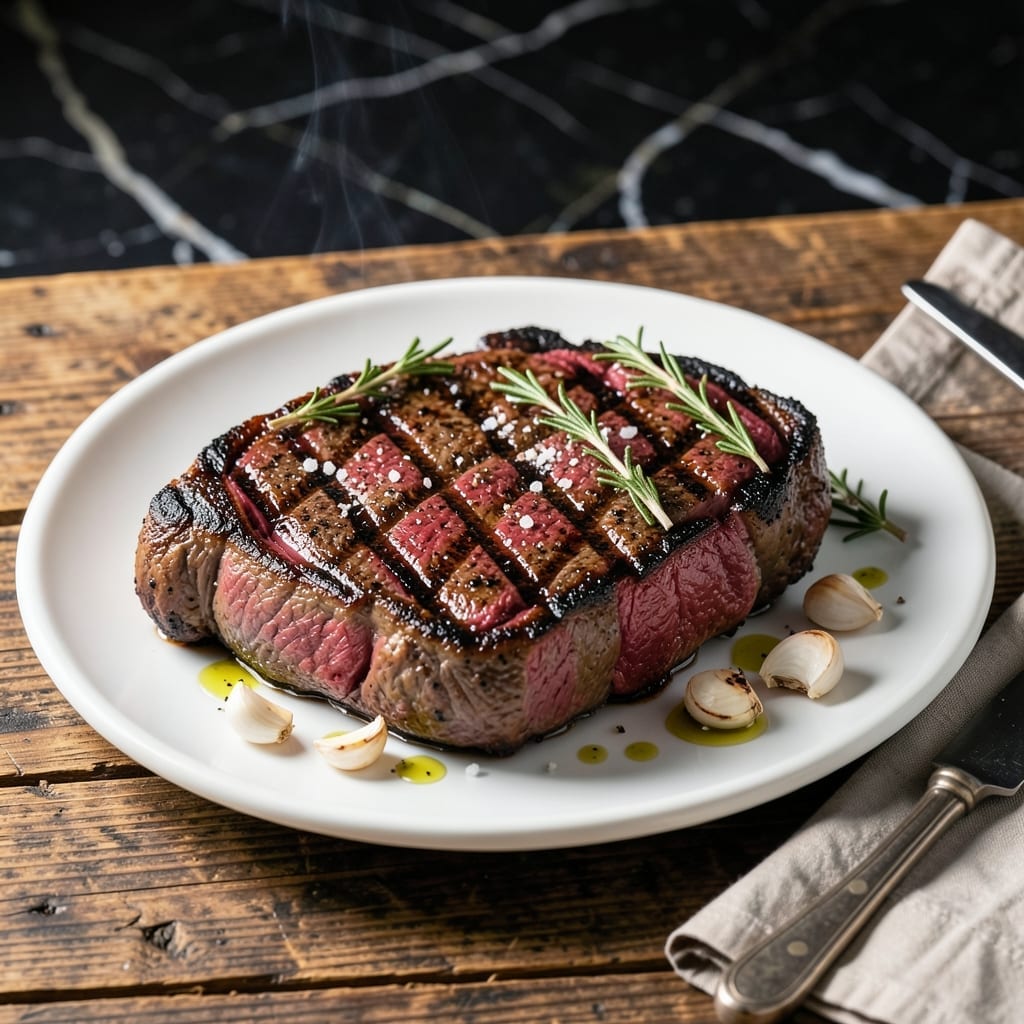
Mastering the perfect rib eye requires precision, and this reverse sear method delivers even doneness from edge to edge every time. The low-and-slow start followed by a high-heat finish ensures a tender, juicy center with a beautifully caramelized crust.
I learned early that great steak isn’t just about the cut—it’s about technique. This approach, inspired by professional pitmasters, transforms a simple rib eye into a restaurant-quality masterpiece with minimal effort.
What you’ll get is a steak with a deep, flavorful crust and a consistently perfect medium-rare interior. The reverse sear method takes the guesswork out of grilling, making it foolproof for home cooks.
Ready to elevate your steak game? Let’s fire up the grill.
Ingredients for Bobby Flay Grilled Rib Eye Steak
A few quality ingredients transform prime rib eye into a steakhouse masterpiece at home.
| Ingredient | Amount | Notes |
|---|---|---|
| Rib Eye Steak 🥩 | 2 lb | Bone-in, 1.5 inches thick |
| Kosher Salt 🧂 | 2 tbsp | Diamond Crystal preferred |
| Freshly Ground Black Pepper 🌶️ | 1 tbsp | Coarse grind for crust |
| Garlic Cloves 🧄 | 4 cloves | Smashed, peeled |
| Fresh Rosemary Sprigs 🌿 | 2 whole | Stems intact for infusion |
| Fresh Thyme Sprigs 🍃 | 4 whole | Stems intact for infusion |
| Extra-Virgin Olive Oil 🫒 | ¼ cup | High smoke point preferred |
| Unsalted Butter 🧈 | 4 tbsp | European-style for basting |
| Vegetable Oil 💧 | 2 tbsp | Neutral flavor for searing |
| Shallot 🧅 | 1 whole | Finely minced for compound butter |
| Dijon Mustard 🟡 | 1 tbsp | For finishing compound butter |
| Red Wine Vinegar 🍷 | 1 tsp | For acidity in compound butter |
[recipe_ingredient_scaler]
The rib eye is non-negotiable here—USDA Prime from a reputable butcher like Pat LaFrieda ensures superior marbling. Thickness matters: aim for 1.5-inch cuts for even cooking. Bone-in adds flavor, but boneless works if that’s what’s available. For salt, Diamond Crystal kosher salt is the professional standard (lighter texture means more even distribution). The fresh herbs should be vibrant—avoid wilted or browned sprigs.
No rib eye? New York strip is the closest substitute, though slightly leaner. Out of fresh rosemary? Dried rosemary at one-third the amount works, but fresh is ideal. For the compound butter, shallots can be swapped for red onion in a pinch. The butter must be unsalted—salted throws off the seasoning balance. If avoiding dairy, high-smoke-point oil alone works for basting, though less flavorful.
Steaks can be dry-brined (salted) up to 24 hours ahead—this actually improves texture. Compound butter keeps 1 week refrigerated or 3 months frozen. Fresh herbs are best used within 3 days for peak flavor. Always bring steaks to room temperature before cooking for even doneness.
Why You’ll Love This Recipe
- No-Fuss Grilling: Honestly, it’s just salt, pepper, garlic, and rosemary—no marinade, no fuss. Toss it on the grill and let the flavors do the work.
- Steakhouse Quality: That rib eye crust with the rosemary and garlic? It tastes like a restaurant steak, minus the bill.
- Backyard Star: I’ve served this at casual cookouts and fancy dinners—always the first thing to disappear.
- Leftovers Gold: Cold rib eye slices make the best next-day sandwiches. Between us, I sometimes grill extra just for that.
Step-by-Step Instructions for Grilled Rib Eye Steak
Master the reverse sear technique for perfectly even doneness from edge to edge.
Step 1: Season and Slow-Roast the Rib Eye
Pat the 2 lb Rib Eye Steak completely dry with paper towels. This is critical—excess moisture prevents proper browning. Season aggressively on all sides with the 2 tbsp Kosher Salt and 1 tbsp Freshly Ground Black Pepper, pressing the seasoning into the meat so it adheres during cooking.
Place the steak on a wire rack set over a baking sheet. Position in an oven preheated to 250°F and roast until the internal temperature reaches 110-115°F for medium-rare, about 30-40 minutes. This low-and-slow start ensures the center cooks evenly without overcooking the outer layers.
Step 2: Infuse Compound Butter with Aromatics
While the steak roasts, prepare the compound butter. In a small saucepan, combine the 4 tbsp Unsalted Butter, 0.25 cup Extra-Virgin Olive Oil, 4 cloves Garlic Cloves, 2 whole Fresh Rosemary Sprigs, and 4 whole Fresh Thyme Sprigs.
Heat over low heat for 3-4 minutes until the butter melts and the garlic begins to sizzle gently. The oil should be fragrant and just beginning to take on color from the herbs. Remove from heat and let steep for 10 minutes to deepen the infusion.
Step 3: Sear Over High Heat for Crust Development
Heat a grill or cast-iron skillet over high heat until smoking hot. Add the 2 tbsp Vegetable Oil and swirl to coat. Carefully place the steak on the grill and sear undisturbed for 2-3 minutes per side until a deep, dark crust forms.
During the final minute of searing, baste the steak generously with the infused butter mixture, spooning it over the surface repeatedly. This adds layers of flavor and promotes glossy, caramelized crust development. The steak should reach an internal temperature of 125-130°F for perfect medium-rare.
Step 4: Rest and Finish with Compound Butter
Transfer the steak to a cutting board and let rest for 10 minutes. This allows the juices to redistribute throughout the meat. While it rests, strain the infused butter mixture into a small bowl and discard the solids.
In a separate bowl, mix the strained butter with the finely minced 1 whole Shallot, 1 tbsp Dijon Mustard, and 1 tsp Red Wine Vinegar. Stir until fully combined. Slice the steak against the grain and serve with a generous spoonful of the compound butter on top.
Pro Tips For Making Bobby Flay Grilled Rib Eye Steak
- Dry the Steak: Pat the rib eye completely dry with paper towels before seasoning—this is the only way to get that deep, Bobby Flay-worthy crust on the grill.
- Season Aggressively: Use more kosher salt than you think, pressing it into the meat so it adheres, and don’t forget the edges—flavor shouldn’t stop at the sides.
- Let It Rest: After grilling, tent the steak with foil and give it a solid 5-10 minutes to rest, or all those juices will end up on the cutting board instead of in your mouth.
- Bruise the Herbs: Lightly crush the rosemary sprigs and garlic cloves before adding them to the grill—this releases their oils and infuses the steak with way more aroma.
Best Sauces and Condiments for This Dish
Classic Chimichurri
This vibrant green sauce cuts through the richness of rib eye beautifully. I blend 1 cup fresh parsley, ¼ cup fresh cilantro, 3 garlic cloves, ¼ cup red wine vinegar, and ½ cup olive oil with a pinch of red pepper flakes. Let it sit 10 minutes before serving. 🌿
Creamy Horseradish
For a bold kick, mix ½ cup sour cream with 2 tbsp prepared horseradish, 1 tsp Dijon mustard, and 1 tsp lemon juice. The sharpness complements the steak’s richness perfectly. I always use Gold’s horseradish for its clean heat.
Red Wine Reduction
Simmer 1 cup dry red wine with 1 minced shallot until reduced by half. Add 1 tbsp cold butter for shine. This sophisticated sauce feels restaurant-worthy but takes 10 minutes to make.
Garlic-Herb Butter
Soften ½ cup unsalted butter and mix with 1 tbsp chopped rosemary, 1 tbsp chopped thyme, and 2 minced garlic cloves. Roll in parchment and chill. Slice coins over hot steak. 🧈
Smoky BBQ Glaze
Combine ½ cup BBQ sauce with 1 tbsp apple cider vinegar and 1 tsp smoked paprika. Brush on during the last minute of searing. I prefer Stubb’s Original for its balanced sweetness.
Nutrition Facts
Frequently Asked Questions
Why use reverse sear instead of direct grilling?
Reverse searing ensures even doneness throughout the steak. The low oven start gently cooks the center while the hot sear creates a perfect crust. This method eliminates the risk of overcooking the edges.
How do I know when the steak is done?
Use an instant-read thermometer. For medium-rare, pull it at 125-130°F. The temperature will rise 5°F while resting. A perfectly cooked steak feels slightly soft with a bit of resistance.
Can I use a different cut of meat?
Yes, but choose thick cuts like New York strip or filet mignon. Avoid lean cuts like sirloin—they dry out faster. Stick to 1.5-inch thickness for best results with this method.
What if I don’t have a meat thermometer?
Use the finger test. Press the steak: rare feels soft, medium-rare has slight resistance, medium is firm. But for precision, a thermometer is the only reliable way to hit 125-130°F.

Trained in classic French technique but raised on slow-cooked ribs and spicy rubs, she blends culinary skill with smoke and soul.
- Recipe for Boneless Pork Chops in Cast Iron Skillet: Sear and Baste to Juicy Perfection - October 3, 2026
- Recipe for Boneless Cross Rib Roast: Slow-Roasted Beef with Herb Crust - October 3, 2026
- Hamburgers in Sauce Recipe Crock Pot: Slow-Cooked Savory Delight - October 3, 2026