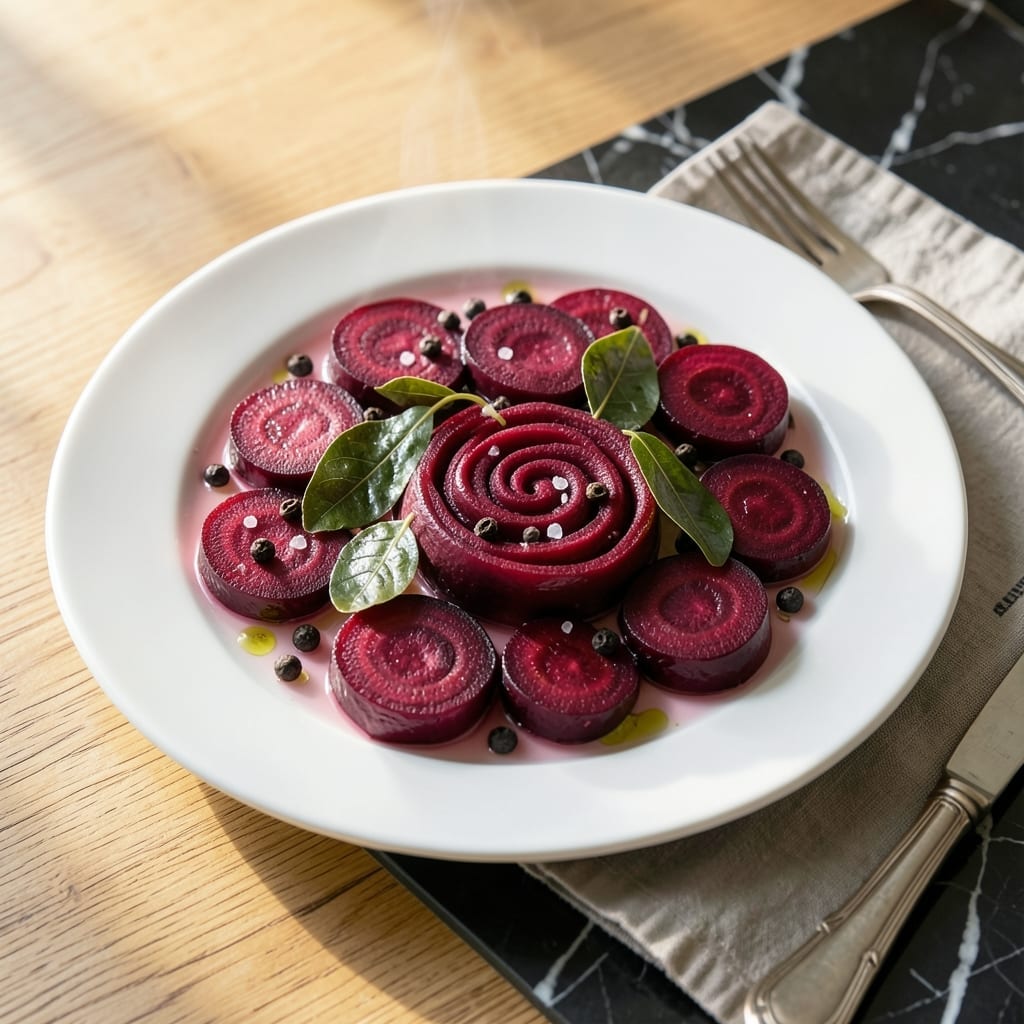
This method delivers tender, vibrant beets with minimal effort and maximum flavor. The key is starting them in cold water to ensure even cooking.
No fancy techniques needed—just fresh beets, water, and a little patience. The result is a simple side dish that highlights the natural earthy sweetness of the roots.
Ingredients for Boiled Beets
Fresh beets, a few pantry staples, and patience deliver earthy, vibrant roots.
| Ingredient | Amount | Notes |
|---|---|---|
| Medium Beets 🍠 | 2 lb | Scrubbed, stems trimmed |
| Water 💧 | 8 cups | Cold, for even cooking |
| White Vinegar 🍶 | ¼ cup | For color preservation |
| Kosher Salt 🧂 | 1 tbsp | Diamond Crystal preferred |
| Black Peppercorns 🌶️ | 10 whole | Lightly crushed |
| Bay Leaf 🍃 | 1 whole | Dried, for aroma |
| Extra-Virgin Olive Oil 🫒 | 2 tbsp | For finishing |
| Fresh Parsley 🌿 | ¼ cup | Chopped, for garnish |
| Garlic Cloves 🧄 | 2 cloves | Minced, optional |
| Red Wine Vinegar 🍷 | 1 tbsp | For acidity balance |
[recipe_ingredient_scaler]
The beets are the star—choose firm, smooth specimens with intact stems (a sign of freshness). Whole Foods or a local farmers market typically has the best selection. Avoid pre-cooked or canned beets; their texture pales in comparison. The vinegar in the cooking water isn’t just for flavor—it helps preserve that stunning magenta hue. Don’t skip it.
No white vinegar? Apple cider vinegar works just as well. Out of fresh parsley? Fresh dill or chives add a nice herbaceous note. The olive oil can be swapped for avocado oil if that’s your preference, but don’t use a strongly flavored oil—it’ll overpower the beets’ natural sweetness. Salt amounts can be adjusted, but go easy; you can always add more at the end.
Boiled beets keep beautifully in the fridge for up to 5 days in a sealed container. They’ll maintain vibrancy and flavor. For longer storage, peel and slice before freezing—they’ll last 6-8 months. The cooking liquid can also be saved and reduced into a light, tangy broth for soups or dressings.
Why You’ll Love This Recipe
- Hands-Off Cooking: I just simmer the beets with water, vinegar, and peppercorns—no babysitting required.
- Bright, Tangy Bite: The white vinegar cuts the earthiness and makes every forkful pop.
- Meal Prep MVP: I boil a big batch Sunday and toss them in salads, grain bowls, or sandwiches all week.
Step-by-Step Instructions for Boiled Beets
Master this straightforward technique for beets that retain color, texture, and natural sweetness.
Step 1: Prepare the Beets and Aromatics
Scrub the 2 lb Medium Beets thoroughly under cold running water to remove any dirt. Trim the stems and any long roots, but leave the root end intact to prevent bleeding during cooking. I use a vegetable brush for stubborn soil—this ensures no grit remains on the skin.
Lightly crush the 10 whole Black Peppercorns with the flat side of a knife or a mortar and pestle. This releases their essential oils without pulverizing them. Combine the crushed peppercorns with the 1 whole Bay Leaf and 1 tbsp Kosher Salt in a small piece of cheesecloth or a spice bag if desired, though I often add them directly to the pot.
Step 2: Simmer with Vinegar for Vibrant Color
In a large pot, combine the 8 cups Water and 0.25 cup White Vinegar. The vinegar is crucial—it stabilizes the beets’ natural pigments, preventing them from bleeding into the cooking liquid. Bring the mixture to a rolling boil over high heat.
Add the prepared beets, peppercorns, bay leaf, and salt to the boiling water. The liquid should cover the beets by at least 1-2 inches—if not, add more water. Reduce the heat to medium-low to maintain a gentle simmer. Cover the pot partially to allow steam to escape while preventing excessive evaporation.
Step 3: Cook Until Tender
Simmer the beets for 45-60 minutes, depending on their size. You’ll know they’re done when a knife or fork slides in with minimal resistance. I check the largest beet first, as smaller ones will cook faster. Avoid overcooking, which can make the beets mushy and dull their vibrant color.
During cooking, the water may take on a faint pink hue—this is normal and doesn’t indicate overcooking. The beets are ready when their skins start to wrinkle slightly and the flesh is tender but still holds its shape.
Step 4: Shock and Peel
Once tender, drain the beets and immediately transfer them to a bowl of ice water to halt the cooking process. This shock treatment also makes the skins easier to remove. Let them cool for 5-10 minutes until comfortable to handle.
Under running water or while submerged, use your fingers or a paring knife to slip off the skins. They should come away effortlessly. If any resist, return the beets to the ice water for another 2-3 minutes. Trim off any remaining stems or roots at this stage.
Step 5: Finish and Serve
Slice, dice, or leave the beets whole, depending on your preference. For serving, I toss them with the 2 tbsp Extra-Virgin Olive Oil and 1 tbsp Red Wine Vinegar while still warm—this enhances their natural sweetness and adds a bright, tangy note.
Garnish with the 0.25 cup Fresh Parsley, finely chopped. If using, mince the 2 cloves Garlic Cloves and sprinkle over the top just before serving to add a subtle pungency. Serve warm or at room temperature for the best flavor and texture.
Pro Tips For Making Boiled Beets
- Keep Skins On: Don’t peel before boiling—it keeps the beets from bleeding into the water and makes peeling easier after cooking. I learned this the hard way after turning my first batch into a pale pink mess.
- Add Vinegar Early: Toss 2 tablespoons of white vinegar into the water at the start. It brightens the color and cuts the earthy flavor—my grandmother swore by this, and she was right.
- Test With a Knife: Skip the fork test; a thin knife should slide in like butter at the thickest part. After undercooking my first three batches, I finally realized beets lie about their doneness.
- Shock in Cold Water: Drain and plunge the beets into ice water for 5 minutes after boiling. It stops the cooking and makes peeling a breeze—sounds like extra work, but it saves time in the long run.
Perfect Pairings for boiled beets
Cheese and Dairy
Crumbled goat cheese adds a creamy tang that pairs beautifully with earthy beets. I love using Cypress Grove brand—just ½ cup sprinkled over warm beets creates a luxurious contrast. Feta works too, but reduce to ⅓ cup to avoid overpowering the dish.
Herb Combinations
Fresh dill or mint brightens the earthy notes of beets wonderfully. I often combine 2 tbsp dill with 1 tbsp mint for a refreshing herb blend. Foraged wild herbs from coastal rides add a unique twist I adore.
Protein Pairings
For a heartier meal, serve with smoked salmon or grilled chicken. The smokiness from my pitmaster days complements the beets perfectly. A 4 oz portion of protein per serving keeps the balance right.
Grain Accompaniments
Whole grains like quinoa or farro absorb the beet juices beautifully. Cook 1 cup dry grain and toss with the beets while warm. The nutty flavor of farro from local markets is my personal favorite. 💛
Nut and Seed Toppings
Toasted walnuts or pumpkin seeds add crunch and healthy fats. I toast ¼ cup walnuts in a dry pan for 3-4 minutes until fragrant. Sprinkle just before serving to maintain the texture.
Bread Options
A crusty sourdough or baguette is perfect for soaking up beet juices. I get mine from the local bakery—slice ½ inch thick and toast lightly. The contrast between crisp bread and tender beets is divine. 🔥
Nutrition Facts
Frequently Asked Questions
Should I peel beets before boiling?
No, leave the skins on during cooking to preserve color and flavor. Peel them after boiling when they’re tender—the skins will slip off easily under running water.
Why add vinegar to the water?
The vinegar helps stabilize the beets’ natural pigments, keeping their vibrant color from bleeding into the water. It also adds a subtle tang that balances their earthy sweetness.
How do I know when they’re done?
Test with a fork or knife—it should slide in with minimal resistance. Smaller beets may take 45 minutes, while larger ones need up to 60 minutes.
Can I boil beets in advance?
Yes! They’ll keep in the fridge for up to 5 days in a sealed container. For longer storage, peel and slice before freezing for 6-8 months.

Trained in classic French technique but raised on slow-cooked ribs and spicy rubs, she blends culinary skill with smoke and soul.
- Recipe for Boneless Pork Chops in Cast Iron Skillet: Sear and Baste to Juicy Perfection - October 3, 2026
- Recipe for Boneless Cross Rib Roast: Slow-Roasted Beef with Herb Crust - October 3, 2026
- Hamburgers in Sauce Recipe Crock Pot: Slow-Cooked Savory Delight - October 3, 2026