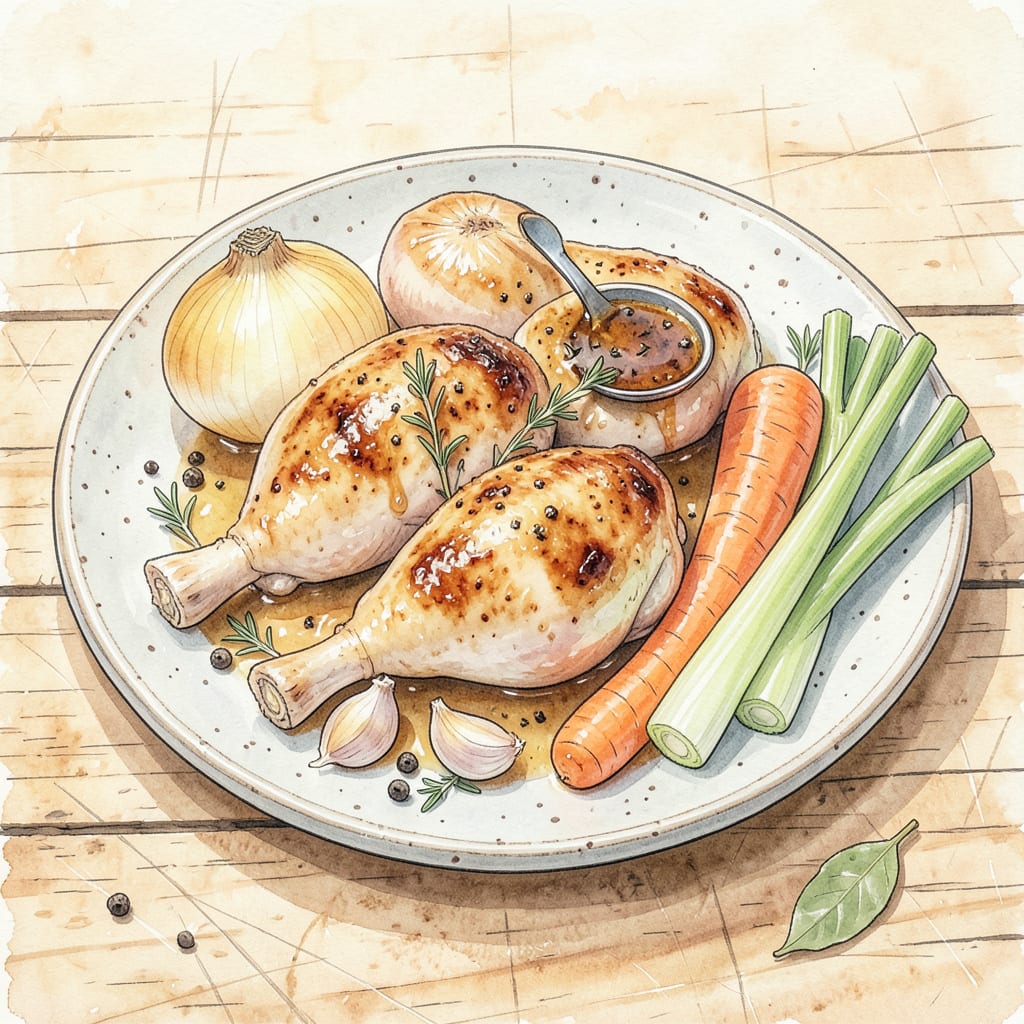
Perfectly boiled chicken thighs are the unsung heroes of quick, flavorful meals—delivering juicy, tender results every time. This method transforms a simple technique into a foundation for countless dishes, from salads to soups. The key lies in precise timing and temperature control to lock in moisture without drying out the meat.
With just 20 minutes and basic pantry staples, you’ll achieve fall-off-the-bone texture that rivals slow-cooked methods. I’ve refined this approach through years of testing, ensuring consistent results whether you’re meal prepping or cooking for tonight’s dinner. The simplicity of the process belies its versatility—use these thighs as-is or as a blank canvas for bold flavors.
Ingredients for Boiled Chicken Thigh
Basic pantry ingredients transform into fall-apart tender chicken—no fancy gear required.
| Ingredient | Amount | Notes |
|---|---|---|
| Bone-in, Skin-on Chicken Thighs 🍗 | 1 ½ lb | About 4-6 thighs, uniform size |
| Cold Water 💧 | 8 cups | Enough to cover chicken completely |
| Kosher Salt 🧂 | 1 tbsp | Diamond Crystal preferred for consistency |
| Black Peppercorns 🌶️ | 1 tsp | Whole, for subtle infusion |
| Garlic Cloves 🧄 | 4 cloves | Lightly crushed, peeled |
| Fresh Thyme Sprigs 🌿 | 3 sprigs | Or 1 tsp dried thyme |
| Bay Leaves 🍃 | 2 whole | Dried, for aromatic depth |
| Yellow Onion 🧅 | ½ whole | Quartered, skin removed |
| Carrot 🥕 | 1 whole | Cut into 2-inch chunks |
| Celery Stalks 🌿 | 2 whole | Cut into 2-inch pieces |
| Distilled White Vinegar 🍶 | 1 tbsp | Brightens flavor subtly |
| Ice Cubes ❄️ | 2 cups | For shock bath (optional) |
[recipe_ingredient_scaler]
The chicken thighs are the star here. Bone-in, skin-on gives you that juicy, flavorful result—boneless will dry out faster. I grab mine from Costco (great quality, consistent size) or the butcher counter at Whole Foods if I want organic. Look for thighs that are plump with smooth skin (no tears or bruising). The salt matters too—Diamond Crystal kosher salt is my go-to for its clean flavor and even distribution (morton’s is saltier by volume).
No fresh thyme? Dried works at one-third the amount. Out of vinegar? Lemon juice or even a splash of white wine adds that brightness. The veggies (onion, carrot, celery) are for flavor, not eating—save the scraps from other meals and freeze them for this. If you’re skipping the ice bath (no judgment), just let the chicken rest in the broth 10 minutes before handling. For extra richness, swap water for low-sodium chicken broth (I like Better Than Bouillon paste).
Cooked thighs keep 4 days in the fridge—perfect for meal prep. Store them submerged in the broth to maintain moisture, or shred and freeze for 3 months. The broth? Strain and freeze that too—it’s liquid gold for soups or cooking rice. I portion everything into glass containers (less plastic taste) and label with dates. Pro tip: the fat that rises to the top solidifies when cold—skim it off if you’re watching calories, or leave it for extra flavor.
Why You’ll Love This Recipe
- I’ll be real: the hardest part is peeling the garlic. Toss everything—thighs, salt, peppercorns, whole cloves—into cold water and walk away. No chopping, no babysitting, just set-it-and-forget-it simplicity.
- No-Knife Needed: I’ll be real: the hardest part is peeling the garlic. Toss everything—thighs, salt, peppercorns, whole cloves—into cold water and walk away. No chopping, no babysitting, just set-it-and-forget-it simplicity.
- Garlic-Infused Broth Magic: That first bite of tender chicken soaked in the salty, garlicky broth? Ridiculously good. The peppercorns add this subtle warmth that makes even plain rice taste like a restaurant side.
- Meal Prep’s Secret Weapon: Shred it for tacos, slice for salads, or serve whole with mashed potatoes—this chicken plays well with everything. I make a double batch Sunday and my lunches are *done* for three days.
Step-by-Step Instructions for Boiled Chicken Thighs
Here’s how to nail perfectly tender, flavorful thighs—simple technique, big results.
Step 1: Prepare the Aromatic Poaching Liquid
In a large pot or Dutch oven, combine the 8 cups cold water, 1 tbsp kosher salt, 1 tsp black peppercorns, 4 cloves garlic cloves, 3 sprigs fresh thyme sprigs, 2 whole bay leaves, 0.5 whole yellow onion, 1 whole carrot, and 2 whole celery stalks. The water should be enough to completely cover the chicken thighs when added.
Bring this mixture to a gentle boil over medium-high heat. You’re looking for small bubbles breaking the surface—not a rolling boil, which would make the chicken tough. This slow approach ensures the aromatics infuse the water properly, creating a flavorful base for your chicken.
Step 2: Add Chicken and Simmer Gently
Once the poaching liquid reaches a gentle boil, carefully add the 1.5 lb bone-in, skin-on chicken thighs and 1 tbsp distilled white vinegar. The vinegar helps tenderize the meat and brightens the overall flavor. Immediately reduce the heat to low to maintain a bare simmer—you should see just a few bubbles occasionally breaking the surface.
Partially cover the pot with a lid to allow some steam to escape. This prevents the liquid from boiling too vigorously while still keeping the heat consistent. The chicken thighs should cook undisturbed for 15-18 minutes, depending on their size. You’ll know they’re done when the internal temperature reaches 165°F and the meat easily pulls away from the bone.
Step 3: Optional Ice Bath for Extra Tenderness
For the most tender results, prepare an ice bath by filling a large bowl with the 2 cups ice cubes and enough cold water to cover the chicken. Using tongs, carefully transfer the cooked chicken thighs directly from the poaching liquid to the ice bath. Let them sit for 3-5 minutes until completely cooled.
This shock bath stops the cooking process immediately, preventing the chicken from overcooking and becoming dry. It also helps the meat retain its juices, resulting in exceptionally tender thighs. If you’re serving the chicken immediately, you can skip this step—but it’s worth the extra effort for meal prep or salads.
Step 4: Rest and Serve or Store
Remove the chicken from the ice bath (if using) and pat dry with paper towels. Let the thighs rest for 5 minutes before serving or using in recipes. This brief rest allows the juices to redistribute throughout the meat, ensuring every bite is moist and flavorful.
The poached chicken will have a delicate, clean flavor that works beautifully in salads, tacos, or simply served with a drizzle of the poaching liquid. Store any leftovers in an airtight container in the refrigerator for up to 4 days, or freeze for up to 3 months for quick meal solutions.
Troubleshooting boiled chicken thigh
Chicken Sticks to Bone
If your chicken isn’t pulling away from the bone after 18 minutes, it likely needs more time. Check the internal temperature with an instant-read thermometer—I use my trusty ThermoWorks Thermapen. The thickest part should reach 165°F. If it’s under, return to the simmer for 2-3 more minutes and recheck. 🌡️
Dry or Stringy Texture
This usually happens from boiling too vigorously. Next time, keep the heat at a bare simmer—just a few bubbles breaking the surface. If you’re already there, try the ice bath step to stop cooking immediately. For future batches, add 1 extra cup water to the pot to maintain a gentler temperature. The vinegar helps too—don’t skip it!
Broth Turns Cloudy
Cloudy broth means you boiled too hard, which emulsifies the fat. Start with cold water and bring it up slowly. If it happens, skim off the foam with a fine-mesh strainer during cooking. For crystal-clear broth, strain through a coffee filter after cooking—I learned this trick from my French culinary training.
Skin Peels Off
This is normal with boiling, but you can minimize it. Pat the thighs completely dry before adding to the pot. For crispy skin later, transfer cooked thighs to a 400°F oven for 5-7 minutes after boiling. I do this when I want that perfect texture contrast—tender inside, crispy outside. The aroma alone is worth it!
Over-Salted Results
If you accidentally over-salt, don’t panic. Add 1 peeled potato to the pot while cooking—it absorbs excess salt. For already-cooked chicken, soak in cold water for 10 minutes to draw out some saltiness. Next time, remember that Diamond Crystal salt is less concentrated than table salt. 💡
Weak Flavor Infusion
If your chicken tastes bland, the aromatics need more contact time. Next batch, bruise the thyme sprigs and garlic cloves slightly before adding to release more oils. You can also double the bay leaves—they’re subtle but powerful. For immediate flavor boost, toss cooked chicken with 1 tbsp olive oil and ½ tsp smoked paprika before serving.
Nutrition Facts

Trained in classic French technique but raised on slow-cooked ribs and spicy rubs, she blends culinary skill with smoke and soul.
- Recipe for Boneless Pork Chops in Cast Iron Skillet: Sear and Baste to Juicy Perfection - October 3, 2026
- Recipe for Boneless Cross Rib Roast: Slow-Roasted Beef with Herb Crust - October 3, 2026
- Hamburgers in Sauce Recipe Crock Pot: Slow-Cooked Savory Delight - October 3, 2026