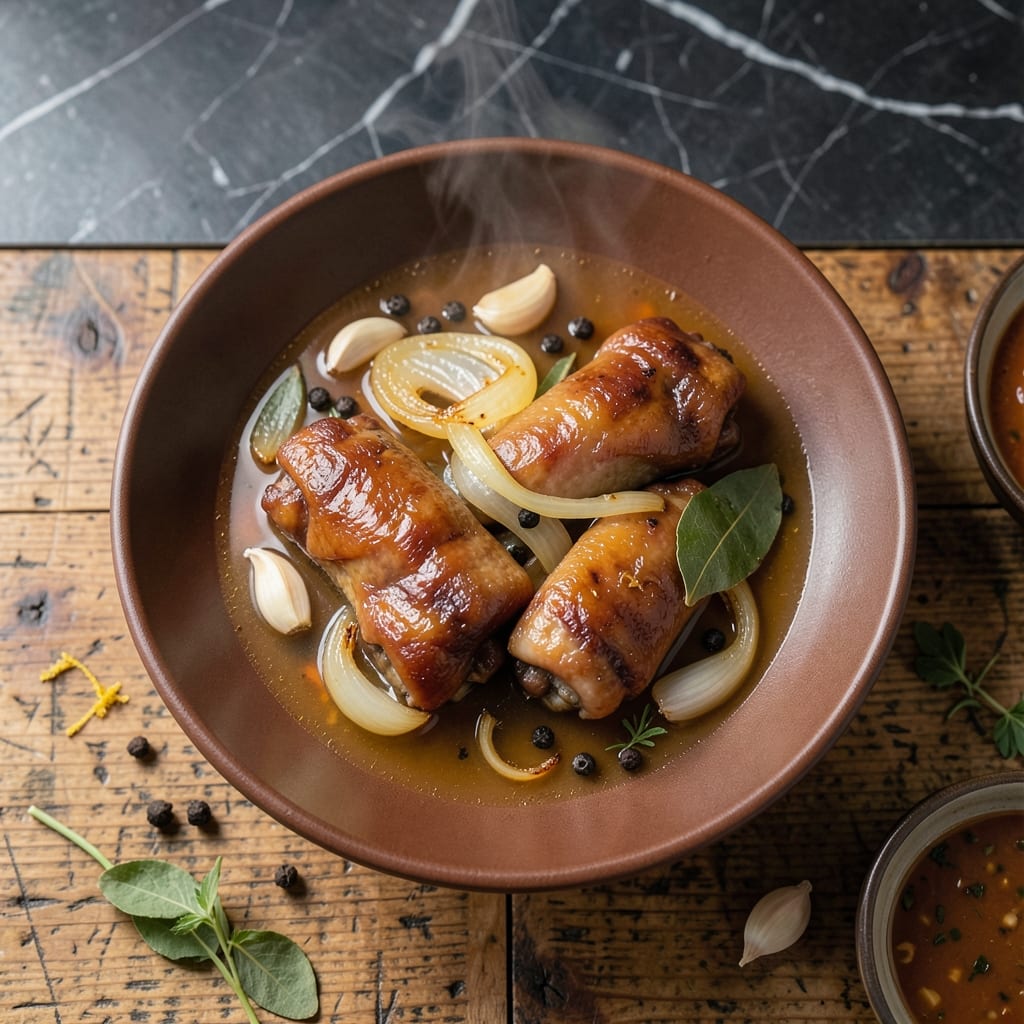
This traditional preparation transforms tough cuts into tender, gelatinous perfection through a long, gentle simmer.
The slow cooking process extracts rich collagen, creating a broth that’s both flavorful and nourishing. Simple seasonings allow the natural pork flavor to shine without overpowering the dish.
You’ll achieve fall-off-the-bone meat with a silky texture that’s impossible to rush. The extended cook time develops depth that shorter methods simply cannot match.
Serve as a hearty main course or use the resulting broth as a base for other dishes. The results justify every minute spent at the stove.
Ingredients for Boiled Pigs Feet
Tender pigs feet and simple aromatics create a rich, collagen-packed dish through slow simmering.
| Ingredient | Amount | Notes |
|---|---|---|
| Pigs Feet 🐷 | 4 whole | Split or whole, cleaned thoroughly |
| Yellow Onion 🧅 | 1 whole | Quartered, skin on for color |
| Garlic Cloves 🧄 | 6 cloves | Lightly crushed, unpeeled |
| Bay Leaves 🌿 | 2 whole | Dried, whole leaves |
| Black Peppercorns 🌶️ | 1 tbsp | Whole, lightly crushed |
| Kosher Salt 🧂 | 2 tbsp | Diamond Crystal preferred |
| Apple Cider Vinegar 🍏 | ½ cup | For acidity and balance |
| Carrots 🥕 | 2 whole | Cut into large chunks |
| Celery Stalks 🥬 | 2 whole | Cut into large chunks |
| Fresh Thyme Sprigs 🌿 | 4 whole | Tied with kitchen twine |
| Water 💧 | 8 cups | Enough to fully submerge pigs feet |
| White Vinegar 🍶 | ¼ cup | For initial cleaning rinse |
| Whole Cloves 🌿 | 4 whole | Optional, for depth |
[recipe_ingredient_scaler]
The pigs feet are the foundation here. Source from a trusted butcher—look for fresh, not frozen, with clean, intact skin. Most specialty meat markets or Asian grocery stores stock them regularly. If using frozen, thaw completely in the fridge overnight. The vinegar rinse is non-negotiable—it removes any residual impurities and tightens the skin for better texture.
No apple cider vinegar? White wine vinegar or rice vinegar work equally well. Fresh thyme can be swapped for dried thyme at one-third the amount. If you’re missing celery, fennel bulbs add a similar aromatic quality. The bay leaves are essential—don’t substitute with ground bay. For extra depth, a splash of soy sauce enhances the umami without overpowering.
The broth improves with time. Refrigerate for up to 5 days or freeze for 3 months. Skim off solidified fat before reheating. Pigs feet can be shredded and used in tacos, or the broth reduced for a rich sauce base. Always store in airtight containers to preserve freshness.
Why You’ll Love This Recipe
- Set and Forget: I toss everything in one pot and let it simmer while I do other things.
- Rich Collagen Boost: The slow-cooked pigs feet release that deep, gelatinous goodness with every bite.
- Sunday Supper Star: It’s the dish my whole family gathers around, especially with a side of hot sauce.
- Pennywise Protein: I get pounds of flavor for just a few dollars—leftovers taste even better the next day.
Step-by-Step Instructions for Boiled Pigs Feet
This traditional preparation transforms tough cuts into tender, collagen-rich perfection with a simple simmer.
Step 1: Clean and Prepare the Pigs Feet
Begin by thoroughly rinsing the 4 whole Pigs Feet under cold water to remove any debris. Submerge them in a large bowl with the 0.25 cup White Vinegar and enough water to cover for 15 minutes—this helps remove any lingering impurities and neutralizes odors.
After soaking, rinse the pigs feet again under cold water and pat them dry with paper towels. If using whole feet, you may split them lengthwise with a sharp knife for easier portioning later. This preparation ensures the final dish has the cleanest possible flavor.
Step 2: Build the Aromatic Base
In a large stockpot, combine the cleaned 4 whole Pigs Feet with the 1 whole Yellow Onion (quartered, skin on), 6 cloves Garlic Cloves (lightly crushed, unpeeled), 2 whole Carrots (cut into large chunks), and 2 whole Celery Stalks (cut into large chunks).
Add the 2 whole Bay Leaves, 1 tbsp Black Peppercorns (lightly crushed), 4 whole Fresh Thyme Sprigs (tied with kitchen twine), and 4 whole Whole Cloves. These aromatics infuse the broth with deep, layered flavors as the pigs feet simmer.
Step 3: Season and Simmer Until Tender
Pour in the 8 cups Water and 0.5 cup Apple Cider Vinegar, then add the 2 tbsp Kosher Salt. The vinegar balances the richness of the meat while helping to break down collagen into gelatin, giving the dish its signature unctuous texture.
Bring the mixture to a boil over high heat, then reduce to a gentle simmer. Partially cover the pot and cook for 3 to 4 hours, occasionally skimming off any foam that rises to the surface. The pigs feet are done when the meat easily pulls away from the bone and the skin is fork-tender.
Step 4: Finish and Serve
Once the pigs feet are tender, remove them from the broth with a slotted spoon and transfer to a serving platter. The broth can be strained and reserved for soups or sauces, if desired.
Serve the pigs feet hot, accompanied by some of the cooking liquid for dipping. The meat should be fall-apart tender with a rich, gelatinous texture, while the broth offers a savory, aromatic depth that complements the dish perfectly.
Pro Tips For Making Boiled Pigs Feet
- Simmer, Don’t Boil: Keep the heat low enough that you see gentle bubbles, not a rolling boil—otherwise the meat gets tough and the broth turns cloudy. I learned this the hard way after ruining two batches with aggressive heat.
- Score the Skin: Before boiling, make shallow cuts in the pig’s feet skin to help render the fat and let the flavors penetrate deeper. Sounds weird, but it works.
- Skimming Matters: A foam layer will rise to the top in the first 30 minutes—skim it off with a spoon for a cleaner, clearer broth. Skip this and your stock will taste bitter.
- Add Vinegar Last: If you’re using vinegar for that tangy kick, stir it in during the final 15 minutes, not at the start—otherwise the feet stay rubbery. My grandmother swore by this, and she was right.
Best Sauces and Condiments for boiled pigs feet
Classic Vinegar Sauce
Whisk together ½ cup apple cider vinegar, 2 tbsp olive oil, 1 tsp salt, and 1 tbsp brown sugar for a tangy-sweet dip. I love how it cuts through the richness while complementing the collagen. The acidity brightens each bite beautifully. 🌟
Spicy Mustard Kick
Combine ¼ cup Dijon mustard, 1 tbsp honey, and 1 tsp hot sauce for a bold, slightly sweet contrast. This pairs especially well with the gelatinous texture. I often add 1 minced garlic clove for extra depth.
Garlic-Herb Broth
Reduce 2 cups of the cooking liquid with 4 minced garlic cloves and 1 tbsp fresh parsley until syrupy. It intensifies the natural flavors while adding a fresh herbal note. Perfect for drizzling over the meat.
Creamy Pepper Sauce
Blend ½ cup mayo, 2 tbsp black pepper, and 1 tbsp lemon juice for a cool, peppery contrast. The creaminess balances the dish’s richness while the pepper adds a subtle bite. I always use fresh cracked pepper for best results.
Sweet Chili Glaze
Simmer ½ cup sweet chili sauce with 1 tbsp soy sauce and 1 tsp ginger until thickened. This Asian-inspired glaze adds a sticky, sweet-spicy element that clings to the meat. 🔥
Nutrition Facts
Frequently Asked Questions
How long should pigs feet simmer to get tender?
Simmer for 3 to 4 hours on low heat. The collagen breaks down slowly, creating that signature gelatinous texture. Rushing it results in tough meat, so patience is key.
Can I use frozen pigs feet?
Yes, but thaw them completely in the fridge first. Frozen feet may require an extra 30-60 minutes of simmering. Always rinse well to remove any ice crystals or impurities.
Why do you add vinegar to the water?
The vinegar helps break down collagen and removes any gamey odors. It also balances the richness of the meat. Use apple cider or white vinegar for best results.
What if my broth turns cloudy?
Cloudiness is normal and comes from emulsified fats and collagen. For clearer broth, skim foam regularly and avoid boiling. Straining through cheesecloth also helps.

Trained in classic French technique but raised on slow-cooked ribs and spicy rubs, she blends culinary skill with smoke and soul.
- Recipe for Boneless Pork Chops in Cast Iron Skillet: Sear and Baste to Juicy Perfection - October 3, 2026
- Recipe for Boneless Cross Rib Roast: Slow-Roasted Beef with Herb Crust - October 3, 2026
- Hamburgers in Sauce Recipe Crock Pot: Slow-Cooked Savory Delight - October 3, 2026