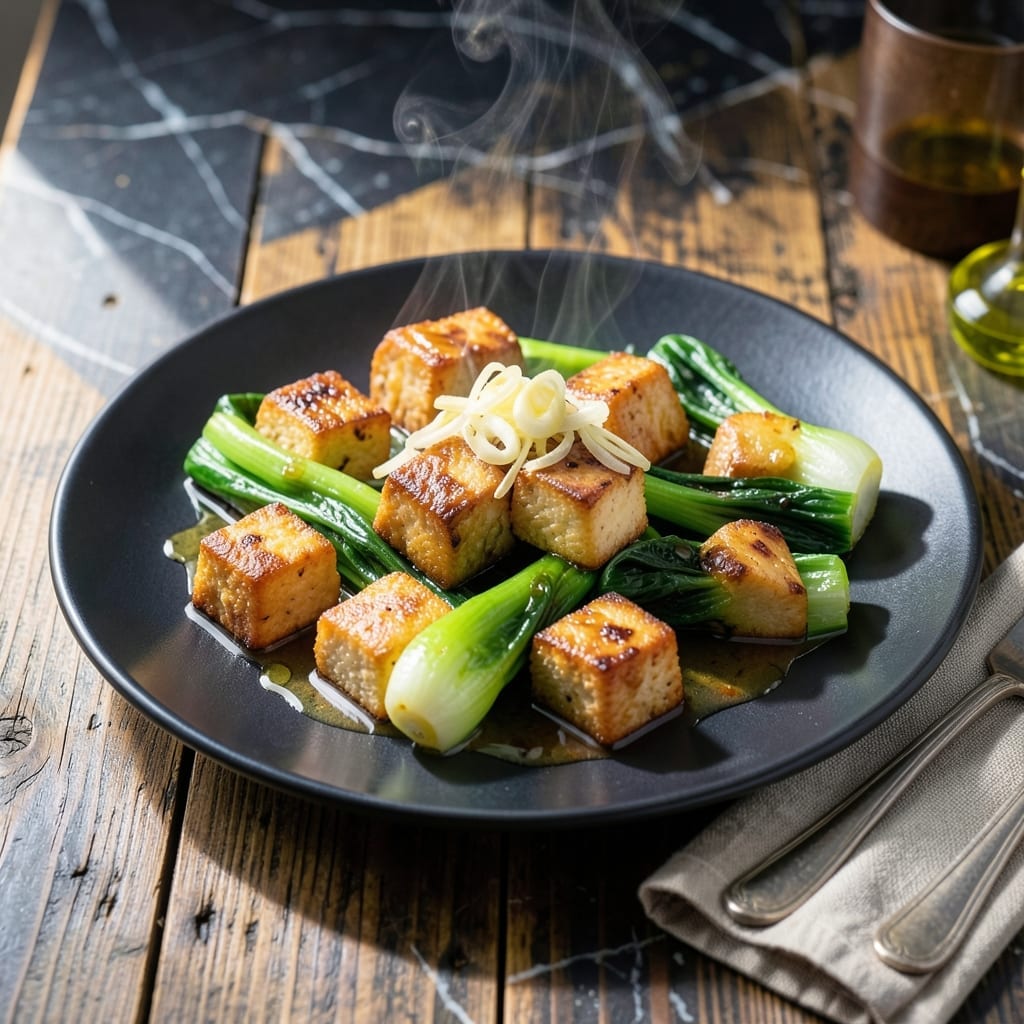
This stir-fry delivers quick, restaurant-quality results in under 15 minutes. The combination of garlic and ginger creates an aromatic base that elevates the natural sweetness of bok choy.
Simple ingredients and high heat are the secrets to achieving tender-crisp vegetables and bold, balanced flavors. The dish works equally well as a side or light main course for busy weeknights.
Ingredients for Bok Choy Asian
Fresh vegetables, bold aromatics, and a few pantry staples create this vibrant dish.
| Ingredient | Amount | Notes |
|---|---|---|
| Baby Bok Choy 🥬 | 8 whole | Halved lengthwise, washed |
| Garlic Cloves 🧄 | 6 cloves | Thinly sliced or minced |
| Fresh Ginger Root 🌿 | 1 ½ tbsp | Peeled and julienned |
| Vegetable Oil 🫒 | 2 tbsp | High smoke point preferred |
| Soy Sauce 💧 | 3 tbsp | Low-sodium or tamari |
| Rice Vinegar 🍚 | 1 tbsp | Unseasoned variety |
| Sesame Oil 🫒 | 1 tsp | Toasted for aroma |
| Agave Nectar 🍯 | 1 tsp | Or maple syrup |
| Red Pepper Flakes 🌶️ | ½ tsp | Adjust to heat preference |
| Sesame Seeds 🍲 | 1 tbsp | Toasted for garnish |
| Green Onions 🧅 | 3 whole | Thinly sliced on bias |
| Tofu 🧈 | 14 oz | Extra-firm, pressed and cubed |
| Cornstarch 🌾 | 1 tbsp | Mixed with 2 tbsp water |
| Salt 🧂 | ½ tsp | Kosher or sea salt |
| Black Pepper 🌶️ | ¼ tsp | Freshly ground |
[recipe_ingredient_scaler]
The bok choy should be firm and vibrant green—avoid any with wilted leaves or brown spots. Asian markets often have the best selection, but most Whole Foods locations stock it fresh. For the ginger and garlic, fresh is non-negotiable—pre-minced versions lack the potency. Look for ginger with smooth, taut skin and plump garlic heads with unbroken cloves.
No tamari? Coconut aminos work as a gluten-free alternative. Out of agave? Maple syrup or even brown sugar dissolved in warm water can substitute. For extra heat, add a dash of sriracha or gochujang. If you can’t find baby bok choy, regular bok choy works—just cut into 2-inch pieces. The tofu can be swapped for tempeh or seitan if preferred.
Store bok choy unwashed in a perforated bag in the fridge for up to 5 days. Once cooked, leftovers keep for 3-4 days in an airtight container. The ginger and garlic can be frozen for 3 months—peel and chop before freezing for convenience.
Why You’ll Love This Recipe
- One Pan Wonder: I just toss the baby bok choy in the pan with garlic, ginger, and soy sauce—no extra bowls, no fuss.
- Umami Bomb: The garlic and ginger in hot oil hit the bok choy and create this deep, savory flavor that’s ridiculously good.
- Weeknight MVP: Honestly, it’s my go-to side for busy evenings—ready before the rice finishes cooking.
- Budget Friendly: A whole head of bok choy costs pennies, and this dish stretches it into something satisfying.
Step-by-Step Instructions for Quick Stir-Fry with Garlic and Ginger
Master the wok with this streamlined approach to vibrant, restaurant-quality results in minutes.
Step 1: Prepare and Season the Tofu
Press the 14 oz Tofu between paper towels for 10 minutes to remove excess moisture, then cut into 1-inch cubes. This step is non-negotiable—proper pressing ensures crispy edges. Toss the cubes with 1 tbsp Cornstarch, 0.5 tsp Salt, and 0.25 tsp Black Pepper until evenly coated.
The cornstarch creates a protective barrier that locks in moisture while forming a golden crust. I’ve found that chilling the tofu for 15 minutes after seasoning helps the coating adhere better during cooking, but you can proceed immediately if pressed for time.
Step 2: Stir-Fry Aromatics and Tofu
Heat 1 tbsp Vegetable Oil in a wok or large skillet over medium-high heat until shimmering. Add the seasoned tofu and cook undisturbed for 3-4 minutes until the bottoms turn golden brown. Flip and cook another 3 minutes until crisp on all sides.
Transfer the tofu to a plate, then add the remaining 1 tbsp Vegetable Oil to the pan. Immediately add the 6 cloves Garlic Cloves and 1.5 tbsp Fresh Ginger Root, stir-frying for 30-45 seconds until fragrant but not browned. Garlic burns quickly, so keep it moving.
Step 3: Add Vegetables and Build the Sauce
Increase heat to high and add the 8 whole Baby Bok Choy, halved lengthwise. Stir-fry for 2-3 minutes until the leaves wilt slightly but retain a vibrant green color. The stems should remain crisp—this is your visual cue that they’re done.
Pour in the 3 tbsp Soy Sauce, 1 tbsp Rice Vinegar, 1 tsp Agave Nectar, and 0.5 tsp Red Pepper Flakes. Stir to coat the bok choy evenly, then return the tofu to the pan. Toss everything together for 1-2 minutes until the sauce thickens slightly and clings to the ingredients.
Step 4: Finish and Garnish
Drizzle the 1 tsp Sesame Oil over the stir-fry and toss once more to distribute its nutty aroma. Remove from heat and transfer to a serving platter. The sesame oil’s low smoke point means it’s added last to preserve its delicate flavor.
Garnish with the 1 tbsp Sesame Seeds and 3 whole Green Onions, thinly sliced. The contrast of toasty seeds and fresh onions adds texture and brightness. Serve immediately while the bok choy is still crisp-tender and the tofu retains its crunch.
Pro Tips For Making Bok Choy Asian
- Halve the Bok Choy: Cut baby bok choy lengthwise into quarters so the heat penetrates evenly and the leaves crisp up—whole heads steam instead of sear.
- Bloom the Aromatics: Cook minced garlic and grated ginger in hot oil for 30 seconds until fragrant, but pull them off before they brown or they’ll turn bitter.
- Skip the Crowded Pan: I learned this the hard way—overloading the pan steams the bok choy instead of giving it those coveted caramelized edges.
- Finish with Soy: Add soy sauce at the very end of cooking so it reduces into a glossy glaze rather than burning into a salty crust.
Flavor Customization for This Recipe
Spice It Up
For heat lovers, double the red pepper flakes or add ½ tsp sriracha to the sauce. I’ve found that a pinch of Sichuan peppercorns (available at specialty spice shops) adds a numbing tingle that’s authentic to many regional dishes. Start small—you can always add more. 🌶️
Sweet and Tangy
Balance the flavors by adjusting the agave nectar to 2 tsp for a sweeter profile. Add 1 tbsp lime juice for extra tang. The acidity brightens the dish and pairs well with the garlic and ginger base.
Umami Boost
Enhance depth with 1 tbsp miso paste or 1 tsp fish sauce (use tamari for vegan). Stir either into the sauce before adding the bok choy. I love how miso adds a creamy richness without dairy.
Nutty Crunch
Swap toasted sesame seeds for crushed peanuts or cashews as garnish. Add 1 tbsp to the dish during the final toss for a Thai-inspired twist. The texture contrast elevates every bite.
Herbal Freshness
Finish with fresh herbs like cilantro or Thai basil instead of green onions. I forage wild Thai basil at local markets—its anise-like flavor is incredible here. Add just before serving to preserve the aroma.
Rich and Creamy
For a decadent touch, stir in 2 tbsp coconut milk at the end. This mellows the heat and adds a silky texture. It’s a trick I picked up from coastal rides through Thai neighborhoods. 💛
Nutrition Facts
Frequently Asked Questions
What can I substitute for agave nectar?
Maple syrup or brown sugar dissolved in warm water work perfectly. Honey is another option, though it’s slightly thicker and may alter texture. Use the same 1 tsp measurement for balance.
Can I use regular bok choy instead of baby?
Yes! Cut regular bok choy into 2-inch pieces for even cooking. The stems may need an extra 1-2 minutes to soften. Baby bok choy cooks faster due to its smaller size.
How do I prevent soggy tofu?
Press the tofu thoroughly for 10 minutes and use high heat. Avoid overcrowding the pan, which steams instead of crisps. Cornstarch in the coating also helps create a crispy exterior.

Trained in classic French technique but raised on slow-cooked ribs and spicy rubs, she blends culinary skill with smoke and soul.
- Recipe for Boneless Pork Chops in Cast Iron Skillet: Sear and Baste to Juicy Perfection - October 3, 2026
- Recipe for Boneless Cross Rib Roast: Slow-Roasted Beef with Herb Crust - October 3, 2026
- Hamburgers in Sauce Recipe Crock Pot: Slow-Cooked Savory Delight - October 3, 2026