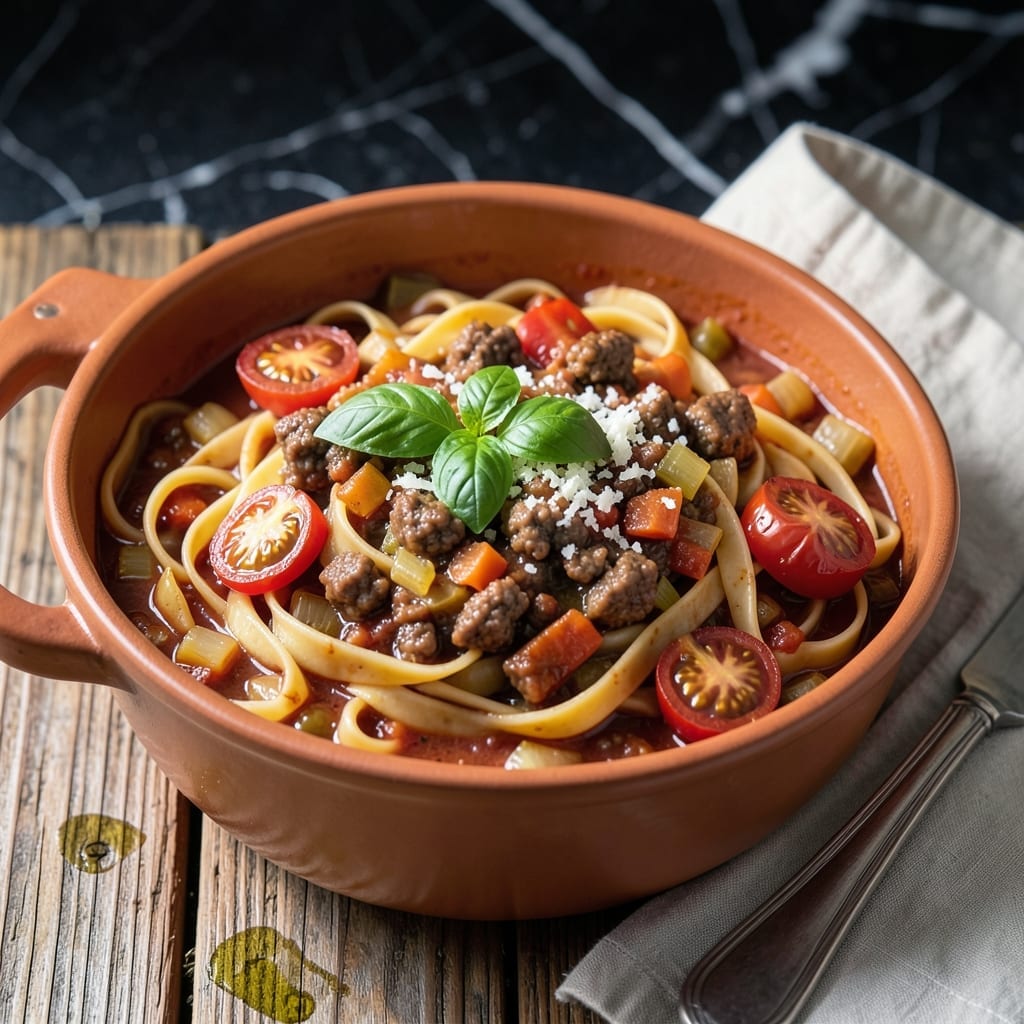
This sauce transforms fresh garden tomatoes into a rich, meaty bolognese that simmers for hours to develop deep, complex flavors. The slow cooking process allows the tomatoes to break down naturally, creating a thick, hearty base.
Use it over pasta, as a lasagna filling, or as a topping for polenta. The result is a restaurant-quality sauce with robust texture and authentic Italian character.
Ingredients for Bolognese Sauce Recipe Fresh Tomatoes
Fresh tomatoes and slow simmering create a rich, restaurant-quality sauce with authentic Italian depth.
| Ingredient | Amount | Notes |
|---|---|---|
| Fresh Roma Tomatoes 🍅 | 4 lb | Cored and quartered |
| Ground Beef 🥩 | 1 lb | 80/20 fat ratio preferred |
| Ground Pork 🥩 | ½ lb | Or substitute more beef |
| Yellow Onion 🧅 | 1 whole | Finely diced |
| Carrots 🥕 | 2 whole | Finely diced |
| Celery Stalks 🌿 | 2 whole | Finely diced |
| Garlic Cloves 🧄 | 4 cloves | Minced |
| Tomato Paste 🍅 | 2 tbsp | For depth of flavor |
| Dry Red Wine 🍷 | ½ cup | Cabernet or Merlot |
| Whole Milk 🥛 | ½ cup | For tenderness |
| Chicken Stock 🍲 | 1 cup | Low-sodium preferred |
| Extra-Virgin Olive Oil 🫒 | ¼ cup | For sautéing |
| Salt 🧂 | 1 tsp | Kosher or sea salt |
| Black Pepper 🌶️ | ½ tsp | Freshly ground |
[recipe_ingredient_scaler]
The tomatoes are non-negotiable here. Roma or San Marzano varieties have the right meaty texture and low water content. Look for vibrant red color and firm flesh at the market or Whole Foods. For the meat, 80/20 ground beef gives you the fat needed for flavor—Costco has good quality at a fair price. The pork adds richness, but you can double the beef if needed.
No red wine? Beef broth with a splash of balsamic vinegar works in a pinch. Fresh tomatoes not in season? Canned San Marzano tomatoes at half the quantity are a solid backup. The milk might seem odd, but it balances the acidity—whole milk is best. If you’re avoiding dairy, unsweetened almond milk can substitute, though the flavor profile shifts slightly.
This sauce improves overnight. Store in an airtight container in the fridge for up to 5 days, or freeze for 3 months. Portion into meal-sized containers before freezing for easy use later. The flavors deepen and meld beautifully with time.
Why You’ll Love This Recipe
- Minimal Chopping: I just dice the onion, carrots, and Roma tomatoes—no fancy knife skills required.
- Deep Rich Flavor: The slow-simmered beef and pork with fresh tomatoes taste like Nonna’s kitchen in a bowl.
- Meal Prep Hero: I make a double batch and freeze portions for those “nothing in the fridge” nights.
- Budget Stretcher: Ground beef and pork with garden tomatoes feed my family for days without breaking the bank.
Step-by-Step Instructions for Bolognese Sauce with Fresh Tomatoes
This slow-simmered method transforms garden-fresh ingredients into a rich, layered sauce.
Step 1: Prepare and Sauté the Aromatic Base
Finely dice the yellow onion, carrots, and celery stalks into uniform pieces. Heat the 0.25 cup extra-virgin olive oil in a heavy pot over medium heat until shimmering. Add the diced vegetables and cook for 8-10 minutes, stirring occasionally.
You’ll know it’s ready when the mixture softens and the onions turn translucent. Add the 4 cloves minced garlic cloves and cook for 1 minute until fragrant. This base builds the flavor foundation for your sauce.
Step 2: Brown the Meat and Develop Flavor
Increase heat to medium-high and add the 1 lb ground beef and 0.5 lb ground pork. Break the meat into small pieces with a wooden spoon. Cook for 8-10 minutes until the meat is fully browned and no pink remains.
Season with the 1 tsp salt and 0.5 tsp black pepper during this process. The meat should develop a rich, caramelized appearance. Stir in the 2 tbsp tomato paste and cook for 2 minutes to deepen the flavor.
Step 3: Incorporate Liquids and Tomatoes
Pour in the 0.5 cup dry red wine and scrape up any browned bits from the bottom of the pot. Let it simmer for 3-4 minutes until the liquid reduces by half. Add the 4 lb cored and quartered fresh Roma tomatoes, 0.5 cup whole milk, and 1 cup chicken stock.
Stir well to combine all ingredients. The fresh tomatoes will break down as they cook, creating a vibrant, chunky sauce. Bring the mixture to a gentle simmer, then reduce the heat to low.
Step 4: Simmer for Optimal Flavor Development
Partially cover the pot and let the sauce simmer for 2 to 2.5 hours. Stir occasionally and add a splash of water if it becomes too thick. The long, slow cook time allows the flavors to meld together beautifully.
You’ll notice the sauce darken and thicken as it reduces. Taste and adjust seasoning if needed, though the initial salt should be sufficient. The meat will become incredibly tender, and the tomatoes will transform into a rich, velvety base.
Step 5: Finish and Serve
Remove the lid and simmer uncovered for an additional 15-20 minutes to reach your desired consistency. The final sauce should coat the back of a spoon but still have a slightly loose texture.
Let the sauce rest for 10 minutes before serving. This allows the flavors to settle. Toss with pasta or use as a base for lasagna, and enjoy the deep, garden-fresh richness in every bite.
Pro Tips For Making Bolognese Sauce Recipe Fresh Tomatoes
- Brown Meat Well: Cook the ground beef and pork until deeply browned, not just gray—this builds the rich flavor base that fresh tomatoes can’t provide on their own. I learned this the hard way after making bland batches that tasted like marinara with meat.
- Seed the Tomatoes: Scoop out the seeds and excess pulp from your Roma tomatoes before dicing to prevent a watery sauce. It’s an extra 2 minutes that actually changes the outcome.
- Skip the Garlic Overload: Yellow onion and carrots are the real flavor foundation here—too much garlic can overpower the sweetness of fresh tomatoes. I was skeptical until I tried it.
- Simmer Uncovered: Let the sauce reduce uncovered for at least 45 minutes so the fresh tomato liquid cooks down and concentrates. Sounds weird, but it works—your sauce will cling to pasta instead of pooling at the bottom of the plate.
Storing and Reheating This Recipe
🍳 Refrigerator Storage
To keep your fresh tomato bolognese sauce tasting its best, store it in an airtight container in the refrigerator. It will stay fresh for 3 to 4 days. Make sure the sauce has cooled completely before sealing it to prevent condensation, which can affect flavor and texture.
❄️ Freezer Storage
For longer storage, freeze your bolognese sauce in airtight containers or heavy-duty freezer bags. It can last 2 to 3 months without losing quality. Portioning the sauce before freezing makes it easier to thaw only what you need later. Pro tip: 💡 Leave some space at the top of the container to allow for expansion during freezing.
🔥 Reheating Methods
Reheat your sauce gently to preserve its rich flavor. On the stovetop, warm it over medium-low heat for 5-10 minutes, stirring occasionally. In the microwave, use 30-second intervals and stir between each to ensure even heating. For a smoky twist, reheat in a smoker at 225°F (107°C) for 20-30 minutes, stirring occasionally.
✨ Quality Preservation
To maintain the best texture and flavor, thaw frozen sauce overnight in the refrigerator. If reheating from frozen, add a splash of water or broth to prevent drying out. Pro tip: 🌡️ Avoid boiling the sauce vigorously, as this can break down the tomatoes and make the texture less appealing. Stirring frequently helps distribute heat evenly and keeps the sauce smooth and delicious.
Nutrition Facts

Trained in classic French technique but raised on slow-cooked ribs and spicy rubs, she blends culinary skill with smoke and soul.
- Recipe for Boneless Pork Chops in Cast Iron Skillet: Sear and Baste to Juicy Perfection - October 3, 2026
- Recipe for Boneless Cross Rib Roast: Slow-Roasted Beef with Herb Crust - October 3, 2026
- Hamburgers in Sauce Recipe Crock Pot: Slow-Cooked Savory Delight - October 3, 2026