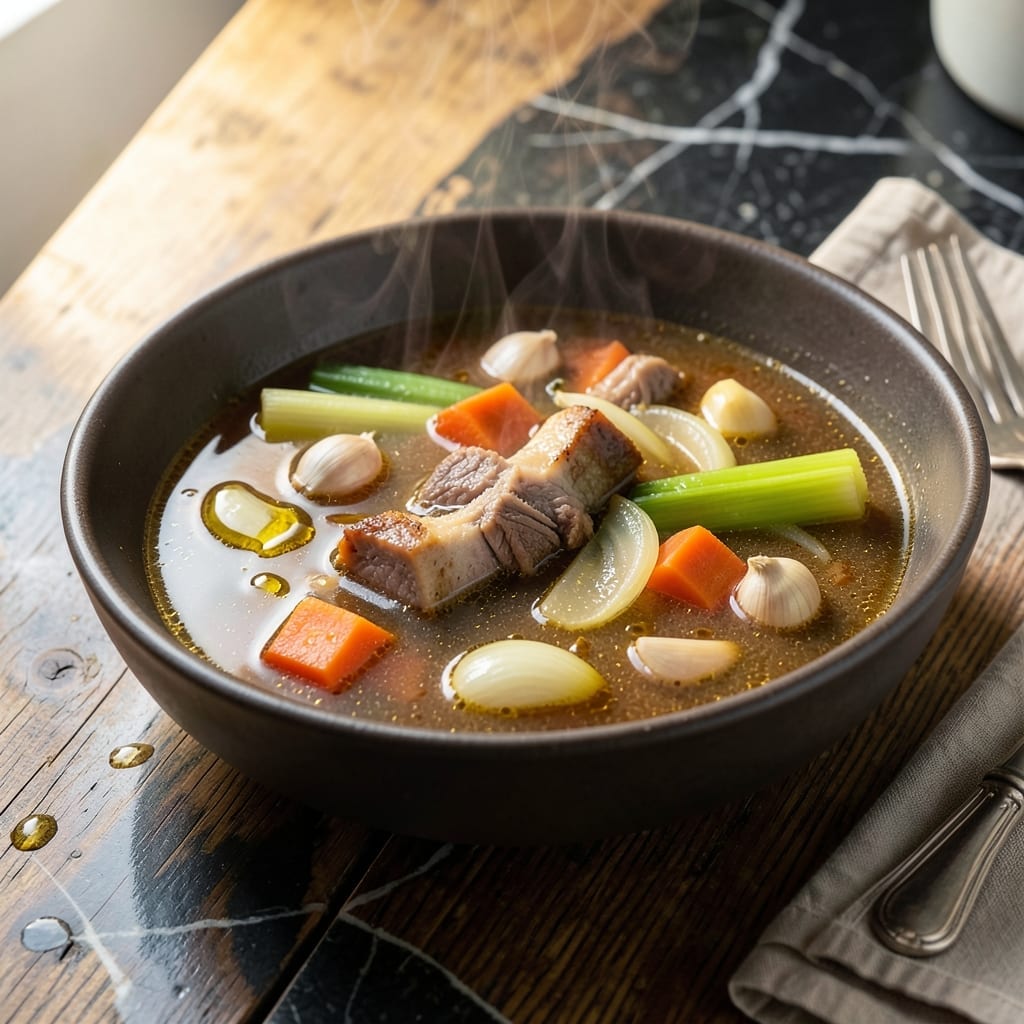
There’s a reason pork bone broth has been a staple in kitchens for generations. This perfect method extracts maximum flavor and nutrients from the bones through a long, gentle simmer.
You’ll end up with a rich, golden liquid that’s deeply satisfying on its own or as a base for other dishes. The key is patience—low heat and time work together to create something truly special.
Ingredients for Bone Broth Recipe Pork
Pork bones and vegetables simmer slowly into liquid gold. No shortcuts, just perfect extraction.
| Ingredient | Amount | Notes |
|---|---|---|
| Pork Bones 🦴 | 2 lb | Knuckle or femur, meaty preferred |
| Apple Cider Vinegar 🍎 | 2 tbsp | For demineralizing bones |
| Yellow Onion 🧅 | 1 whole | Quartered, skin on for color |
| Carrots 🥕 | 2 whole | Roughly chopped into chunks |
| Celery Stalks 🌿 | 2 whole | Cut into large pieces |
| Garlic Cloves 🧄 | 4 cloves | Smashed, skin on |
| Fresh Parsley 🌿 | ¼ cup | Stems and leaves included |
| Bay Leaves 🍃 | 2 whole | Dried, whole leaves |
| Black Peppercorns 🌶️ | 1 tbsp | Whole, lightly crushed |
| Sea Salt 🧂 | 1 tsp | Added to taste after simmering |
| Filtered Water 💧 | 4 cups | Or enough to cover bones |
[recipe_ingredient_scaler]
The bones are everything here. Pork knuckle or femur bones with some meat and cartilage yield the richest, most gelatinous broth. Ask your butcher for grass-fed or pasture-raised if possible—they have better flavor and nutrient density. Whole Foods or local butcher shops typically carry these, but most grocery stores can special order them. Roasting the bones first (400°F for 30 minutes) deepens the color and flavor significantly.
No pork bones? Beef or chicken bones work in a pinch, but the flavor profile will differ. Apple cider vinegar can be swapped for white vinegar or lemon juice—the acid helps pull minerals from the bones. If you lack fresh parsley, dried works at half the amount. Bay leaves are essential though—don’t skip them. For extra depth, add a splash of soy sauce or fish sauce (if not strict vegetarian).
Broth keeps 5 days in the fridge or freezes beautifully for 6 months. Store in airtight containers, leaving headspace for expansion. Skim the fat after chilling—it’s easier to remove solidified. Use within a week for best flavor, though it’s safe longer if properly stored.
Why You’ll Love This Recipe
- Set It and Forget It: I toss everything in the pot, let it simmer all day, and the apple cider vinegar does the work of pulling all the good stuff from the pork bones.
- Rich and Deep: The carrots, celery, and onion create a broth so flavorful I use it as a base for soups, stews, or just sip it straight from a mug.
- Meal Prep Magic: I make a big batch on Sunday and it fuels my week—soups, grains, or even just reheated for a quick warm-up.
- Budget Stretcher: Pork bones are cheap, and this turns them into liquid gold. Honestly, it’s the most affordable way I’ve found to eat well all week.
Step-by-Step Instructions for Pork Bone Broth
Master the technique for extracting maximum flavor and nutrients from these ingredients.
Step 1: Prepare the Bones and Vegetables
Place the 2 lb pork bones in a large stockpot. I prefer using knuckle or femur bones as they contain more connective tissue, which breaks down into gelatin during cooking. Pour the 2 tbsp apple cider vinegar over the bones—this acid helps demineralize them, extracting valuable minerals into the broth.
Add the 1 whole yellow onion (quartered with skin on for color), the 2 whole carrots (roughly chopped), and the 2 whole celery stalks (cut into large pieces). The onion skin contributes a deep amber hue to the finished broth. Include the 4 cloves garlic cloves (smashed with skin on) for robust flavor without bitterness.
Step 2: Add Aromatics and Water
Toss in the 0.25 cup fresh parsley (stems and leaves), the 2 whole bay leaves, and the 1 tbsp black peppercorns (lightly crushed to release their essence). These aromatics create a complex flavor profile that deepens as the broth simmers.
Pour in the 4 cups filtered water, ensuring it covers the bones completely. If needed, add a bit more to maintain full coverage. The quality of water matters here—filtered water prevents any off-flavors from affecting your broth. Avoid tap water if it has a strong chlorine taste.
Step 3: Simmer Gently for Maximum Extraction
Bring the mixture to a boil over high heat, then immediately reduce to a low simmer. You should see small bubbles occasionally breaking the surface—never let it reach a rolling boil, as this can make the broth cloudy and break down the collagen too quickly.
Partially cover the pot and maintain this gentle simmer for 12-24 hours. The longer cooking time extracts more gelatin, minerals, and flavor from the bones. Skim off any foam or impurities that rise to the top during the first hour of simmering with a fine-mesh skimmer.
Step 4: Strain and Finish
After simmering, carefully strain the broth through a fine-mesh sieve into a clean pot or large bowl. Discard all solids—they’ve given up all their goodness. Let the broth cool slightly, then season with the 1 tsp sea salt, tasting as you go. The salt enhances the natural flavors without overpowering them.
For the clearest broth, you can chill it completely and remove the solidified fat from the surface before reheating. The finished broth should have a rich, golden color and a deep, meaty aroma. It will gel slightly when cooled if you’ve extracted enough collagen from the bones.
Pro Tips For Making Bone Broth Recipe Pork
- Roast the Bones: Toss pork bones with a little oil and roast at 400°F for 20-25 minutes until deeply browned—this adds a rich, caramelized depth that raw bones just can’t deliver.
- Use the Vinegar: Add 2 tablespoons of apple cider vinegar to the pot before simmering; it helps extract minerals from the bones and gives the broth a subtle brightness.
- Skim the Foam: I learned this the hard way—always skim off the frothy impurities that rise to the top in the first 30 minutes, or your broth will turn out cloudy and bitter.
- Go Long and Low: After bringing to a boil, reduce to a bare simmer and let it cook for at least 12 hours—any less and the gelatin won’t fully release from the bones.
Make-Ahead Tips for Leftovers
Batch Prep Tips
I always make a double batch of this broth—it freezes beautifully. Use a 12-quart stockpot for 4 lb pork bones and double the other ingredients. The process takes the same amount of time, and you’ll have broth ready for future meals.
Freezer Storage
Cool the broth completely before freezing. I use quart-sized silicone molds (1 cup portions) for easy grab-and-go use. Once frozen solid, transfer cubes to gallon freezer bags to save space. Label with the date and use within 6 months for best quality. ❄️
Fridge Storage
Store strained broth in airtight glass jars in the fridge for up to 5 days. The fat will solidify at the top—simply lift it off before using. I keep a jar in my fridge at all times for quick soups and sauces.
Reheating Methods
For single servings, microwave in 30-second intervals until just simmering. For larger quantities, reheat gently on the stovetop over medium-low heat for 5-7 minutes. Avoid boiling to preserve the delicate flavors.
Prep Ahead Shortcut
Roast your bones the night before and store them in the fridge. In the morning, just add them to your pot with the other ingredients. This saves 30 minutes of active prep time while still delivering deep, rich flavor.
Strain and Store
After straining, I pour the broth through a coffee filter for ultra-clear results. This extra step removes fine particles and gives your broth a professional, polished appearance. 💡
Nutrition Facts
Frequently Asked Questions
Why use apple cider vinegar in the broth?
The 2 tbsp apple cider vinegar helps demineralize the bones, extracting more calcium and other minerals. It doesn’t affect flavor but boosts nutritional value significantly.
Can I use a slow cooker instead?
Yes! Cook on low heat for 18-24 hours. The gentle, consistent temperature works perfectly for extracting gelatin and flavor from pork bones.
How do I know when it’s done?
Your broth is ready when the bones crumble easily and the liquid has a rich, golden color. If it gels when cooled, you’ve extracted maximum collagen.
What if my broth is cloudy?
Cloudiness often comes from boiling too hard. Next time, maintain a gentle simmer and skim foam regularly. Straining through a coffee filter also helps.

Trained in classic French technique but raised on slow-cooked ribs and spicy rubs, she blends culinary skill with smoke and soul.
- Recipe for Boneless Pork Chops in Cast Iron Skillet: Sear and Baste to Juicy Perfection - October 3, 2026
- Recipe for Boneless Cross Rib Roast: Slow-Roasted Beef with Herb Crust - October 3, 2026
- Hamburgers in Sauce Recipe Crock Pot: Slow-Cooked Savory Delight - October 3, 2026