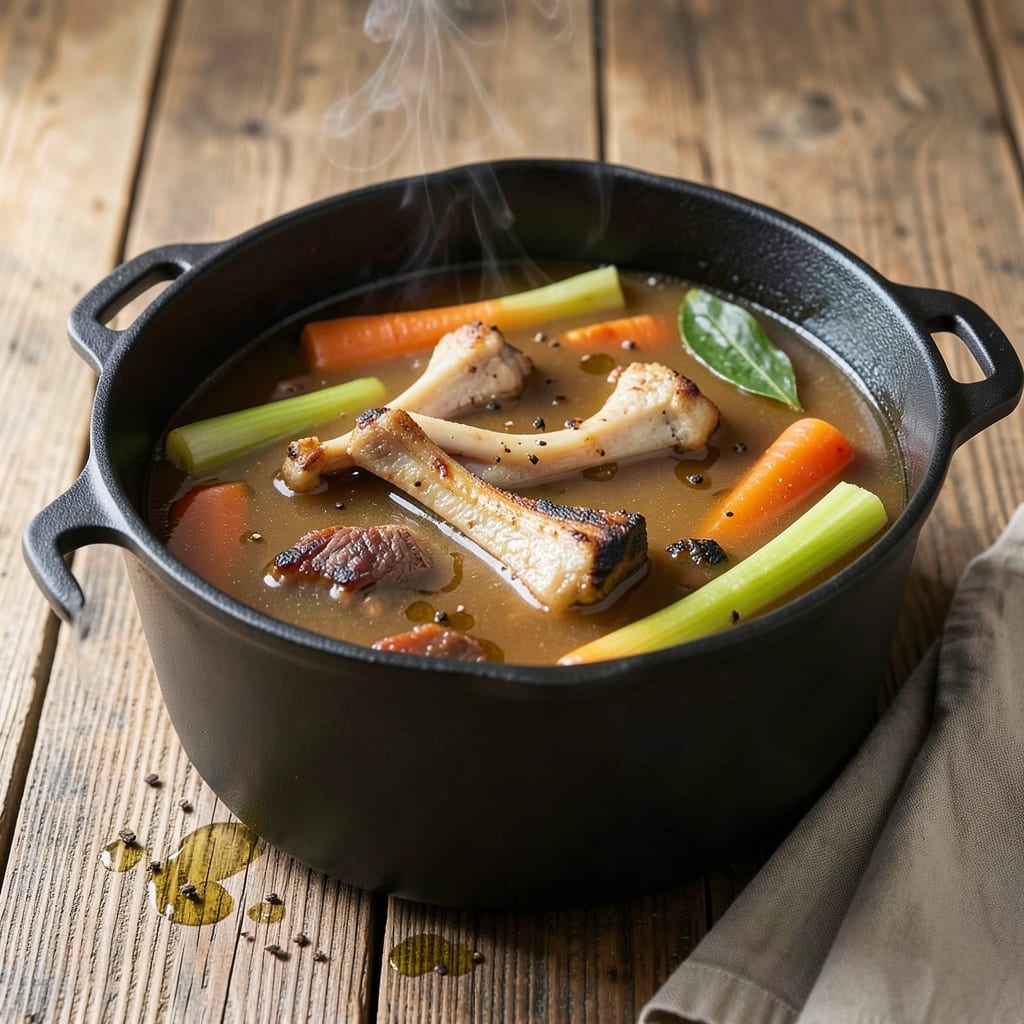
This slow cooker method extracts maximum nutrients and flavor from bones with minimal effort. The long, gentle simmering breaks down collagen and connective tissue, creating a rich, gelatinous broth that forms the perfect base for soups, stews, or sipping on its own.
With just bones, water, and a touch of vinegar, you can achieve professional results. The 24-hour cooking time ensures every ounce of goodness is drawn out, resulting in a nutrient-rich liquid gold that’s far superior to store-bought versions.
Ingredients for Bone Broth Recipe Slow Cooker
Rich, nourishing ingredients transform into liquid gold with time and patience.
| Ingredient | Amount | Notes |
|---|---|---|
| Beef Bones 🥩 | 2 lb | Marrow or knuckle bones preferred |
| Chicken Bones 🍗 | 1 lb | Carcass or backs and necks |
| Cold Water 💧 | 12 cups | Enough to cover bones by 2 inches |
| Apple Cider Vinegar 🍏 | 2 tbsp | For mineral extraction |
| Carrots 🥕 | 2 whole | Roughly chopped, unpeeled |
| Celery Stalks 🌿 | 2 whole | Roughly chopped with leaves |
| Yellow Onion 🧅 | 1 whole | Quartered, skin on |
| Garlic Cloves 🧄 | 4 cloves | Smashed, unpeeled |
| Bay Leaves 🍃 | 2 pieces | Dried for aroma |
| Black Peppercorns 🌶️ | 1 tbsp | Whole, not ground |
| Sea Salt 🧂 | 1 tsp | Added at the end |
| Fresh Parsley 🌿 | ¼ cup | Chopped, for finishing |
[recipe_ingredient_scaler]
The bones are everything here. Grass-fed beef marrow bones and pasture-raised chicken backs yield the most gelatin and nutrients. Most butchers will save bones for you—just ask. Whole Foods and local farms are reliable sources. Don’t skip the vinegar; it’s crucial for drawing minerals out of the bones.
Need to adjust? Pork or turkey bones work too—just avoid fish bones, which can get bitter. Short on time? An Instant Pot can cut this down to 8 hours. No apple cider vinegar? Lemon juice or white vinegar at the same amount gets the job done. The veggies are optional but add depth.
Broth keeps 5 days in the fridge—fat will solidify on top, just skim it off. For longer storage, freeze in silicone molds for easy portioning. Good for 6 months in the freezer. Strain while warm for the clearest results.
Why You’ll Love This Recipe
- Set And Forget: I dump everything in the slow cooker and walk away—no stirring, no fuss, just rich broth hours later.
- Deep, Rich Taste: The apple cider vinegar pulls every bit of flavor from the beef and chicken bones, making it taste like it simmered all day.
- Meal Prep Magic: I use it as a base for soups, stews, or just sip it plain—honestly, it’s my secret for easy, healthy meals all week.
- Penny-Pincher Friendly: Those leftover bones and scraps turn into liquid gold, and a batch costs me next to nothing.
Step-by-Step Instructions for Bone Broth Slow Cooker
This straightforward method ensures maximum nutrient extraction with minimal active effort.
Step 1: Roast the Beef and Chicken Bones
Preheat your oven to 400°F. Arrange the 2 lb Beef Bones and 1 lb Chicken Bones on a baking sheet in a single layer. Roast for 20-25 minutes until the bones develop a deep golden brown color.
This step intensifies the flavor of your finished broth. You’ll notice the bones release their fats, which will render down during roasting. The aroma will be rich and meaty when they’re ready. Don’t skip this—it’s the difference between bland and deeply flavorful broth.
Step 2: Combine Bones and Vegetables in the Slow Cooker
Transfer the roasted bones to your slow cooker. Add the 2 whole Carrots, 2 whole Celery Stalks, 1 whole Yellow Onion, 4 cloves Garlic Cloves, 2 pieces Bay Leaves, and 1 tbsp Black Peppercorns directly on top. The vegetables don’t need peeling or precise chopping—rough pieces work perfectly.
Pour in the 2 tbsp Apple Cider Vinegar and 12 cups Cold Water, ensuring the bones are submerged by about 2 inches. The vinegar helps extract minerals from the bones, making your broth more nutritious. Avoid overfilling—leave at least an inch of space at the top to prevent spills.
Step 3: Slow Cook on Low for Maximum Extraction
Cover the slow cooker and set it to low heat. Cook for 24 hours—this extended time is non-negotiable for breaking down collagen into gelatin and extracting every bit of flavor and nutrients from the bones and vegetables.
You’ll know it’s working when the surface develops a layer of fat and the aroma fills your kitchen with a rich, savory scent. Resist the urge to lift the lid—every time you do, you extend the cooking time and risk heat loss. The liquid should occasionally bubble gently at the edges.
Step 4: Strain and Season the Finished Broth
After 24 hours, turn off the slow cooker and let the broth cool slightly for 30 minutes. Place a fine-mesh strainer over a large bowl or pot and carefully ladle the broth through it to remove all solids. Press gently on the bones and vegetables to extract any remaining liquid, but avoid squeezing, which can make the broth cloudy.
Discard the solids and stir in the 1 tsp Sea Salt. Taste and adjust seasoning if needed—remember, the broth will reduce slightly as it cools. The finished product should be a deep amber color with a rich, meaty flavor and a slightly gelatinous texture when chilled.
Step 5: Finish with Fresh Parsley and Store
Once the broth has cooled to room temperature, stir in the 0.25 cup Fresh Parsley. This adds a bright, fresh note to balance the deep, savory flavors. The parsley should be finely chopped for even distribution.
Transfer the broth to airtight containers and refrigerate for up to 5 days or freeze for up to 6 months. If refrigerating, the fat will solidify at the top—simply skim it off before using if desired. Your broth is now ready to use in soups, stews, or simply sipped as is.
Pro Tips For Making Bone Broth Recipe Slow Cooker
- Roast Bones First: I learned this the hard way—raw bones make a flat broth. Toss them in a 400°F oven for 20-30 minutes until deeply browned to build that rich, meaty depth.
- Add Vinegar Early: Sounds weird, but it works: splash in 2 tablespoons of apple cider vinegar right at the start to help pull minerals from the bones during the long cook.
- Skip the Boiling: Resist the urge to crank the slow cooker to high. Keep it on low for 12-24 hours—boiling makes the broth cloudy and can turn the fat greasy instead of silky.
- Strain Through Cheesecloth: My grandmother swore by this, and she was right: line your strainer with cheesecloth to catch all the tiny bits that make the broth look murky.
Perfect Pairings for bone broth recipe slow cooker
Soup Pairings
This rich broth forms the perfect base for hearty soups. Try adding 1 cup cooked lentils, 2 diced carrots, and 2 chopped celery stalks for a simple, nourishing lentil soup. The broth’s depth enhances every ingredient. 🥕
Rice and Grain Bowls
Use it to cook 1 cup brown rice or quinoa instead of water for an instant flavor boost. I love serving it over grains with sautéed mushrooms and wilted spinach—the broth soaks in beautifully.
Beverage Pairings
A warm mug of this broth pairs wonderfully with herbal teas like chamomile or ginger. For a savory twist, add a splash of lemon juice and fresh parsley directly to your cup. 🍵
Sauce Foundation
Reduce 2 cups broth by half to create a concentrated sauce base. I drizzle this over roasted vegetables or use it to deglaze pans after searing meats. The gelatinous texture adds luxurious body to any sauce.
Sipping Broth
Enjoy it straight from a mug with just a pinch of sea salt and black pepper. For extra warmth, add 1 tsp grated ginger and 1 minced garlic clove. It’s my go-to remedy during cold season. 💪
Braised Dishes
Use it as the liquid for braising chicken thighs or beef short ribs. Combine with 1 cup red wine and 2 tbsp tomato paste for a rich braising liquid. The collagen in the broth helps tenderize the meat beautifully.
Nutrition Facts
Frequently Asked Questions
Can I use pre-cooked bones?
Yes, but fresh raw bones yield better results. Pre-cooked bones have already released some flavor and gelatin, resulting in a less rich broth.
Why include apple cider vinegar?
The acidity helps extract minerals like calcium and magnesium from the bones. Use 2 tablespoons for every 12 cups water.
How do I make it gelatinous?
Use bones with plenty of connective tissue like marrow or knuckle bones. The 24-hour cook time breaks down collagen into gelatin.
Can I cook it less than 24 hours?
You can, but 12 hours is the absolute minimum for decent results. Shorter times won’t fully extract nutrients or develop deep flavor.

Trained in classic French technique but raised on slow-cooked ribs and spicy rubs, she blends culinary skill with smoke and soul.
- Recipe for Boneless Pork Chops in Cast Iron Skillet: Sear and Baste to Juicy Perfection - October 3, 2026
- Recipe for Boneless Cross Rib Roast: Slow-Roasted Beef with Herb Crust - October 3, 2026
- Hamburgers in Sauce Recipe Crock Pot: Slow-Cooked Savory Delight - October 3, 2026