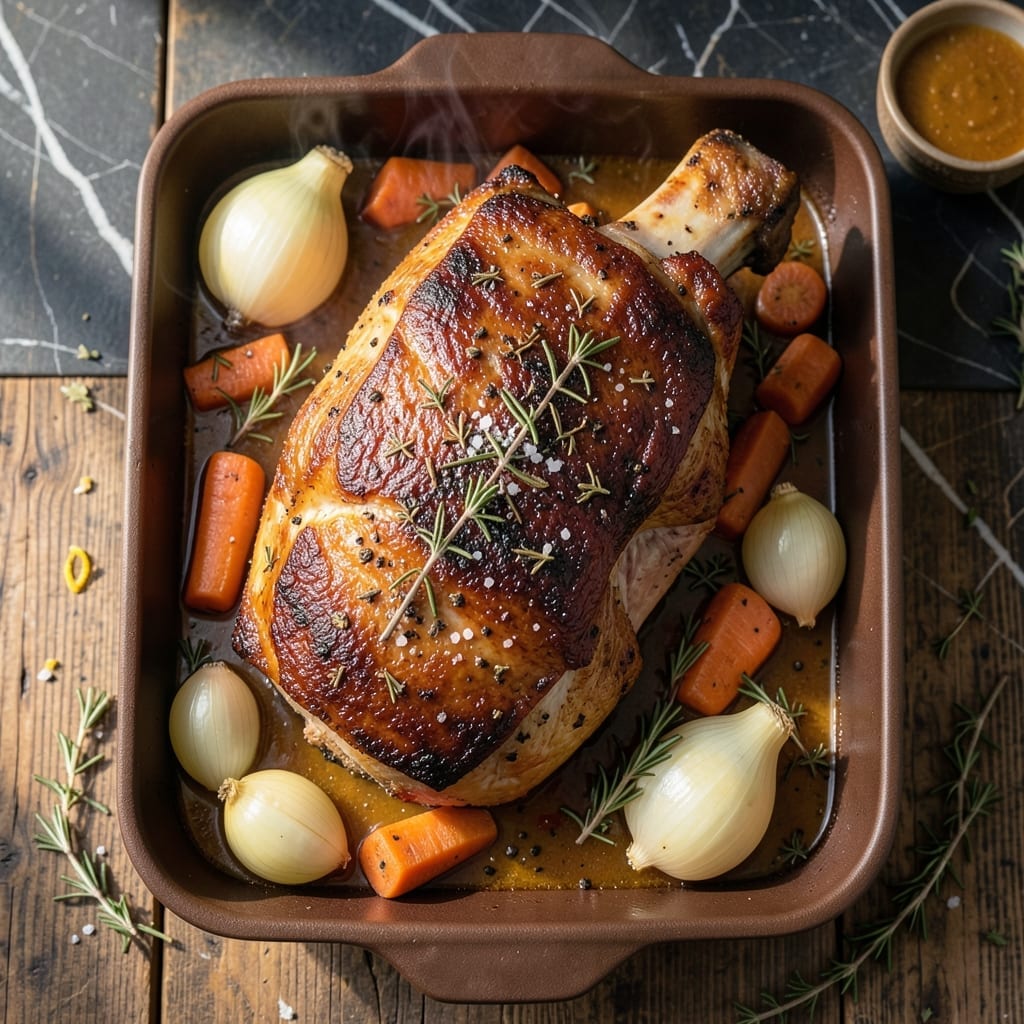
Slow-roasting transforms tough pork butt into pull-apart tender perfection. This method develops deep, rich flavors while keeping the meat incredibly juicy.
I’ve refined this technique over years of Sunday meal prep, ensuring the bone-in cut cooks evenly without drying out. The low and slow approach guarantees that signature fall-off-the-bone texture.
A simple rub of salt, pepper, and herbs enhances the natural pork flavor without overpowering it. Resting after roasting locks in moisture for the best results.
Serve with roasted vegetables or mashed potatoes to soak up every bit of flavor. This is comfort food at its finest.
Ingredients for Bone in Pork Butt Roast Recipe Oven
Transform tough pork butt into fall-apart tender perfection with these pantry staples and fresh herbs.
| Ingredient | Amount | Notes |
|---|---|---|
| Bone-In Pork Butt 🥩 | 4 lb | Skin-on, well-marbled preferred |
| Kosher Salt 🧂 | 1 ½ tbsp | Diamond Crystal preferred for even seasoning |
| Freshly Ground Black Pepper 🌶️ | 1 tbsp | Coarse grind for texture |
| Dried Rosemary 🌿 | 1 tbsp | Crushed to release oils |
| Dried Thyme 🍃 | 1 tbsp | Rubbed between fingers before using |
| Garlic Cloves 🧄 | 6 cloves | Smashed and peeled |
| Yellow Onion 🧅 | 1 whole | Quartered for roasting bed |
| Carrots 🥕 | 3 whole | Peeled, cut into large chunks |
| Celery Stalks 🌿 | 3 pieces | Cut into 3-inch lengths |
| Chicken Stock 🍲 | 1 cup | Low-sodium preferred for balance |
| Olive Oil 🫒 | 2 tbsp | For searing and moisture |
| Apple Cider Vinegar 🍏 | 2 tbsp | Adds brightness to rich meat |
| Bay Leaves 🌿 | 2 pieces | Removed before serving |
[recipe_ingredient_scaler]
The pork butt is non-negotiable here. Bone-in, skin-on cuts from Costco or a trusted butcher yield the best marbling and flavor. Look for pieces with vibrant pink color and a good fat cap—this renders down during slow-roasting for that unctuous texture. I always buy 8-10 lb roasts and portion them myself for better value and quality control.
Out of rosemary? Fresh sage or marjoram work beautifully at the same quantity. No fresh garlic? Garlic powder at one-third the amount is acceptable, though less aromatic. For the stock, vegetable broth or water can substitute, but the chicken stock adds depth. If you’re missing apple cider vinegar, white wine vinegar or lemon juice will provide similar acidity.
Store the pork butt in its original packaging for 3-5 days in the fridge, or freeze for 6-12 months. Once cooked, the roast keeps refrigerated for 4-5 days or frozen for 3 months. Reheat gently in its juices to maintain that coveted tenderness.
Why You’ll Love This Recipe
- Set It and Forget: I season the pork butt with salt, pepper, rosemary, and thyme, pop it in the oven, and let it do its thing for hours with zero babysitting.
- Herb-Crusted Heaven: That crust from the rosemary and thyme with the juicy meat underneath is ridiculous. I catch myself sneaking bites straight from the pan.
- Feeds the Whole Crew: One bone-in pork butt makes enough for Sunday dinner, plus leftovers for sandwiches all week. My family actually fights over the leftovers.
- Budget Hero: Pork butt is cheap, and this recipe turns it into something that tastes like a fancy roast. Honestly, it’s my secret weapon for impressive meals that don’t break the bank.
Step-by-Step Instructions for Bone-In Pork Butt Roast
This slow-roasting method guarantees fall-apart tender meat with rich, concentrated flavors.
Step 1: Season and Prep the Pork Butt
Pat the 4 lb Bone-In Pork Butt dry with paper towels to ensure optimal browning. In a small bowl, combine the 1.5 tbsp Kosher Salt, 1 tbsp Freshly Ground Black Pepper, 1 tbsp Dried Rosemary, and 1 tbsp Dried Thyme.
Rub this mixture evenly over all surfaces of the pork, pressing it into the meat. This aggressive seasoning penetrates deeply during the long cook time. Place the pork in a roasting pan and let it sit at room temperature for 30 minutes while you prep the vegetables.
Step 2: Create the Aromatic Roasting Bed
Quarter the 1 whole Yellow Onion, peel the 3 whole Carrots and cut into large chunks, and trim the 3 pieces Celery Stalks into 3-inch lengths. Scatter these vegetables across the bottom of your roasting pan.
Add the 6 cloves Garlic Cloves (smashed but left whole), 2 pieces Bay Leaves, and pour in the 1 cup Chicken Stock. The vegetables will infuse the liquid with flavor while creating a natural rack for the pork.
Step 3: Sear and Begin the Slow Roast
Position a rack in the lower third of your oven and preheat to 325°F. Heat the 2 tbsp Olive Oil in a skillet over medium-high heat. Sear the pork on all sides until deeply browned, about 3-4 minutes per side.
Return the pork to the roasting pan, placing it directly on top of the vegetable bed. Drizzle the 2 tbsp Apple Cider Vinegar over the pork. This adds essential brightness to cut through the richness of the meat.
Step 4: Slow Roast to Perfection
Cover the pan tightly with foil or a lid and transfer to the preheated oven. Roast for 3.5 to 4 hours, basting the pork with the pan juices every 45 minutes. You’ll know it’s ready when the meat pulls apart effortlessly with a fork.
The internal temperature should reach 195-200°F for ideal pull-apart tenderness. The collagen in the pork butt breaks down at this temperature, transforming tough connective tissue into silky, unctuous gel.
Step 5: Rest and Serve
Carefully transfer the pork to a cutting board, leaving the vegetables and juices in the pan. Tent loosely with foil and let rest for 20-30 minutes. This allows the juices to redistribute throughout the meat.
Discard the bay leaves before serving. Shred the pork with two forks, mixing in some of the pan juices for moisture. The vegetables can be served alongside or mashed into the juices for a simple sauce.
Pro Tips For Making Bone In Pork Butt Roast Recipe Oven
- Dry the Meat: Pat the pork butt thoroughly dry with paper towels before seasoning—I learned this the hard way after my first roast came out steamed instead of browned.
- Season Overnight: Rub the salt, pepper, rosemary, and thyme into the meat at least 12 hours before cooking. The longer dry brine actually changes the outcome, giving you deeper flavor and better texture.
- Start Hot: Sear the pork at 450°F for 20 minutes first, then drop to 325°F. Sounds weird, but it works for getting that crispy crust without drying out the inside.
- Rest Before Slicing: Give it a solid 20-30 minutes under foil after roasting—my grandmother swore by this, and she was right: the juices redistribute, and it carves like a dream.
Essential Equipment for Perfect Results
Roasting Pan Essentials
I always reach for my 14-inch enameled cast iron roaster from Le Creuset for this dish. The heavy base prevents scorching, and the wide surface allows proper browning. A 13×9-inch glass baking dish works too, but monitor liquid levels more closely. 🔥
Thermometer Matters
An instant-read thermometer like my ThermoWorks Mk4 is non-negotiable. I check multiple spots in the pork to ensure it hits 195-200°F internally. The probe should slide in like butter when it’s ready.
Quality Knives
My 8-inch chef’s knife from Wüsthof makes quick work of the onions, carrots, and celery. A boning knife helps separate the meat from the bone after cooking. Keep both razor-sharp for safety.
Basting Tools
A silicone pastry brush is perfect for those 45-minute basting intervals. I also keep a ladle nearby to spoon juices over the roast. These small touches make a big difference in flavor development.
Resting Setup
Have a large cutting board and aluminum foil ready for the resting phase. I use my John Boos maple board—it’s big enough to hold the entire roast with room for shredding. The foil tent keeps it warm while juices redistribute.
Optional Upgrades
For extra richness, I sometimes add a meat injector to deliver flavored broth deep into the pork. A fat separator helps skim excess grease from the pan juices before serving. These aren’t essential but elevate the final result.
Nutrition Facts
Frequently Asked Questions
Should I cover the roast while cooking?
Yes, keep it covered with foil or a lid for the first 3 hours to retain moisture. Uncover for the last 30-60 minutes to develop a golden crust.
How do I know when it’s done?
Use a meat thermometer—the internal temp should reach 195-200°F. The meat will pull apart easily with a fork when fully tender.
Can I use a different cut of pork?
Pork shoulder works similarly, but avoid lean cuts like tenderloin. The fat and connective tissue in butt/shoulder are essential for that pull-apart texture.
What if my roast dries out?
This usually happens if cooked too hot or uncovered. Baste every 45 minutes and ensure your oven stays at 325°F.

Trained in classic French technique but raised on slow-cooked ribs and spicy rubs, she blends culinary skill with smoke and soul.
- Recipe for French Pork Spread Gorton: Savory Gallic Flavors in a Spreadable Delight - October 3, 2026
- Recipe for Pan Fried: Golden Crust with Savory Depth - October 3, 2026
- Recipe For Fried Chicken In A Pressure Cooker: Crispy Golden Bites in Half the Time - October 3, 2026