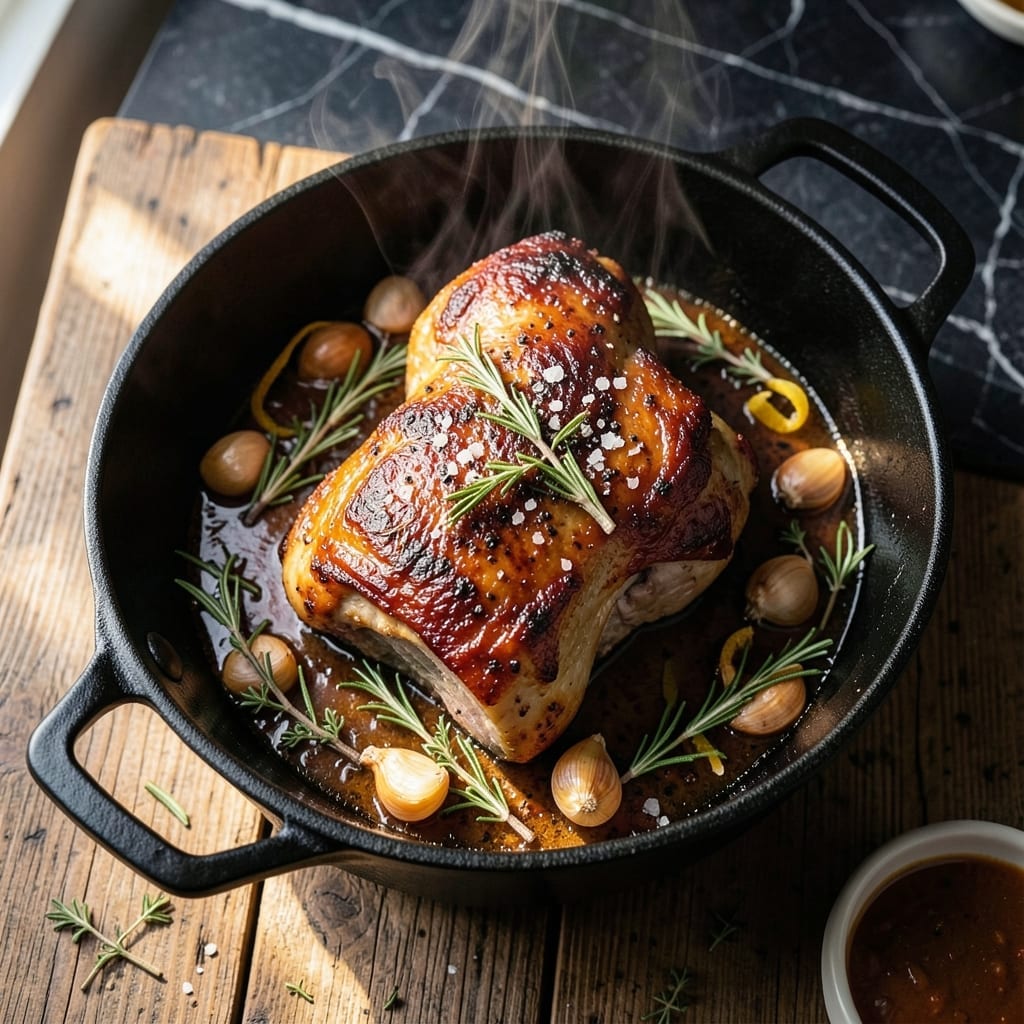
There’s nothing quite like slow-roasted pork with its falling-off-the-bone tenderness. This method transforms a simple cut into a showstopping centerpiece.
The herb crust forms a flavorful seal that locks in juices while creating a golden, aromatic exterior. It’s a technique that never fails to impress.
Ingredients for Bone in Pork
Transform a humble cut into a masterpiece with these carefully selected components for unparalleled flavor and texture.
| Ingredient | Amount | Notes |
|---|---|---|
| Bone-In Pork Shoulder 🍖 | 4 lb | Skin-on, excess fat trimmed |
| Kosher Salt 🧂 | 2 tbsp | Diamond Crystal preferred for even seasoning |
| Freshly Ground Black Pepper 🌶️ | 2 tsp | Coarse grind for texture |
| Fresh Rosemary 🌿 | 3 tbsp | Finely chopped, woody stems discarded |
| Fresh Thyme 🍃 | 3 tbsp | Leaves stripped from stems |
| Garlic Cloves 🧄 | 6 cloves | Minced for herb crust |
| Dijon Mustard 🟡 | ¼ cup | For adhering herb crust |
| Extra-Virgin Olive Oil 🫒 | 3 tbsp | Divided for searing and crust |
| Dry White Wine 🍷 | 1 cup | For deglazing and moisture |
| Chicken Stock 🥣 | 1 ½ cups | Low-sodium preferred |
| Yellow Onion 🧅 | 1 whole | Roughly chopped for roasting pan |
| Carrots 🥕 | 3 whole | Peeled, cut into chunks |
| Celery Stalks 🥬 | 2 whole | Cut into large pieces |
[recipe_ingredient_scaler]
The pork shoulder must be bone-in, skin-on for optimal results. Costco or Whole Foods typically carry high-quality cuts with good marbling. Look for pieces with a thick fat cap—this renders down during slow-roasting, basting the meat naturally. The herb quality is non-negotiable; fresh rosemary and thyme from the produce section (not those sad bundles in tubes) provide the aromatic base this dish demands.
No fresh herbs? Dried at one-third the quantity, but fresh is strongly recommended. The white wine can be substituted with additional chicken stock plus a splash of apple cider vinegar for acidity. If Dijon mustard is unavailable, whole-grain mustard works equally well. The vegetables in the roasting pan aren’t just for show—they form the base for a rich pan sauce (don’t skip them).
The roast can be prepped 12 hours ahead—herb crust applied, covered, and refrigerated. Cooked pork keeps 4-5 days refrigerated or 3 months frozen. Reheat gently in its juices to maintain moisture (microwaving dries it out).
Why You’ll Love This Recipe
- Set and Forget: I rub the pork with salt, pepper, and fresh herbs, then let the oven do all the work.
- Herb-Infused Bite: The rosemary and thyme crust forms this insane aromatic layer that’s worth every second.
- Sunday Dinner Star: It’s my go-to for feeding a crowd without breaking a sweat or the bank.
- Leftovers for Days: One shoulder gives me pulled pork for sandwiches, tacos, and stews all week long.
Step-by-Step Instructions for Slow-Roasted Bone-In Pork
This method ensures fall-apart tender meat with a fragrant herb crust every time.
Step 1: Prepare the Herb Crust and Season the Pork
In a small bowl, combine the 3 tbsp fresh rosemary, 3 tbsp fresh thyme, 6 cloves minced garlic, 2 tbsp kosher salt, and 2 tsp freshly ground black pepper. Finely chop the herbs if not already prepared, ensuring no woody stems remain.
Pat the 4 lb bone-in pork shoulder dry with paper towels. This step is crucial for achieving a good sear and herb adhesion. Rub the herb mixture evenly over the entire surface of the pork, pressing firmly to create a thick, aromatic crust.
Spread the 0.25 cup Dijon mustard over the herb-coated pork. The mustard acts as a binder, ensuring the herb crust stays intact during roasting while adding a subtle tang.
Step 2: Sear the Pork for Depth of Flavor
Heat 2 tbsp extra-virgin olive oil in a large Dutch oven or heavy pot over medium-high heat. When the oil shimmers, carefully place the pork in the pot, fat-side down. Sear undisturbed for 4-5 minutes until the surface develops a deep golden-brown crust.
Turn the pork and sear the other sides for 2-3 minutes each until uniformly browned. The fond (browned bits) left in the pot will dissolve into the cooking liquid later, building layers of rich flavor. Transfer the pork to a plate temporarily.
Step 3: Build the Braising Liquid and Roast
Reduce heat to medium and add the remaining 1 tbsp extra-virgin olive oil to the pot. Toss in the roughly chopped yellow onion, peeled carrot chunks, and celery pieces. Sauté for 3-4 minutes until the vegetables begin to soften and brown slightly.
Deglaze the pot with the 1 cup dry white wine, scraping up all browned bits with a wooden spoon. Add the 1.5 cups chicken stock and bring to a gentle simmer. Return the pork to the pot, nestling it into the liquid and vegetables. The liquid should come about halfway up the pork.
Step 4: Slow-Roast to Perfection
Cover the pot and transfer to a preheated 325°F oven. Roast for 3 to 3.5 hours, turning the pork halfway through the cooking time. The meat is done when it reaches an internal temperature of 195-200°F and a fork inserts with no resistance.
Baste the pork occasionally with the pan juices to keep the herb crust moist and flavorful. The vegetables will have broken down, contributing sweetness and depth to the braising liquid. You’ll know it’s ready when the pork nearly falls apart at the touch.
Step 5: Rest and Serve
Carefully transfer the pork to a cutting board. Skim excess fat from the surface of the braising liquid if desired, then strain the liquid into a gravy boat or serving bowl. The vegetables will have infused the liquid with incredible depth.
Let the pork rest for 15-20 minutes before shredding or slicing. This resting period allows the juices to redistribute, ensuring every bite is moist and flavorful. Serve the pork with the strained pan juices spooned over the top for maximum flavor impact.
Pro Tips For Making Bone In Pork
- Score the Fat: Use a sharp knife to cut 1/4-inch slits in the fat cap before seasoning—this lets the salt, rosemary, and thyme penetrate deeper into the pork shoulder.
- Low and Slow: I learned this the hard way: bone-in pork shoulder needs at least 3-4 hours at 275°F to break down properly. Anything hotter and it’ll seize up.
- Dry the Surface: Pat the pork shoulder completely dry with paper towels before seasoning—this guarantees a better crust and keeps the herbs from sliding off.
- Rest Before Carving: Give it a solid 15-20 minutes under foil after cooking—skipping this step means all the juices will end up on the cutting board, not in the meat.
Perfect Pairings for bone in pork
Wine Selections
A medium-bodied red like Pinot Noir from Oregon complements the herb crust beautifully, with its bright acidity cutting through the richness. For white lovers, a buttery Chardonnay enhances the pork’s natural sweetness. I always chill whites to 50-55°F for best results.
Beer Pairings
An amber ale with caramel notes mirrors the pork’s depth, while a crisp pilsner cleanses the palate. I’ve found local craft IPAs work too if you enjoy hoppy contrast. Serve at 45-50°F for optimal flavor.
Side Dish Ideas
Creamy mashed potatoes soak up the pan juices wonderfully. I use Yukon Golds and fold in ½ cup sour cream for extra richness. Roasted Brussels sprouts with a balsamic glaze add a nice textural contrast.
Bread Options
A crusty baguette is perfect for mopping up sauce. I warm mine at 350°F for 5 minutes before serving. For something special, try ciabatta toasted with garlic butter. 💫
Fresh Accompaniments
A simple apple fennel salad brings brightness to the meal. I toss thinly sliced Granny Smith apples with shaved fennel and lemon dressing. The crisp texture balances the pork’s tenderness perfectly.
Sauce Enhancements
Reduce the pan juices with 1 tbsp butter for a glossy finish. Add 1 tsp apple cider vinegar for brightness. I strain mine through a fine-mesh sieve for silky texture. This sauce ties the whole plate together.
Nutrition Facts
Frequently Asked Questions
What internal temperature should I aim for?
Cook until it reaches 195-200°F internally for fall-apart tenderness. This higher temp breaks down collagen in the connective tissues. Use a meat thermometer for accuracy.
Can I use a different cut of pork?
Bone-in shoulder is ideal, but bone-in loin works in a pinch. Avoid lean cuts like tenderloin—they’ll dry out. Adjust cooking time for smaller pieces.
How do I prevent the herb crust from burning?
Tent loosely with foil if it browns too quickly. Keep oven at 325°F and baste occasionally. The mustard base helps protect the herbs.
Can I make this in a slow cooker?
Yes! Brown the pork first, then cook on low for 8-10 hours. Skip the wine to avoid overpowering flavors. Add herbs at the end.

Trained in classic French technique but raised on slow-cooked ribs and spicy rubs, she blends culinary skill with smoke and soul.
- Recipe for Boneless Pork Chops in Cast Iron Skillet: Sear and Baste to Juicy Perfection - October 3, 2026
- Recipe for Boneless Cross Rib Roast: Slow-Roasted Beef with Herb Crust - October 3, 2026
- Hamburgers in Sauce Recipe Crock Pot: Slow-Cooked Savory Delight - October 3, 2026