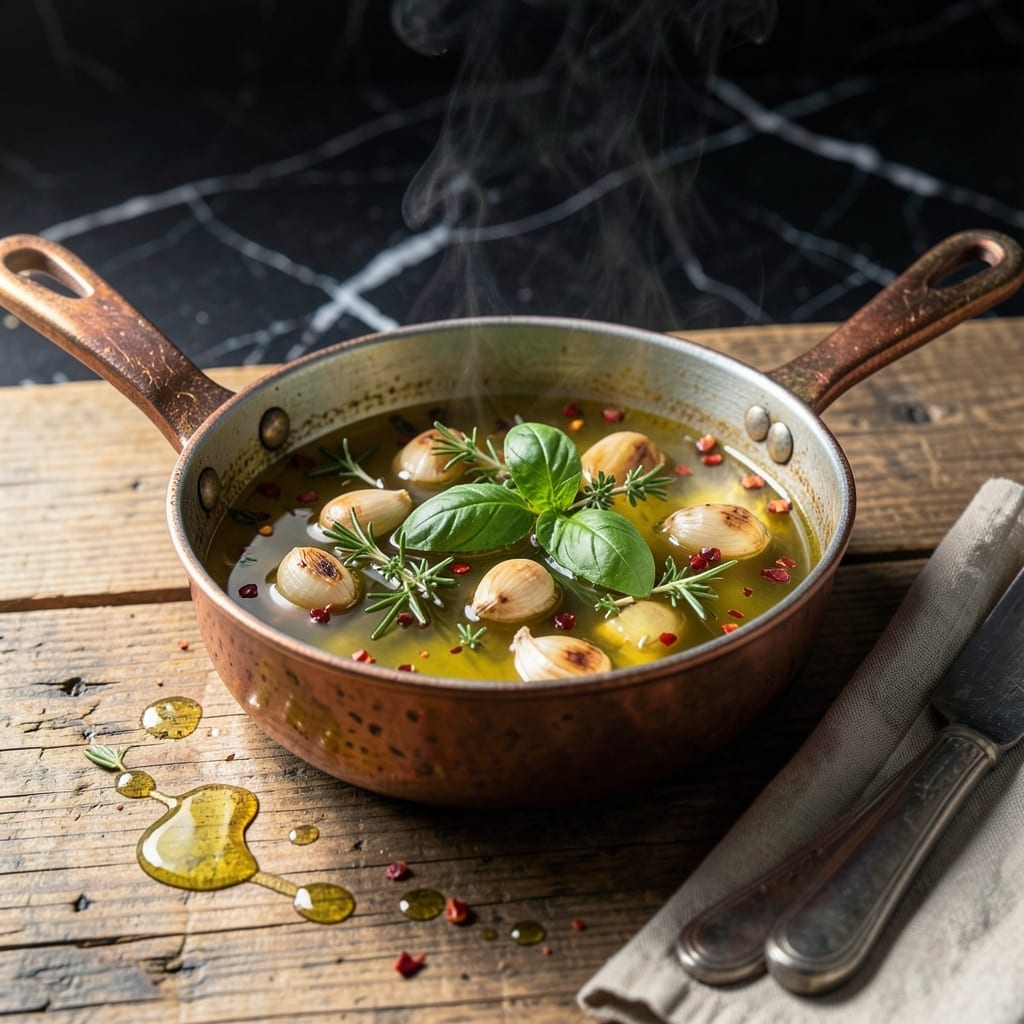
This herb-infused oil brings restaurant quality to your table with minimal effort.
With fresh herbs, garlic, and premium olive oil, it transforms crusty bread into an aromatic experience. Perfect for entertaining or a simple weeknight treat.
Ingredients for Bonefish Grill Bread Oil
Nine ingredients transform good olive oil into that restaurant-quality dipping experience you crave.
| Ingredient | Amount | Notes |
|---|---|---|
| Extra-Virgin Olive Oil 🫒 | 1 ½ cups | High quality, fruity finish preferred |
| Fresh Rosemary 🌿 | 3 tbsp | Finely chopped, stems discarded |
| Fresh Basil 🍃 | ¼ cup | Tightly packed, torn by hand |
| Fresh Thyme 🌿 | 2 tbsp | Leaves stripped from stems |
| Garlic Cloves 🧄 | 6 cloves | Thinly sliced, not minced |
| Red Pepper Flakes 🌶️ | ½ tsp | Adjust for heat preference |
| Black Pepper 🌶️ | ½ tsp | Freshly cracked for best flavor |
| Kosher Salt 🧂 | 1 tsp | Diamond Crystal preferred for texture |
| Lemon Zest 🍋 | 1 tsp | From 1 medium lemon |
[recipe_ingredient_scaler]
The olive oil is non-negotiable here. California Olive Ranch or Colavita are my go-tos—they’ve got that peppery finish that stands up to the herbs. Fresh herbs are key (the grocery store kind in tubes won’t cut it). Look for bright green, fragrant bunches at the store—if they smell like nothing, they’ll taste like nothing. Farmers markets are gold for rosemary and thyme this time of year.
No fresh herbs? Dried at one-third the amount, but toast them in a dry pan first to wake up the flavors. Swap basil for oregano if that’s what’s in your spice cabinet. Missing lemon zest? A splash of lemon juice works in a pinch, though you’ll lose that sunny brightness. The garlic can be granulated at half the quantity, but thin slices infuse the oil better and look prettier in the dish.
This tastes best the day it’s made but keeps in the fridge for up to 5 days. Store in a clean jar with a tight lid. For longer storage, freeze in ice cube trays—pop one into soups or pasta whenever you need a flavor boost. Don’t microwave the oil to reheat; let it come to room temp naturally.
Why You’ll Love This Recipe
- No Fuss Infusion: I just heat the oil with the garlic and herbs—no fancy steps, just let the flavors mingle while I prep the rest of dinner.
- Garlic-Herb Heaven: The rosemary and thyme with that slow-cooked garlic? Honestly, it’s the kind of smell that makes the whole house feel like a restaurant.
- Drizzle on Everything: I’ve used it on crusty bread, grilled veggies, even stirred into pasta. Between us, it’s my secret for making leftovers taste brand new.
- Pantry to Table: Five ingredients I always have on hand, and it takes 10 minutes. I’ll be real: this is the kind of recipe that saves my weeknights.
Step-by-Step Instructions for Herb-Infused Bread Oil
Here’s how to make the restaurant-quality dipping oil at home with minimal effort.
Step 1: Gently Heat the Olive Oil Base
Pour the 1.5 cups Extra-Virgin Olive Oil into a small saucepan. Heat over low heat until it reaches 180-200°F—just warm enough that you see gentle movement in the oil, but not so hot it starts to shimmer aggressively.
This gentle warmth is crucial. Too hot, and you’ll cook the garlic and herbs, making them bitter. Too cool, and the flavors won’t infuse properly. You want the oil to be like a warm bath, not a simmering pool.
Step 2: Toast the Aromatics
Add the 6 cloves Garlic Cloves, 3 tbsp Fresh Rosemary, 0.25 cup Fresh Basil, and 2 tbsp Fresh Thyme to the warm oil. Stir once to submerge them, then let them steep undisturbed for 3-4 minutes.
Watch for tiny bubbles around the garlic edges—that’s your visual cue they’re releasing their essence. The herbs should turn slightly translucent and the garlic should take on a pale golden color. Don’t let it brown or the oil will develop a harsh flavor.
Step 3: Season and Steep
Remove the saucepan from heat and stir in the 1 tsp Kosher Salt, 0.5 tsp Black Pepper, 0.5 tsp Red Pepper Flakes, and 1 tsp Lemon Zest. The residual warmth will continue the infusion process.
Let the mixture sit at room temperature for 1 hour. This resting period allows all the flavors to meld together. You’ll notice the oil takes on a beautiful golden hue and the herbs release their aromatic oils into the mixture.
Step 4: Strain and Serve
Set a fine-mesh strainer over a clean bowl or jar and pour the oil mixture through it. Press gently on the solids with a spoon to extract every last bit of flavor, but don’t force it—you want a clean oil, not a paste.
Discard the solids and transfer the infused oil to a serving dish. Serve warm or at room temperature with crusty bread for dipping. The oil should have a vibrant, herbaceous aroma with a subtle kick from the red pepper and a bright finish from the lemon.
Pro Tips For Making Bonefish Grill Bread Oil
- Warm the Oil First: Heat the olive oil gently for 1-2 minutes before adding herbs—cold oil won’t extract the rosemary and thyme flavors as well, and I learned this the hard way after making bland batches.
- Bruise the Garlic: Smash the garlic cloves lightly with the side of your knife before adding them whole—this releases the aroma without the bitterness of minced garlic.
- Skip Dried Herbs: Fresh rosemary, basil, and thyme are non-negotiable here; dried versions just don’t give that bright, vibrant taste that makes this oil special.
- Strain While Warm: After infusing, strain the oil through a fine-mesh sieve while it’s still warm—waiting until it cools makes the herbs release more sediment, and your oil will look muddy.
Serving Suggestions for Leftovers
Bread Pairings
Crusty Italian bread or a warm baguette are my top picks for soaking up this oil. Slice ½-inch thick pieces and toast lightly for extra crunch. Honestly, even day-old bread revives beautifully when dipped in this. 🥖
Cheese Accompaniments
Add a side of aged Parmesan or Pecorino Romano for grating over the bread. A sprinkle of freshly grated cheese on top of the oil just before serving adds a salty, umami depth that complements the herbs perfectly.
Charcuterie Board
This oil shines on a charcuterie spread. Pair with prosciutto, soppressata, or mild salami. The fatty, savory meats balance the bright, herbal notes of the oil beautifully.
Salad Integration
Drizzle over a simple Caprese salad or use as a dressing base. Toss with mixed greens, cherry tomatoes, and fresh mozzarella for a light lunch. The acidity from the lemon zest cuts through the creaminess.
Pasta Enhancer
Toss 1 cup of this oil with 1 lb cooked pasta and ¼ cup pasta water for an instant herb-infused dish. Finish with grated Parmesan and cracked black pepper for a quick, restaurant-worthy meal.
Dipping Station
Set up a dipping trio with this oil, balsamic glaze, and olive tapenade. I love watching guests mix and match flavors—it turns a simple appetizer into an interactive experience. 💛
Nutrition Facts
Frequently Asked Questions
Can I use dried herbs instead of fresh?
Yes, but use 1/3 the amount and toast them in a dry pan first. Fresh herbs provide brighter flavor, but dried work in a pinch. The oil may taste slightly more concentrated.
How long does the infused oil keep?
Store in an airtight container in the fridge for up to 5 days. For longer storage, freeze in ice cube trays. Always use clean utensils to prevent contamination.
Why heat the oil gently instead of boiling?
Boiling burns the garlic and herbs, making the oil bitter. Gentle warmth at 180-200°F extracts flavors without cooking them. Watch for tiny bubbles around the garlic edges.
Can I reuse the strained herbs and garlic?
No, they’ve released all their flavor into the oil. Discard them after straining. Reusing would result in weak, bland oil and risk spoilage.

Trained in classic French technique but raised on slow-cooked ribs and spicy rubs, she blends culinary skill with smoke and soul.
- Recipe for Boneless Pork Chops in Cast Iron Skillet: Sear and Baste to Juicy Perfection - October 3, 2026
- Recipe for Boneless Cross Rib Roast: Slow-Roasted Beef with Herb Crust - October 3, 2026
- Hamburgers in Sauce Recipe Crock Pot: Slow-Cooked Savory Delight - October 3, 2026