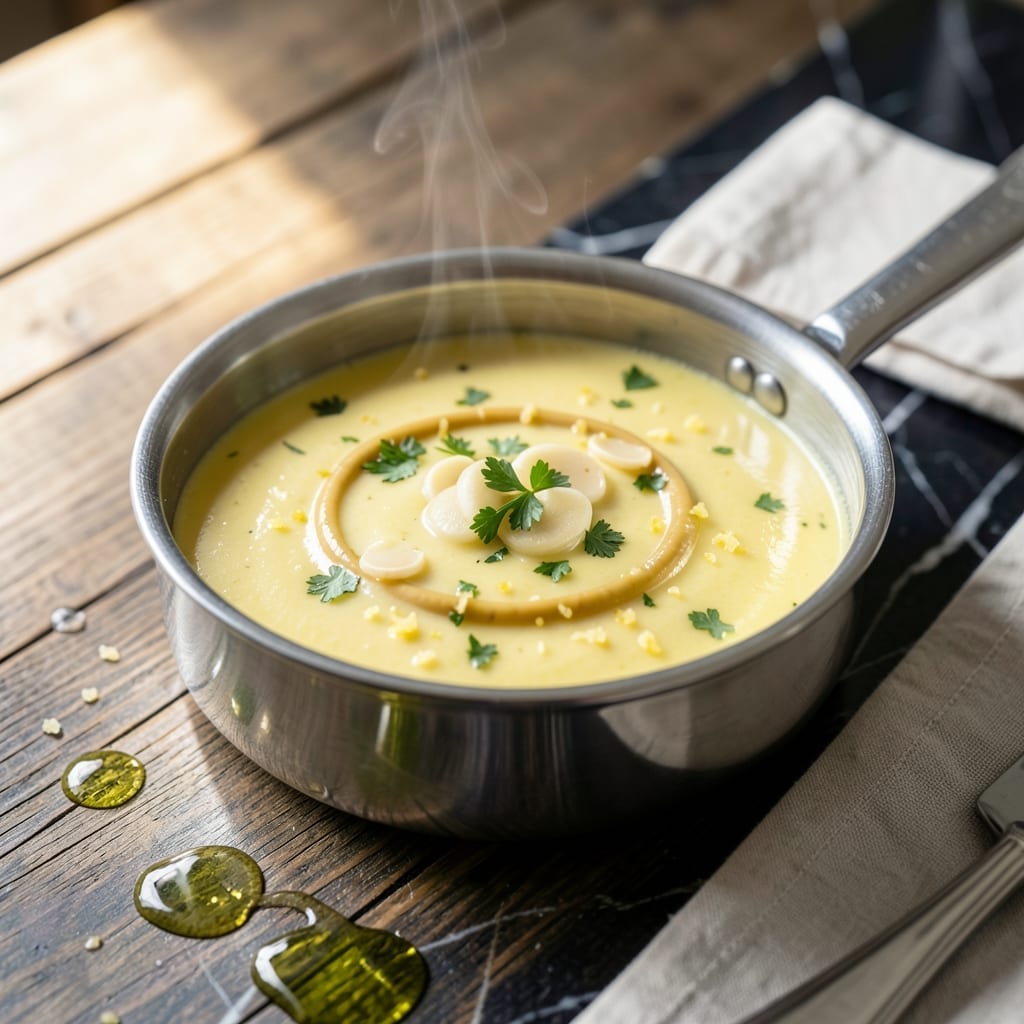
This lemon butter sauce transforms seafood with its bright, velvety finish. I developed this version to mirror Bonefish Grill’s signature touch.
A simple emulsion of butter, lemon juice, and herbs creates a restaurant-quality topping for fish, vegetables, or bread.
Ingredients for Bonefish Grill Lemon Butter
Nine ingredients create that signature velvety, citrus-kissed restaurant sauce you crave at home.
| Ingredient | Amount | Notes |
|---|---|---|
| Unsalted Butter 🧈 | 1 cup | High-quality, room temperature |
| Fresh Lemon Juice 🍋 | ¼ cup | About 2-3 large lemons |
| Lemon Zest 🍋 | 1 tbsp | Finely grated, packed |
| Garlic Cloves 🧄 | 3 cloves | Minced or pressed |
| Fresh Parsley 🌿 | 2 tbsp | Finely chopped flat-leaf |
| Dijon Mustard 🟡 | 1 tsp | Smooth, strong variety |
| White Wine 🍷 | 2 tbsp | Dry variety like Sauvignon Blanc |
| Heavy Cream 🥛 | 2 tbsp | Full-fat for richness |
| Sea Salt 🧂 | ½ tsp | Fine grain, adjust to taste |
| White Pepper 🌶️ | ¼ tsp | Freshly ground preferred |
[recipe_ingredient_scaler]
The butter is non-negotiable here—Plugrá or European-style for that extra richness Bonefish uses. I grab mine from Whole Foods or Trader Joe’s. Lemons should be fresh and heavy (that’s how you know they’re juicy). Zest them first before juicing—way easier. The white wine doesn’t need to be fancy, but avoid anything labeled ‘cooking wine’ (it’s salty and harsh).
No white wine? Substitute chicken broth with a splash of lemon. Heavy cream can be swapped for half-and-half at the same amount (just slightly less rich). Parsley not on hand? Fresh chives or tarragon add a nice twist. If you’re missing Dijon, a teaspoon of regular mustard plus a pinch of turmeric gets close. Skip the zest if you must, but it really brightens everything up.
This emulsion holds for 3-4 days in the fridge, though it’s best fresh. Store in a jar and let it come to room temp before using—cold butter separates. Freezes for 1 month (the herbs lose some punch, but it still works).
Why You’ll Love This Recipe
- 5-Minute Magic: I melt the butter, toss in the garlic and lemon zest, and it’s done before the pasta finishes boiling.
- Bright and Zesty: That pop of fresh lemon juice cuts through the richness of the butter in the best way.
- Seafood’s Best Friend: I drizzle it over grilled fish, shrimp, or even steamed veggies—never a waste.
- Pantry Staples Only: Unsalted butter, a couple lemons, and garlic cloves—things I always have on hand, so no last-minute store runs.
Step-by-Step Instructions for Lemon Butter Emulsion
Here’s how I create this silky, restaurant-worthy sauce with perfect balance every time.
Step 1: Infuse the Butter with Aromatics
In a small saucepan over medium-low heat, melt the 1 cup unsalted butter until just beginning to foam. Immediately add the 3 cloves garlic cloves, 1 tbsp lemon zest, and 0.5 tsp sea salt, stirring constantly for 2-3 minutes until the garlic turns fragant and pale gold.
Watch closely—you want to infuse the butter without browning the garlic. The zest will release its bright citrus oils into the butter, creating a fragrant base. Remove from heat the moment the garlic starts to color to prevent bitterness.
Step 2: Create the Emulsion Base
Whisk in the 1 tsp Dijon mustard and 2 tbsp white wine to the infused butter. The mustard acts as an emulsifier, while the wine adds acidity to balance the richness. Return the pan to low heat and simmer for 1 minute to cook off the alcohol.
This step is crucial—it stabilizes the mixture before adding the liquid ingredients. You’ll notice the sauce begin to thicken slightly as the alcohol evaporates. Keep the heat gentle to maintain control over the emulsion.
Step 3: Incorporate the Citrus and Cream
Slowly drizzle in the 0.25 cup fresh lemon juice while whisking constantly. The sauce will appear broken at first—this is normal. Continue whisking vigorously for 30-45 seconds until it comes together into a smooth, glossy emulsion.
Now add the 2 tbsp heavy cream and 2 tbsp fresh parsley, whisking until fully incorporated. The cream adds body and richness, while the parsley provides freshness. The sauce should coat the back of a spoon with a velvety texture.
Step 4: Season and Finish with Precision
Remove the sauce from heat and stir in the 0.25 tsp white pepper. Taste carefully—this is your final opportunity to adjust the seasoning. Remember that the sauce will reduce slightly as it sits, so the flavors should be slightly more pronounced than your ideal serving taste.
Let the sauce rest for 2-3 minutes before serving. This allows the flavors to meld completely. The finished emulsion should be pale yellow with visible flecks of parsley and zest, with a consistency that ribbons off a spoon.
Pro Tips For Making Bonefish Grill Lemon Butter
- Melt Butter Slowly: Use low heat and stir constantly—this prevents the butter from separating or browning too fast, which can make the sauce bitter.
- Zest Before Juicing: Always zest the lemon before cutting it in half for juice; it’s nearly impossible to do afterward, and fresh zest adds way more brightness.
- Avoid Overcooked Garlic: Add minced garlic at the end of cooking—it burns quickly and turns bitter if left in hot butter for more than 30 seconds.
- Use Room-Temp Butter: Take the butter out 15 minutes before starting so it melts evenly and blends smoothly with the lemon and herbs—no clumps.
Essential Equipment for Great bonefish grill lemon butter
Saucepan Selection
I always reach for my 2-quart All-Clad stainless steel saucepan for this recipe. The heavy base distributes heat evenly, preventing hot spots that could break your emulsion. A light-colored interior helps you monitor the butter’s color as it infuses with the garlic and zest. 🔥
Whisk Matters
A balloon whisk is essential for creating that silky texture. I prefer the OXO Good Grips 11-inch for its comfortable handle and perfect size. The wires should be thin enough to incorporate air while whisking, but sturdy enough to handle the butter’s thickness.
Precision Thermometer
Temperature control is everything with emulsions. My ThermoWorks Classic Super-Fast gives instant readings, ensuring I never overheat the butter. Keep your sauce between 160-180°F during emulsification – any hotter and you risk separating the mixture.
Fine Mesh Strainer
For ultra-smooth results, strain your finished sauce through a fine-mesh sieve. I use the Cuisinox 5-inch – it catches any stray bits of zest or garlic while letting the velvety emulsion pass through. This step is optional but gives that restaurant-quality finish.
Storage Containers
Glass jars with airtight lids are perfect for storing leftovers. I love the Le Parfait Super 8.5 oz jars – they’re the ideal size for sauce portions and create a perfect seal. The clear glass lets you see the beautiful pale yellow color of your creation. ❄️
Citrus Tools
A Microplane zester and reamer make quick work of the lemons. I’ve had my OXO zester for years – it creates the finest zest without any bitter pith. For juicing, a simple handheld reamer gives you more control than electric juicers.
Nutrition Facts
Frequently Asked Questions
Can I use salted butter instead?
Yes, but reduce the added sea salt to 1/4 tsp or omit entirely. Salted butter varies by brand, so taste before final seasoning.
How do I fix a broken emulsion?
Remove from heat and whisk in 1 tsp cold water or 1 ice cube vigorously. The temperature shock often brings it back together.
What’s the best way to reheat this sauce?
Gently warm over low heat while whisking constantly. Avoid microwaving as it can separate the butter.
Can I make this ahead of time?
Prepare up to 1 day ahead and store in an airtight container in the fridge. Re-whisk before serving.

Trained in classic French technique but raised on slow-cooked ribs and spicy rubs, she blends culinary skill with smoke and soul.
- Recipe for Boneless Pork Chops in Cast Iron Skillet: Sear and Baste to Juicy Perfection - October 3, 2026
- Recipe for Boneless Cross Rib Roast: Slow-Roasted Beef with Herb Crust - October 3, 2026
- Hamburgers in Sauce Recipe Crock Pot: Slow-Cooked Savory Delight - October 3, 2026