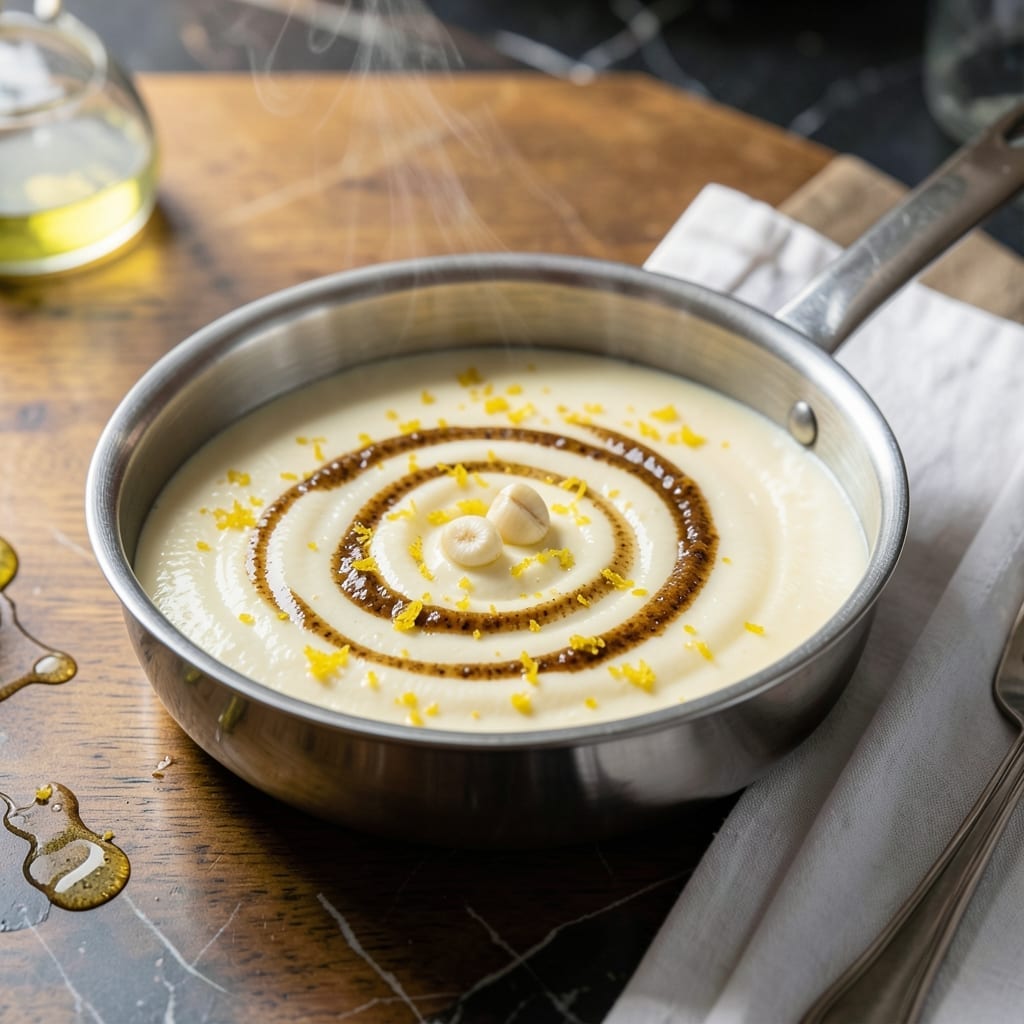
This bright lemon butter sauce brings restaurant-quality flavor to any seafood dish. The emulsion of citrus and rich butter creates a silky texture that elevates simple ingredients.
I developed this version to capture that perfect balance of tangy and creamy, using a foolproof technique that prevents separation. It takes 5 minutes and uses pantry staples.
Ingredients for Bonefish Grill Lemon Butter Sauce
Nine simple ingredients create this luxurious citrus emulsion for seafood dishes.
| Ingredient | Amount | Notes |
|---|---|---|
| Unsalted Butter 🧈 | ½ cup | High-fat content preferred |
| Fresh Lemon Juice 🍋 | ¼ cup | Newly squeezed, no seeds |
| Lemon Zest 🍋 | 1 tbsp | Finely grated outer peel |
| Heavy Cream 🥛 | 2 tbsp | Full-fat for stability |
| Garlic Cloves 🧄 | 2 cloves | Minced to fine paste |
| Dijon Mustard 🟡 | 1 tsp | Smooth, not whole grain |
| White Wine Vinegar 🍷 | 1 tsp | Balances sweetness of butter |
| Kosher Salt 🧂 | ½ tsp | Diamond Crystal preferred |
| Freshly Ground Black Pepper 🌶️ | ¼ tsp | Fine grind for smooth texture |
| Dry White Wine 🍷 | 2 tbsp | Sauvignon Blanc recommended |
[recipe_ingredient_scaler]
The butter quality is non-negotiable here. European-style unsalted butter (like Plugrá or Kerrygold) has the fat content (82-86%) needed for a stable emulsion. Standard grocery store butter works in a pinch, but may separate more easily. The lemons should be firm and heavy—indicators of high juice content. Zest before juicing (trust me on this one).
No white wine? Substitute with chicken stock plus a squeeze of extra lemon. Heavy cream can be replaced with half-and-half at half the amount, though the sauce will be slightly less rich. If avoiding dairy entirely, coconut cream works but alters the flavor profile. Dijon mustard is key for emulsification—don’t skip it (yellow mustard lacks the acidity).
This sauce is best used fresh but keeps in the fridge for 3-4 days. Reheat gently over low heat, whisking constantly to prevent separation. For longer storage, freeze in ice cube trays for up to 3 months. Thaw in the fridge overnight before reheating.
Why You’ll Love This Recipe
- Five-Minute Magic: I can melt the butter, squeeze the lemon, and have this sauce ready before the pasta finishes boiling.
- Bright and Zesty: That punch of fresh lemon juice and zest cuts through rich dishes without overpowering them.
- Drizzle on Everything: I’ve used this on fish, chicken, veggies, even tossed with pasta—it’s my secret weapon for quick flavor.
- Budget Luxury: A handful of pantry staples turns into restaurant-worthy sauce for pennies, and it keeps for days in the fridge.
Step-by-Step Instructions for Lemon Butter Sauce
Master this emulsion technique for a velvety, restaurant-quality finishing sauce with vibrant citrus notes.
Step 1: Build the Flavor Base with Aromatics
In a small saucepan over medium heat, melt the 0.5 cup Unsalted Butter until it just begins to foam. Immediately add the 2 cloves Garlic Cloves (minced to a fine paste) and cook for 45-60 seconds, stirring constantly, until fragrant but not browned.
Watch for the edges of the garlic to turn just barely golden—this signals it’s time to proceed. Remove the pan from heat if the garlic begins to color too quickly. This base develops the aromatic foundation without introducing bitterness.
Step 2: Deglaze and Incorporate Acidic Elements
Return the pan to medium-low heat and carefully add the 2 tbsp Dry White Wine. Simmer for 1-2 minutes until the liquid reduces by half, scraping up any browned bits from the garlic. This deglazing step captures all the concentrated flavor.
Add the 0.25 cup Fresh Lemon Juice, 1 tbsp Lemon Zest, 1 tsp White Wine Vinegar, 1 tsp Dijon Mustard, 0.5 tsp Kosher Salt, and 0.25 tsp Freshly Ground Black Pepper. Stir to combine and simmer for 30 seconds to meld the flavors.
Step 3: Emulsify with Heavy Cream
Reduce heat to low and slowly whisk in the 2 tbsp Heavy Cream. The key here is gradual incorporation—add it in a thin stream while whisking vigorously to create a stable emulsion. You’ll notice the sauce begin to thicken and take on a glossy, velvety appearance.
Continue whisking for 1-2 minutes until the sauce reaches a smooth, creamy consistency. If it appears too thick, add a teaspoon of warm water to adjust. The emulsion should coat the back of a spoon without separating.
Step 4: Finish and Strain for Silky Texture
Remove the sauce from heat and let it sit for 1 minute to allow any residual foam to settle. For the silkiest texture, strain the sauce through a fine-mesh sieve to remove the garlic and lemon zest. This step is optional but recommended for a refined presentation.
Taste and adjust seasoning if needed, though the initial measurements should yield a perfectly balanced sauce. Serve immediately over grilled fish or seafood while warm, as the emulsion is most stable at this temperature.
Pro Tips For Making Bonefish Grill Lemon Butter Sauce
- Temper Your Butter: Let the unsalted butter sit at room temperature for 15-20 minutes before melting—cold butter can cause the sauce to break.
- Zest Before Juicing: Always zest the lemons first, then juice them. I learned this the hard way after ruining a batch by trying to zest already-squeezed halves.
- Low and Slow Heat: Keep the heat at medium-low when combining the cream and butter. Too high and the sauce will separate before your eyes.
- Strain the Garlic: After infusing the cream with minced garlic, strain it out before adding the lemon—this keeps the sauce silky smooth without bitter bits.
Make-Ahead Tips for bonefish grill lemon butter sauce
Prep Ahead Strategy
You can prep all the dry ingredients (1 tsp Dijon Mustard, 1 tsp White Wine Vinegar, 0.5 tsp Kosher Salt, 0.25 tsp Freshly Ground Black Pepper) in a small bowl the night before. This saves 5 minutes of measuring during cooking. I always do this when prepping for dinner parties. 💡
Zest and Juice
Zest your lemons first, then juice them—this prevents wasting any of that fragrant outer peel. Store the zest in an airtight container in the fridge for up to 2 days. The juice can be kept in a separate container for the same period.
Butter and Cream
Take your 0.5 cup Unsalted Butter and 2 tbsp Heavy Cream out of the fridge 30 minutes before starting. This ensures they incorporate smoothly into the emulsion. Cold ingredients can cause the sauce to break.
Garlic Paste
Mince your 2 cloves Garlic Cloves into a fine paste using a knife or mortar and pestle. This can be done 1 day ahead and stored in the fridge in a small sealed container. The flavor will intensify slightly overnight.
Reheating Tips
To reheat prepped sauce, warm it gently over low heat, whisking constantly. If it begins to separate, remove from heat and whisk in 1 tsp warm water to bring it back together. Never microwave this emulsion. 🔥
Freezing Method
For longer storage, freeze the sauce in an ice cube tray for up to 3 months. Once solid, transfer cubes to a freezer bag. Thaw overnight in the fridge before reheating as described above.
Nutrition Facts
Frequently Asked Questions
Can I use salted butter instead?
Yes, but reduce the added salt by half to avoid over-seasoning. The emulsion needs precise balance, and salted butter varies in sodium content.
Why did my sauce separate?
This happens if the heat was too high or cream was added too quickly. Remove from heat and whisk in 1 tsp warm water to restore the emulsion.
What’s the best way to store leftovers?
Transfer to an airtight container and refrigerate for up to 4 days. Reheat gently over low heat while whisking.
Can I make this dairy-free?
Substitute coconut cream for heavy cream and use vegan butter. Note that this changes the flavor profile slightly.

Trained in classic French technique but raised on slow-cooked ribs and spicy rubs, she blends culinary skill with smoke and soul.
- Recipe for Fried Pork Chops With Flour: Crispy Crust and Juicy Centers - October 3, 2026
- Octopus Recipe Pan Fried: Crispy Edges With Tender Bites - October 3, 2026
- Recipe For Fried Pork Chops In An Iron Skillet: Crispy Crust With Juicy Centers - October 3, 2026