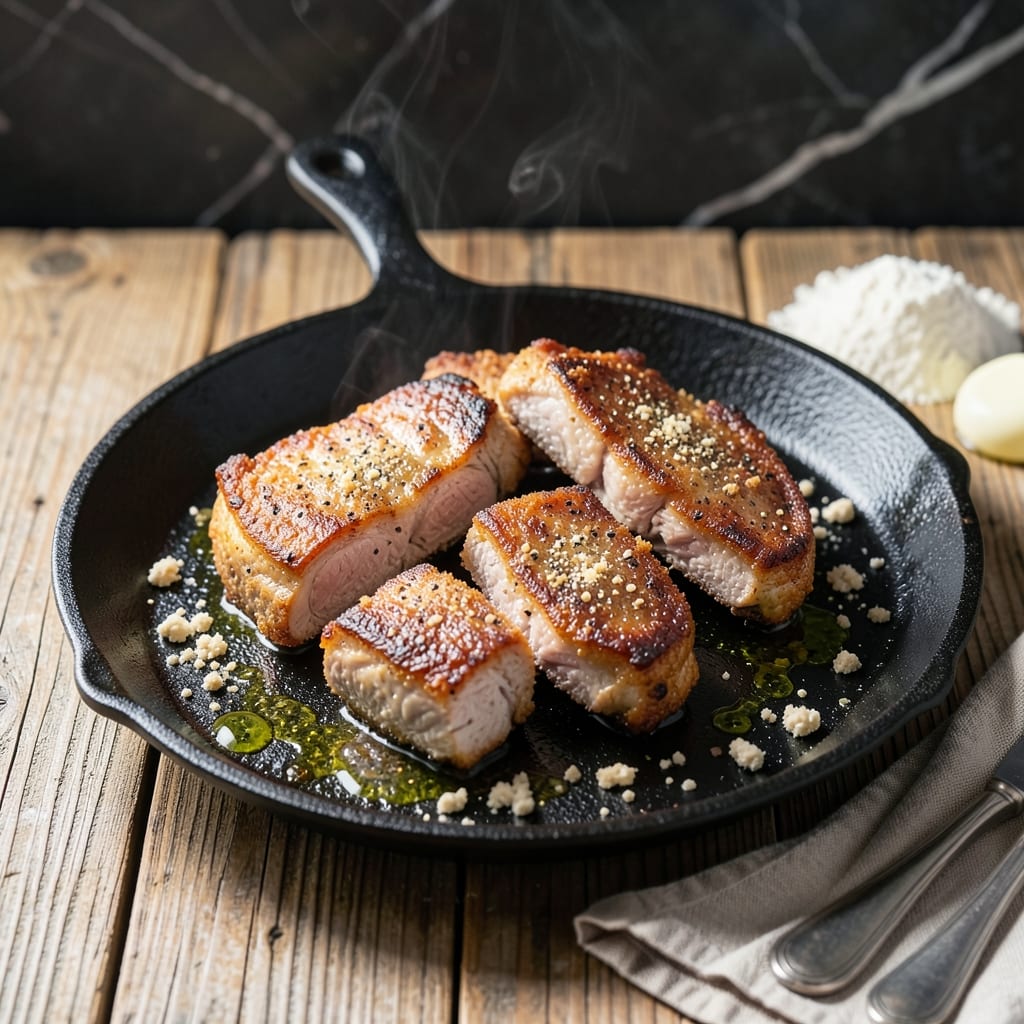
There’s nothing quite like a perfectly fried pork chop with a crispy golden crust and juicy center. My cast iron skillet method delivers that ideal contrast every time.
I learned this technique from Dad, who swore by the even heat distribution of cast iron. The key is maintaining steady heat and not crowding the pan—each chop needs space to develop that signature crunch.
The result is tender meat inside with a shatteringly crispy exterior that stays intact. A simple breading and proper oil temperature make all the difference.
This method works for both bone-in and boneless chops, with consistent results. The skillet creates a seal that locks in those juicy flavors.
Ingredients for Recipe for Fried Pork Chops in an Iron Skillet
A handful of pantry staples transforms these chops into restaurant-quality perfection. Nothing complicated here.
| Ingredient | Amount | Notes |
|---|---|---|
| Bone-In Pork Chops 🥩 | 4 whole | About 1-inch thick, rib or loin |
| All-Purpose Flour 🌾 | 1 ½ cups | For dredging, seasoned |
| Kosher Salt 🧂 | 2 tsp | Diamond Crystal preferred |
| Freshly Ground Black Pepper 🌶️ | 1 tsp | Coarse grind for texture |
| Garlic Powder 🧄 | 1 tsp | Not garlic salt |
| Onion Powder 🧅 | 1 tsp | Balances the breading |
| Paprika 🌶️ | 1 tsp | Sweet or smoked variety |
| Large Eggs 🥚 | 2 whole | Beaten for egg wash |
| Whole Milk 🥛 | ½ cup | For egg wash mixture |
| Panko Breadcrumbs 🍞 | 1 cup | For extra crispiness |
| Vegetable Oil 🫒 | 1 cup | High smoke point for frying |
| Unsalted Butter 🧈 | 2 tbsp | Optional for browning |
[recipe_ingredient_scaler]
The pork chops are the foundation—bone-in rib or loin cuts (about 1-inch thick) yield the juiciest results. Whole Foods or butcher shops often carry high-quality options. Look for chops with good marbling; this fat renders down during cooking, basting the meat from within. Avoid pre-brined chops, as they can throw off the seasoning balance in your breading.
No panko? Crushed cornflakes or saltine crackers work in a pinch for crunch. Dried herbs at half the amount can replace fresh if needed. For a gluten-free version, swap all-purpose flour for rice flour or cornstarch. The milk in the egg wash can be replaced with buttermilk for extra tang, or water if that’s all you have.
Breaded chops are best cooked immediately, but you can prep the dredging stations 1 hour ahead. Store fresh pork in the fridge for up to 3 days or freeze for 3 months. Leftovers keep 4 days refrigerated—reheat in the oven to maintain crispiness.
Why You’ll Love This Recipe
- One Pan Magic: I just season, dredge, and fry—all in the same iron skillet. No extra bowls, no fuss.
- Crispy Perfection: That garlic powder in the flour mix gives the crust an irresistible kick. Honestly, it’s the reason I make these weekly.
- Feeds the Gang: Bone-in chops stretch further than boneless, and they’re hearty enough for Sunday supper or a quick Friday treat.
- Budget Hero: Pork chops are cheaper than steak, and a bag of flour lasts forever. I’ll be real: this is my go-to when I need to save.
Step-by-Step Instructions for Fried Pork Chops in an Iron Skillet
Here’s the method. Straightforward, tested, works every time.
Step 1: Season and Dredge the Bone-In Pork Chops
In a shallow dish, combine the 1.5 cups all-purpose flour, 2 tsp kosher salt, 1 tsp freshly ground black pepper, 1 tsp garlic powder, 1 tsp onion powder, and 1 tsp paprika. Whisk until evenly distributed. This seasoned flour creates the flavorful base layer for the crust.
Pat the 4 whole bone-in pork chops dry with paper towels to ensure the coating adheres properly. Dredge each chop in the flour mixture, pressing gently to create an even, thorough coating. Shake off any excess—too much flour leads to a gummy crust rather than a crisp one.
Step 2: Prepare the Egg Wash and Panko Coating
In a separate shallow dish, whisk together the 2 whole large eggs and 0.5 cup whole milk until fully combined. This egg wash acts as the glue between the flour and the panko breadcrumbs, ensuring everything stays in place during frying.
Place the 1 cup panko breadcrumbs in a third shallow dish. The panko’s coarse texture creates extra crunch. Dip each floured pork chop into the egg wash, allowing any excess to drip off, then press it into the panko breadcrumbs, turning to coat completely. Set the breaded chops on a wire rack to rest for 5 minutes—this helps the coating set and adhere better.
Step 3: Heat the Oil and Fry to Golden Perfection
In a large cast-iron skillet, heat the 1 cup vegetable oil over medium-high heat until it reaches 350°F. To test without a thermometer, drop a pinch of panko into the oil—if it sizzles immediately and floats to the surface, it’s ready. Add the 2 tbsp unsalted butter to the oil for added richness and flavor.
Carefully place the breaded pork chops into the hot oil, ensuring they’re not crowded—fry in batches if necessary. Cook for 4-5 minutes per side until the coating is deep golden brown and crisp. The internal temperature of the pork should reach 145°F for perfect doneness. Avoid moving the chops too soon; let them develop a crust before flipping.
Step 4: Drain and Rest for Maximum Crispiness
Using tongs, transfer the fried pork chops to a paper towel-lined plate or wire rack to drain excess oil. The paper towels absorb any residual grease while allowing air circulation to maintain crispness. If using a rack, place it over a baking sheet to catch drips.
Let the chops rest for 5 minutes before serving. This brief rest allows the juices to redistribute throughout the meat, ensuring each bite is tender and juicy rather than dry. The coating will also firm up slightly, making it less likely to fall off when cutting into the chops.
Pro Tips For Making Recipe For Fried Pork Chops In An Iron Skillet
- Dry the Chops First: Pat those bone-in pork chops dry with paper towels before dredging—I learned this the hard way after my first batch steamed instead of fried. Moisture is the enemy of a good crust.
- Heat the Skillet Longer: Crank the iron skillet over medium-high for a full 5 minutes before adding oil. A properly hot pan guarantees that golden, crispy coating instead of a sad, greasy one.
- Season the Flour: Mix the kosher salt, black pepper, and garlic powder right into the flour before dredging. It sticks better and every bite actually tastes seasoned, not just the surface.
- Rest Before Serving: Let the chops rest 5-10 minutes on a wire rack after frying. Sounds weird, but it keeps them juicy and stops the breading from turning soggy on the plate.
Troubleshooting Great recipe for fried pork chops in an iron skillet
Oil Temperature Issues
If your chops are greasy instead of crispy, the oil likely wasn’t hot enough. I test with a panko pinch—it should sizzle immediately at 350°F. Too cool oil absorbs into the breading. 🌡️
Coating Falling Off
This usually happens when the chops aren’t dry before dredging. Pat them thoroughly with paper towels first. Also, let the breaded chops rest for 5 minutes before frying to help the coating set.
Uneven Cooking
Thick and thin spots cook differently. Use a meat thermometer to check internal temp reaches 145°F. For even cooking, pound thicker chops to a uniform 1-inch thickness before breading.
Burnt Exterior
This means your heat is too high. Adjust to medium-high and maintain steady heat. Cast iron retains heat well, so if the oil starts smoking, reduce the temperature slightly.
Dry Meat
Overcooking is the culprit here. Pull chops at 145°F and let them rest. Bone-in chops often finish cooking during the 5-minute rest. I learned this the hard way with Dad’s first attempt.
Also, avoid overcrowding the pan—this lowers oil temperature and leads to steaming rather than frying.
Nutrition Facts
Frequently Asked Questions
What oil works best for frying?
Use oils with a high smoke point like vegetable, canola, or peanut oil. They handle the 350°F heat without burning. Avoid olive oil as it can impart a bitter taste.
How thick should the chops be?
Aim for 1-inch thickness for even cooking. Thinner chops cook too quickly and may dry out. If yours are thicker, pound them gently to an even thickness before breading.
Why did my coating turn out soggy?
Sogginess usually means the oil wasn’t hot enough. Maintain 350°F and don’t crowd the pan. Also, ensure chops are fully coated and rested before frying.
Can I make these ahead of time?
Breaded chops are best cooked fresh, but you can prep the dredging stations 1 hour ahead. Store fresh pork up to 3 days in the fridge or freeze for 3 months.

Trained in classic French technique but raised on slow-cooked ribs and spicy rubs, she blends culinary skill with smoke and soul.
- Recipe For Fried Pork Chops In An Iron Skillet: Crispy Crust With Juicy Centers - October 3, 2026
- Recipe for Fully Cooked Spiral Ham: Sweet Glaze and Effortless Elegance - October 3, 2026
- Recipe for Cream of Rice: Silky Smooth Breakfast Comfort - October 3, 2026