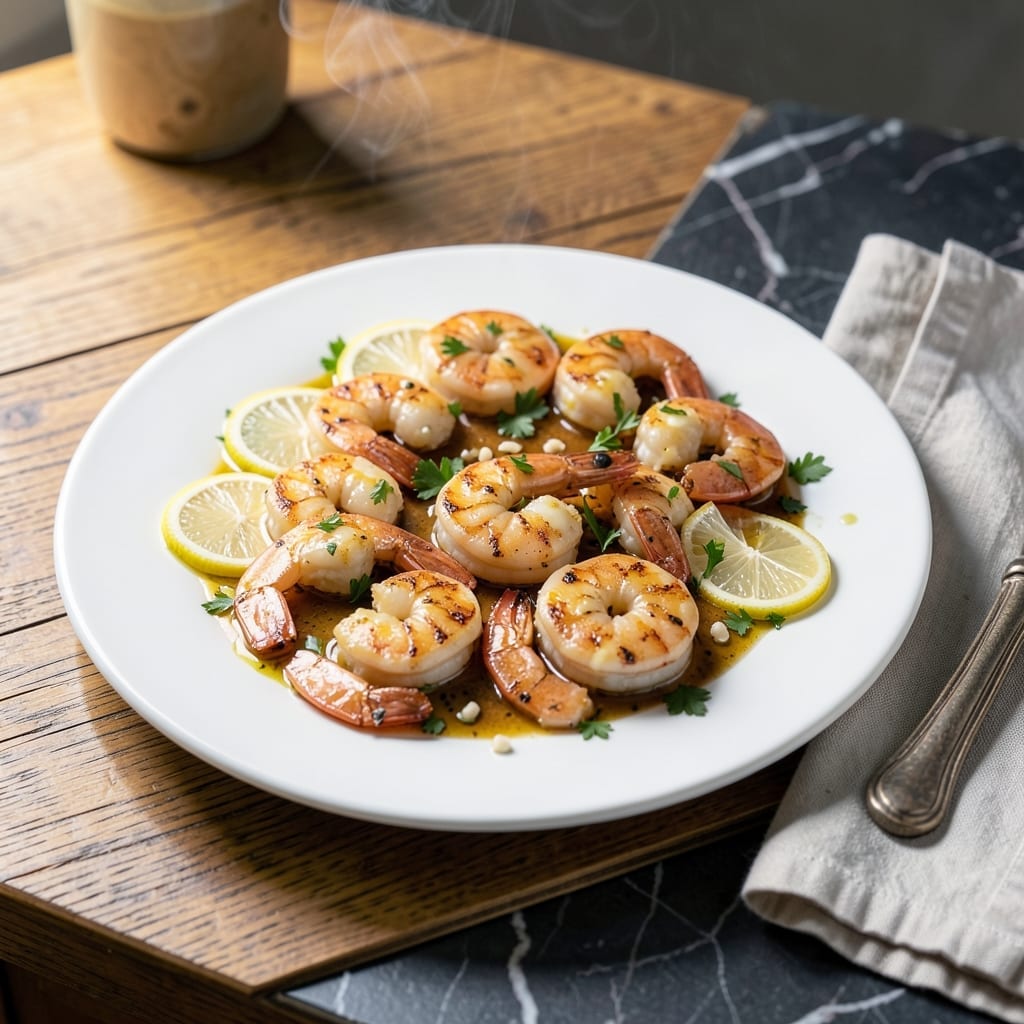
This recipe captures the signature Bonefish Grill experience with succulent shrimp bathed in rich garlic butter sauce. The professional technique ensures restaurant-quality results every time.
Simple ingredients come together through precise cooking to deliver tender, flavorful shrimp with a velvety sauce that’s impossible to resist.
Ingredients for Bonefish Grill Shrimp
Restaurant-quality shrimp requires just these straightforward, high-impact ingredients for maximum flavor and texture.
| Ingredient | Amount | Notes |
|---|---|---|
| Large Shrimp 🦐 | 1 ½ lb | Peeled, deveined, tails on |
| Unsalted Butter 🧈 | ½ cup | Divided for cooking and finishing |
| Garlic Cloves 🧄 | 6 cloves | Minced finely for sauce |
| Extra-Virgin Olive Oil 🫒 | 2 tbsp | For sautéing shrimp |
| Dry White Wine 🍷 | ¼ cup | Sauvignon Blanc or Pinot Grigio |
| Fresh Lemon Juice 🍋 | 2 tbsp | Recently squeezed preferred |
| Fresh Parsley 🌿 | ¼ cup | Finely chopped for garnish |
| Kosher Salt 🧂 | 1 tsp | Diamond Crystal brand recommended |
| Freshly Ground Black Pepper 🌶️ | ½ tsp | Coarse grind preferred |
| Red Pepper Flakes 🌶️ | ¼ tsp | Adjust for desired heat level |
| Shallot 🧅 | 1 whole | Finely minced for sauce base |
| Heavy Cream 🥛 | ¼ cup | For sauce richness |
[recipe_ingredient_scaler]
The shrimp quality is paramount. Wild-caught Gulf shrimp (16-20 count per pound) deliver the signature Bonefish texture. Whole Foods or local seafood markets are ideal for sourcing, but most supermarkets carry acceptable frozen options—thaw in cold water before using. For the wine, any dry white works, but avoid cooking wines with added salt.
No white wine? Substitute chicken broth with a splash of lemon juice. Shallots can be replaced with yellow onion at equal volume. For a lighter sauce, omit the cream or use half-and-half. The parsley is essential for freshness—flat-leaf parsley offers superior flavor. Frozen shrimp work (thaw properly), but fresh is preferred for optimal texture.
The cooked shrimp keep 2-3 days refrigerated in an airtight container. The garlic butter sauce can be made 1 day ahead and reheated gently. For best results, cook shrimp just before serving—overcooked shrimp lose their signature tenderness. Freezing cooked shrimp is not recommended as it alters texture.
Why You’ll Love This Recipe
- 20-Minute Meal: I can have these plump shrimp sizzling in garlic, butter, and white wine faster than takeout arrives.
- Restaurant Quality: The combo of olive oil, garlic, and wine makes the shrimp taste like they came straight from Bonefish’s kitchen.
- Crowd Pleaser: Honestly, this works for date night, family dinner, or even a solo treat—everyone cleans their plate.
- Leftovers? No Problem: The shrimp reheat beautifully, so I make extra for next-day tacos or salads.
Step-by-Step Instructions for Garlic Butter Shrimp
Master this technique for restaurant-quality shrimp with a luxurious garlic butter sauce.
Step 1: Prepare the Shrimp and Aromatics
Pat the 1.5 lb Large Shrimp completely dry with paper towels to ensure proper searing. Season them evenly with 1 tsp Kosher Salt and 0.5 tsp Freshly Ground Black Pepper, then set aside at room temperature while you prep the sauce base.
Finely mince the 1 whole Shallot and 6 cloves Garlic Cloves together—they’ll melt into the sauce. Finely chop the 0.25 cup Fresh Parsley, reserving a portion for garnish. This prep ensures all components are ready before cooking begins, as shrimp cook quickly and shouldn’t wait.
Step 2: Sauté the Shrimp to Perfection
Heat 2 tbsp Extra-Virgin Olive Oil in a large skillet over medium-high heat until it shimmers. Add the shrimp in a single layer, working in batches if necessary to avoid crowding. Cook for 1-2 minutes per side until the shrimp turn opaque and pink with golden edges.
Transfer the cooked shrimp to a plate and tent with foil to keep warm. Don’t overcook them at this stage—they’ll finish in the sauce. The residual heat will continue cooking them slightly, so remove them just before they’re fully done.
Step 3: Build the Garlic Butter Sauce
In the same skillet, reduce heat to medium and add 0.25 cup Dry White Wine. Use a wooden spoon to scrape up any browned bits from the shrimp—this adds depth to the sauce. Let the wine simmer for 2 minutes until reduced by half.
Add 0.5 cup Unsalted Butter, the minced shallot, and minced garlic. Cook for 2-3 minutes, stirring constantly, until the butter melts and the shallots soften. Stir in 0.25 tsp Red Pepper Flakes for a subtle kick, then pour in the 0.25 cup Heavy Cream and 2 tbsp Fresh Lemon Juice. Simmer for 2 minutes until the sauce thickens slightly.
Step 4: Finish and Serve
Return the shrimp to the skillet along with any accumulated juices. Toss gently to coat the shrimp in the sauce, cooking for an additional 1-2 minutes until heated through. The sauce should cling to the shrimp with a glossy sheen.
Sprinkle with the reserved chopped Fresh Parsley and serve immediately. The shrimp should be tender with a slight snap, and the sauce rich and velvety. For best results, serve with crusty bread to soak up every bit of the garlic butter sauce.
Pro Tips For Making Bonefish Grill Shrimp
- Dry the Shrimp: Pat those large shrimp bone-dry with paper towels before they hit the pan—water is the enemy of a good sear, and I learned this the hard way after too many steamed shrimp disasters.
- Hot Pan, Fast Cook: Get your skillet screaming hot before adding the shrimp, then cook them 2-3 minutes per side max. Overcrowding or low heat turns them rubbery, and after ruining a batch, I now use a timer.
- Use Room-Temp Butter: Take the unsalted butter out 20 minutes early so it melts smoothly into the sauce instead of clumping. Sounds fussy, but it actually changes the outcome—no one likes greasy butter blobs in their wine-garlic sauce.
- Deglaze with Wine: After removing the shrimp, pour in the dry white wine to scrape up all those browned garlic bits. I was skeptical until I tried it—this step pulls every last bit of flavor into the sauce.
Essential Equipment for Perfect Results
Must-Have Skillet
A heavy-bottomed stainless steel skillet is essential for even heat distribution and developing fond. I use a 12-inch All-Clad—it’s my go-to for restaurant-quality searing. Avoid nonstick as the high heat needed for proper browning can damage the coating. 🔥
Wooden Spoon Essential
Use a wooden spoon to scrape up browned bits when deglazing with wine. The flat edge gets into all the nooks where flavor hides. I keep a dedicated spoon just for this purpose—it’s picked up flavors from hundreds of sauces.
Instant-Read Thermometer
While shrimp cook quickly, an instant-read thermometer ensures perfect doneness. I rely on my ThermoWorks Thermapen to check shrimp hit 145°F internal temperature. This prevents overcooking and guarantees tender results every time.
Fine Mesh Strainer
A fine mesh strainer helps when you want to reuse the garlic butter sauce for other dishes. I strain out the shallots and garlic for a silky smooth sauce. The small investment makes a big difference in sauce quality.
Kitchen Tongs
Use 12-inch locking tongs for flipping shrimp—they give you precision without piercing the delicate flesh. I prefer OXO brand for their comfortable grip. The locking feature makes them easy to store in my crowded drawer. 💡
Garlic Press Alternative
If mincing garlic isn’t your thing, a garlic press works beautifully here. I use my Zyliss press when I’m in a hurry—it crushes 6 cloves in seconds. Just be sure to clean it immediately after use to prevent flavors from lingering.
Nutrition Facts
Frequently Asked Questions
Can I use frozen shrimp for this?
Yes, thaw frozen shrimp in cold water for 15-20 minutes before cooking. Pat them completely dry for proper searing. Avoid thawing at room temperature to prevent bacterial growth.
What if I don’t have white wine?
Substitute chicken broth with a splash of lemon juice for similar acidity. The flavor will be slightly different but still delicious. Avoid using cooking wine as it contains added salt.
How do I prevent overcooking the shrimp?
Remove shrimp from the pan when they turn opaque and pink, typically after 1-2 minutes per side. They’ll finish cooking in the hot sauce. Overcooked shrimp become rubbery.
Can I make the sauce ahead of time?
The garlic butter sauce can be prepared 1 day ahead and gently reheated. Store in an airtight container in the refrigerator. Add shrimp just before serving for best texture.

Trained in classic French technique but raised on slow-cooked ribs and spicy rubs, she blends culinary skill with smoke and soul.
- Recipe for Boneless Pork Chops in Cast Iron Skillet: Sear and Baste to Juicy Perfection - October 3, 2026
- Recipe for Boneless Cross Rib Roast: Slow-Roasted Beef with Herb Crust - October 3, 2026
- Hamburgers in Sauce Recipe Crock Pot: Slow-Cooked Savory Delight - October 3, 2026