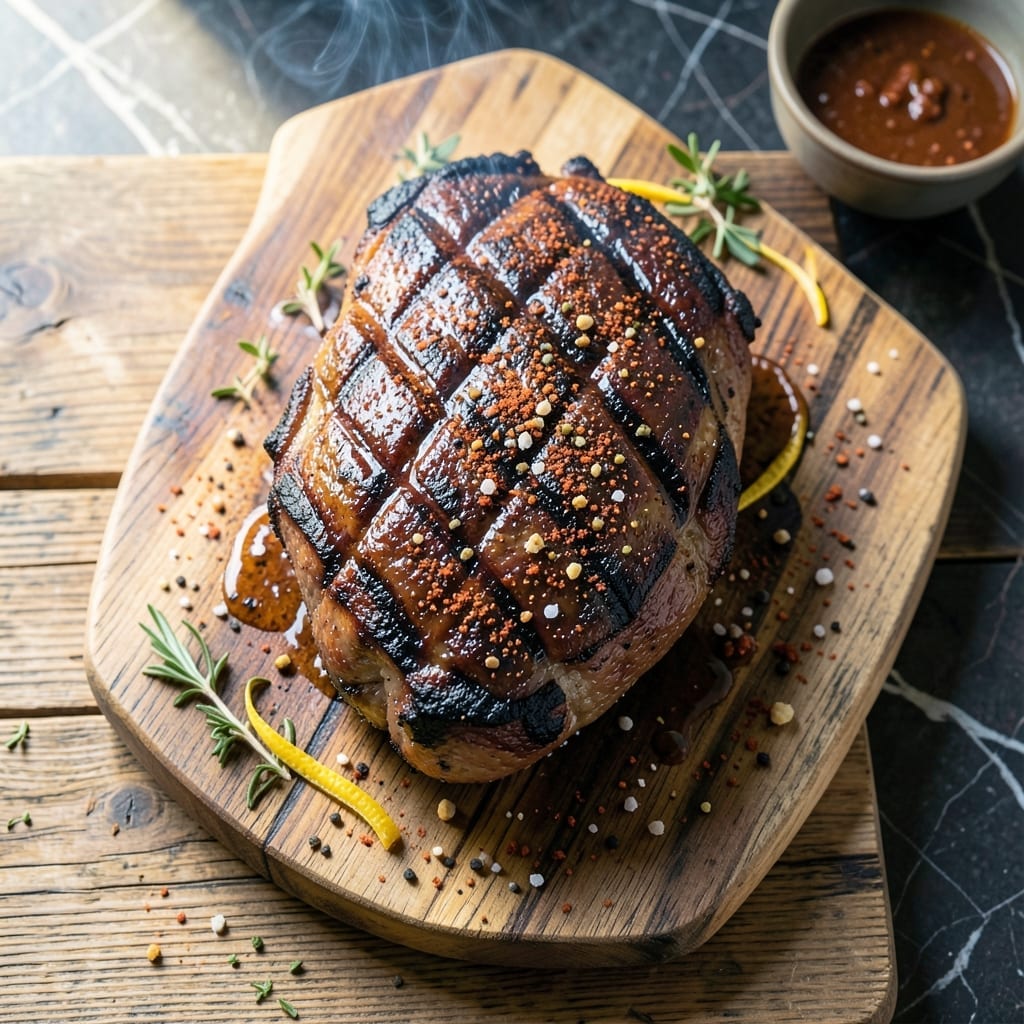
Mastering the grill transforms chuck roast into a showstopper with a charred crust and juicy interior. This method delivers restaurant-quality results at home.
With precise heat control and proper timing, this dish proves that tough cuts can become incredibly tender. The secret lies in the reverse sear technique.
Ingredients for Boneless Chuck Roast Grill
A handful of bold seasonings and quality beef create this juicy, charred masterpiece on the grill.
| Ingredient | Amount | Notes |
|---|---|---|
| Boneless Chuck Roast 🥩 | 2 ½ lb | Uniform thickness for even cooking |
| Kosher Salt 🧂 | 2 tbsp | Diamond Crystal preferred for texture |
| Coarse Black Pepper 🌶️ | 2 tsp | Freshly ground for maximum flavor |
| Garlic Powder 🧄 | 1 tbsp | Not garlic salt for clean flavor |
| Onion Powder 🧅 | 1 tbsp | Enhances depth of seasoning |
| Smoked Paprika 🌶️ | 1 tbsp | Adds subtle smoky complexity |
| Olive Oil 🫒 | ¼ cup | For searing and moisture |
| Worcestershire Sauce 💧 | 2 tbsp | Balances savory umami notes |
| Beef Broth 🥣 | ½ cup | Low-sodium preferred for control |
| Brown Sugar 🍚 | 1 tbsp | Light or dark for caramelization |
| Apple Cider Vinegar 🍏 | 1 tbsp | Brightens the flavor profile |
| Fresh Rosemary 🌿 | 2 sprigs | Optional but recommended for aroma |
[recipe_ingredient_scaler]
The chuck roast is non-negotiable here—look for well-marbled pieces with a thick fat cap. Costco and Whole Foods carry excellent pre-trimmed options, but ask your butcher for a custom cut if you want precise thickness. The fat content is what ensures that juicy interior the intro promises. Avoid select-grade beef; choice or prime is ideal for this application.
No smoked paprika? Regular paprika plus a pinch of cayenne mimics the depth. Worcestershire sauce can be swapped for soy sauce (use half the amount), though the flavor profile will shift slightly. Brown sugar substitutes include honey or maple syrup—both work but may caramelize differently. Fresh rosemary not available? Dried at one-third the quantity still delivers that piney note.
Prep the roast up to 24 hours ahead—dry brine it with salt and pepper for deeper seasoning. Cooked meat rests 10-15 minutes before slicing (critical for juiciness). Leftovers keep 4-5 days refrigerated or freeze for 3 months in airtight portions.
Why You’ll Love This Recipe
- Set and Forget: I rub the chuck with salt, pepper, garlic and onion powder, then let the grill do all the work—no babysitting required.
- Crispy, Juicy Magic: The dry rub caramelizes into a crust while the inside stays tender. Honestly, it’s the best part of grilling this cut.
- Feeds the Weekend: Leftovers slice thin for sandwiches or dice for tacos. Between us, it tastes even better the next day.
- Budget Hero: A chuck roast stretches further than pricier cuts, and that simple seasoning makes it taste like a million bucks.
Step-by-Step Instructions for Boneless Chuck Roast on the Grill
Master this technique for a perfectly charred exterior and tender, juicy interior every time.
Step 1: Season the Chuck Roast Generously
Pat the 2.5 lb boneless chuck roast completely dry with paper towels to ensure a good sear. In a small bowl, combine the 2 tbsp kosher salt, 2 tsp coarse black pepper, 1 tbsp garlic powder, 1 tbsp onion powder, and 1 tbsp smoked paprika.
Rub this mixture evenly over all surfaces of the roast, pressing it in firmly to create a flavorful crust. The spices should coat the meat completely, with no bare spots. Let it sit at room temperature for 30 minutes to allow the seasoning to penetrate.
Step 2: Sear Over Direct Heat for Crust Development
Preheat your grill to high heat (about 450-500°F). Brush the grates clean and oil them lightly with some of the 0.25 cup olive oil. Place the seasoned roast directly over the hottest part of the grill.
Sear for 4-5 minutes per side until a deep, dark brown crust forms. This high-heat sear creates the Maillard reaction, which gives the roast its rich, complex flavor. Avoid moving the meat too soon—let it develop that perfect crust before flipping.
Step 3: Move to Indirect Heat and Add Liquid for Tenderness
Once seared, move the roast to the cooler side of the grill (indirect heat). In a small bowl, whisk together the remaining olive oil, 2 tbsp Worcestershire sauce, 0.5 cup beef broth, 1 tbsp brown sugar, and 1 tbsp apple cider vinegar.
Pour this mixture into a disposable aluminum pan on the grill, then place the roast in the pan. Add the 2 sprigs fresh rosemary on top for aroma. Cover the grill and cook for 1.5 to 2 hours, maintaining a temperature of about 325°F. The liquid will braise the meat, keeping it moist as it cooks.
Step 4: Check for Doneness and Rest Before Slicing
Use a meat thermometer to check the internal temperature. The roast is done when it reaches 195-200°F internally, at which point it should be fork-tender. The meat will have shrunk slightly and the crust will be deeply caramelized.
Transfer the roast to a cutting board, tent loosely with foil, and let it rest for 15-20 minutes. This resting period allows the juices to redistribute throughout the meat, ensuring every slice is moist and flavorful. Resist the temptation to cut into it immediately—this step is crucial for the juiciest results.
Slice against the grain into ½-inch thick pieces and serve with the pan juices spooned over the top.
Pro Tips For Making Boneless Chuck Roast Grill
- Preheat the Grill: I learned this the hard way—crank the grill to high heat first, then reduce to medium for cooking. A screaming hot grill sears the chuck roast properly and locks in those juices.
- Dry the Roast: Pat the chuck roast completely dry with paper towels before seasoning. Sounds tedious, but it actually changes the outcome—wet meat steams instead of searing.
- Resist the Urge to Flip: Leave the roast undisturbed for at least 4-5 minutes per side. Flipping too soon prevents that deep crust from forming, and I know from experience it’s worth the wait.
- Let It Rest: After grilling, tent the roast with foil and give it a solid 10 minutes before slicing. Skipping this step means all those beautiful juices end up on the cutting board instead of in the meat.
Flavor Customization for This boneless chuck roast grill
Spice It Up
For a bold kick, add 1 tsp cayenne pepper or ½ tsp chipotle powder to the dry rub. I often mix in 1 tbsp coffee grounds for a deep, earthy note that pairs beautifully with beef. This creates a crust with serious complexity. 🌶️
Sweet and Smoky
Replace the brown sugar with 2 tbsp maple syrup in the braising liquid for a richer sweetness. Add 1 tsp ground cumin to the dry rub for a warm, aromatic touch. The maple glaze caramelizes wonderfully during cooking.
Herbal Infusion
Swap the fresh rosemary for thyme and sage sprigs—about 3 sprigs each. These herbs add a different aromatic profile while maintaining that earthy depth. I forage wild thyme along my coastal rides for an extra layer of flavor.
Tangy Twist
Boost the acidity by adding 2 tbsp balsamic vinegar to the braising liquid. This creates a subtle tang that cuts through the richness of the beef. The balsamic also enhances the caramelization on the crust.
Umami Boost
For deeper savory notes, add 1 tbsp soy sauce or 1 tsp fish sauce to the braising mixture. I learned this trick from my French training—it amplifies the meaty flavor without overpowering. The result is incredibly satisfying.
Citrus Zing
Add zest of 1 orange to the dry rub for a bright, citrusy lift. The orange oils in the crust create a beautiful contrast with the smoky, savory flavors. This works especially well with the coffee rub variation. 💫
Nutrition Facts
Frequently Asked Questions
What’s the best grill temperature for this?
Start with high heat at 450-500°F for searing, then reduce to 325°F for indirect cooking. This two-zone setup ensures a perfect crust without burning.
How can I tell when it’s done?
Use a meat thermometer—the roast is ready at 195-200°F internally. It should feel fork-tender and have shrunk slightly. Resting 15-20 minutes is essential before slicing.
Can I use a gas grill instead of charcoal?
Yes! Gas grills work well for this method. Preheat all burners to high for searing, then turn off one side for indirect heat. The process remains the same.
What if my roast isn’t fork-tender?
If it’s tough, it likely needs more time. Return it to indirect heat, add more liquid, and cook until it reaches 200°F. Patience pays off with chuck roast.

Trained in classic French technique but raised on slow-cooked ribs and spicy rubs, she blends culinary skill with smoke and soul.
- Recipe for Boneless Pork Chops in Cast Iron Skillet: Sear and Baste to Juicy Perfection - October 3, 2026
- Recipe for Boneless Cross Rib Roast: Slow-Roasted Beef with Herb Crust - October 3, 2026
- Hamburgers in Sauce Recipe Crock Pot: Slow-Cooked Savory Delight - October 3, 2026