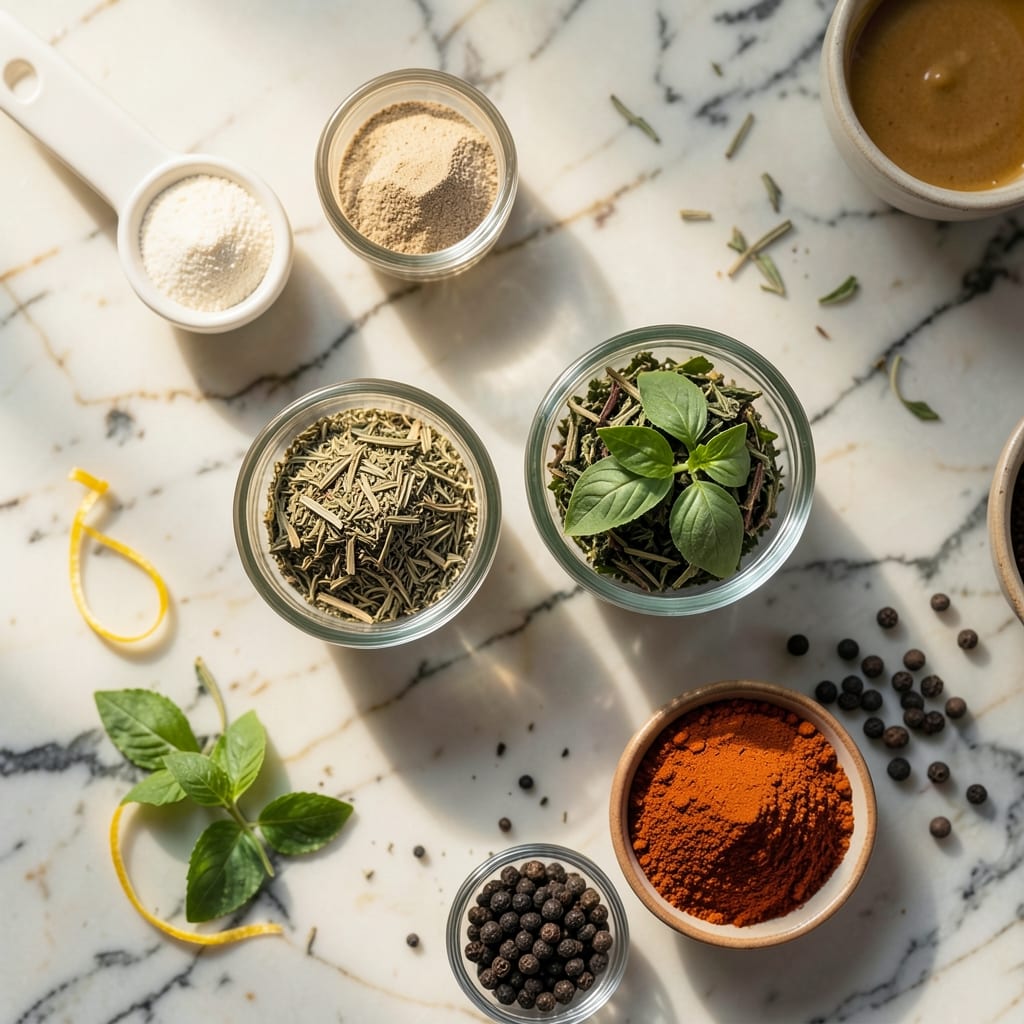
This method delivers juicy pork loin with smoky char every time. The key is proper seasoning and precise grill temperature control.
I developed this technique after years of competition cooking, ensuring tender centers and caramelized crust without drying out the meat. The result is a dish that impresses at any table.
Ingredients for Boneless Pork Loin Grilled
A few pantry staples plus fresh pork create this impressive centerpiece with minimal effort.
| Ingredient | Amount | Notes |
|---|---|---|
| Boneless Pork Loin 🥩 | 2 lb | Trimmed of excess fat |
| Kosher Salt 🧂 | 1 ½ tbsp | Diamond Crystal preferred |
| Black Pepper 🌶️ | 1 tbsp | Freshly ground, coarse |
| Garlic Powder 🧄 | 1 tbsp | Not garlic salt |
| Smoked Paprika 🌶️ | 1 tsp | Spanish variety ideal |
| Dried Thyme 🍃 | 1 tsp | Rubbed between fingers |
| Dried Rosemary 🌿 | 1 tsp | Crushed for release |
| Olive Oil 🫒 | 2 tbsp | Extra-virgin for binding |
| Brown Sugar 🍚 | 1 tbsp | Light or dark variety |
| Dijon Mustard 🟡 | 1 tbsp | Smooth, no seeds |
| Apple Cider Vinegar 🍏 | 1 tbsp | Balances sweetness |
| Vegetable Oil 🫒 | 1 tbsp | High smoke point for grilling |
[recipe_ingredient_scaler]
The pork loin must be uniformly thick for even cooking—ask your butcher to trim and tie it if needed. Whole Foods and Costco carry excellent pre-trimmed options. For the seasoning blend, Penzeys offers exceptional smoked paprika and dried herbs. The kosher salt is non-negotiable; its coarse texture adheres better to the meat’s surface, creating a superior crust.
Out of smoked paprika? Regular paprika plus a pinch of chipotle powder works in a pinch. No Dijon? Whole-grain mustard at the same quantity adds texture. The brown sugar can be swapped for honey or maple syrup, though the caramelization may differ slightly. For the vinegar, white wine vinegar is an acceptable substitute, but apple cider’s mildness complements the pork best.
The seasoned pork loin can rest in the fridge for up to 24 hours before grilling—this enhances flavor penetration. Leftovers keep for 4-5 days refrigerated or freeze for 3 months. Slice only after resting to retain those precious juices.
Why You’ll Love This Recipe
- Set It and Forget: No marinating, just rub with salt, pepper, garlic powder, and smoked paprika—then let the grill do the work.
- Smoky Depth: That subtle heat from the smoked paprika? It turns simple pork loin into something I crave all week.
- Feeds the Gang: One loin, endless options—sandwiches today, tacos tomorrow, or a hearty dinner with roasted veggies.
Step-by-Step Instructions for Boneless Pork Loin Grilled
Master the technique for achieving perfectly charred exteriors with tender, juicy centers every time.
Step 1: Create the Dry Rub and Wet Paste
In a small bowl, combine the 1.5 tbsp Kosher Salt, 1 tbsp Black Pepper, 1 tbsp Garlic Powder, 1 tsp Smoked Paprika, 1 tsp Dried Thyme, and 1 tsp Dried Rosemary. Rub this mixture all over the 2 lb Boneless Pork Loin, pressing firmly to adhere.
In a separate bowl, whisk together the 2 tbsp Olive Oil, 1 tbsp Brown Sugar, 1 tbsp Dijon Mustard, and 1 tbsp Apple Cider Vinegar until smooth. This paste will create a glossy, flavorful crust. Let the pork sit at room temperature for 30 minutes to absorb the flavors.
Step 2: Preheat and Prepare the Grill
Preheat your grill to medium-high heat (about 400°F). Use a clean cloth or paper towel to oil the grates with the 1 tbsp Vegetable Oil, ensuring the pork won’t stick. This high heat is crucial for achieving a deep sear and smoky char.
Set up for two-zone grilling: one side with direct heat for searing and the other with indirect heat for even cooking. This allows you to control the cooking process and prevent burning. Close the lid to maintain consistent temperature.
Step 3: Sear and Cook the Pork Loin
Place the pork loin on the direct heat side of the grill. Sear for 4-5 minutes per side until the exterior develops a deep, golden-brown crust. You’ll hear a satisfying sizzle when it hits the grates—this is the sound of perfect caramelization.
Move the pork to the indirect heat side and close the lid. Cook for an additional 20-25 minutes, turning occasionally, until the internal temperature reaches 145°F on an instant-read thermometer. The juices should run clear, not pink.
Step 4: Rest and Slice
Transfer the pork loin to a cutting board and tent loosely with foil. Let it rest for 10-15 minutes—this step is non-negotiable for juicy results. Resting allows the muscle fibers to relax and redistribute the juices throughout the meat.
Slice the pork against the grain into ½-inch thick pieces. Each slice should reveal a tender, slightly pink center with a smoky, caramelized crust. Serve immediately to enjoy the full depth of flavor and texture.
Pro Tips For Making Boneless Pork Loin Grilled
- Preheat the Grill: Get your grill screaming hot—450°F minimum—before the pork hits the grates. I learned this the hard way after pulling off too many pale, sad pork loins.
- Dry the Pork: Pat the loin bone-dry with paper towels before seasoning. Sounds weird, but it works: the rub sticks better and you’ll get a proper crust.
- Skip the Overcrowding: Leave space between pieces if grilling multiple loins—steer clear of the urge to cram. After burning three batches from uneven cooking, I finally figured out airflow matters.
- Rest Before Slicing: Give it a solid 10 minutes under foil once it hits 145°F internally. My grandmother swore by this, and she was right: it keeps the juices where they belong.
Common Mistakes When Making boneless pork loin grilled
Skipping the Rest
I’ve seen too many cooks slice into their pork loin straight off the grill. That 10-15 minute rest is crucial—it lets juices redistribute, so they don’t spill onto your cutting board. Skipping this step guarantees dry, disappointing meat. 💡
Uneven Thickness
If your loin tapers at one end, that thin part will overcook while the thick section stays raw. Ask your butcher for a center-cut piece or tie the thinner end under itself. Aim for 2-3 inches uniform thickness throughout.
Grill Temperature Swings
Fluctuating heat leads to uneven cooking and burnt spots. Invest in a good thermometer—I swear by ThermoWorks—and maintain 400°F consistently. Charcoal users, arrange your coals for two-zone cooking.
Overcrowding the Grill
Give your pork loin space. Crowding the grates lowers temperature and causes steaming instead of searing. With 2 lb of meat, you need at least 12 inches of clear grilling space around it.
Ignoring Internal Temp
Pork is safe at 145°F, not the outdated 160°F many still use. Pull it at 140°F—it’ll rise to perfect doneness while resting. Use an instant-read thermometer; guessing leads to dry meat.
Skipping the Paste
That wet paste of olive oil, brown sugar, and Dijon isn’t just for flavor—it creates a sticky surface that caramelizes beautifully. Don’t rush this step; let it sit for the full 30 minutes before grilling.
Nutrition Facts

Trained in classic French technique but raised on slow-cooked ribs and spicy rubs, she blends culinary skill with smoke and soul.
- Recipe for Boneless Pork Chops in Cast Iron Skillet: Sear and Baste to Juicy Perfection - October 3, 2026
- Recipe for Boneless Cross Rib Roast: Slow-Roasted Beef with Herb Crust - October 3, 2026
- Hamburgers in Sauce Recipe Crock Pot: Slow-Cooked Savory Delight - October 3, 2026