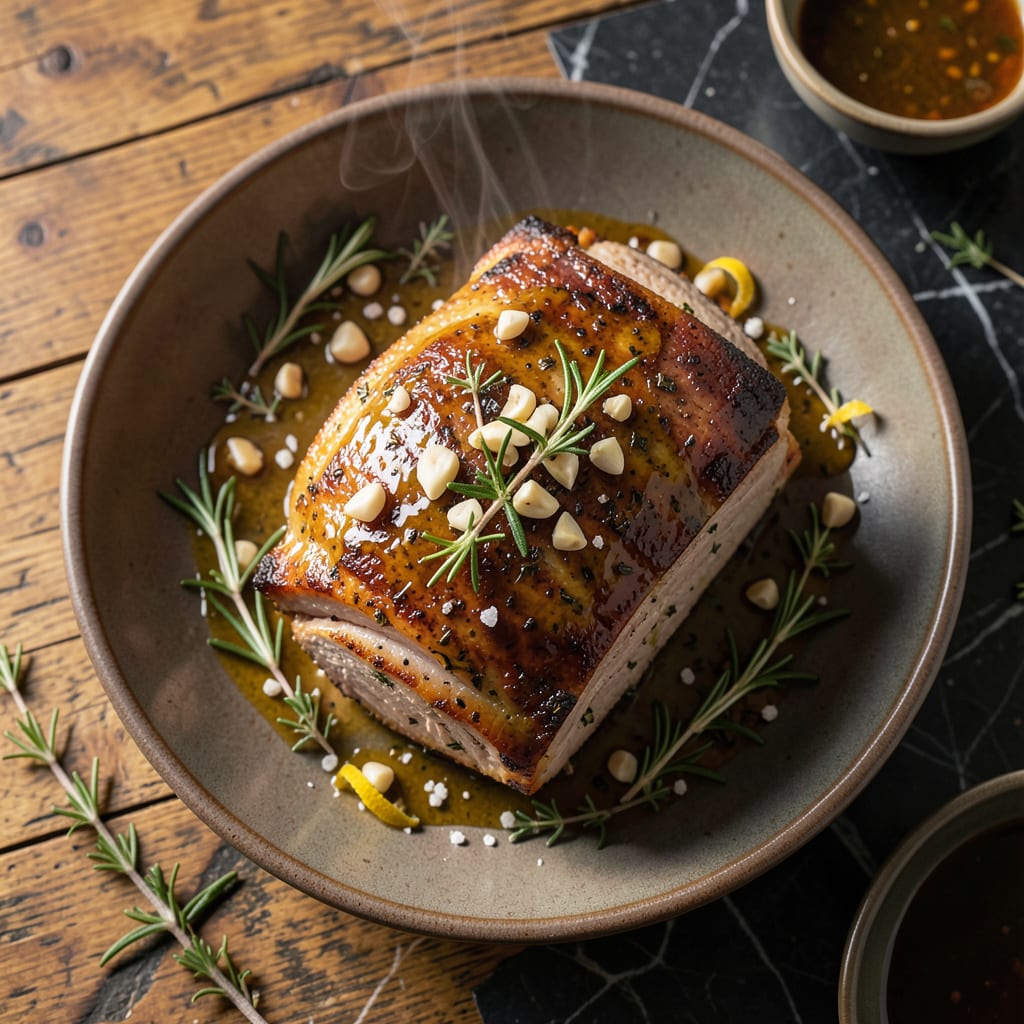
This boneless pork rib roast delivers a tender, flavorful centerpiece with minimal effort. The herb crust forms a fragrant seal that locks in juices.
With a simple preparation and oven-roasting method, you’ll achieve restaurant-quality results. Perfect for Sunday suppers or special occasions.
Ingredients for Boneless Pork Rib Roast
A well-marbled roast and fragrant herbs create this elegant yet simple centerpiece.
| Ingredient | Amount | Notes |
|---|---|---|
| Boneless Pork Rib Roast 🥩 | 3 lb | Well-marbled, trimmed of excess fat |
| Kosher Salt 🧂 | 2 tsp | Diamond Crystal preferred |
| Freshly Ground Black Pepper 🌶️ | 1 tsp | Coarse grind recommended |
| Garlic Cloves 🧄 | 6 cloves | Finely minced for crust |
| Fresh Rosemary 🌿 | 2 tbsp | Finely chopped, stems discarded |
| Fresh Thyme Leaves 🍃 | 2 tbsp | Stems removed before chopping |
| Dijon Mustard 🟡 | 3 tbsp | Whole grain acceptable |
| Olive Oil 🫒 | 2 tbsp | Extra-virgin for best flavor |
| Dry White Wine 🍷 | ½ cup | Sauvignon Blanc or Pinot Grigio |
| Unsalted Butter 🧈 | 2 tbsp | Softened to room temperature |
| Shallot 🧅 | 1 whole | Finely diced for herb paste |
| Dried Oregano 🌿 | 1 tsp | Mediterranean variety preferred |
| Fresh Parsley 🌿 | ¼ cup | Chopped, for garnish |
[recipeingredientscaler]
The pork rib roast is the star here—look for good marbling at the butcher counter or Whole Foods meat section. A 3-pound roast serves four generously. The herbs should be fresh and vibrant (the good stuff, not the pre-packaged kind that’s been sitting for weeks). If your market doesn’t have boneless rib roast, ask the butcher to debone a regular rib roast for you.
No white wine? Chicken stock with a splash of apple cider vinegar works in a pinch. Fresh herbs are ideal, but dried at one-third the amount can substitute—just rehydrate in a bit of oil first. The Dijon mustard adds acidity and helps the crust adhere; whole grain mustard adds pleasant texture. Unsalted butter ensures you control the seasoning precisely.
The roast can be prepped 12 hours ahead—just cover and refrigerate. Leftovers keep beautifully for 4-5 days and make incredible sandwiches. The herb paste can be made 2 days in advance (store covered in the fridge). Always bring the roast to room temperature before cooking for even cooking.
Why You’ll Love This Recipe
- One Pan Wonder: I just season, sear, and roast—no fancy steps, and the oven does the rest.
- Garlic-Rosemary Magic: That combo of fresh rosemary and garlic makes every bite taste like a Sunday dinner, even on a Tuesday.
- Crowd Pleaser: I’ve served this at holidays and casual suppers, and it’s always the first dish to disappear.
- Meal Prep Hero: Honestly, the leftovers make the best sandwiches or tacos for days.
Step-by-Step Instructions for Herb-Crusted Boneless Pork Rib Roast
Precision and patience transform this cut into a centerpiece worthy of any occasion.
Step 1: Prepare the Herb Paste and Season the Roast
In a small bowl, combine the 3 tbsp Dijon mustard, 2 tbsp olive oil, 6 cloves garlic cloves (minced), 2 tbsp fresh rosemary, 2 tbsp fresh thyme leaves, 1 tsp dried oregano, 2 tsp kosher salt, and 1 tsp freshly ground black pepper.
Stir until a thick, fragrant paste forms. This paste will create a flavorful crust that locks in moisture while adding complex herbal notes. The garlic should be fully incorporated, not clumping.
Step 2: Sear and Coat the Pork
Pat the 3 lb boneless pork rib roast dry with paper towels. This step is crucial for achieving a proper sear. Heat a large oven-safe skillet over medium-high heat until very hot.
Add the 2 tbsp unsalted butter and let it melt. Sear the roast on all sides until deep golden brown, about 2-3 minutes per side. Immediately brush the herb paste generously over the entire surface of the pork, pressing it into the meat to adhere.
Step 3: Roast to Perfection
Preheat your oven to 375°F. Place the seared and coated roast in the center of the skillet. Pour the 0.5 cup dry white wine into the pan around the pork, not over it, to prevent washing off the herb crust.
Transfer the skillet to the oven and roast for 45-60 minutes, or until an instant-read thermometer inserted into the thickest part registers 145°F. Baste the roast with pan juices every 15 minutes to keep the crust moist and flavorful.
Step 4: Rest and Serve
Remove the roast from the oven and transfer it to a cutting board. Tent loosely with foil and let it rest for 15 minutes. This allows the juices to redistribute throughout the meat, ensuring every slice is tender and moist.
Slice the roast against the grain into ½-inch thick pieces. Garnish with the 0.25 cup fresh parsley and any accumulated pan juices. The crust should be deeply browned and aromatic, with a tender, juicy interior.
Pro Tips For Making Boneless Pork Rib Roast
- Rest Before Slicing: Let the roast rest under foil for at least 15 minutes after pulling it from the oven—I learned this the hard way when my first few cuts released all those juices onto the cutting board instead of staying in the meat.
- Score the Fat Cap: Even if it’s boneless, make shallow cuts in the fat cap (about 1/4-inch deep) before seasoning. My grandmother swore by this, and it lets the salt, garlic, and rosemary really penetrate.
- Use a Meat Thermometer: Skip guessing and pull the roast at 145°F internal temp—any higher and that beautiful pork turns dry. I burned three roasts before I finally invested in a good thermometer.
- Crush the Garlic: Smash the garlic cloves with the side of your knife before mincing—sounds weird, but it works to release more flavor into the rosemary rub. I was skeptical until I tried it.
Essential Equipment for Perfect Results
Oven-Safe Skillet
I swear by my 12-inch Lodge Cast Iron for this recipe—it goes from stovetop searing to oven roasting seamlessly. The heavy base prevents hot spots that could burn your herb crust. A quality stainless steel skillet from All-Clad works just as well if you prefer lighter cookware. 🔥
Instant-Read Thermometer
Don’t even think about roasting without a ThermoWorks Thermapen. It gives accurate readings in 2-3 seconds, so you’ll know exactly when your pork hits that perfect 145°F. Cheaper models often lag, risking overcooking your beautiful roast.
Mixing Bowls
For the herb paste, I use my medium Pyrex bowl—easy to clean and won’t absorb odors like plastic. A stainless steel mixing bowl works too, but glass lets me see when everything’s perfectly combined. The paste should be thick enough to cling to the pork.
Basting Tool
A silicon basting brush is essential for coating the roast and basting during cooking. I keep one dedicated to savory dishes to avoid any sweet contamination. The long handle keeps your hands safe from the hot pan.
Cutting Board
After resting, transfer to a large wooden cutting board for slicing. The juices need room to pool without spilling. I love the end-grain boards from John Boos—they’re gentle on my knives and last forever.
Carving Knife
Use a long, sharp slicing knife (I prefer my Wüsthof 8-inch) to cut clean ½-inch slices against the grain. A dull knife will tear the meat and ruin your presentation. Keep it honed before starting.
Nutrition Facts

Trained in classic French technique but raised on slow-cooked ribs and spicy rubs, she blends culinary skill with smoke and soul.
- Recipe for Boneless Pork Chops in Cast Iron Skillet: Sear and Baste to Juicy Perfection - October 3, 2026
- Recipe for Boneless Cross Rib Roast: Slow-Roasted Beef with Herb Crust - October 3, 2026
- Hamburgers in Sauce Recipe Crock Pot: Slow-Cooked Savory Delight - October 3, 2026