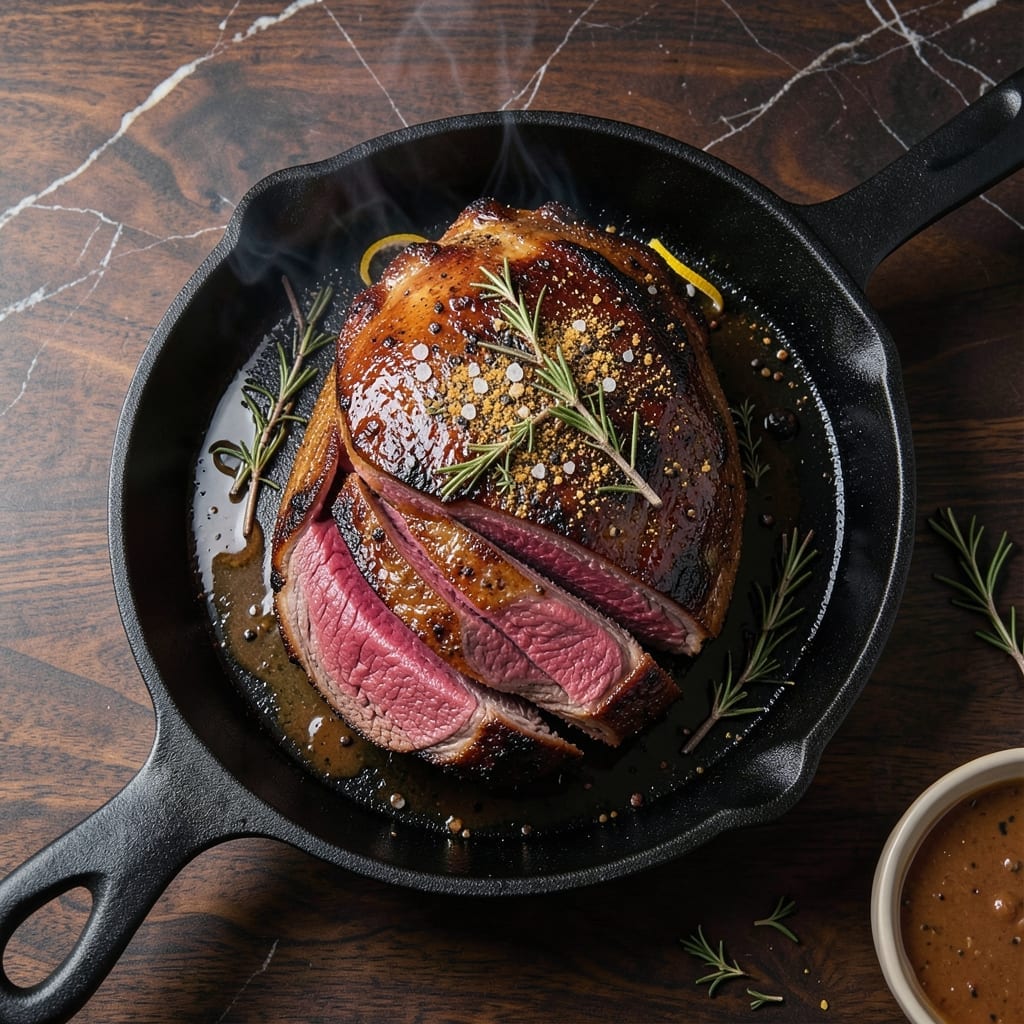
I remember the first time I smelled prime rib sizzling over open flame at a family cookout—it changed how I approached grilling forever. This method delivers perfect medium-rare results with a crispy crust that seals in every juicy bite.
The reverse-sear technique starts low and slow, allowing the meat to cook evenly before finishing with a high-heat sear. This approach eliminates the guesswork and guarantees consistent results, even for beginners.
You’ll achieve a roast with a beautifully caramelized exterior and a tender, pink center that melts on your tongue. The flavor is rich, beefy, and deeply satisfying—exactly what prime rib should be.
No fancy equipment needed—just a grill, patience, and quality meat. This is grilling at its finest.
Ingredients for Boneless Prime Rib Roast Grilling
Quality beef and bold seasonings create a showstopping centerpiece for your grill.
| Ingredient | Amount | Notes |
|---|---|---|
| Boneless Prime Rib Roast 🥩 | 5 lb | Well-marbled, trimmed of excess fat |
| Kosher Salt 🧂 | 2 tbsp | Diamond Crystal preferred for even distribution |
| Coarse Black Pepper 🌶️ | 1 ½ tbsp | Freshly cracked for boldest flavor |
| Garlic Powder 🧄 | 1 tbsp | Not garlic salt for purity of flavor |
| Onion Powder 🧅 | 1 tbsp | Balances the garlic’s sharpness |
| Dried Rosemary 🌿 | 2 tsp | Crushed between fingers to release oils |
| Dried Thyme 🍃 | 2 tsp | Earthy complement to the beef |
| Olive Oil 🫒 | ¼ cup | Extra-virgin for richness in crust |
| Unsalted Butter 🧈 | 4 tbsp | For basting during sear |
| Fresh Rosemary Sprigs 🌿 | 4 pieces | For aromatic smoke on the grill |
| Fresh Thyme Sprigs 🍃 | 4 pieces | Adds depth to the searing phase |
| Beef Tallow 🥩 | 2 tbsp | Optional for high-smoke-point searing |
[recipe_ingredient_scaler]
The prime rib is everything here—look for USDA Choice or Prime grade with abundant marbling. Costco and Whole Foods are reliable for well-trimmed roasts, but ask your local butcher to remove the bones and tie it up if you want a custom cut. A 5-pound roast serves 6 comfortably. Let it sit at room temperature for 2 hours before grilling to ensure even cooking.
No kosher salt? Sea salt at the same quantity works, but avoid iodized—it can taste metallic. Swap fresh rosemary and thyme for dried at one-third the amount. The garlic and onion powders add depth, but fresh minced garlic and grated onion can replace them (use 4 cloves and 1 small onion). Out of beef tallow? Avocado oil handles the high heat just as well.
Store the raw roast in the coldest part of your fridge for up to 5 days (the salt helps preserve it). Leftovers keep beautifully—slice thin and reheat in beef broth for 4-5 days, or freeze for 3 months wrapped tightly in foil and a freezer bag.
Why You’ll Love This Recipe
- Five Ingredients Only: I just rub the roast with salt, pepper, garlic, and onion powder—no fuss, no complicated marinades.
- Crispy Outside, Tender Inside: The grill gives it that perfect sear while keeping the inside juicy and flavorful.
- Holiday or Tuesday: Honestly, it’s impressive enough for Christmas but simple enough for a random weeknight.
- Leftovers for Days: One roast feeds us for two meals, and the sandwiches the next day? Even better.
Step-by-Step Instructions for Boneless Prime Rib Roast Grilling
Here’s the method I use for that perfect medium-rare finish with a crust worth bragging about.
Step 1: Season and Prep the Roast
Start by patting the 5 lb Boneless Prime Rib Roast completely dry with paper towels—this is non-negotiable for a good sear. In a small bowl, mix the 2 tbsp Kosher Salt, 1.5 tbsp Coarse Black Pepper, 1 tbsp Garlic Powder, 1 tbsp Onion Powder, 2 tsp Dried Rosemary, and 2 tsp Dried Thyme.
Rub the 0.25 cup Olive Oil all over the roast, then coat it evenly with the spice mixture. I press the seasoning in firmly so it adheres well. Let the roast sit at room temperature for 1 hour while you prep the grill—this ensures even cooking from edge to edge.
Step 2: Smoke the Roast at Low Temperature
Set up your grill for indirect heat at 225°F. If using a charcoal grill, bank the coals to one side; for gas, turn off the center burners. Add the 4 pieces Fresh Rosemary Sprigs and 4 pieces Fresh Thyme Sprigs directly to the coals or in a smoker box for aromatic depth.
Place the roast on the cool side of the grill, fat-side up. Insert a meat probe if using one. Smoke the roast until the internal temperature reaches 115-120°F for medium-rare, which should take about 2-2.5 hours. Resist the urge to peek—every time you open the lid, you lose heat and smoke.
Step 3: Sear Over Direct Heat for the Crust
Once the roast hits temperature, it’s time for the reverse sear. Move the roast to the hot side of the grill. Add the 2 tbsp Beef Tallow to the grates and let it melt—this boosts the flavor and prevents sticking. Sear the roast for 2-3 minutes per side until deeply browned.
For the final touch, baste the roast with the 4 tbsp Unsalted Butter during the last 1 minute of searing. Use a long-handled spoon to drizzle the melted butter over the top repeatedly. This creates a glossy, flavor-packed crust that’s simply unbeatable.
Step 4: Rest and Slice for Serving
Transfer the roast to a cutting board and tent loosely with foil. Let it rest for 15-20 minutes—this allows the juices to redistribute, so every slice stays moist. The internal temperature will rise another 5-10°F during this time, settling into that ideal medium-rare range.
Slice the roast against the grain into 1-inch thick portions. The meat should be pink from edge to edge with a dark, crusty exterior. Serve immediately while still warm, and prepare for compliments—this method never fails to impress.
Pro Tips For Making Boneless Prime Rib Roast Grilling
- Reverse Sear First: Start with indirect heat at 250°F until the internal temp hits 110°F for medium-rare, then sear over direct high heat. I learned this the hard way—going straight to high heat gives you a burnt exterior and raw center.
- Dry the Surface: Pat the roast completely dry with paper towels before seasoning—about 5 minutes of thorough drying. Sounds tedious, but it’s the only way to get that deep, crunchy crust with your salt and pepper rub.
- Don’t Skip the Rest: Tent the roast with foil and let it rest for 15-20 minutes after grilling. After rushing this once and serving a juicy disaster on the cutting board, I now set a timer—no exceptions.
- Use a Thermometer: Insert a meat thermometer into the thickest part and pull it at 120°F for perfect medium-rare. My grandmother swore by touch, but I was skeptical until I tried it and finally nailed the doneness every time.
Flavor Customization for This Dish
Herb-Forward Profile
Swap the dried herbs for fresh rosemary and thyme—use 2 tbsp chopped of each. The aromatic oils will infuse the meat with a brighter, more vibrant flavor. I often add sage from my coastal foraging spots for an earthy twist. 🌿
Spice Rub Upgrade
For a bolder crust, mix in 1 tsp smoked paprika and ½ tsp cayenne to your rub. This adds a subtle heat and smokiness that complements the beef beautifully. I learned this trick from a pitmaster at a local BBQ competition.
Coffee-Enhanced Depth
Add 1 tbsp finely ground coffee to your dry rub for a deep, rich complexity. The coffee enhances the beef’s natural flavors without overpowering them. Use a dark roast for the best results.
Citrus Zing
Brighten up the crust by adding 1 tbsp lemon zest and 1 tbsp orange zest to your seasoning mix. The citrus oils add a refreshing contrast to the rich beef. I love how this simple addition elevates the dish.
Umami Boost
For an extra layer of savory depth, mix in 1 tbsp Worcestershire sauce with your olive oil before rubbing it on the roast. The fermented tang adds complexity that’s hard to beat. 💡
Sweet and Smoky
Incorporate 1 tbsp brown sugar into your rub for a caramelized, slightly sweet crust. Pair it with ½ tsp chipotle powder for a smoky-sweet balance. This combo reminds me of my first backyard cookout.
Nutrition Facts
Frequently Asked Questions
What’s the ideal internal temperature for medium-rare?
Remove the roast at 115-120°F—it will rise to 125-130°F during resting. This ensures perfect medium-rare throughout.
How do I prevent flare-ups during searing?
Trim excess fat, use beef tallow for high-smoke-point searing, and keep a spray bottle of water nearby. Move the roast to indirect heat if flames get too high.
Can I use a gas grill for this method?
Set burners for indirect heat at 225°F and sear over direct flame. Gas grills work just as well as charcoal for reverse-searing.
Why rest the meat before slicing?
Resting for 15-20 minutes lets juices redistribute. Slicing too soon causes dry meat—patience pays off with juicier results.

Trained in classic French technique but raised on slow-cooked ribs and spicy rubs, she blends culinary skill with smoke and soul.
- Recipe for Boneless Pork Chops in Cast Iron Skillet: Sear and Baste to Juicy Perfection - October 3, 2026
- Recipe for Boneless Cross Rib Roast: Slow-Roasted Beef with Herb Crust - October 3, 2026
- Hamburgers in Sauce Recipe Crock Pot: Slow-Cooked Savory Delight - October 3, 2026