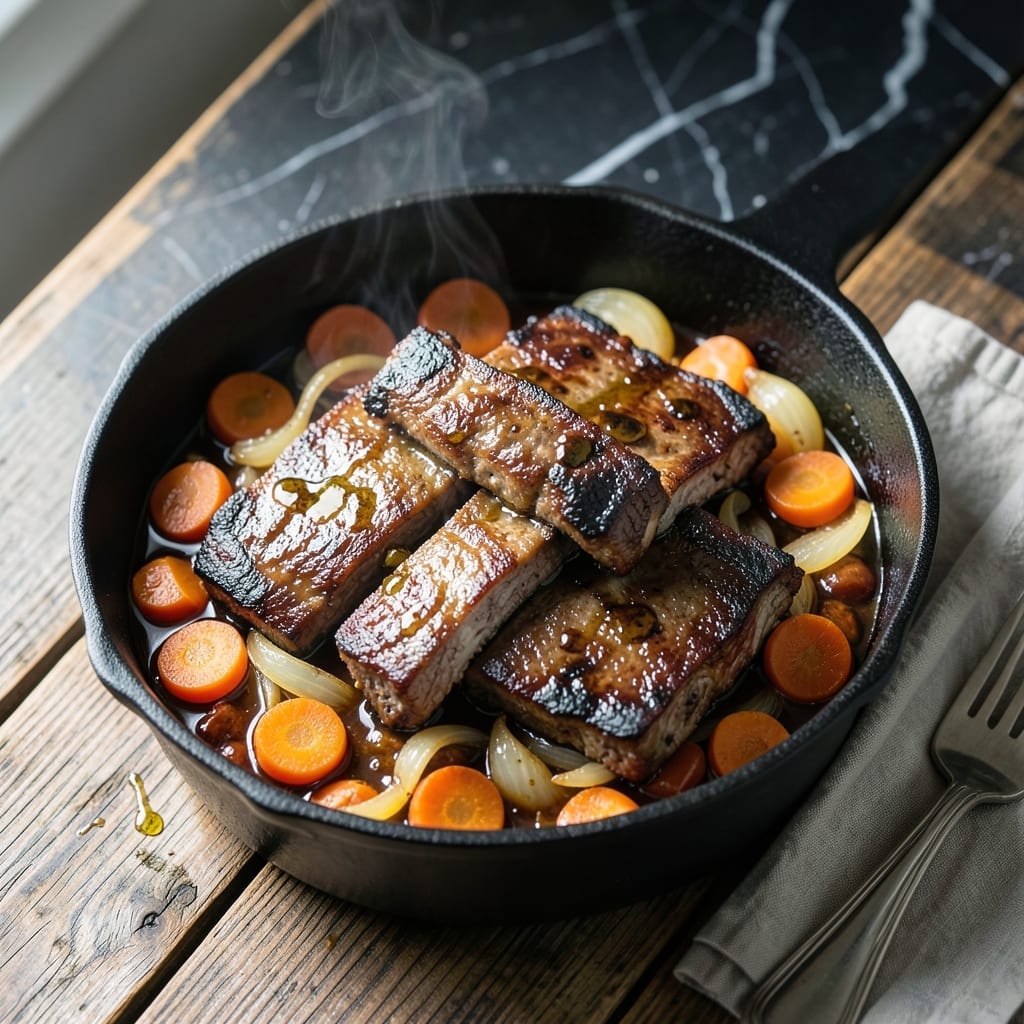
I remember the first time I slow-braised short ribs on the stovetop—my kitchen turned into a French bistro. The rich aroma of beef and red wine filled the air for hours.
This method transforms tough cuts into melt-in-your-mouth tenderness without an oven. A Dutch oven and low heat work magic on these ribs.
You’ll end up with ribbons of beef in a velvety sauce so good you’ll want to drink it straight from the pot. The kind of meal that makes weeknights feel special.
No fancy equipment needed, just time and a little patience. The stovetop does all the heavy lifting for this restaurant-quality dish.
Ingredients for Boneless Short Ribs Recipe Stove Top
Rich, deep flavors start with quality beef and bold red wine. Nothing beats this stovetop magic.
| Ingredient | Amount | Notes |
|---|---|---|
| Boneless Beef Short Ribs 🥩 | 2 ½ lb | Trimmed of excess fat |
| Kosher Salt 🧂 | 1 ½ tsp | Divided for seasoning |
| Black Pepper 🌶️ | 1 tsp | Freshly ground preferred |
| Olive Oil 🫒 | 2 tbsp | For searing ribs |
| Yellow Onion 🧅 | 1 whole | Diced medium |
| Carrots 🥕 | 2 whole | Peeled and chopped |
| Celery Stalks 🌿 | 2 whole | Chopped into pieces |
| Garlic Cloves 🧄 | 4 cloves | Minced for depth |
| Tomato Paste 🍅 | 2 tbsp | For rich umami base |
| Dry Red Wine 🍷 | 1 ½ cups | Bold and dry variety |
| Beef Broth 🥣 | 2 cups | Low-sodium preferred |
| Fresh Thyme 🌿 | 2 tsp | Leaves stripped from stems |
| Bay Leaf 🍃 | 1 whole | For aromatic depth |
| Unsalted Butter 🧈 | 2 tbsp | For finishing the sauce |
[recipe_ingredient_scaler]
The short ribs are the star—look for well-marbled boneless cuts at your butcher or Whole Foods. Avoid pre-cut pieces if they look dry or gray. I always grab mine from Costco when they have the bigger packs (freeze what you don’t use). The wine matters too: a Cabernet Sauvignon or Merlot works perfectly. Don’t waste the expensive stuff, but don’t use cooking wine either (it’s salted and tastes harsh).
No red wine? Extra beef broth with a splash of balsamic vinegar gets you 80% there. Fresh thyme is ideal, but dried at one-third the amount works fine. The tomato paste can be from a can or those Trader Joe’s squeeze tubes—no waste, keeps forever. If you’re missing carrots or celery, a handful of baby carrots or an extra onion works (the mirepoix trio is flexible).
Leftovers taste even better the next day. Store in an airtight container for up to 4 days in the fridge or freeze for 3 months. The fat will solidify on top when chilled—just skim it off before reheating (or leave it for extra richness).
Why You’ll Love This Recipe
- One Pot Wonder: I love that everything—ribs, onions, all the flavor—comes together in a single pan on the stove. No oven, no fancy gadgets, just simple stovetop magic.
- Deep Rich Flavor: The way the olive oil and onions caramelize around the ribs? It builds this incredible savory depth that’ll have you going back for another bite.
- Weeknight Hero: Between us, this is my go-to when I need something hearty but don’t have all day. It’s unfussy but feels like a fancy meal.
- Makes Great Leftovers: Honestly, the ribs taste even better the next day—tender, juicy, and perfect for stacking into sandwiches or over mashed potatoes.
Step-by-Step Instructions for Boneless Short Ribs Stove Top
Here’s the method. Straightforward, tested, works every time.
Step 1: Sear the Boneless Beef Short Ribs
Pat the 2.5 lb Boneless Beef Short Ribs completely dry with paper towels. This is crucial—moisture prevents proper browning. Season both sides generously with 1 tsp Kosher Salt and 1 tsp Black Pepper. I always use freshly ground pepper for the best flavor.
Heat the 2 tbsp Olive Oil in a large Dutch oven or heavy pot over medium-high heat until shimmering. Add the ribs in a single layer (work in batches if needed) and sear for 3-4 minutes per side until deep brown and crusty. Don’t crowd the pan, or they’ll steam instead of sear. Transfer the seared ribs to a plate and set aside.
Step 2: Build the Flavor Base
In the same pot, add the diced Yellow Onion, chopped Carrots, and chopped Celery Stalks. Cook over medium heat for 5-6 minutes, stirring occasionally, until the vegetables soften and begin to brown. This creates the foundation for your rich sauce.
Stir in the minced Garlic Cloves and cook for 30 seconds until fragrant—don’t let it burn. Then add the 2 tbsp Tomato Paste and cook for another 1-2 minutes, stirring constantly. You’ll notice the paste darken slightly and become brick-red in color. This deepens its flavor and prevents a raw taste in the finished dish.
Step 3: Deglaze and Simmer
Pour in the 1.5 cups Dry Red Wine and scrape up all the browned bits from the bottom of the pot with a wooden spoon. These bits, called fond, are packed with flavor. Bring the wine to a boil and let it simmer for 3-4 minutes until reduced by half.
Add the 2 cups Beef Broth, 2 tsp Fresh Thyme, and 1 whole Bay Leaf. Return the seared ribs to the pot, along with any accumulated juices. The liquid should just barely cover the ribs—if it doesn’t, add a little water. Bring to a gentle simmer, then reduce heat to low, cover, and let it cook for 2 to 2.5 hours.
Step 4: Finish and Serve
After the cooking time, the ribs should be fork-tender—they should pull apart easily with a gentle tug. Remove the ribs to a serving platter and tent with foil to keep warm. Skim any excess fat from the surface of the sauce, then bring it to a boil over medium-high heat.
Cook for 5-7 minutes until the sauce thickens slightly and coats the back of a spoon. Stir in the 2 tbsp Unsalted Butter until melted and fully incorporated. This adds a silky richness to the sauce. Pour the sauce over the ribs and serve immediately. The ribs will be incredibly tender, with a deep, rich sauce that soaks into every bite.
Pro Tips For Making Boneless Short Ribs Recipe Stove Top
- Dry the Ribs: Pat the boneless short ribs completely dry with paper towels before seasoning—this guarantees a proper sear instead of steamed meat. I learned this the hard way after wondering why my ribs were pale and soggy.
- Salt Generously: Use more kosher salt than you think, especially on fatty cuts like short ribs. The seasoning needs to penetrate, and most of it will cook off anyway.
- Skip the Overcrowding: Sear the ribs in batches if your pan isn’t huge—crowding drops the temperature and boils the meat instead of browning it. Sounds tedious, but it actually saves time in the long run.
- Deglaze the Pan: After searing, pour a splash of water or stock into the hot pan to lift all those browned bits—this adds deep flavor to your final sauce. My grandmother swore by this, and she was right.
Health Benefits of These Flavors
Protein Powerhouse
These ribs pack 40g of protein per serving, supporting muscle growth and repair. Beef is a complete protein, meaning it contains all nine essential amino acids your body can’t produce on its own. Perfect for active days or recovery meals. 💪
Iron-Rich Energy
Short ribs are exceptionally rich in heme iron, the type your body absorbs most easily. A 4-ounce serving provides about 2.5mg of iron, helping combat fatigue and keeping your energy levels steady throughout the day.
B Vitamin Boost
You’ll get a healthy dose of B vitamins, especially B12 and zinc. These nutrients support your immune system and help maintain healthy metabolism. The slow cooking process makes these nutrients more bioavailable.
Collagen Benefits
The connective tissue in short ribs breaks down into gelatin during cooking, which supports joint health and skin elasticity. That melt-in-your-mouth texture isn’t just delicious—it’s delivering natural collagen with every bite.
Healthy Fats
While marbled with fat, short ribs contain a good balance of saturated and unsaturated fats. The monounsaturated fats in beef can help improve cholesterol levels when enjoyed as part of a balanced diet.
Nutrient-Dense Comfort
This dish delivers big flavor and nutrition from simple ingredients. The bone-in version has slightly more nutrients, but boneless still offers excellent value. I love that it turns an affordable cut into a nutrient-packed meal. ✨
Nutrition Facts
Frequently Asked Questions
What can I use instead of red wine?
Substitute with 1.5 cups beef broth plus 2 tbsp balsamic vinegar for depth. The acidity mimics wine’s role in tenderizing and balancing flavors.
Why does the sauce need to reduce?
Reducing concentrates flavors and thickens the sauce to coat the ribs beautifully. Without this step, the sauce may taste watery. It takes 5-7 minutes on medium-high heat.
Can I make this ahead of time?
The dish improves overnight. Cool, refrigerate in an airtight container for up to 4 days, or freeze for 3 months. Reheat gently on the stove.
How do I know when the ribs are done?
They’re ready when they pull apart easily with a fork after 2-2.5 hours of simmering. The meat should be fork-tender and nearly fall off the bone.

Trained in classic French technique but raised on slow-cooked ribs and spicy rubs, she blends culinary skill with smoke and soul.
- Recipe for Boneless Pork Chops in Cast Iron Skillet: Sear and Baste to Juicy Perfection - October 3, 2026
- Recipe for Boneless Cross Rib Roast: Slow-Roasted Beef with Herb Crust - October 3, 2026
- Hamburgers in Sauce Recipe Crock Pot: Slow-Cooked Savory Delight - October 3, 2026