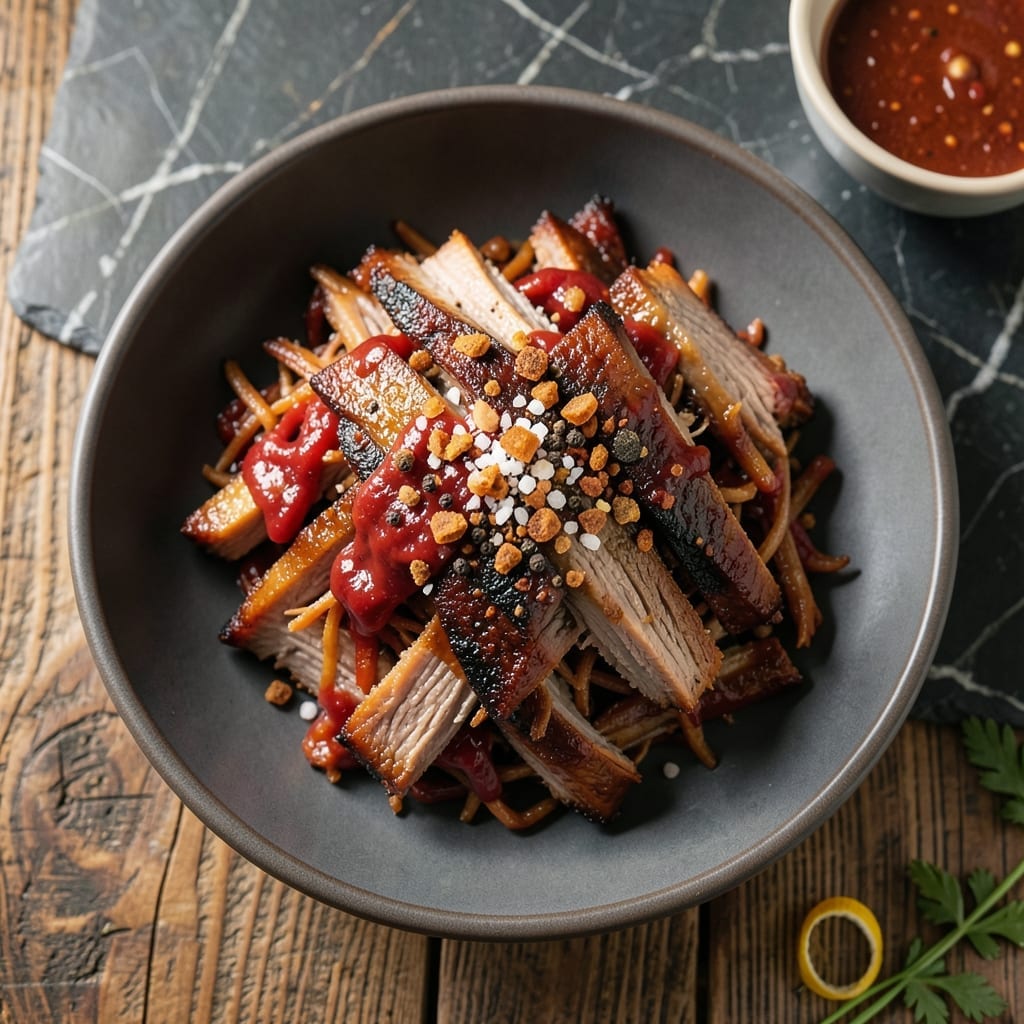
This method delivers tender, fall-off-the-bone pork with a deeply caramelized bark. Years of competition smoking taught me that patience and precise temperature control create the best results.
My dry rub, developed over countless cookouts, enhances the natural pork flavors without overpowering them. The slow smoking process transforms tough meat into a masterpiece.
Ingredients for Boston Butt Barbecue
Pantry staples plus one star ingredient create this smoky, tender masterpiece.
| Ingredient | Amount | Notes |
|---|---|---|
| Boston Butt Pork Roast 🥩 | 4 lb | Bone-in, well-marbled preferred |
| Brown Sugar 🍚 | ½ cup | Light or dark, packed |
| Kosher Salt 🧂 | 2 tbsp | Diamond Crystal preferred |
| Black Pepper 🌶️ | 2 tbsp | Freshly ground, coarse |
| Smoked Paprika 🌶️ | 1 tbsp | Sweet or hot variety |
| Garlic Powder 🧄 | 1 tbsp | Not garlic salt |
| Onion Powder 🧅 | 1 tbsp | Fine grind preferred |
| Cayenne Pepper 🔥 | ½ tsp | Adjust for heat preference |
| Mustard Powder 🟡 | 1 tsp | Dry ground mustard |
| Apple Cider Vinegar 🍏 | ½ cup | For mopping during cook |
| Yellow Mustard 🟡 | ¼ cup | For binder in dry rub |
| Hickory Wood Chunks 🪵 | 4 pieces | Or chips, soaked if using |
[recipe_ingredient_scaler]
The pork is non-negotiable here. Boston butt with the bone in gives you that perfect texture—shoulder works too but lacks the fat cap for bark. Hit up Costco for bulk savings or your local butcher for prime cuts. Look for good marbling throughout the meat (those white streaks of fat), not just a thick cap on top. A 4-pound roast feeds four with leftovers for sandwiches.
No brown sugar? Turbinado or maple sugar at a 1:1 swap works. Out of smoked paprika? Regular paprika plus a pinch of liquid smoke gets you close. The vinegar can be white vinegar in a pinch, but cider adds that extra depth. For the mustard binder, Dijon works too—just avoid the sweet varieties. Hickory wood is classic, but apple or cherry wood adds a fruity note.
Store the pork in the fridge until ready to smoke—use within 3-4 days. The dry rub keeps indefinitely in a cool, dark place. Leftover pulled pork freezes beautifully for up to 3 months. Pro tip: vacuum-seal portions for easy reheating (the bark stays crispier).
Why You’ll Love This Recipe
- I’ll be real: the flavor gets even better overnight, so I always make extra for easy lunches.
- Set and Forget: I toss the Boston butt in the slow cooker with brown sugar and spices before work, and it’s fall-apart tender by dinner.
- Smoky Sweet Crust: The brown sugar and smoked paprika form this caramelized bark that’s honestly the best part.
- Feeds the Block: One 8-pound butt makes enough pulled pork for burgers, tacos, and sandwiches all week.
Step-by-Step Instructions for Boston Butt Barbecue
Here’s the method I’ve perfected over countless slow-smoked sessions for fall-apart tender results.
Step 1: Prepare the Dry Rub and Season the Pork
In a bowl, combine 0.5 cup Brown Sugar, 2 tbsp Kosher Salt, 2 tbsp Black Pepper, 1 tbsp Smoked Paprika, 1 tbsp Garlic Powder, 1 tbsp Onion Powder, 0.5 tsp Cayenne Pepper, and 1 tsp Mustard Powder. Stir until fully blended—the mixture should look uniform with no visible streaks of individual spices.
Pat the 4 lb Boston Butt Pork Roast dry with paper towels to remove excess moisture, which helps the rub adhere. Apply a thin layer of 0.25 cup Yellow Mustard all over the pork—this acts as a binder. Then generously coat every surface with the dry rub, pressing it into the meat so it sticks. Let it sit at room temperature for 30-45 minutes while you prepare the smoker.
Step 2: Set Up the Smoker and Add the Wood
Preheat your smoker to 225-250°F using indirect heat. I prefer a charcoal smoker for this, but a pellet or electric smoker works just as well. Once the temperature stabilizes, add the 4 pieces Hickory Wood Chunks to the fire. Hickory provides a strong, bacon-like smoke that pairs perfectly with pork.
Wait until you see thin, blue smoke before adding the pork—thick white smoke can impart a bitter flavor. Place a water pan in the smoker to maintain moisture during the long cook. This step is non-negotiable for achieving that perfect, tender texture.
Step 3: Smoke the Pork Low and Slow
Place the Boston Butt Pork Roast fat-side up on the smoker grate. Insert a meat thermometer into the thickest part of the roast, avoiding the bone. Smoke undisturbed for 6-8 hours, or until the internal temperature reaches 165-170°F.
During this time, resist the urge to open the smoker frequently. Every time you peek, you lose heat and extend the cooking time. If you notice the pork darkening too quickly, tent it loosely with foil to prevent burning. Around the 4-hour mark, begin mopping the pork with 0.5 cup Apple Cider Vinegar every 45-60 minutes to keep it moist and add a tangy layer of flavor.
Step 4: Wrap and Finish the Cook
Once the pork hits 165-170°F, you’ll likely encounter “the stall,” where the temperature plateaus. Wrap the pork tightly in heavy-duty foil or butcher paper to push through this phase. Return it to the smoker and continue cooking until the internal temperature reaches 200-205°F, which usually takes another 2-3 hours.
The pork is done when it’s probe-tender—meaning a thermometer or skewer slides in with little to no resistance, like butter. If you’re unsure, test a few spots. The meat should pull apart easily with a gentle tug.
Step 5: Rest and Shred the Pork
Remove the pork from the smoker and let it rest, still wrapped, for at least 1 hour. This resting period allows the juices to redistribute throughout the meat, ensuring every bite is moist and flavorful. I like to wrap it in a towel and place it in a cooler to keep it warm during this time.
Once rested, unwrap the pork and shred it using two forks or meat claws. Discard any large chunks of fat or the bone. The meat should pull apart effortlessly, with a dark, flavorful bark on the outside and juicy, tender strands throughout. Serve immediately with your favorite barbecue sauce or enjoy it as-is to savor the full smoky flavor.
Pro Tips For Making Boston Butt Barbecue
- Dry the Butt: Pat the Boston butt completely dry before seasoning—this helps the brown sugar and spices form a better crust. I learned this the hard way after my first few attempts turned out soggy instead of caramelized.
- Low and Slow: Keep your smoker or oven at 225°F and plan for 1.5-2 hours per pound. Rushing with higher heat just turns the meat tough, and nobody wants chewy pulled pork.
- Let It Rest: Once it hits 195-203°F internally, wrap the butt in foil and let it rest for at least 30 minutes. Sounds tedious, but it actually changes the outcome—juices redistribute and the pork shreds like a dream.
- Double the Rub: Use more smoked paprika and brown sugar in your rub than you think you need. The bold flavors mellow out during the long cook, and the extra sugar helps create that sticky, smoky bark everyone fights over.
Best Sauces and Condiments for This Recipe
Classic Vinegar Sauce
In Eastern North Carolina, they swear by a tangy vinegar-based sauce that cuts through the richness. Mix 2 cups apple cider vinegar, 1 cup water, ½ cup ketchup, ¼ cup brown sugar, 1 tbsp hot sauce, and 2 tsp each salt and pepper. Simmer for 10 minutes before serving. 🌶️
Sweet Kansas City
This thick, molasses-rich sauce is a competition favorite. I love Sweet Baby Ray’s for convenience, but my homemade version uses 2 cups ketchup, 1 cup molasses, ½ cup brown sugar, and 3 tbsp apple cider vinegar. Simmer until it coats the back of a spoon.
Alabama White Sauce
Mayo-based white sauce is a must-try for pulled pork sandwiches. Whisk 2 cups mayonnaise, ½ cup apple cider vinegar, ¼ cup horseradish, and 1 tbsp each black pepper and salt. The horseradish gives it a nice kick that pairs perfectly with smoky pork.
Mustard-Based Carolina
South Carolina’s signature golden sauce works beautifully with this dish. Combine 1½ cups yellow mustard, ½ cup honey, ¼ cup apple cider vinegar, and 1 tbsp each Worcestershire and hot sauce. It’s tangy, sweet, and slightly spicy all at once.
Spicy Mop Sauce
For those who like heat, this mop sauce adds moisture during cooking. Thin 1 cup barbecue sauce with ½ cup apple cider vinegar and add 2 tbsp hot sauce and 1 tbsp cayenne. Mop on during the last 2 hours of smoking. 🔥
Pickled Vegetables
Serve with pickled jalapeños, red onions, or bread and butter pickles for crunch and acidity. The vinegar brightness balances the pork’s richness. I always keep a jar of Clausen pickles on hand for quick serving.
Nutrition Facts
Frequently Asked Questions
What’s the ideal smoker temperature?
Maintain a steady 225-250°F for perfect results. This low-and-slow approach ensures tender meat without drying it out.
How do I know when it’s done?
Use a meat thermometer—it’s ready at 200-205°F internal temp. The meat should pull apart easily when probed.
Can I use a different wood?
While hickory is classic, apple or cherry wood add a sweeter, fruitier smoke flavor that complements pork beautifully.
Why does the temperature stall?
This is normal! Around 165-170°F, moisture evaporates, cooling the meat. Wrapping in foil helps push through this phase.

Trained in classic French technique but raised on slow-cooked ribs and spicy rubs, she blends culinary skill with smoke and soul.
- Hamburger Patty Recipe No Egg: Juicy Bind With Breadcrumbs and Milk - October 3, 2026
- Recipe for Oven Baked Halibut: Buttery White Fish with Zesty Lemon Topping - October 3, 2026
- Meatball Curry Recipe Kerala Style: Coconut-Spiced Gravy With Tender Bites - October 3, 2026