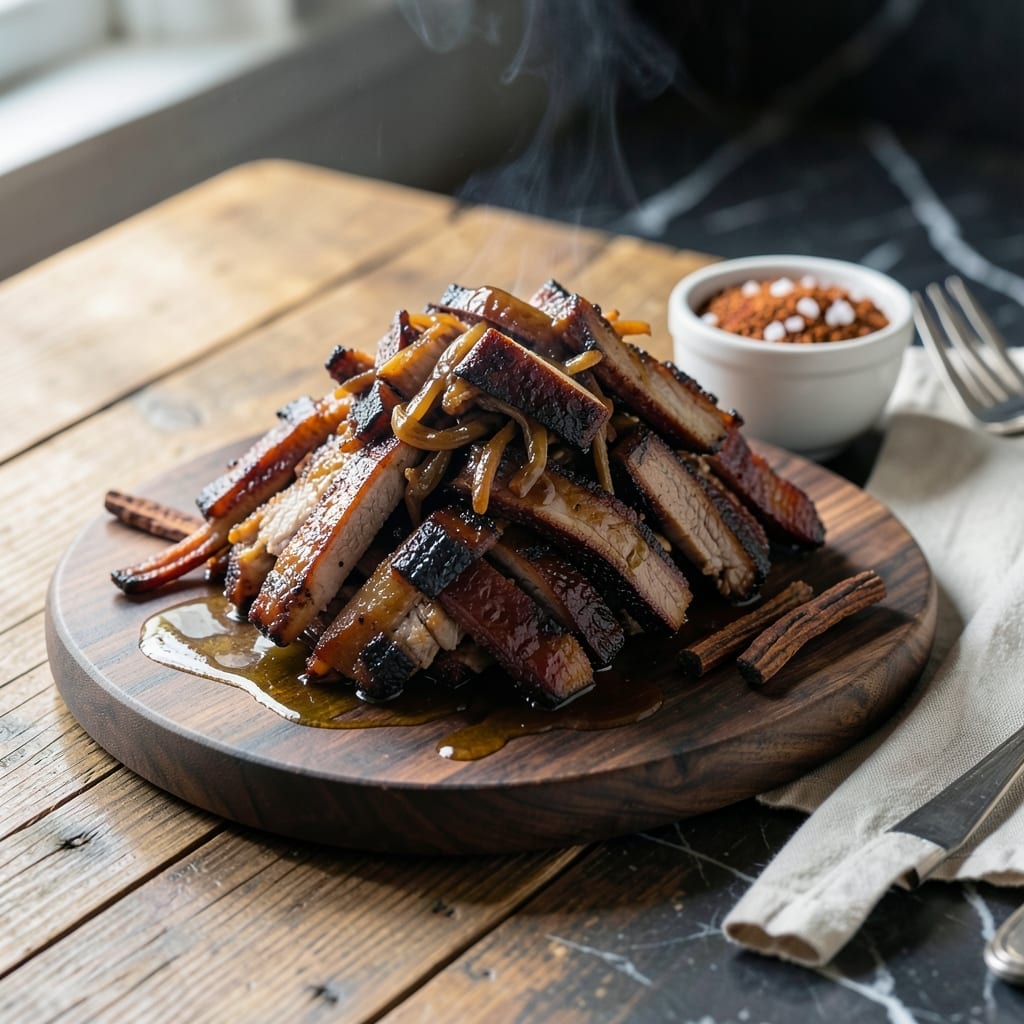
There’s nothing quite like the aroma of low and slow smoked pork filling the air, promising perfect tender results every time. I still remember my first whiff of hickory smoke at a family cookout.
This method transforms tough Boston butt into fall-apart tender barbecue with a smoky bark that’s worth the wait. My French training taught me how to balance those bold flavors.
Ingredients for Boston Butt Pork Barbecue
Pantry staples meet bold hickory smoke for that fall-apart tender barbecue you crave.
| Ingredient | Amount | Notes |
|---|---|---|
| Boston Butt Pork Roast 🥩 | 4 lb | Bone-in for best flavor |
| Hickory Wood Chips 🌳 | 2 cups | Soaked in water 1 hour |
| Yellow Mustard 🟡 | ½ cup | For bark formation |
| Brown Sugar 🏝️ | ½ cup | Light or dark variety |
| Paprika 🌶️ | 2 tbsp | Sweet or smoked variety |
| Kosher Salt 🧂 | 2 tbsp | Diamond Crystal preferred |
| Black Pepper 🌶️ | 2 tbsp | Freshly ground for best flavor |
| Garlic Powder 🧄 | 1 tbsp | Not garlic salt |
| Onion Powder 🧅 | 1 tbsp | Fresh ground preferred |
| Apple Cider Vinegar 🍏 | ½ cup | For tangy balance |
| Tomato Paste 🍅 | ¼ cup | For depth of flavor |
| Worcestershire Sauce 🥫 | 2 tbsp | Adds umami complexity |
| Barbecue Sauce 🍯 | 2 cups | Quality store-bought or homemade |
| Beer 🍺 | 1 cup | Dark beer preferred |
[recipe_ingredient_scaler]
The pork is the star here. Boston butt with good marbling gives you that perfect tender texture—avoid lean cuts. I grab mine from Costco or Whole Foods when they have sales. Hickory chips are essential for that classic smoke flavor; soak them for at least an hour before use. The bark forms best with a thick, even coating of the dry rub, so take your time with that step.
No hickory? Apple or cherry wood work great too. Out of Worcestershire? Soy sauce with a dash of lemon in a pinch. The beer can be any dark variety—Guinness or a brown ale add great depth. If you don’t have tomato paste, ketchup works at half the amount (just skip the extra sugar). Fresh garlic can replace the powder, but you’ll need about 6 cloves for the same punch.
Leftovers keep beautifully in the fridge for 4-5 days or freeze for 3 months. The flavor actually deepens overnight. Reheat gently in a saucepan with a splash of water to keep it moist. I always make extra—the bark stays crispy if you store it separate from the sauce.
Why You’ll Love This Recipe
- Set It and Forget It: Honestly, the hardest part is waiting for that Boston Butt to slow-smoke with hickory chips—everything else is hands-off.
- Smoky Sweet Perfection: That mix of brown sugar, mustard, and paprika forms the stickiest, most crave-worthy bark on the pork.
- Feeds a Hungry Crowd: I’ve served this at summer cookouts and Sunday dinners—always disappears, and leftovers make killer sandwiches.
- Budget-Friendly Feast: A single Boston Butt gives me multiple meals, and it’s way cheaper than buying pre-made pulled pork.
Step-by-Step Instructions for Boston Butt Pork Barbecue
Here’s the method I use to achieve fall-apart tender pork with a perfect bark every time.
Step 1: Prep and Season the Boston Butt Pork Roast
Start by patting the 4 lb Boston Butt Pork Roast completely dry with paper towels. I can’t stress this enough—moisture prevents the bark from forming properly. Trim any large fat caps, but leave about ¼ inch of fat to protect the meat during the long cook.
In a small bowl, mix together the 0.5 cup Yellow Mustard, 0.5 cup Brown Sugar, 2 tbsp Paprika, 2 tbsp Kosher Salt, 2 tbsp Black Pepper, 1 tbsp Garlic Powder, and 1 tbsp Onion Powder. Rub this mixture all over the pork, pressing it in firmly so it adheres well. Let it sit at room temperature for 30 minutes while you prepare your smoker.
Step 2: Set Up Your Smoker for Low and Slow Cooking
Soak the 2 cups Hickory Wood Chips in water for 1 hour before starting. Preheat your smoker to 225-250°F using the soaked wood chips. I use hickory for its strong, classic smoke flavor that pairs perfectly with pork.
Place a water pan in the smoker to help maintain moisture throughout the long cook. When the smoker reaches temperature and you see clean, thin blue smoke (not thick white smoke), you’re ready to add the pork. Position the pork fat-side up on the smoker grate so the rendering fat bastes the meat as it cooks.
Step 3: Smoke the Pork Until Probe-Tender
Smoke the pork undisturbed for 6-8 hours until the internal temperature reaches 165-170°F. This is when you’ll hit “the stall”—the temperature stops rising as moisture evaporates from the surface. Don’t panic; this is completely normal.
At this point, I like to spritz the pork with a mixture of the 0.5 cup Apple Cider Vinegar and 1 cup Beer every 45 minutes to keep the surface moist and add extra flavor. Continue smoking until the internal temperature reaches 195-203°F and a probe slides in like butter with no resistance.
Step 4: Rest and Pull the Pork
When the pork is probe-tender, carefully remove it from the smoker and wrap it tightly in foil. Let it rest for at least 1 hour (I prefer 2 hours wrapped in towels in a cooler). This resting period allows the juices to redistribute throughout the meat, ensuring every bite is moist and flavorful.
After resting, transfer the pork to a large cutting board or pan. Using two forks or meat claws, pull the pork apart into shreds, discarding any large fat chunks. Toss the shredded pork with 2 cups Barbecue Sauce and serve immediately on buns or as a main dish.
Pro Tips For Making Boston Butt Pork Barbecue
- Low and Slow Wins: Cook the Boston butt at 225°F for 1.5 hours per pound—any higher and the fat won’t render right, leaving you with tough meat instead of that fall-apart texture.
- Mustard First, Always: I learned this the hard way—rub the yellow mustard into the pork before the dry rub so the brown sugar and paprika actually stick, not slide off into the smoker.
- Don’t Rush the Rest: After pulling it off the heat, let the butt rest wrapped in foil for at least 30 minutes, or the juices will run all over the cutting board instead of staying in the meat.
- Soak the Wood Chips: Sounds tedious, but soaking hickory chips for 30 minutes before smoking keeps them from burning up too fast and giving your pork that bitter, acrid taste.
Regional Styles of This Dish
Carolina Style
In North Carolina, they prefer a vinegar-based sauce that cuts through the richness. I use equal parts apple cider vinegar and water with 1 tbsp brown sugar and 1 tsp red pepper flakes per cup. The tang brightens the pork beautifully. 🌶️
Texas Style
Texas pitmasters focus on the bark and smoke penetration. They often use a simpler rub with just salt, black pepper, and paprika. I’ve found post oak wood gives that authentic Lone Star flavor profile.
Kansas City Style
This is the style I grew up with—sweet and thick. The sauce is tomato-based with molasses and brown sugar. I always add a splash of Worcestershire sauce to my Kansas City sauce for depth.
Memphis Style
Memphis loves their dry rubs. Instead of saucing, they serve the pork with a spice blend on the side. I make mine with paprika, garlic powder, and cayenne for that perfect kick. The pork stays juicy without any sauce.
Alabama Style
Alabama’s white sauce is unique—it’s mayonnaise-based with apple cider vinegar and horseradish. I was skeptical at first, but it’s surprisingly good on pulled pork. The creamy texture balances the smoke perfectly. 💡
California Style
Out west, they like to experiment. I’ve seen recipes with chipotle peppers and adobo sauce mixed into the sauce. The smoky heat pairs wonderfully with the pork’s natural sweetness.
Nutrition Facts
Frequently Asked Questions
Do I need to trim the fat cap?
Leave about ¼ inch of fat to protect the meat during cooking. Trim any larger pieces, as too much fat can prevent the bark from forming properly.
How do I know when it’s done?
Use a meat probe—it should slide in like butter when the internal temperature reaches 195-203°F. The pork will be tender and pull apart easily.
Can I use an oven instead of a smoker?
Yes! Set your oven to 225°F and place a water pan on the lower rack for moisture. Add wood chips in a foil pouch for smoke flavor.
Why does the temperature stall during cooking?
This is normal—it’s called “the stall.” Moisture evaporates from the surface, temporarily halting temperature rise. Just be patient and let the process continue.

Trained in classic French technique but raised on slow-cooked ribs and spicy rubs, she blends culinary skill with smoke and soul.
- Recipe for Boneless Pork Chops in Cast Iron Skillet: Sear and Baste to Juicy Perfection - October 3, 2026
- Recipe for Boneless Cross Rib Roast: Slow-Roasted Beef with Herb Crust - October 3, 2026
- Hamburgers in Sauce Recipe Crock Pot: Slow-Cooked Savory Delight - October 3, 2026