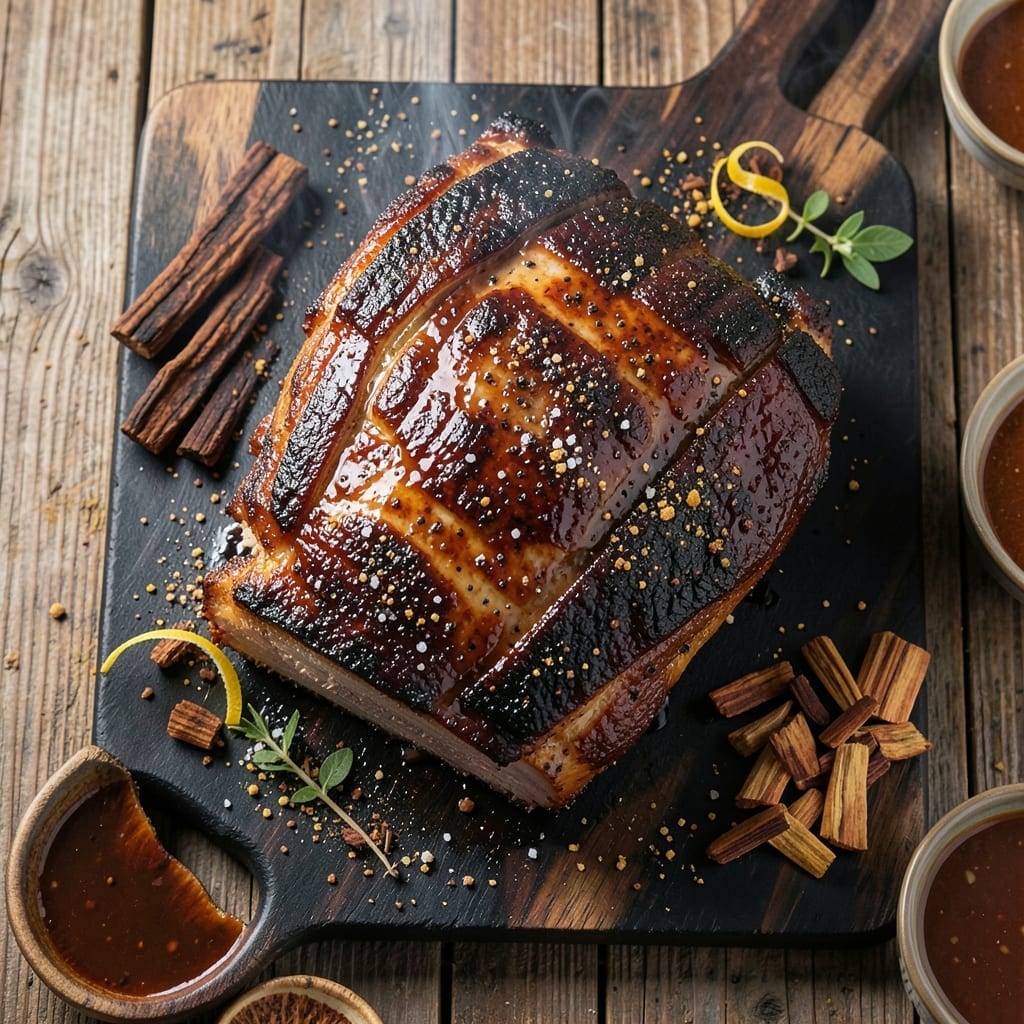
Getting my first whiff of hickory smoke at my family backyard cookout still makes my mouth water. That’s the magic this dish delivers—tender pork with a bark so crisp it shatters.
I’ve spent years perfecting my Boston butt technique, blending French precision with old-school smoke cooking. The secret is patience and the right wood mix.
What you’ll get is meat so tender it pulls apart with just a nudge, wrapped in a smoky crust that’s packed with flavor. It’s the kind of meal that turns a regular weekend into something special.
Serve it on soft buns with tangy slaw, or slice it thick for a hearty plate. Either way, it’s a crowd-pleaser.
Ingredients for Boston Butt Pork Roast Smoker
Pantry staples plus a trip to the butcher. Nothing exotic, just good meat and smoke.
| Ingredient | Amount | Notes |
|---|---|---|
| Boston Butt Pork Roast 🥩 | 8 lb | Bone-in for best flavor |
| Hickory Wood Chunks 🪵 | 4 cups | Soaked in water overnight |
| Apple Wood Chips 🍎 | 2 cups | Optional for sweeter smoke |
| Coarse Kosher Salt 🧂 | ¼ cup | Diamond Crystal preferred |
| Freshly Ground Black Pepper 🌶️ | 2 tbsp | Coarse grind for bark |
| Garlic Powder 🧄 | 2 tbsp | Not garlic salt |
| Onion Powder 🧅 | 2 tbsp | Balances the rub |
| Paprika 🌶️ | 2 tbsp | Sweet or smoked variety |
| Brown Sugar 🍚 | ½ cup | Light or dark both work |
| Yellow Mustard 🟡 | ½ cup | Binder for the rub |
| Apple Cider Vinegar 🍏 | ½ cup | For spritzing during cook |
| Beer 🍺 | 2 cups | Dark ale or lager |
| Butter 🧈 | ½ cup | For finishing the bark |
[recipe_ingredient_scaler]
The pork is everything here. Boston butt (not blade roast) gives you that perfect fat-to-meat ratio. Costco has great pre-packaged options, but I prefer my local butcher—they’ll trim it to your specs. Look for good marbling and a thick fat cap. The wood matters too: hickory is classic, but adding apple or cherry gives a sweeter note that pairs perfectly with pork.
Out of apple wood? Cherry or pecan work great. No time to soak chunks? Wood chips in a foil pouch (with holes poked in) get the job done. For the rub, turbinado sugar can sub for brown sugar in a pinch. If you’re avoiding gluten, Dijon mustard works instead of yellow. The beer can be any variety—dark stouts add depth, but a light lager is fine too.
The cooked pork keeps 4-5 days in the fridge, shredded or whole. Freezes beautifully for 3 months—portion it first so you can grab exactly what you need. Reheat gently with a splash of the cooking liquid (worth saving every drop).
Why You’ll Love This Recipe
- Set It and Forget: I season the pork with salt and pepper, then let the smoker do all the work for hours.
- Smoky Sweetness: Hickory and apple wood blend into the most tender, fall-off-the-bone flavor.
- Feeds the Crew: One Boston butt makes enough for sandwiches, tacos, or a hearty dinner for six.
- Leftovers for Days: Honestly, the pulled pork tastes even better the next day in quesadillas or soup.
Step-by-Step Instructions for Boston Butt Pork Roast
Here’s the method I use to achieve fall-apart tender pork with a perfect bark every time.
Step 1: Prepare and Season the Pork
Start by patting the 8 lb Boston Butt Pork Roast completely dry with paper towels. I leave the fat cap intact for flavor and moisture during the long cook. In a bowl, combine the 0.25 cup Coarse Kosher Salt, 2 tbsp Freshly Ground Black Pepper, 2 tbsp Garlic Powder, 2 tbsp Onion Powder, 2 tbsp Paprika, and 0.5 cup Brown Sugar.
Rub the 0.5 cup Yellow Mustard all over the pork—this helps the seasoning stick. Then apply the spice mixture generously, pressing it into the meat so it adheres. Let the seasoned roast sit at room temperature for 1 hour while you prepare your smoker.
Step 2: Set Up the Smoker for Low and Slow
Fill your smoker’s water pan with water and add the 4 cups Hickory Wood Chunks (soaked overnight) to the firebox. If you want a sweeter smoke profile, add the 2 cups Apple Wood Chips as well. Preheat your smoker to 225-250°F.
I maintain this temperature throughout the cook for even, slow smoking. When the smoker reaches temperature and produces thin, blue smoke (not thick white smoke), you’re ready to begin. Place the pork on the grate, fat-side up, so the rendering fat bastes the meat as it cooks.
Step 3: Smoke and Spritz for Tenderness
Smoke the pork undisturbed for 6-8 hours until the internal temperature reaches 165-170°F. Every 2 hours, spritz the roast with a mixture of the 0.5 cup Apple Cider Vinegar and 2 cups Beer to keep it moist and build the bark.
This spritzing step is crucial—it washes away any creosote from the smoke while adding layers of flavor. Don’t skip it. You’ll notice the bark starting to form and darken beautifully during this phase.
Step 4: Wrap and Finish
When the pork hits 170°F, wrap it tightly in pink butcher paper (this allows it to breathe while keeping moisture in). Return it to the smoker and continue cooking until the internal temperature reaches 200-205°F.
This usually takes another 3-4 hours. You’ll know it’s ready when a probe slides in like butter with no resistance. During the last 30 minutes, brush the pork with the 0.5 cup Butter for extra richness and shine.
Step 5: Rest and Pull
Remove the pork from the smoker and let it rest in the butcher paper for at least 1 hour (I prefer 2 hours wrapped in towels in a cooler). This resting period allows the juices to redistribute throughout the meat.
Unwrap the pork and pull it apart with forks or bear claws. The meat should come apart effortlessly, with a beautiful smoke ring just beneath the dark, flavorful bark. Serve immediately while warm.
Pro Tips For Making Boston Butt Pork Roast Smoker
- Start Low and Slow: Keep your smoker at 225°F for the first 4-6 hours—I learned this the hard way after burning the outside while the inside stayed raw. Patience actually changes the outcome.
- Trim the Fat Cap: Leave about 1/4 inch of fat for flavor, but trim the rest, or you’ll end up with a greasy, uneven cook. Sounds weird, but it works.
- Skip the Over-Soaking: Soak your hickory chunks for 30 minutes max—any longer and they won’t smoke properly. I used to drown them in water for hours and wondered why the flavor was so weak.
- Rest Before Slicing: Once it hits 195°F internally, pull it off, wrap it in foil, and give it a solid 30 minutes under a towel. My grandmother swore by this, and she was right.
Troubleshooting Perfect Results
The Stall Problem
If your pork stalls around 160-170°F, don’t panic—this is normal. The stall happens when evaporative cooling slows the cook. I wrap mine in pink butcher paper at this point to push through. Expect to add 2-3 hours to your total time. 💡
Bark Too Dark
If your bark is darkening too quickly, your smoker might be running too hot. Check your temperature with a probe thermometer—I use ThermoWorks. Also, ensure you’re getting thin blue smoke, not thick white smoke which can bitter the flavor.
Dry Meat
Dry pork usually means it cooked too fast or rested too long. Keep your smoker at a steady 225-250°F and spritz every 2 hours with the apple cider vinegar and beer mix. Resting 1-2 hours wrapped in towels prevents moisture loss.
Uneven Cooking
If one side of your pork is cooking faster, rotate it every 3-4 hours for even exposure. Also, place the meat fat-side up so the rendering fat bastes the entire roast. I learned this the hard way at my first local BBQ competition.
Weak Smoke Flavor
For stronger smoke flavor, use more wood chunks (not chips) and ensure they’re properly soaked. I add 1-2 chunks every hour during the first half of the cook. Avoid overloading—too much wood can create bitter, acrid smoke.
Spritz Drying Out
If your spritz dries on the surface, mix 1 tbsp butter into your spritz liquid. This adds fat to help the moisture adhere. Keep your spritz bottle in a cooler with ice to maintain a cold mist rather than a warm spray.
Nutrition Facts
Frequently Asked Questions
What’s the best wood for smoking?
Hickory gives classic bold flavor, but apple or cherry adds sweetness. Use 4 cups soaked chunks for steady smoke. Avoid softwoods like pine.
How do I know when it’s done?
Probe should slide in like butter at 200-205°F internal temp. The bark will be dark and crusty, and the meat will pull apart easily.
Can I skip the resting time?
Never skip resting! Let it rest 1-2 hours wrapped in towels. This keeps it juicy—cutting too soon loses all those precious drippings.
Why did my bark turn out bitter?
Thick white smoke or too much wood creates bitterness. Aim for thin blue smoke and use soaked chunks, not chips, for clean flavor.

Trained in classic French technique but raised on slow-cooked ribs and spicy rubs, she blends culinary skill with smoke and soul.
- Hamburger Patty Recipe No Egg: Juicy Bind With Breadcrumbs and Milk - October 3, 2026
- Recipe for Oven Baked Halibut: Buttery White Fish with Zesty Lemon Topping - October 3, 2026
- Meatball Curry Recipe Kerala Style: Coconut-Spiced Gravy With Tender Bites - October 3, 2026