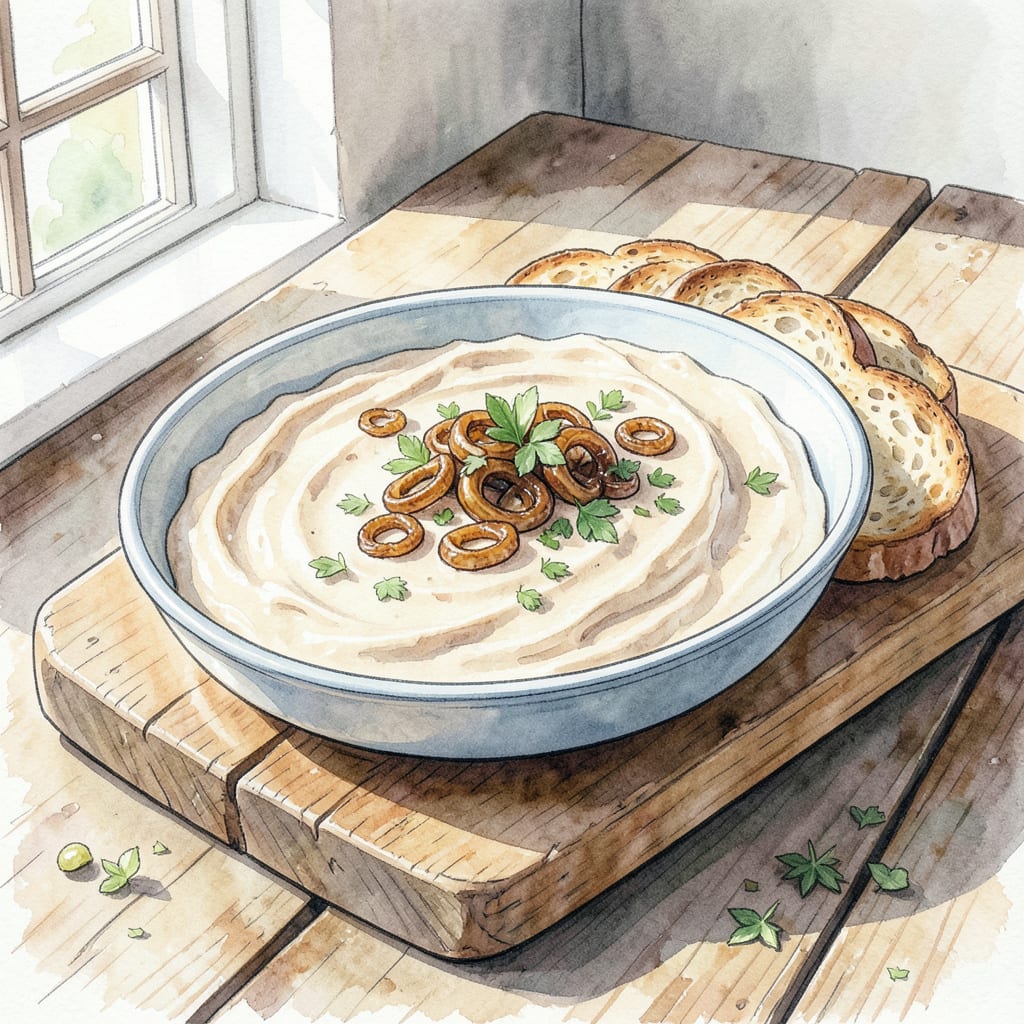
I’m excited to share my Braunschweiger recipe, a creamy liver spread that’s perfect for charcuterie boards. This traditional German dish combines rich pork liver with aromatic spices, creating a smooth and savory experience.
With simple ingredients and straightforward instructions, you’ll achieve a creamy texture that’s sure to impress. Let’s get started on this delicious journey!
Ingredients for Braunschweiger
Gather these premium ingredients to create a rich Braunschweiger spread.
| Ingredient | Amount | Notes |
|---|---|---|
| Pork Liver 🥩 | 1 lb | Fresh or frozen, thawed |
| Onion 🧅 | 1 whole | Yellow or sweet, chopped |
| Garlic Cloves 🧄 | 4 cloves | Peeled, minced |
| Butter 🧈 | ½ cup | Unsalted, softened |
| Heavy Cream 🥛 | ½ cup | For creamy texture |
| Salt 🧂 | 1 tsp | Kosher or sea salt |
| Black Pepper 🌶️ | ½ tsp | Freshly ground |
| Nutmeg 🌿 | ¼ tsp | Freshly grated |
| Allspice 🌶️ | ¼ tsp | Ground |
| Cognac 🍸 | 2 tbsp | Optional, for flavor |
| Fresh Parsley 🌿 | ¼ cup | Chopped, for garnish |
[recipe_ingredient_scaler]
The quality of pork liver matters here. Look for fresh, bright red liver at your local butcher or high-quality grocery stores. Some specialty butchers may have it pre-cleaned. If using frozen, make sure it’s fully thawed before using. I usually grab mine from Whole Foods when I’m doing a big batch.
No Cognac? Brandy or dry sherry works as a decent substitute. The Cognac adds a subtle depth, but you can skip it for a simpler version. Fresh parsley is nice for garnish, but you can omit it if you don’t have it. The heavy cream is what gives this Braunschweiger its signature creamy texture, so don’t skip it.
This Braunschweiger keeps for 5-7 days in the fridge. Store it in an airtight container and give it a good stir before serving. You can also freeze it for up to 3 months—just thaw in the fridge overnight. I like to portion it into small ramekins so it’s ready for charcuterie nights.
Step-by-Step Instructions for Braunschweiger
Creating this creamy liver spread is straightforward and rewarding. Let’s break it down into manageable steps.
Step 1: Sauté the Onion and Garlic until Softened
In a large skillet, melt 2 tablespoons of the 0.5 cup Butter over medium heat. Add the 1 whole Onion, chopped, and cook until it’s translucent and softened, which should take about 8-10 minutes. You’ll know it’s ready when the onion is no longer crunchy and has a sweet aroma. Then, add the 4 cloves Garlic Cloves, minced, and cook for another 1-2 minutes until fragrant. Be careful not to burn the garlic, as it can quickly become bitter.
Once the onion and garlic are cooked, set them aside to cool slightly. This step is crucial as it prevents the liver from cooking too quickly when blended with the hot onion mixture.
Step 2: Prepare the Liver Mixture
Preheat your oven to 350°F. In a food processor, combine the cooled onion and garlic mixture, 1 lb Pork Liver, 1 tsp Salt, 0.5 tsp Black Pepper, 0.25 tsp Nutmeg, and 0.25 tsp Allspice. Process the mixture until it’s smooth and well combined. You’ll notice the liver breaking down and the mixture becoming more uniform. This should take about 2-3 minutes depending on your processor.
The mixture will be quite smooth at this point, but it’s essential to ensure there are no remaining chunks of liver. Stop the processor occasionally to scrape down the sides, ensuring everything is well incorporated.
Step 3: Blend in the Remaining Ingredients
Add the remaining 0.5 cup Butter – 2 tablespoons (since we’ve already used 2 tablespoons), softened, and 0.5 cup Heavy Cream to the liver mixture. Process until the mixture is creamy and smooth. If you’re using 2 tbsp Cognac, add it now and process until well combined. The Cognac adds a depth of flavor, but be cautious as it can make the mixture slightly more liquid.
The final mixture should be smooth and spreadable. If it’s too thick, you can adjust the consistency with a little more Heavy Cream. Taste and adjust the seasoning as needed.
Step 4: Bake and Chill the Braunschweiger
Transfer the liver mixture to a baking dish or a terrine mold. Cover it with aluminum foil and bake in the preheated oven for about 45-50 minutes, or until the internal temperature reaches 160°F. You’ll notice the mixture firming up and slightly puffing.
Remove the Braunschweiger from the oven and let it cool to room temperature. Then, cover it with plastic wrap, pressing the wrap directly onto the surface to prevent air from reaching it, and refrigerate until chilled, at least 4 hours or overnight. This chilling process allows the flavors to meld together and the texture to firm up.
Step 5: Serve with Fresh Parsley
Once chilled, give the Braunschweiger a good stir. Transfer it to a serving dish or keep it in the terrine mold. Garnish with 0.25 cup Fresh Parsley, chopped, just before serving. The freshness of the parsley adds a nice contrast to the rich, creamy Braunschweiger.
Serve the Braunschweiger chilled, accompanied by crackers, bread, or vegetables. It’s perfect for charcuterie boards or as a snack. The creamy texture and rich flavor make it a delightful addition to any gathering.
Essential Equipment for This Dish
Essential Tools
To make Braunschweiger, you’ll need a few key pieces of equipment. Start with a large skillet for sautéing onions and garlic—I prefer a cast-iron pan for its even heat distribution. A food processor is crucial for achieving that silky-smooth texture. 🔥
Food Processor Requirements
Choose a high-powered food processor that can handle raw liver. I recommend a Breville or Cuisinart model with at least 600 watts of power. This ensures you’ll get a perfectly smooth Braunschweiger without any grainy texture.
Baking and Chilling Equipment
For baking, use a terrine mold or a 9×5-inch loaf pan. These help maintain the Braunschweiger’s shape while it chills. If you don’t have a terrine, a regular loaf pan works fine. For chilling, make sure you have enough refrigerator space to accommodate your Braunschweiger. ❄️
Temperature Control
Accurate temperature control is crucial. Use a reliable meat thermometer to check that your Braunschweiger reaches the safe internal temperature of 160°F. I prefer Thermapen thermometers for their quick and accurate readings.
Storage Containers
After your Braunschweiger has chilled, transfer it to airtight containers for storage. I like using glass containers with tight-fitting lids to keep it fresh. This Braunschweiger will keep in the fridge for 5-7 days, so plan your storage accordingly.
Nutrition Facts

Trained in classic French technique but raised on slow-cooked ribs and spicy rubs, she blends culinary skill with smoke and soul.
- Recipe for Boneless Pork Chops in Cast Iron Skillet: Sear and Baste to Juicy Perfection - October 3, 2026
- Recipe for Boneless Cross Rib Roast: Slow-Roasted Beef with Herb Crust - October 3, 2026
- Hamburgers in Sauce Recipe Crock Pot: Slow-Cooked Savory Delight - October 3, 2026