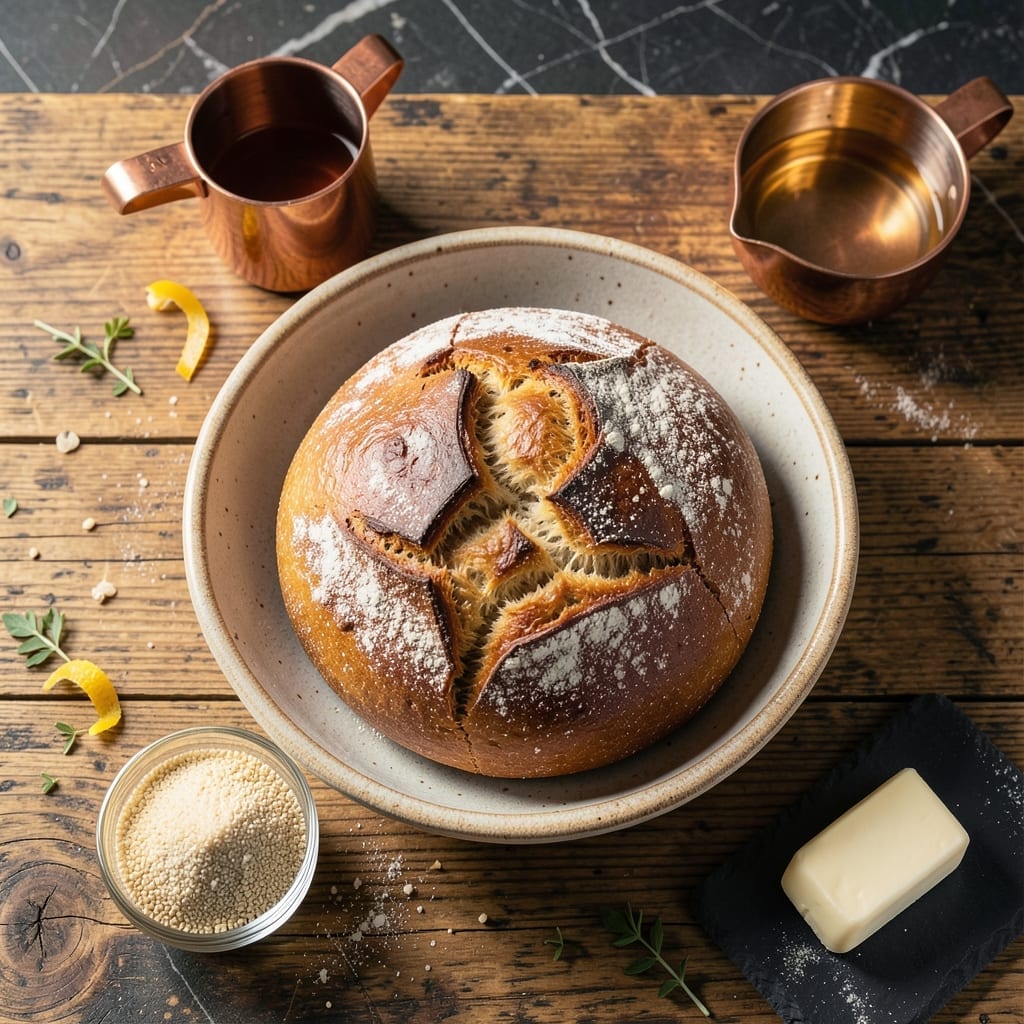
There’s nothing quite like the aroma of fresh bread filling your kitchen, and this homemade loaf delivers that experience with soft, pillowy results every time.
With basic ingredients and a simple method, you’ll create a golden loaf that rivals any bakery. The yeast works its magic during proofing, ensuring perfect texture.
Ingredients for Bread Recipe with Yeast
Basic pantry staples transform into a bakery-worthy loaf with this simple yeast bread.
| Ingredient | Amount | Notes |
|---|---|---|
| Bread Flour 🌾 | 4 cups | High-protein for structure |
| Active Dry Yeast 🍞 | 2 ¼ tsp | One packet, proofed in warm water |
| Warm Water 💧 | 1 ¼ cups | 110-115°F for yeast activation |
| Granulated Sugar 🍚 | 1 tbsp | Feeds the yeast |
| Kosher Salt 🧂 | 2 tsp | Diamond Crystal preferred |
| Unsalted Butter 🧈 | 2 tbsp | Softened for dough enrichment |
| Whole Milk 🥛 | ¼ cup | Warmed, enhances softness |
| Large Egg 🥚 | 1 whole | Room temperature, for richness |
| Olive Oil 🫒 | 1 tbsp | For bowl greasing |
| Honey 🍯 | 1 tbsp | Optional for subtle sweetness |
[recipe_ingredient_scaler]
The flour is critical here—King Arthur Bread Flour delivers consistent protein content (12.7%) for that pillowy texture. Yeast freshness matters: check the expiration date and store unopened packets in the freezer. Whole Foods or Trader Joe’s carry reliable active dry yeast. For the milk and butter, organic full-fat versions yield the softest crumb (trust me on the full-fat version).
No bread flour? All-purpose with 1 tbsp vital wheat gluten per cup gets you close. Out of yeast? This isn’t the recipe for sourdough starter substitutions. For a dairy-free version, unsweetened almond milk and vegan butter work well. The egg can be omitted, but the loaf will be slightly less tender. Honey can be swapped for maple syrup (vegan option).
Store yeast in an airtight container in the freezer for 1-2 years. The dough can rise in the fridge overnight for enhanced flavor. Baked loaves keep fresh wrapped in foil at room temp for 3 days, or freeze for 3 months.
Why You’ll Love This Recipe
- No-Fuss Mixing: I just dump the flour, yeast, sugar, and salt in a bowl, add warm water, and let the yeast do its magic.
- Warm, Buttery Flavor: The sugar caramelizes slightly as it bakes, giving that golden crust a hint of sweetness with every bite.
- Breakfast to Dinner: I’ve served it as toast with jam for breakfast, alongside soup for dinner, and even as sandwich bread for lunch.
- Budget Stretch: A few cents’ worth of flour and yeast makes a loaf that’s honestly better than the $5 bakery version.
Step-by-Step Instructions for Bread with Yeast
Master the process of creating a soft, pillowy loaf with these precise, tested steps.
Step 1: Activate the Yeast and Prepare Wet Ingredients
In a small bowl, combine the 2.25 tsp Active Dry Yeast, 1 tbsp Granulated Sugar, and 1.25 cups Warm Water heated to 110-115°F. Let this mixture stand for 5-7 minutes until it becomes foamy and bubbly—this confirms the yeast is active and ready to work.
While the yeast activates, warm the 0.25 cup Whole Milk and measure out the 1 whole Large Egg and 2 tbsp Unsalted Butter. The butter should be softened but not melted, as this ensures even distribution throughout the dough.
Step 2: Combine Wet and Dry Ingredients
In a large mixing bowl, whisk together the 4 cups Bread Flour and 2 tsp Kosher Salt. Create a well in the center and add the activated yeast mixture, whole milk, egg, butter, and 1 tbsp Honey.
Using a wooden spoon or dough whisk, mix until a shaggy dough forms. The dough will be sticky at this stage, but resist the urge to add more flour—this hydration level is key to achieving the soft, pillowy texture promised by this recipe.
Step 3: Knead the Dough to Develop Gluten
Turn the dough out onto a lightly floured surface and knead for 8-10 minutes by hand, or 5-6 minutes in a stand mixer fitted with a dough hook. The dough should become smooth and elastic, springing back when gently pressed with a finger.
This kneading process develops the gluten network, which gives the bread its structure and chewy texture. If the dough feels too sticky during kneading, add flour 1 tbsp at a time, but avoid over-flouring, as this can make the final loaf dense.
Step 4: First Rise Until Doubled in Size
Lightly grease a large bowl with the 1 tbsp Olive Oil and place the kneaded dough inside, turning once to coat all sides. Cover the bowl with a clean kitchen towel or plastic wrap and let it rise in a warm, draft-free place for 1 to 1.5 hours, or until the dough has doubled in volume.
For best results, I place the bowl in an oven that has been preheated to 100°F and then turned off. This controlled environment ensures a steady rise. The dough is ready for the next step when it holds an indentation when gently pressed.
Step 5: Shape, Second Rise, and Bake
Punch down the risen dough to release the air, then turn it out onto a lightly floured surface. Shape it into a loaf by gently flattening it into a rectangle, then rolling it tightly from the short end. Pinch the seam and tuck it under to create surface tension.
Place the shaped loaf into a greased 9×5-inch loaf pan and cover it again. Let it rise for another 45-60 minutes, or until it domes about 1 inch above the rim of the pan. Preheat the oven to 375°F during the last 15 minutes of rising.
Bake the loaf for 25-30 minutes until the top is deep golden brown and the internal temperature reaches 190-200°F. If the top browns too quickly, tent the pan with aluminum foil. Once done, transfer the loaf to a wire rack to cool for at least 20 minutes before slicing.
Pro Tips For Making Bread Recipe With Yeast
- Test Your Yeast: Always bloom your active dry yeast in warm water (105-110°F) with a pinch of sugar first—I learned this the hard way after wasting flour on dead yeast more times than I’d like to admit.
- Use Bread Flour: Skip the all-purpose; bread flour’s higher protein content gives you that chewy, bakery-style texture you’re after.
- Don’t Rush the Rise: Let the dough double in size, even if it takes an extra 20 minutes—your bread will be lighter and more flavorful, not dense and gummy.
- Salt Last: Add the kosher salt after the yeast has foamed; direct contact with salt can kill the yeast before it gets to work.
Regional Styles of This bread recipe with yeast
French Baguette Style
For a crispy crust, reduce olive oil to ½ tbsp and replace whole milk with water. Shape into long, thin logs and bake on a baking stone at 450°F for 20-25 minutes. Steam the oven by placing a pan of boiling water on the lower rack. 🌟
Italian Focaccia Style
Increase olive oil to ¼ cup and add 1 tsp dried rosemary. Press dough into a greased 9×13-inch pan, dimple with fingers, and drizzle with extra oil. Bake at 400°F for 20 minutes.
German Pretzel Style
Before baking, boil shaped dough in 4 cups water with ¼ cup baking soda for 30 seconds. Sprinkle with coarse salt and bake at 425°F for 15-18 minutes. The boiling step gives that signature pretzel crust.
American Sandwich Style
Add 2 tbsp powdered milk to the dry ingredients for extra softness. Shape into a 9×5-inch loaf pan and bake as directed. This version makes the best PB&J or turkey sandwiches you’ve ever had.
Swedish Cardamom Style
Add 1 tsp ground cardamom to the flour mixture. Shape into small rolls and bake at 375°F for 15-18 minutes. These sweet, aromatic buns are perfect with coffee. ✨
Nutrition Facts
Frequently Asked Questions
Why didn’t my dough rise?
Yeast may have been inactive or water too hot. Always check water temperature at 110-115°F and confirm yeast foams before adding. Also ensure your rising spot is warm enough.
Can I use instant yeast instead?
Yes! Use the same amount but skip the activation step. Just mix instant yeast directly with dry ingredients. This saves 5-7 minutes of prep time.
How do I store leftover bread?
Wrap cooled loaf tightly in foil or plastic at room temperature for up to 3 days. For longer storage, freeze slices in an airtight container for 3 months.
What if my bread is dense?
Over-flouring or insufficient kneading often causes this. Stick to 4 cups bread flour and knead until smooth. Also allow full rising time.

Trained in classic French technique but raised on slow-cooked ribs and spicy rubs, she blends culinary skill with smoke and soul.
- Recipe for Boneless Pork Chops in Cast Iron Skillet: Sear and Baste to Juicy Perfection - October 3, 2026
- Recipe for Boneless Cross Rib Roast: Slow-Roasted Beef with Herb Crust - October 3, 2026
- Hamburgers in Sauce Recipe Crock Pot: Slow-Cooked Savory Delight - October 3, 2026